The post China’s Rare Earth May Save The Retail Economy When Trump & Xi Meet appeared on BitcoinEthereumNews.com. Face the facts, America’s trading partners need us, but they don’t seem to like us very much these days. As a nation, America has been changing the rules of trade while creating new headaches for the retail and supplier community – on a near-daily basis. At the same time, our overseas partners are starting to look elsewhere to power their economies and China is a willing partner. Could this all change when President Trump negotiates with President Xi this week? It certainly is possible – let’s hope! Trade War (written in Chinese calligraphy) conflict between China and U.S.A. represented with flags and boxing gloves decorated with yen and dollar symbols fighting each other. getty Retailers understand that international trade fuels the American consumer, and any negative adjustment to the fragile trading formula sends ripples through supply chains, demolishes corporate earnings, and ultimately slows the retail economy. The stakes for this weeks meeting with President Xi of China are high – because if President Trump’s strategy for trade is not successful, Americans will see more rising prices, increased inflation, empty shelves, and employee layoffs. To be clear, none of this has happened as yet, and hopefully this week’s Presidential trip will draw new lines in the sand – so that the trading system is more fair, more balanced, and America can maintain leadership. If so, President Trump will have achieved monumental success, and he will have made a major step towards re-adjusting the world’s economy. Some will say that all this trade turmoil is a positive development. Others will probably say that the constant changes are disruptive, hamper long-term planning, and have yet to prove their worth. While every retailer understands the importance of China, all eyes have now suddenly turned to China’s latest Trump Card – the export of rare… The post China’s Rare Earth May Save The Retail Economy When Trump & Xi Meet appeared on BitcoinEthereumNews.com. Face the facts, America’s trading partners need us, but they don’t seem to like us very much these days. As a nation, America has been changing the rules of trade while creating new headaches for the retail and supplier community – on a near-daily basis. At the same time, our overseas partners are starting to look elsewhere to power their economies and China is a willing partner. Could this all change when President Trump negotiates with President Xi this week? It certainly is possible – let’s hope! Trade War (written in Chinese calligraphy) conflict between China and U.S.A. represented with flags and boxing gloves decorated with yen and dollar symbols fighting each other. getty Retailers understand that international trade fuels the American consumer, and any negative adjustment to the fragile trading formula sends ripples through supply chains, demolishes corporate earnings, and ultimately slows the retail economy. The stakes for this weeks meeting with President Xi of China are high – because if President Trump’s strategy for trade is not successful, Americans will see more rising prices, increased inflation, empty shelves, and employee layoffs. To be clear, none of this has happened as yet, and hopefully this week’s Presidential trip will draw new lines in the sand – so that the trading system is more fair, more balanced, and America can maintain leadership. If so, President Trump will have achieved monumental success, and he will have made a major step towards re-adjusting the world’s economy. Some will say that all this trade turmoil is a positive development. Others will probably say that the constant changes are disruptive, hamper long-term planning, and have yet to prove their worth. While every retailer understands the importance of China, all eyes have now suddenly turned to China’s latest Trump Card – the export of rare…

China’s Rare Earth May Save The Retail Economy When Trump & Xi Meet

Face the facts, America’s trading partners need us, but they don’t seem to like us very much these days. As a nation, America has been changing the rules of trade while creating new headaches for the retail and supplier community – on a near-daily basis. At the same time, our overseas partners are starting to look elsewhere to power their economies and China is a willing partner. Could this all change when President Trump negotiates with President Xi this week? It certainly is possible – let’s hope!

Trade War (written in Chinese calligraphy) conflict between China and U.S.A. represented with flags and boxing gloves decorated with yen and dollar symbols fighting each other.

getty

Retailers understand that international trade fuels the American consumer, and any negative adjustment to the fragile trading formula sends ripples through supply chains, demolishes corporate earnings, and ultimately slows the retail economy. The stakes for this weeks meeting with President Xi of China are high – because if President Trump’s strategy for trade is not successful, Americans will see more rising prices, increased inflation, empty shelves, and employee layoffs. To be clear, none of this has happened as yet, and hopefully this week’s Presidential trip will draw new lines in the sand – so that the trading system is more fair, more balanced, and America can maintain leadership. If so, President Trump will have achieved monumental success, and he will have made a major step towards re-adjusting the world’s economy.

Some will say that all this trade turmoil is a positive development. Others will probably say that the constant changes are disruptive, hamper long-term planning, and have yet to prove their worth.

While every retailer understands the importance of China, all eyes have now suddenly turned to China’s latest Trump Card – the export of rare earth which will likely be the game-changer in these discussions.

For couch potatoes who sit on the beach and don’t dig too far, it turns out that China mines about 70% of the world’s capacity of rare earth – but (more importantly) they process about 90% of the world’s refining – which is critical for global manufacturing of key consumables like cars, TV’s, smartphones, appliances, fighter jets, and submarines. To most everyone’s surprise, China has cornered the rare-earth market, and America can’t live or grow manufacturing without these components. The accelerated dynamic occurred only recently – when China (in reaction to USA tariffs) added restrictive export controls to five rare earth metals, following the seven they had restricted a few months prior (and a few they banned for export to the USA last year).

These materials have names that you may not recall from your high school chemistry class (when you studied the Periodic Chart of Elements), but they have real-world use and real-world consequences. The latest on the list are holmium, erbium, thulium, europium, and ytterbium. Last year, (for the apparel retailers reading this) China banned the export of antimony to the USA. While that particular word may not ring your bell (it sounds like alimony) – antimony is a core ingredient in our specialty core fabric called polyester.

As President Trump goes after Chinese vessels, China has countered with a tax on American vessels. As President Trump props up the finances of Argentina, China has decided to buy their soybean business (leaving American farmers in the dust – and ripe for a bailout). These acts only confirm that while some believe that our trade war has no consequences – that concept only rests with those who haven’t yet been affected. Just ask the lobstermen in Maine what happened to their catch that was previously exported to China, or ask the farmers in the mid-west who were bailed out to the tune of $28 billion dollars a few years back.

President Trump’s trip to Asia this week features a visit to Malaysia for the ASEAN summit, a visit to Japan, and a visit to South Korea where he will attend APEC and also meet with President Xi of China. Prior to the trip, the key trade subject with China had drifted to rare earth – which now totally dominates the retail discussion on trade. With China still being the largest retail player for apparel, accessories, and footwear – 100% additional tariffs that that slated to be added to products in November – just weren’t in the planning. It’s refreshing to hear that they have now likely been put aside, as it was pretty clear (in retail terminology) that one would not be able to sell from an empty cart, that we are already in the Holiday selling season, and that as prices go up – sales would go down.

As an aside, I had to leave my NYC apartment this morning to get some fresh air, and take time off from this all-encompassing trade conundrum. As I exited the side door of the building, several burly men were digging a sizable hole in the street.

“Good morning burly men,” I said, “what’s going on?”

With typical NYC city bravado, the burliest of the men (head wrapped like a rock star) – looked me in the eye and said: “we’re digging a hole to China.”

“Funny,” I said, “I was just upstairs doing the same thing on my computer.”

We stared at each other for a moment (a NYC gaze), there was a pause in our banter, and then an abrupt end – drowned out by the sound of a jackhammer.

I mention this because the “China” conversation dialed me back to Oakland Beach in Rye, NY where (as kids), we did the exact same thing in the sand…..dug holes to China. The sand at that time was just sand, and little did we know that years later, it would turn our attention to rare earth.

The China-charged political comments on Capitol Hill do continue, but the tone has become significantly more civil than it has been in years. President Trump believes there is a deal to be made with China, and that the meeting this week will be a success. There also seems to be a new realization that China and the United States actually need each other. Caution does remain in the wind, but we may now be on a better path to finally see some issues get resolved.

As a country, America has come a long way from Trump’s first tariffs on solar panels and washing machines in 2018, through the famous Fox News Sunday program in 2019 when Peter Navarro (who was Trump’s Director of Trade and Manufacturing at the time) called out China’s 7 Deadly Sins. What started as a war against theft of intellectual property and trade deficits – eventually morphed into the world was taking advantage of America – with tariffs as the antidote to fight that back. Success or failure? Hard to say as yet, but at least progress is being made after years of trade stagnation.

Just like the kids that were digging in the sand near Rye Playland, and the burly men outside my NYC building – perhaps, once again, with China now likely planning to park rare earth restrictions to the side and President Trump willing to reduce tariffs, a new hole will finally be dug towards China.

Source: https://www.forbes.com/sites/rickhelfenbein/2025/10/26/chinas-rare-earth-may-save-the-retail-economy-when-trump–xi-meet/
Disclaimer: The articles reposted on this site are sourced from public platforms and are provided for informational purposes only. They do not necessarily reflect the views of MEXC. All rights remain with the original authors. If you believe any content infringes on third-party rights, please contact crypto.news@mexc.com for removal. MEXC makes no guarantees regarding the accuracy, completeness, or timeliness of the content and is not responsible for any actions taken based on the information provided. The content does not constitute financial, legal, or other professional advice, nor should it be considered a recommendation or endorsement by MEXC.

You May Also Like

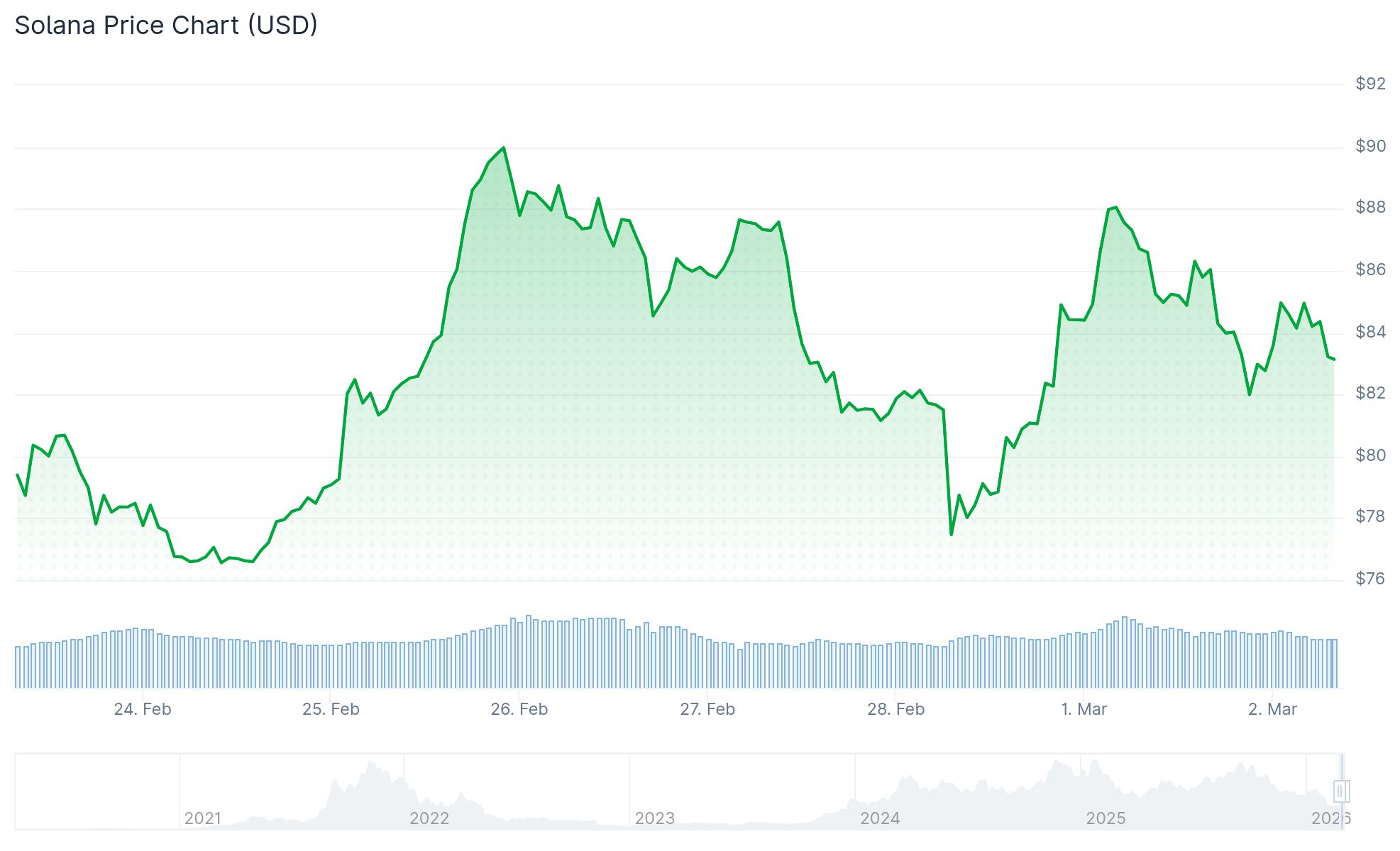
Solana (SOL) Price: Is a Breakout Coming After Four Weeks Stuck in the Same Range?

Solana (SOL) Price: Is a Breakout Coming After Four Weeks Stuck in the Same Range?

TLDR Solana (SOL) has traded in a tight $77–$88 range for nearly four weeks with no clear trend direction US spot Solana ETFs recorded over $44 million in weekly
Share
Coincentral2026/03/02 15:55
South Africa Tax Collector Deploys New Tech to Track Crypto and Offshore Assets

South Africa Tax Collector Deploys New Tech to Track Crypto and Offshore Assets

The post South Africa Tax Collector Deploys New Tech to Track Crypto and Offshore Assets appeared on BitcoinEthereumNews.com. South African crypto-asset service
Share
BitcoinEthereumNews2026/03/02 16:33
Crypto Futures Liquidation: Unpacking the Stunning $105 Million Market Shock

Crypto Futures Liquidation: Unpacking the Stunning $105 Million Market Shock

BitcoinWorld Crypto Futures Liquidation: Unpacking the Stunning $105 Million Market Shock The cryptocurrency market just experienced a sudden jolt, with a staggering $105 million worth of futures liquidated in a single hour. This dramatic event, part of a larger $311 million wipeout over the past 24 hours, has sent ripples across major exchanges. For many traders, this recent wave of crypto futures liquidation serves as a stark reminder of the inherent volatility and risks associated with leveraged trading in digital assets. What Exactly is Crypto Futures Liquidation? Understanding what happened requires a quick look at futures trading. A crypto futures contract is essentially an agreement to buy or sell a cryptocurrency at a predetermined price on a specified future date. Traders use these contracts to speculate on future price movements without owning the underlying asset. Leverage Amplifies Gains and Losses: Many traders utilize leverage, which means they borrow funds to increase their trading position beyond their initial capital. While leverage can magnify profits, it also significantly amplifies potential losses. Margin Calls and Forced Selling: When the market moves against a leveraged position, a trader’s margin (the collateral they put up) might fall below a required threshold. This triggers a “margin call,” where they need to add more funds. If they fail to do so, the exchange automatically closes their position to prevent further losses – this forced closure is known as crypto futures liquidation. The Recent $105 Million Crypto Futures Liquidation: What Triggered It? The recent surge in crypto futures liquidation, particularly the rapid $105 million in one hour, indicates a sharp and unexpected price movement. While the exact catalyst can be complex, such rapid liquidations often occur during: Sudden Price Swings: A rapid upward or downward movement in a major cryptocurrency’s price can quickly push many leveraged positions into unprofitable territory, leading to widespread liquidations. Market-Wide Sentiment Shifts: Unexpected news, regulatory announcements, or macroeconomic data can trigger a sudden shift in market sentiment, causing a cascade of selling or buying pressure. Over the past 24 hours, the total figure climbed to $311 million, highlighting a period of sustained volatility that caught many leveraged traders off guard. Why Does Leverage Play a Crucial Role in Futures Liquidation? Leverage is a double-edged sword. It allows traders to control large positions with relatively small amounts of capital. However, even a minor price fluctuation can have a significant impact on highly leveraged positions. When the market moves contrary to a trader’s bet, their equity can diminish rapidly. This is where the automatic liquidation mechanism kicks in. Exchanges implement this system to protect themselves and other traders from excessive losses. It ensures that a trader’s losses do not exceed their collateral, but it also means positions can be closed unexpectedly and quickly, contributing to the dramatic numbers seen in the recent crypto futures liquidation event. Navigating the Volatility: How Can Traders Prepare for Futures Liquidation Events? For those involved in or considering crypto futures trading, understanding and managing risk is paramount. The recent crypto futures liquidation serves as a powerful lesson. Here are some actionable insights: Use Lower Leverage: While tempting, high leverage dramatically increases risk. Opting for lower leverage significantly reduces the chance of premature liquidation. Implement Stop-Loss Orders: These orders automatically close a position if the price reaches a predetermined level, limiting potential losses before a full liquidation occurs. Manage Position Sizing: Never allocate too much of your portfolio to a single trade, especially a leveraged one. Diversification and responsible position sizing are key. Stay Informed: Keep abreast of market news, technical analysis, and global economic factors that could influence cryptocurrency prices. Beyond the Headlines: What Does This Mean for the Broader Crypto Market? While large-scale crypto futures liquidation events can be unsettling, they are a regular, albeit dramatic, feature of highly leveraged markets. Often, such events can “cleanse” the market of over-leveraged positions, potentially paving the way for more stable price action in the short term. However, they also underscore the need for caution and robust risk management practices, especially for new traders entering the volatile world of crypto futures. The recent $105 million liquidation is a stark reminder that while opportunities abound in crypto, so do significant risks. It emphasizes the importance of understanding the tools you’re using, especially leverage, and trading responsibly to protect your capital. Stay informed, manage your risks, and approach the market with a clear strategy. Frequently Asked Questions About Crypto Futures Liquidation Q1: What is the primary cause of crypto futures liquidation? A1: The primary cause is typically a sudden and significant price movement in the underlying cryptocurrency that goes against a trader’s leveraged position, causing their margin to fall below the exchange’s required maintenance level. Q2: How can traders avoid liquidation in futures trading? A2: Traders can reduce their risk of liquidation by using lower leverage, setting stop-loss orders to automatically close positions at a certain loss level, managing their position sizes responsibly, and continuously monitoring market conditions. Q3: Does liquidation only happen with leveraged positions? A3: Yes, liquidation specifically refers to the forced closure of a leveraged position when the trader’s collateral (margin) is insufficient to cover potential losses. Spot trading, where you own the asset outright, does not involve liquidation in the same manner. Q4: Is a crypto futures liquidation event bad for the entire market? A4: While immediate liquidations can cause further price volatility and negatively impact sentiment, some analysts view them as a “cleansing” event that removes excessive leverage from the market, potentially leading to a healthier, more stable environment in the long run. However, it certainly signifies a period of heightened risk. Q5: What is the difference between a margin call and liquidation? A5: A margin call is a notification from the exchange that your margin level is too low and you need to deposit more funds to maintain your position. Liquidation is what happens if you fail to meet that margin call; the exchange automatically closes your position to prevent further losses. Understanding market dynamics like crypto futures liquidation is crucial for navigating the cryptocurrency space. If you found this article insightful, please share it with your network on social media to help others better understand these significant market events and trade more responsibly. To learn more about the latest crypto market trends, explore our article on key developments shaping Bitcoin price action. This post Crypto Futures Liquidation: Unpacking the Stunning $105 Million Market Shock first appeared on BitcoinWorld.
Share
Coinstats2025/09/19 23:40