The post Single-family rent growth is starting to show new weakness appeared on BitcoinEthereumNews.com. A “For Rent” sign in front of a building in the Capitol Hill neighborhood of Washington, DC, US, on Tuesday, Aug. 12, 2025. Al Drago | Bloomberg | Getty Images A version of this article first appeared in the CNBC Property Play newsletter with Diana Olick. Property Play covers new and evolving opportunities for the real estate investor, from individuals to venture capitalists, private equity funds, family offices, institutional investors and large public companies. Sign up to receive future editions, straight to your inbox. After strengthening in the first half of this year, single-family home rents began to slow in July. This could be a sign that as the consumer struggles, landlords are going to have to move to meet them.  Single-family rent prices in July increased 2.3% from the same month last year, which is slower than the 3.1% average increase a year ago, according to the latest data from Cotality. Rent growth has now fallen below the lower end of the 10-year average range of pre-pandemic growth.  “After a strong start to the year, single-family rent growth is clearly losing steam,” said Molly Boesel, senior principal economist at Cotality. “In July, we broadly saw weakening in annual single-family rent growth across metro areas and price tiers.” Rent growth was just 0.2% higher in July compared with June, which is far below the historical July average monthly growth of 0.7%. That is a notable shift from monthly gains that had been stronger than usual earlier this year.  Get Property Play directly to your inbox CNBC’s Property Play with Diana Olick covers new and evolving opportunities for the real estate investor, delivered weekly to your inbox. Subscribe here to get access today. “Even markets like Los Angeles, which had been buoyed by post-wildfire demand, are now cooling off. Chicago stands out as… The post Single-family rent growth is starting to show new weakness appeared on BitcoinEthereumNews.com. A “For Rent” sign in front of a building in the Capitol Hill neighborhood of Washington, DC, US, on Tuesday, Aug. 12, 2025. Al Drago | Bloomberg | Getty Images A version of this article first appeared in the CNBC Property Play newsletter with Diana Olick. Property Play covers new and evolving opportunities for the real estate investor, from individuals to venture capitalists, private equity funds, family offices, institutional investors and large public companies. Sign up to receive future editions, straight to your inbox. After strengthening in the first half of this year, single-family home rents began to slow in July. This could be a sign that as the consumer struggles, landlords are going to have to move to meet them.  Single-family rent prices in July increased 2.3% from the same month last year, which is slower than the 3.1% average increase a year ago, according to the latest data from Cotality. Rent growth has now fallen below the lower end of the 10-year average range of pre-pandemic growth.  “After a strong start to the year, single-family rent growth is clearly losing steam,” said Molly Boesel, senior principal economist at Cotality. “In July, we broadly saw weakening in annual single-family rent growth across metro areas and price tiers.” Rent growth was just 0.2% higher in July compared with June, which is far below the historical July average monthly growth of 0.7%. That is a notable shift from monthly gains that had been stronger than usual earlier this year.  Get Property Play directly to your inbox CNBC’s Property Play with Diana Olick covers new and evolving opportunities for the real estate investor, delivered weekly to your inbox. Subscribe here to get access today. “Even markets like Los Angeles, which had been buoyed by post-wildfire demand, are now cooling off. Chicago stands out as…

Single-family rent growth is starting to show new weakness

A “For Rent” sign in front of a building in the Capitol Hill neighborhood of Washington, DC, US, on Tuesday, Aug. 12, 2025.

Al Drago | Bloomberg | Getty Images

A version of this article first appeared in the CNBC Property Play newsletter with Diana Olick. Property Play covers new and evolving opportunities for the real estate investor, from individuals to venture capitalists, private equity funds, family offices, institutional investors and large public companies. Sign up to receive future editions, straight to your inbox.

After strengthening in the first half of this year, single-family home rents began to slow in July. This could be a sign that as the consumer struggles, landlords are going to have to move to meet them. 

Single-family rent prices in July increased 2.3% from the same month last year, which is slower than the 3.1% average increase a year ago, according to the latest data from Cotality. Rent growth has now fallen below the lower end of the 10-year average range of pre-pandemic growth. 

“After a strong start to the year, single-family rent growth is clearly losing steam,” said Molly Boesel, senior principal economist at Cotality. “In July, we broadly saw weakening in annual single-family rent growth across metro areas and price tiers.”

Rent growth was just 0.2% higher in July compared with June, which is far below the historical July average monthly growth of 0.7%. That is a notable shift from monthly gains that had been stronger than usual earlier this year. 

Get Property Play directly to your inbox

CNBC’s Property Play with Diana Olick covers new and evolving opportunities for the real estate investor, delivered weekly to your inbox.

Subscribe here to get access today.

“Even markets like Los Angeles, which had been buoyed by post-wildfire demand, are now cooling off. Chicago stands out as the exception, leading the nation in rent growth amid tight inventory and resilient demand,” said Boesel. 

Looking just at the 10 largest metropolitan markets, Chicago was in the lead at 5.1% rent growth, and the New York City metropolitan area came in second at 3.7% growth. Philadelphia and Washington, D.C., followed, and while Los Angeles is slowing, it still rounds out the top five for rent growth. 

Dallas and Miami were the lowest of the 10, with Miami seeing no rent growth at all. Compare that to 2022, when pandemic-driven migration to the Suth caused Miami’s annual rent growth to soar 40%.

Rent growth also weakened at all price points. For high-end properties, national average rents increased 2.9% from a year ago, down from the 3.2% annual gain seen last July. The same trend was seen in low-end rents, which increased 1.6% annually in July, down from the 2.8% gain in July 2024.

Single-family rents had been doing much better than apartment rents over the last few years, as an enormous amount of supply came on the multifamily market. Single-family rentals were also in high demand due to the skyrocketing prices in the for-sale market. Families, which tend to be buyers, were opting for rental homes in good school districts instead. 

Single-family rental REITs, like Invitation Homes and American Homes 4 Rent, have actually been building more rental communities just to keep up with that demand, so it will be interesting to see if this latest weakening causes them to pull back. 

As Property Play noted in July, the largest single-family rental REITs were selling more homes than they were buying, according to a count by Parcl Labs. That, however, was because they were trying to consolidate away from standalone properties and more into full rental communities, some of which they were building. 

Source: https://www.cnbc.com/2025/09/23/single-family-rent-growth-is-starting-to-show-new-weakness.html

Disclaimer: The articles reposted on this site are sourced from public platforms and are provided for informational purposes only. They do not necessarily reflect the views of MEXC. All rights remain with the original authors. If you believe any content infringes on third-party rights, please contact service@support.mexc.com for removal. MEXC makes no guarantees regarding the accuracy, completeness, or timeliness of the content and is not responsible for any actions taken based on the information provided. The content does not constitute financial, legal, or other professional advice, nor should it be considered a recommendation or endorsement by MEXC.

You May Also Like

Pippin (PIPPIN) Price Prediction 2026–2030: Can PIPPIN Hit $0.70 Soon?

Pippin (PIPPIN) Price Prediction 2026–2030: Can PIPPIN Hit $0.70 Soon?

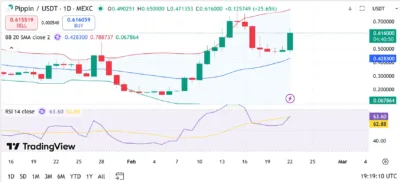
PIPPIN has surged sharply on the daily timeframe, printing a powerful bullish candle with over 25% gains. RSI is holding above 60, signaling strengthening momentum
Share
Coinstats2026/02/23 04:29
Will Cardano Reach $10 by 2030? Analysts Break Down ADA’s Growth Cycles

Will Cardano Reach $10 by 2030? Analysts Break Down ADA’s Growth Cycles

The post Will Cardano Reach $10 by 2030? Analysts Break Down ADA’s Growth Cycles appeared first on Coinpedia Fintech News Cardano (ADA) is trading at $0.9024 with a market cap of $32.91 billion. Experts say ADA has the potential to climb much higher, with some placing long-term targets as high as $10. The token continues to benefit from stronger visibility, rising liquidity, and increasing inflows from both institutional and retail markets. Can Cardano Hit $10 …
Share
CoinPedia2025/09/18 17:19
Crypto whale loses $6M to sneaky phishing scheme targeting staked Ethereum

Crypto whale loses $6M to sneaky phishing scheme targeting staked Ethereum

The post Crypto whale loses $6M to sneaky phishing scheme targeting staked Ethereum appeared on BitcoinEthereumNews.com. A crypto whale lost more than $6 million in staked Ethereum (stETH) and Aave-wrapped Bitcoin (aEthWBTC) after approving malicious signatures in a phishing scheme on Sept. 18, according to blockchain security firm Scam Sniffer. According to the firm, the attackers disguised their move as a routine wallet confirmation through “Permit” signatures, which tricked the victim into authorizing fund transfers without triggering obvious red flags. Yu Xian, founder of blockchain security company SlowMist, noted that the victim did not recognize the danger because the transaction required no gas fees. He wrote: “From the victim’s perspective, he just clicked a few times to confirm the wallet’s pop-up signature requests, didn’t spend a single penny of gas, and $6.28 million was gone.” How Permit exploits work Permit approvals were originally designed to simplify token transfers. Instead of submitting an on-chain approval and paying fees, a user can sign an off-chain message authorizing a spender. That efficiency, however, has created a new attack surface for malicious players. Once a user signs such a permit, attackers can combine two functions—Permit and TransferFrom—to drain assets directly. Because the authorization takes place off-chain, wallet dashboards show no unusual activity until the funds move. As a result, the assets are gone when the approval executes on-chain, and tokens are redirected to the attacker’s wallet. This loophole has made permit exploits increasingly attractive for malicious actors, who can siphon millions without needing complex hacks or high-cost gas wars. Phishing losses The latest theft highlights a wider trend of escalating phishing campaigns. Scam Sniffer reported that in August alone, attackers stole $12.17 million from more than 15,200 victims. That figure represented a 72% jump in losses compared with July. According to the firm, the most significant share of August’s damages came from three large accounts that accounted for nearly half…
Share
BitcoinEthereumNews2025/09/19 02:31