

Top Crypto Presales in 2025: $BFX Raises $8.5M While SUBBD, Space Pay, Unstaked, and Lightchain Chase 100x Gains


That’s exactly what BlockchainFX ($BFX) is building, and its presale already has over $8.5 million raised to prove investors are taking notice. It’s being talked about among the top crypto presales and for good reason—it blends meme-coin energy with institutional-grade mechanics.
Elsewhere, SUBBD, Space Pay, Unstaked, and Lightchain are making noise in their corners of the market, promising fresh ideas and intriguing presale structures. Yet none of them can match the presale excitement building around $BFX.
This article will cover the developments and updates of BlockchainFX ($BFX), SUBBD, Space Pay, Unstaked, and Lightchain.
BlockchainFX: Daily Rewards and Real-World Spending
At its core, BlockchainFX ($BFX) transforms the way investors think about token holding. Up to 70% of trading fees generated across its 500+ assets, crypto, forex, stocks, ETFs, and commodities—flow back to token holders as rewards. Payments arrive in both BFX and USDT, offering a blend of growth potential and stable returns.
Beyond that, $BFX integrates a Visa Card, giving holders the ability to spend rewards instantly anywhere Visa is accepted. This feature pushes BlockchainFX beyond speculation and into practical, everyday use, setting it apart as one of the best crypto presales this year.
BlockchainFX: Deflationary Design for Long-Term Strength
BlockchainFX isn’t only about rewards; it’s also about longevity. Unsold tokens are set to be burned, and liquidity will be locked post-launch. With a total supply capped at 3.5 billion, scarcity is engineered directly into the project. Combined with external audits by Coinsult and CertiK and KYC verification by Solidproof, $BFX is positioning itself as a trustworthy bridge between DeFi and traditional finance.
BlockchainFX Presale Numbers and $5,000 Scenario
The presale is live at $0.026, with a $0.05 listing price already in place. More than $8.5M has been raised, and momentum is accelerating as early buyers secure allocations before the final stages.
$5,000 Investment Scenario
- Presale Price: $0.026
- Tokens Purchased (without bonus): 192,307 $BFX
- With OCT35 Bonus (+35%): +67,307 $BFX
- Total Tokens: 259,614 $BFX
- Value at Listing ($0.05): $12,980
- Profit at Listing: $7,980
- Value at $1 Prediction: $259,614
This math demonstrates why BlockchainFX is being viewed as a top crypto to buy in 2025, even moderate allocations could scale dramatically if $BFX climbs toward $1.
A $500,000 Giveaway Adding Momentum
BlockchainFX has supercharged its presale with a $500,000 giveaway, where 20 winners will share the prize pool: $250,000 for 1st place, $100,000 for 2nd, $50,000 for 3rd, $30,000 for 4th, $20,000 for 5th, $10,000 each for 6th–10th, and $1,000 each for 11th–20th. Entry is straightforward—buy BFX, leave a TrustPilot review, repost on X, join Telegram, or share content on Reddit and TikTok. The giveaway officially activates once the presale sells out, adding urgency to secure early positions.

👉 Buy BlockchainFX today with code OCT35 and secure your share in the best crypto presale 2025 before the next price rise.
SUBBD: A Fresh Approach to Tokenized Communities
SUBBD is drawing attention with its focus on subscription-based decentralized communities, allowing creators to earn directly while rewarding subscribers for loyalty. This model reduces reliance on centralized platforms and offers a unique way to keep value within communities.
Yet, it lacks the institutional audits and real-world payment features that set BlockchainFX ($BFX) apart. Without trusted verification or Visa card integration, SUBBD remains more of a niche experiment, while $BFX delivers both innovation and practical, scalable utility.
Space Pay: Payments for a Digital Future
Space Pay aims to be a next-generation payments solution, promising instant speed, zero-fee transfers, and scalability for online and offline retail. Its vision appeals to those seeking cheaper, faster alternatives to traditional processors.
Still, the project is in its infancy, with most features untested. Unlike BlockchainFX ($BFX), which already offers real-world Visa card integration, Space Pay lacks proven partnerships, making $BFX the stronger choice for immediate utility.
Unstaked: High-Yield Staking on Steroids
Unstaked positions itself as a solution to low staking yields, using DeFi protocols to promise double-digit returns that appeal to investors seeking higher passive income. This approach has sparked early interest among communities frustrated with the modest percentages offered by traditional staking platforms.
The concern, however, lies in its long-term viability. High DeFi yields often bring risks such as volatility, liquidity issues, or contract vulnerabilities. By contrast, BlockchainFX ($BFX) delivers revenue-backed daily rewards from its multi-asset trading platform, offering both transparency and stability, making it a stronger choice for consistent, long-term growth.
Lightchain: Low-Energy Blockchain Solutions
Lightchain positions itself as an eco-friendly blockchain, emphasizing minimal energy consumption to appeal to environmentally conscious investors. By branding its token as a green alternative, it taps into the growing demand for sustainable crypto solutions, aiming to stand out in a market where environmental impact has become a major concern.
However, despite its strong narrative, Lightchain currently lacks the direct real-world utility that makes other projects more compelling. Unlike BlockchainFX ($BFX), which already offers Visa card integration for everyday spending, Lightchain’s value remains largely conceptual, leaving investors waiting for tangible applications to back its eco-friendly vision.

Why BlockchainFX Presale Is the Clear Choice
Joining the BlockchainFX presale is a win-win situation. Unlike speculative tokens that rely solely on hype, $BFX combines strong tokenomics, institutional audits, and real-world utility. Investors benefit from both daily rewards and long-term scarcity, making it structurally stronger than many competitors.
Compared with SUBBD, Space Pay, Unstaked, and Lightchain, BlockchainFX is the only project offering immediate financial use via a Visa card, plus a $500,000 giveaway that multiplies its allure. For anyone searching for the top crypto coins right now, $BFX leads the list.
Conclusion
SUBBD, Space Pay, Unstaked, and Lightchain all bring fresh concepts to the presale arena. Each has its unique appeal, from community-driven economies to eco-friendly solutions.
Yet the presale buzz belongs to BlockchainFX ($BFX). With $8.5M raised, a $0.026 entry price, Visa integration, daily rewards, and a half-million-dollar giveaway, it stands as the top crypto presale and arguably the top crypto to buy in 2025. Investors who missed previous 100x moments may not want to overlook this one.
Find Out More Information Here:
Website: https://blockchainfx.com/
X: https://x.com/BlockchainFX.com
Telegram Chat: https://t.me/blockchainfx_chat
FAQs
Q1: What is the presale price of $BFX?
The current price is $0.026, with a $0.05 listing target.
Q2: How does BlockchainFX reward its investors?
Up to 70% of trading fees are distributed daily in BFX and USDT.
Q3: What makes BlockchainFX different from other presales?
Real-world Visa card utility, deflationary tokenomics, and institutional audits.
Q4: How can investors join the $500,000 giveaway?
By buying tokens and completing simple tasks like reposting on X or leaving reviews.
Q5: Why is BlockchainFX considered a top crypto to buy in 2025?
Because it blends presale upside with structural rewards and tangible financial use cases.
This publication is sponsored. Coindoo does not endorse or assume responsibility for the content, accuracy, quality, advertising, products, or any other materials on this page. Readers are encouraged to conduct their own research before engaging in any cryptocurrency-related actions. Coindoo will not be liable, directly or indirectly, for any damages or losses resulting from the use of or reliance on any content, goods, or services mentioned. Always do your own research.
The post Top Crypto Presales in 2025: $BFX Raises $8.5M While SUBBD, Space Pay, Unstaked, and Lightchain Chase 100x Gains appeared first on Coindoo.
You May Also Like

The Stunning ASEAN Winner Emerges As Manufacturing Shifts Accelerate
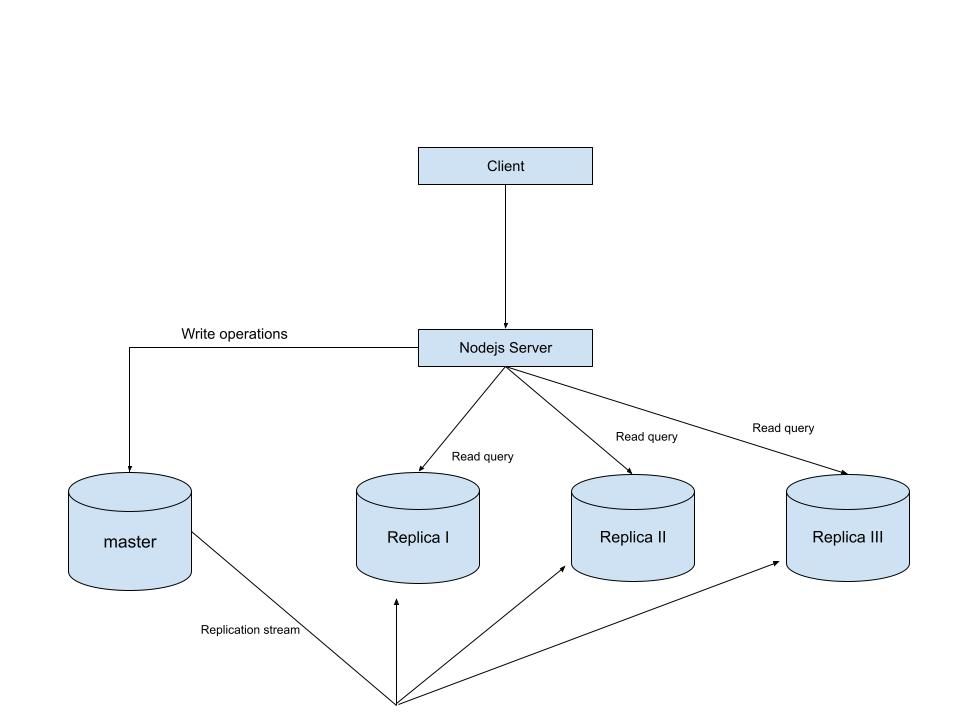
MySQL Single Leader Replication with Node.js and Docker
command: --server-id=1 --log-bin=ON The --server-id option gives each MySQL server in your replication setup its own name tag. Each one has to be unique and without it, replication won’t work at all. Another cool option not included here is binlog_format=ROW. This tells MySQL how to keep track of changes before passing them along to the replicas. By default, MySQL already uses row-based replication, but you can explicitly set it to ROW to be sure or switch it to STATEMENT if you’d rather log the actual SQL statements instead of row-by-row changes. \ Run our containers on docker Now, in the terminal, we can run the following command to spin up our database containers: docker-compose up -d \ Setting Up Our Master (Primary) Server To configure our master server, we would have to first access the running instance on docker using the following command docker exec -it mysql-master bash This command opens an interactive Bash shell inside the running Docker container named mysql-master, allowing us to run commands directly inside that container. \ Now that we’re inside the container, we can access the MySQL server and start running commands. type: mysql -uroot -p This will log you into MySQL as the root user. You’ll be prompted to enter the password you set in your docker-compose.yml file. \ Next, we need to create a special user that our replicas will use to connect to the master server and pull data. Inside the MySQL prompt, run the following commands: \ CREATE USER 'repl_user'@'%' IDENTIFIED BY 'replication_pass'; GRANT REPLICATION SLAVE ON . TO 'repl_user'@'%'; FLUSH PRIVILEGES; Here’s what’s happening: CREATE USER makes a new MySQL user called repl_user with the password replication_pass. GRANT REPLICATION SLAVE gives this user permission to act as a replication client. FLUSH PRIVILEGES tells MySQL to reload the user permissions so they take effect immediately. \ Time to Configure the Replica (Secondary) Servers a. First, let’s access the replica containers the same way we did with the master. Run this command in your terminal for each of the replica containers: \ docker exec -it <replica_container_name> bash mysql -uroot -p <replica_container_name> should be replace with the name of the replica container you are trying to setup b. Now it’s time to tell our replica where to get its data from. While inside the replica’s MySQL shell, run the following command to configure replication using the master’s details: CHANGE REPLICATION SOURCE TO SOURCE_HOST='mysql-master', SOURCE_USER='repl_user', SOURCE_PASSWORD='replication_pass', GET_SOURCE_PUBLIC_KEY=1; With the replication settings in place, let’s fire up the replica and get it syncing with the master. Still inside the MySQL shell on the replica, run: START REPLICA; This starts the replication process. To make sure everything is working, check the replica’s status with:
SHOW REPLICA STATUS\G; Look for Replica_IO_Running and Replica_SQL_Running — if both say Yes, congratulations! 🎉 Your replica is now successfully connected to the master and replicating data in real time.
Testing Our Replication Setup from the Node.js App Now that our replication is successfully set up, we can configure our Node.js server to observe the real-time effect of data being replicated from the master server to the replica server whenever we write to it. We start by installing the following dependencies:
npm i express mysql2 sequelize \ Now create a folder called src in the root directory and add the following files inside that folder connection.js, index.js and model.js. Our current directory should look like this We can now set up our connections to our master and replica server in the connection.js file as shown below
const Sequelize = require("sequelize"); const sequelize = new Sequelize({ dialect: "mysql", replication: { write: { host: "127.0.0.1", username: "root", password: "master", database: "replicaDb", }, read: [ { host: "127.0.0.1", username: "root", password: "slave", database: "replicaDb", port: 3307 }, { host: "127.0.0.1", username: "root", password: "slave", database: "replicaDb", port: 3308 }, { host: "127.0.0.1", username: "root", password: "slave", database: "replicaDb", port: 3309 }, ], }, }); async function connectdb() { try { await sequelize.authenticate(); } catch (error) { console.error("❌ unable to connect to the follower database", error); } } connectdb(); module.exports = { sequelize, }; \ We can now create a User table in the model.js file
const {DataTypes} = require("sequelize"); const { sequelize } = require("./connection"); const User = sequelize.define("User", { name: { type: DataTypes.STRING, allowNull: false, }, email: { type: DataTypes.STRING, unique: true, allowNull: false, }, }); module.exports = User \ and finally in our index.js file we can start our server and listen for connections on port 3000. from the code sample below, all inserts or updates will be routed by sequelize to the master server. while all read queries will be routed to the read replicas.
const express = require("express"); const { sequelize } = require("./connection"); const User = require("./model"); const app = express(); app.use(express.json()); async function main() { await sequelize.sync({ alter: true }); app.get("/", (req, res) => { res.status(200).json({ message: "first step to setting server up", }); }); app.post("/user", async (req, res) => { const { email, name } = req.body; let newUser = await User.build({ name, email, }); // This INSERT will go to the write (master) connection newUser = newUser.save({ returning: false }); res.status(201).json({ message: "User successfully created", }); }); app.get("/user", async (req, res) => { // This SELECT query will go to one of the read replicas const users = await User.findAll(); res.status(200).json(users); }); app.listen(3000, () => { console.log("server has connected"); }); } main(); When you make a POST request to the /users endpoint, take a moment to check both the master and replica servers to observe how data is replicated in real time. Right now, we are relying on Sequelize to automatically route requests, which works for development but isn’t robust enough for a production environment. In particular, if the master node goes down, Sequelize cannot automatically redirect requests to a newly elected leader. In the next part of this series, we’ll explore strategies to handle these challenges
