The post UK Crypto Investors May Still Owe Taxes Despite No HMRC Warning Letter appeared on BitcoinEthereumNews.com. UK crypto investors could face tax bills even if they haven’t received warning letters from HM Revenue & Customs (HMRC), as the agency steps up efforts to track undeclared digital asset income. Last week, the Financial Times revealed that HMRC issued nearly 65,000 “nudge letters” in the 2024–25 tax year, more than double the number sent the year before. The letters urge investors to review their filings and voluntarily declare crypto-related gains before potential audits begin. However, tax experts warn that the agency’s growing use of exchange data and international reporting agreements means that investors who haven’t received a letter shouldn’t assume they’re in the clear. “Not reporting cryptocurrency transactions to HMRC is illegal, regardless of whether you’ve been contacted yet,” Andrew Duca, founder of the crypto tax platform Awaken Tax, told Cointelegraph. “So even if you haven’t received a warning letter, the fact that HMRC has issued so many this year should serve as a wake-up call,” he added. Duca noted that HMRC typically identifies noncompliance by comparing bank records, exchange data, and self-assessment forms. Discrepancies, such as undeclared deposits or transfers, can trigger letters or formal investigations. Higher earners and investors with large onchain portfolios are especially likely to be targeted as data sharing between exchanges and regulators increases, he said. Example of a previous nudge letter sent in 2024. Source: kc-usercontent Related: How to file crypto taxes in 2025 (US, UK, Germany guide) HMRC tightens crypto oversight Exchanges operating in the UK and those serving UK customers abroad are legally required to provide transaction data to HMRC. With the OECD’s Crypto-Asset Reporting Framework (CARF) set to take effect in 2026, the agency will gain automatic access to information from global trading platforms. “It’s far better to be proactive and report on your activity now, rather than wait for HMRC… The post UK Crypto Investors May Still Owe Taxes Despite No HMRC Warning Letter appeared on BitcoinEthereumNews.com. UK crypto investors could face tax bills even if they haven’t received warning letters from HM Revenue & Customs (HMRC), as the agency steps up efforts to track undeclared digital asset income. Last week, the Financial Times revealed that HMRC issued nearly 65,000 “nudge letters” in the 2024–25 tax year, more than double the number sent the year before. The letters urge investors to review their filings and voluntarily declare crypto-related gains before potential audits begin. However, tax experts warn that the agency’s growing use of exchange data and international reporting agreements means that investors who haven’t received a letter shouldn’t assume they’re in the clear. “Not reporting cryptocurrency transactions to HMRC is illegal, regardless of whether you’ve been contacted yet,” Andrew Duca, founder of the crypto tax platform Awaken Tax, told Cointelegraph. “So even if you haven’t received a warning letter, the fact that HMRC has issued so many this year should serve as a wake-up call,” he added. Duca noted that HMRC typically identifies noncompliance by comparing bank records, exchange data, and self-assessment forms. Discrepancies, such as undeclared deposits or transfers, can trigger letters or formal investigations. Higher earners and investors with large onchain portfolios are especially likely to be targeted as data sharing between exchanges and regulators increases, he said. Example of a previous nudge letter sent in 2024. Source: kc-usercontent Related: How to file crypto taxes in 2025 (US, UK, Germany guide) HMRC tightens crypto oversight Exchanges operating in the UK and those serving UK customers abroad are legally required to provide transaction data to HMRC. With the OECD’s Crypto-Asset Reporting Framework (CARF) set to take effect in 2026, the agency will gain automatic access to information from global trading platforms. “It’s far better to be proactive and report on your activity now, rather than wait for HMRC…

UK Crypto Investors May Still Owe Taxes Despite No HMRC Warning Letter

For feedback or concerns regarding this content, please contact us at crypto.news@mexc.com

UK crypto investors could face tax bills even if they haven’t received warning letters from HM Revenue & Customs (HMRC), as the agency steps up efforts to track undeclared digital asset income.

Last week, the Financial Times revealed that HMRC issued nearly 65,000 “nudge letters” in the 2024–25 tax year, more than double the number sent the year before. The letters urge investors to review their filings and voluntarily declare crypto-related gains before potential audits begin.

However, tax experts warn that the agency’s growing use of exchange data and international reporting agreements means that investors who haven’t received a letter shouldn’t assume they’re in the clear.

“Not reporting cryptocurrency transactions to HMRC is illegal, regardless of whether you’ve been contacted yet,” Andrew Duca, founder of the crypto tax platform Awaken Tax, told Cointelegraph. “So even if you haven’t received a warning letter, the fact that HMRC has issued so many this year should serve as a wake-up call,” he added.

Duca noted that HMRC typically identifies noncompliance by comparing bank records, exchange data, and self-assessment forms. Discrepancies, such as undeclared deposits or transfers, can trigger letters or formal investigations.

Higher earners and investors with large onchain portfolios are especially likely to be targeted as data sharing between exchanges and regulators increases, he said.

Example of a previous nudge letter sent in 2024. Source: kc-usercontent

Related: How to file crypto taxes in 2025 (US, UK, Germany guide)

HMRC tightens crypto oversight

Exchanges operating in the UK and those serving UK customers abroad are legally required to provide transaction data to HMRC. With the OECD’s Crypto-Asset Reporting Framework (CARF) set to take effect in 2026, the agency will gain automatic access to information from global trading platforms.

“It’s far better to be proactive and report on your activity now, rather than wait for HMRC to pull you up on it,” Duca said.

He noted that crypto activity becomes taxable not only when digital assets are converted to pounds, but also when they’re swapped between tokens or generate income through staking, airdrops, or yield farming. Only purchases made with fiat currency or transfers between personal wallets are exempt.

To calculate gains, HMRC applies a three-tier “spooling” method. This includes assessing same-day trades first, then transactions within a 30-day window, and finally using an average cost for older purchases. For active traders, this process can become highly complex, and Duca recommends using specialist tax software designed for crypto reporting.

Related: New York State senator proposes tax on crypto mining energy use

What to do if contacted

Duca said investors who receive an HMRC letter are best advised to seek professional advice immediately. Specialist accountants can help prepare accurate transaction reports and negotiate with the tax office if underpayment is discovered. Failure to respond may lead to penalties or further investigation.

“Using crypto tax software will also help you to generate accurate reports of all your activity as accurately and efficiently as possible,” Duca said. “Lastly, you need to be prepared to pay. If you owe taxes, you’ll need to settle them.”

Duca added that decentralized exchanges (DEXs) and cold wallets are not exempt from HMRC reporting requirements. “You are legally required to report on all DEX transactions, cold wallet activity and hot wallet transfers,” he said.

Meanwhile, in the US, senators are exploring updates to crypto tax policy, including exempting small transactions from taxation and clarifying how staking rewards are treated.

During a Senate Finance Committee hearing earlier this month, lawmakers debated whether everyday crypto payments should trigger capital gains tax and how to fairly classify income generated from staking services. Coinbase’s vice president of tax, Lawrence Zlatkin, urged Congress to adopt a de minimis exemption for crypto transactions under $300.

Magazine: Back to Ethereum — How Synthetix, Ronin and Celo saw the light

Source: https://cointelegraph.com/news/uk-crypto-investors-tax-hmrc-warning-letters-2025?utm_source=rss_feed&utm_medium=feed&utm_campaign=rss_partner_inbound

Disclaimer: The articles reposted on this site are sourced from public platforms and are provided for informational purposes only. They do not necessarily reflect the views of MEXC. All rights remain with the original authors. If you believe any content infringes on third-party rights, please contact crypto.news@mexc.com for removal. MEXC makes no guarantees regarding the accuracy, completeness, or timeliness of the content and is not responsible for any actions taken based on the information provided. The content does not constitute financial, legal, or other professional advice, nor should it be considered a recommendation or endorsement by MEXC.

You May Also Like

Tether Backs Ark Labs’ $5.2 Million Bet on Bitcoin’s Stablecoin Revival

Tether Backs Ark Labs’ $5.2 Million Bet on Bitcoin’s Stablecoin Revival

The post Tether Backs Ark Labs’ $5.2 Million Bet on Bitcoin’s Stablecoin Revival appeared on BitcoinEthereumNews.com. In brief Ark Labs secured backing from Tether
Share
BitcoinEthereumNews2026/03/12 21:44
MySQL Single Leader Replication with Node.js and Docker

MySQL Single Leader Replication with Node.js and Docker

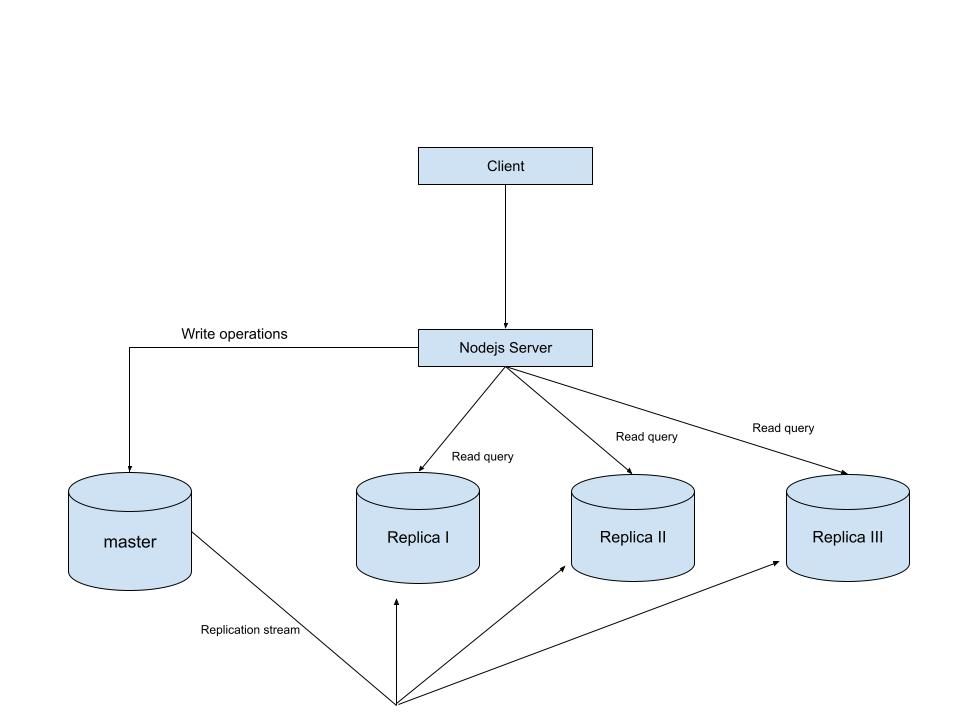
Modern applications demand high availability and the ability to scale reads without compromising performance. One of the most common strategies to achieve this is Replication. In this setup, we configured a single database to act as the leader (master) and handle all write operations, while three replicas handle read operations. In this article, we’ll walk through how to set up MySQL single-leader replication on your local machine using Docker. Once the replication is working, we’ll connect it to a Node.js application using Sequelize ORM, so that reads are routed to the replica and writes go to the master. By the end, you’ll have a working environment where you can see replication in real time Prerequisites knowledge of database replication Background knowledge of docker and docker compose Background knowledge of Nodejs and how to run a NodeJS server An Overview of what we are building Setup Setup our database servers on docker compose in the root of our project directory, create a file named docker-compose.yml with the following content to setup our mysql primary and replica databases. \ \ name: "learn-replica" volumes: mysqlMasterDatabase: mysqlSlaveDatabase: mysqlSlaveDatabaseII: mysqlSlaveDatabaseIII: networks: mysql-replication-network: services: mysql-master: image: mysql:latest container_name: mysql-master command: --server-id=1 --log-bin=ON environment: MYSQL_ROOT_PASSWORD: master MYSQL_DATABASE: replicaDb ports: - "3306:3306" volumes: - mysqlMasterDatabase:/var/lib/mysql networks: - mysql-replication-network mysql-slave: image: mysql:latest container_name: mysql-slave command: --server-id=2 --log-bin=ON environment: MYSQL_ROOT_PASSWORD: slave MYSQL_DATABASE: replicaDb MYSQL_ROOT_HOST: "%" ports: - "3307:3306" volumes: - mysqlSlaveDatabase:/var/lib/mysql depends_on: - mysql-master networks: - mysql-replication-network mysql-slaveII: image: mysql:latest container_name: mysql-slaveII command: --server-id=2 --log-bin=ON environment: MYSQL_ROOT_PASSWORD: slave MYSQL_DATABASE: replicaDb MYSQL_ROOT_HOST: "%" ports: - "3308:3306" volumes: - mysqlSlaveDatabaseII:/var/lib/mysql depends_on: - mysql-master networks: - mysql-replication-network mysql-slaveIII: image: mysql:latest container_name: mysql-slaveIII command: --server-id=3 --log-bin=ON environment: MYSQL_ROOT_PASSWORD: slave MYSQL_DATABASE: replicaDb MYSQL_ROOT_HOST: "%" ports: - "3309:3306" volumes: - mysqlSlaveDatabaseIII:/var/lib/mysql depends_on: - mysql-master networks: - mysql-replication-network In this setup, I’m creating a master database container called mysql-master and 3 replica containers called mysql-slave, mysql-slaveII and mysql-slaveIII. I won’t go too deep into the docker-compose.yml file since it’s just a basic setup, but I do want to walk you through the command line instructions used in all four services because that’s where things get interesting.
command: --server-id=1 --log-bin=ON The --server-id option gives each MySQL server in your replication setup its own name tag. Each one has to be unique and without it, replication won’t work at all. Another cool option not included here is binlog_format=ROW. This tells MySQL how to keep track of changes before passing them along to the replicas. By default, MySQL already uses row-based replication, but you can explicitly set it to ROW to be sure or switch it to STATEMENT if you’d rather log the actual SQL statements instead of row-by-row changes. \ Run our containers on docker Now, in the terminal, we can run the following command to spin up our database containers: docker-compose up -d \ Setting Up Our Master (Primary) Server To configure our master server, we would have to first access the running instance on docker using the following command docker exec -it mysql-master bash This command opens an interactive Bash shell inside the running Docker container named mysql-master, allowing us to run commands directly inside that container. \ Now that we’re inside the container, we can access the MySQL server and start running commands. type: mysql -uroot -p This will log you into MySQL as the root user. You’ll be prompted to enter the password you set in your docker-compose.yml file. \ Next, we need to create a special user that our replicas will use to connect to the master server and pull data. Inside the MySQL prompt, run the following commands: \ CREATE USER 'repl_user'@'%' IDENTIFIED BY 'replication_pass'; GRANT REPLICATION SLAVE ON . TO 'repl_user'@'%'; FLUSH PRIVILEGES; Here’s what’s happening: CREATE USER makes a new MySQL user called repl_user with the password replication_pass. GRANT REPLICATION SLAVE gives this user permission to act as a replication client. FLUSH PRIVILEGES tells MySQL to reload the user permissions so they take effect immediately. \ Time to Configure the Replica (Secondary) Servers a. First, let’s access the replica containers the same way we did with the master. Run this command in your terminal for each of the replica containers: \ docker exec -it <replica_container_name> bash mysql -uroot -p <replica_container_name> should be replace with the name of the replica container you are trying to setup b. Now it’s time to tell our replica where to get its data from. While inside the replica’s MySQL shell, run the following command to configure replication using the master’s details: CHANGE REPLICATION SOURCE TO SOURCE_HOST='mysql-master', SOURCE_USER='repl_user', SOURCE_PASSWORD='replication_pass', GET_SOURCE_PUBLIC_KEY=1; With the replication settings in place, let’s fire up the replica and get it syncing with the master. Still inside the MySQL shell on the replica, run: START REPLICA; This starts the replication process. To make sure everything is working, check the replica’s status with:
SHOW REPLICA STATUS\G; Look for Replica_IO_Running and Replica_SQL_Running — if both say Yes, congratulations! 🎉 Your replica is now successfully connected to the master and replicating data in real time.
Testing Our Replication Setup from the Node.js App Now that our replication is successfully set up, we can configure our Node.js server to observe the real-time effect of data being replicated from the master server to the replica server whenever we write to it. We start by installing the following dependencies:
npm i express mysql2 sequelize \ Now create a folder called src in the root directory and add the following files inside that folder connection.js, index.js and model.js. Our current directory should look like this We can now set up our connections to our master and replica server in the connection.js file as shown below
const Sequelize = require("sequelize"); const sequelize = new Sequelize({ dialect: "mysql", replication: { write: { host: "127.0.0.1", username: "root", password: "master", database: "replicaDb", }, read: [ { host: "127.0.0.1", username: "root", password: "slave", database: "replicaDb", port: 3307 }, { host: "127.0.0.1", username: "root", password: "slave", database: "replicaDb", port: 3308 }, { host: "127.0.0.1", username: "root", password: "slave", database: "replicaDb", port: 3309 }, ], }, }); async function connectdb() { try { await sequelize.authenticate(); } catch (error) { console.error("❌ unable to connect to the follower database", error); } } connectdb(); module.exports = { sequelize, }; \ We can now create a User table in the model.js file
const {DataTypes} = require("sequelize"); const { sequelize } = require("./connection"); const User = sequelize.define("User", { name: { type: DataTypes.STRING, allowNull: false, }, email: { type: DataTypes.STRING, unique: true, allowNull: false, }, }); module.exports = User \ and finally in our index.js file we can start our server and listen for connections on port 3000. from the code sample below, all inserts or updates will be routed by sequelize to the master server. while all read queries will be routed to the read replicas.
const express = require("express"); const { sequelize } = require("./connection"); const User = require("./model"); const app = express(); app.use(express.json()); async function main() { await sequelize.sync({ alter: true }); app.get("/", (req, res) => { res.status(200).json({ message: "first step to setting server up", }); }); app.post("/user", async (req, res) => { const { email, name } = req.body; let newUser = await User.build({ name, email, }); // This INSERT will go to the write (master) connection newUser = newUser.save({ returning: false }); res.status(201).json({ message: "User successfully created", }); }); app.get("/user", async (req, res) => { // This SELECT query will go to one of the read replicas const users = await User.findAll(); res.status(200).json(users); }); app.listen(3000, () => { console.log("server has connected"); }); } main(); When you make a POST request to the /users endpoint, take a moment to check both the master and replica servers to observe how data is replicated in real time. Right now, we are relying on Sequelize to automatically route requests, which works for development but isn’t robust enough for a production environment. In particular, if the master node goes down, Sequelize cannot automatically redirect requests to a newly elected leader. In the next part of this series, we’ll explore strategies to handle these challenges
Share
Hackernoon2025/09/18 14:44
Nvidia shares fall 3%

Nvidia shares fall 3%

The post Nvidia shares fall 3% appeared on BitcoinEthereumNews.com. Home » AI » Nvidia shares fall 3% Chipmaker extends decline as investors continue to take profits from recent highs. Photo: Budrul Chukrut/SOPA Images/LightRocket via Getty Images Key Takeaways Nvidia’s stock decreased by 3% today. The decline extends Nvidia’s recent losing streak. Nvidia shares fell 3% today, extending the chipmaker’s recent decline. The stock dropped further during trading as the artificial intelligence chip leader continued its pullback from recent highs. Disclaimer Source: https://cryptobriefing.com/nvidia-shares-fall-2-8/
Share
BitcoinEthereumNews2025/09/18 03:13