

CME Group to Launch Bitcoin Volatility Futures on June 1
CME Group is set to launch Bitcoin volatility futures on June 1, introducing a new derivatives contract that lets traders take positions on Bitcoin’s price swings rather than its spot direction.
What CME Group Is Launching on June 1
The product, listed under CME Group’s cryptocurrency futures offerings, represents a distinct category from standard Bitcoin futures. Rather than tracking the price of Bitcoin itself, volatility futures allow market participants to trade expectations about how much Bitcoin’s price will move over a given period.
The distinction matters. A trader holding volatility futures profits when Bitcoin’s price swings intensify, regardless of whether the move is up or down. This makes the product useful for hedging portfolios against sudden market turbulence or for speculating on periods of calm versus chaos.
Why Bitcoin Volatility Futures Matter
CME Group operates one of the largest regulated derivatives exchanges in the world. Its existing Bitcoin futures, launched in 2017, became a benchmark for institutional participation in crypto markets. A volatility-specific contract builds on that foundation.
Volatility products tend to attract attention during uncertain market conditions, when traders need tools to manage risk exposure beyond simple long or short positions. The launch comes as Bitcoin derivatives markets continue expanding, with institutional players increasingly seeking regulated instruments, a trend also visible in moves like Galaxy and State Street’s recent tokenized fund launch.
For institutional desks already active in CME’s Bitcoin futures, a volatility contract adds a layer of precision. Portfolio managers can isolate volatility risk from directional risk, a capability that traditional equity markets have had through products like the VIX for decades.
What Traders Should Watch After the Launch
The first weeks of trading will reveal whether the product gains meaningful traction. Early liquidity and open interest will be the clearest signals of institutional appetite. New futures contracts often start with thin order books, and it can take months before spreads tighten enough to attract larger participants.
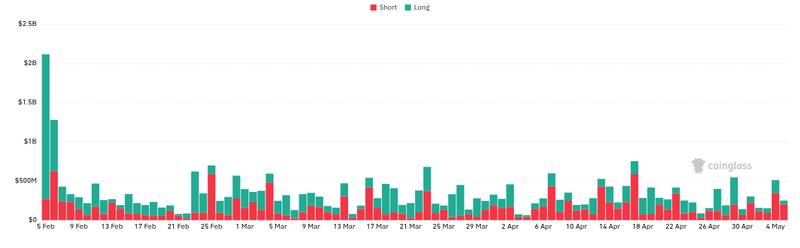 CoinGlass derivatives screen showing the positioning backdrop around bitcoin.
CME’s regulatory filings for the contract suggest the exchange is targeting the same institutional audience that drives volume in its existing crypto derivatives suite. The broader digital asset industry continues restructuring around institutional demand, as seen in Coinbase’s recent workforce realignment toward AI-driven operations.
Whether the contract expands Bitcoin derivatives coverage in a meaningful way depends on adoption from hedgers currently using the options market. If volatility futures reduce friction for firms managing large Bitcoin positions, they could become a core risk tool, particularly as concerns around large-scale DeFi exploits continue to shape how institutions approach crypto exposure.
The June 1 launch date gives market participants roughly four weeks to prepare. Traders considering the product should monitor CME’s contract specifications and margin requirements as the exchange finalizes details ahead of the first trading session.
Disclaimer: This article is for informational purposes only and does not constitute financial or investment advice. Cryptocurrency and digital asset markets carry significant risk. Always do your own research before making decisions.


You May Also Like

From Telegram to Terminal: Banana Gun’s Pro Platform Hits Ethereum as User Base Surpasses One Million

Pepe Coin is Predicted to Drop to $ 0.000003 By May 10, 2026




