

PAPSS: Wamkele Mene and Ernest Mbenkum on Africa’s bold break from the global dollar standard
Africa’s most ambitious payments experiment is no longer theoretical. It is live, scaling, and beginning to break long-standing dependencies defined by a colonial hangover: the inability of neighbours to trade without routing money through New York, Paris, or London.
It is a system that His Excellency Wamkele Mene, Secretary-General of the AfCFTA Secretariat, describes not just as inefficient but as a structural tax on the continent’s existence.
“Our continent loses an estimated $5 billion every year in currency conversion alone,” Mene told the conference delegates. “When two African traders must rely on the USD or Euro, the cost of doing business rises sharply. PAPSS is designed to cut out that detour,” he said.
At the PAPSS Cowry Conference in Lagos, the message from policymakers and innovators was blunt. Africa is done outsourcing its monetary plumbing.
 His Excellency Wamkele Mene, Secretary-General of the AfCFTA Secretariat
The shift is more than operational. It represents a structural turn toward financial sovereignty. And it sets the stage for a new class of instruments to aid a continental payment architecture built for Africa’s needs rather than global defaults.
The Stablecoin Twist
Ernest Mbenkum, CEO of Interstellar, offered perhaps the conference’s most radical argument, framing the technology with refreshing pragmatism. He argues that Africa isn’t catching up to global blockchain trends; it is setting them out of necessity.
“The beauty about this is that the participants don’t need to know,” Mbenkum explains, using an aviation analogy. “Just like when you fly on an aeroplane, you don’t worry about whether it is a Rolls-Royce engine or a General Electric engine. All you care about is that it works.”
He described how the PAPSS-aligned African Currency Marketplace has become “Africa’s first sovereign stablecoin marketplace”, live across ten markets and growing.
The project began quietly last year with pilots, regulatory testing, and corridor-level stress checks. By this summer, commercial uptake had surged. Mbenkum cited “a 1,000 per cent increase in demand” for the marketplace’s stablecoin-powered settlement tools.
The angle that grabbed delegates was not the technology itself. It was what the technology fixed.
Also read: PAPSS COWRY Lagos 2025: Africa stakes its claim on the future of payments
Corporate funds have been trapped in illiquid or tightly controlled currency corridors for years. Markets such as Malawi, Mozambique, and Burundi carry long delays and high premiums for cross-border transfers. Stablecoin rails now offer a workaround that remains compliant with banking rules but moves at the speed of blockchain.
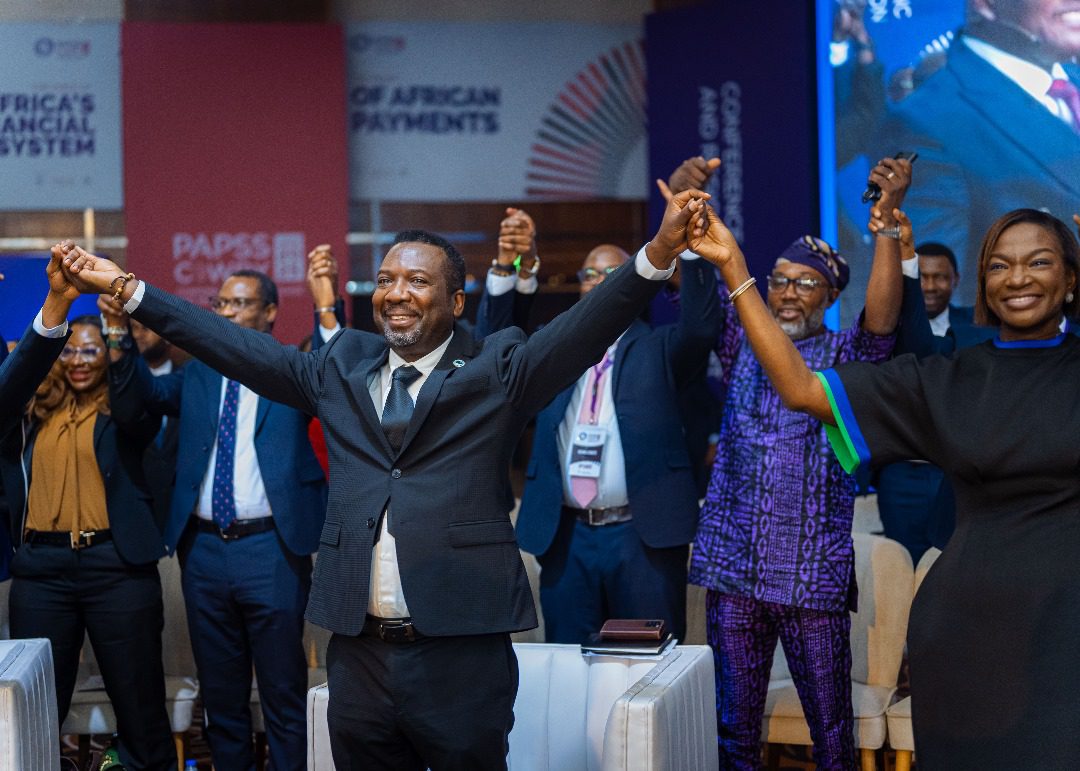 A cross-session of attendees at the PAPSS COWRY conference 2025
The example that landed hardest was Kenya Airways. For more than a decade the airline priced tickets higher in several West African markets because it took months to repatriate funds. Using the stablecoin marketplace, it can now move revenues “in hours and days, and not months”. The airline has removed a volatility markup of 15–20 per cent for travellers in Nigeria and Cameroon.
That story resonated. It showed how financial sovereignty becomes tangible when passengers feel the difference in their wallets.
Interoperability meets sovereignty
PAPSS sits at the centre of this shift. Mene positioned it as the payment engine of the AfCFTA. The system aligns with global standards such as ISO 20022 and modern AML/CFT rules, yet it reduces reliance on external correspondent banks. In other words, interoperability without dependence.
Across the world, regions are consolidating their payment frameworks. Europe’s SEPA and India’s UPI are often referenced. But Africa’s turn is unique. It is building a multi-currency system for 1.4 billion people without the benefit of a historical monetary union.
This makes the stablecoin layer even more significant. It introduces an FX infrastructure capable of real-time price discovery using African data instead of Bloomberg or Reuters benchmarks. Mbenkum called it a correction to a long-standing absurdity. “Why should we be going elsewhere to get rates between the Malawi Kwacha and the Kenyan Shilling?” he asked.
Real-time, market-driven rates are now emerging inside a continental marketplace. This is foundational for trade policy, treasury operations, and future monetary cooperation.
Both speakers emphasised that this evolution will not be driven by ideology. It will be driven by use cases and friction reduction. PAPSS enables instant settlement. The marketplace solves liquidity bottlenecks. Stablecoins bring speed, programmability, and a path toward real-world asset tokenisation.
The long-term vision is a system where Africans can trade, invest, and move value without detouring through third-party currencies or intermediaries. That would mark one of the continent’s most decisive steps toward economic self-determination since independence.

The project’s success now hinges on hard execution. Mene urged banks, regulators, switches, fintechs, and corporates to drive usage and “real transaction volumes”. Mbenkum made a similar call, emphasising the need for liquidity providers and commercial banks to deepen participation.
The work ahead is technical and political. But the mood in Lagos suggested alignment rarely seen in continental financial projects.
Indeed, Africa is not waiting for permission. It is building the rails it needs. And for the first time, those rails run on African engines. Sovereignty.
You May Also Like

Why Financial Technology Is Attracting Record Investment

What’s behind the far-right push to turn Churchill into World War II’s villain: historian


