Next Wave: What if POS agents became Nigeria’s next AI labour force?
Cet article est aussi disponible en français
First published on 7 Nov, 2025
What if POS agents became Nigeria’s next AI labour force?
Image |TechCabal
Last month, Uber, valued at over $174 billion, piloted a new program that allows its drivers to make extra money by labelling data for artificial intelligence. Drivers can earn $1 per task on tasks like uploading a menu or speaking in their local language.
It got me thinking about Nigeria’s financial agents and if fintechs and banks are leaving money on the table by not finding creative ways to monetise agents beyond transaction fees and commissions? Can Nigeria’s vast agent population make money for the fintechs and themselves by participating in the global data labelling market?
Recent Central Bank of Nigeria (CBN) rules – such as bans on hawking POS terminals, requirements for fixed locations, transaction limits, and geo-tagging/geo-fencing of agents – are making it harder for agents to chase volume. One industry insider described agent profits as “dwindling day in, day out” and argued that any innovation that opens up additional income will be something agents “jump at”.
If a fintech can help agents earn more from everyday tasks like data labelling, it lowers the agent’s effective operating costs and increases the fintech’s revenue from maintaining the agent. The global data collection and labelling market was valued at $3.77 billion in 2024.
From a fintech’s perspective, the commercial incentive is not just new revenue. One agent manager I spoke to stressed that the real win is stickiness. Suppose a new line of work can generate extra income for agents—on top of their usual commissions—without compromising data or compliance. In that case, it gives agents a reason to remain loyal to that particular fintech rather than juggling multiple providers.
Next Wave continues after this ad.

Sign up with the code OSIMHEN, and Roqqu will cover 50% of your transaction fees when you buy, sell, or swap on the app for the next 1 month!
Sign up here!The agents
If you’ve spent any time in Nigeria, you’ve likely seen the millions of agents who act as the country’s de facto banks with their point-of-sale (POS) devices. These agents, who power cash transactions for Nigeria’s vast population, operate like contract staff for fintechs and banks. Moniepoint, for instance, provides agents with POS terminals for free or at discounted rates but requires a minimum transaction threshold to keep them active.
The current setup is a win-win for financial institutions and agents, but the monetisation model for agents is narrowly based on transaction commissions and fees, which are often minimal. Agents typically earn around 2% per transaction (₦200 on a ₦10,000 withdrawal). These razor-thin margins mean agents must process a high volume of transactions to stay profitable.
Why it can work
In principle, agents are like Uber drivers and they also often have idle periods during the day when no customers are transacting. Fintechs could deploy a “task hub” like Uber in their agent apps or POS devices, allowing agents to complete digital tasks for pay when business is slow.
Such tasks could include labelling images or videos for AI, translating text, filling out surveys, verifying information, or anything that can be done on a smartphone.
Crucially, not all agents are equally suited to this. Cash-in/cash-out agents—those whose core job is handling withdrawals and deposits—are more likely to be interested than traditional merchants.
It’s not a new thing for fintechs to use their agent networks for additional tasks. When I reported on Nigeria’s KYC regulations that required fintechs to verify customer and agent addresses physically, I noted that
fintechs with extensive agent networks could use their agent managers to verify retail customers’ addresses.As far back as 2018, CrowdForce, known as MobileForms, mobilised agents to conduct KYC for informal traders under the government’s TraderMoni microcredit programme.
Why it may not be a priority for the fintechs
The same industry sources who see the potential also don’t think fintechs will rush into AI data labelling. They point out that there are easier, more adjacent ways to grow non-transaction income, especially products that regulators already understand.
Next Wave continues after this ad.

Africa’s Business Heroes celebrates the bold innovators shaping the continent’s future. Join us in Kigali on 12-13 December for the 7th ABH Summit & Grand Final where Africa’s Top10 entrepreneurs take the stage with game changing solutions. Don’t miss the insights, connections, and inspiration.
Register now!Microinsurance, microsavings and micropensions, for example, are all underserved in Nigeria and can be sold naturally through agent networks. Collaborating with insurers to sell microinsurance via agents, or partnering on pension and savings products, is a cleaner regulatory fit.
In other words, if you’re a fintech executive choosing your next adjacent revenue stream, selling microinsurance to your agents’ customers might look like a much lower-hanging fruit than turning your agents into an on-demand AI workforce.
What needs to happen for it work
No regulation currently speaks directly to data labelling, but implementing this monetisation model will require explicit approval from the Central Bank of Nigeria (CBN). Agent banking in Nigeria operates under strict CBN rules that clearly define what activities agents may perform on behalf of financial institutions.
This means that if a fintech wants its agents to take on non-traditional tasks, such as data labelling or e-commerce fulfilment, it would likely need to consult regulators or obtain formal approval.
Any fintech pursuing this path would need to convince the CBN that these new activities do not violate banking rules or undermine compliance.
If a fintech partners with an external AI or data company instead of building it in-house, the implementation must be designed to avoid exposing sensitive agent data.
The limitations of the POS devices also mean that not every POS device can handle the requirements of a data-labelling device. Most agents use basic Android POS terminals with limited processing power.
Fintechs would need to build extremely lightweight task modules or, more realistically, encourage agents to use their personal smartphones, with proper authentication to verify that tasks are completed by legitimate agents.
Digital tasks also consume far more data than routine financial transactions. One workaround is to design tasks that work offline and sync later or to prioritise lightweight tasks such as text classification.
Quality control is another major hurdle because if agents are completing work on behalf of third-party clients, an AI company, or an e-commerce platform, the fintech must guarantee the accuracy of the work. Fintechs would need QA systems, including training for agents, random spot checks, or performance ratings that suspend consistently low-quality workers.
Next Wave ends after this ad.
The Future of Commerce Report: Beyond the First wave is TechCabal Insights’ annual report, launched at Moonshot by TechCabal in October 2025.
Africa’s next wave of innovation isn’t in payments or marketplaces—it’s in the “X Areas”: the overlooked, unglamorous back-office challenges holding millions of businesses back.
This report reveals where investment and innovation are heading next and what it means for founders, investors, and policymakers shaping Africa’s trade backbone.
Muktar Oladunmade
Associate Reporter, TechCabal.
Feel free to email kenn[at]bigcabal.com, with your thoughts about this edition of NextWave. Or just click reply to share your thoughts and feedback.
We’d love to hear from you
Psst! Down here!
Thanks for reading today’s Next Wave. Please share. Or subscribe if someone shared it to you
As always feel free to email a reply or response to this essay. I enjoy reading those emails a lot.
TC Daily newsletter is out daily (Mon – Fri) brief of all the technology and business stories you need to know. Get it in your inbox each weekday at 7 AM (WAT).
Follow TechCabal on Twitter, Instagram, Facebook, and LinkedIn to stay engaged in our real-time conversations on tech and innovation in Africa.
 |
|
    |
|
|
18, Nnobi Street, Surulere, Lagos, Nigeria |
View in Map |
| You received this email because you signed up on our website or made purchase from us.If you know longer wish to recieve these emails, please unsubscribe |

You May Also Like
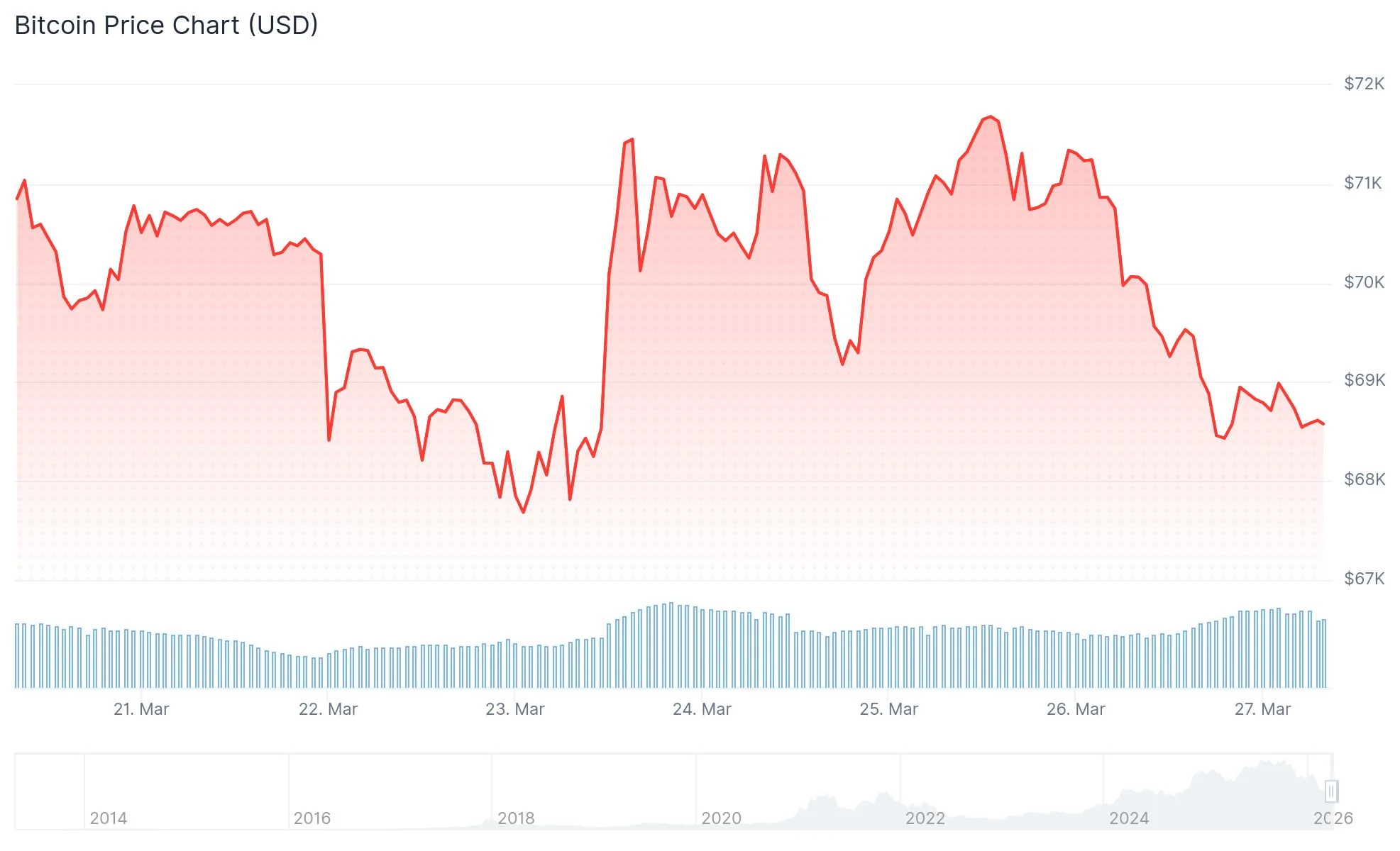
Trump’s Iran Strike Extension: How Bitcoin, Equities, and Crude Oil Are Reacting

Netflix (NFLX) Stock; Rises Slightly as Company Raises Prices Across All Streaming Plans