

USD/KZT Outlook: Bank of America’s Compelling Case for Kazakhstan’s Tenge Strength
BitcoinWorld
USD/KZT Outlook: Bank of America’s Compelling Case for Kazakhstan’s Tenge Strength
In the dynamic world of forex trading, where currencies constantly battle for supremacy, one emerging market currency is capturing serious attention from global financial institutions. The USD/KZT pair, representing the US dollar against Kazakhstan’s tenge, has become a focal point for investors seeking opportunities beyond traditional markets. Bank of America’s recent analysis provides a compelling perspective on why this Central Asian currency deserves your attention.
Why is Bank of America Bullish on the Kazakhstan Tenge?
Bank of America, one of the world’s leading financial institutions, has reiterated its positive forex outlook for Kazakhstan’s currency. This endorsement carries significant weight in international markets and signals confidence in the country’s economic trajectory. The bank’s analysis points to several fundamental factors supporting the tenge’s strength against the US dollar.
Three key pillars underpin Bank of America’s optimistic assessment:
- Commodity Strength: Kazakhstan’s position as a major energy and mineral exporter provides natural support for its currency
- Monetary Policy Discipline: The National Bank of Kazakhstan has maintained relatively tight monetary controls
- Economic Diversification: Gradual movement away from pure commodity dependence toward more balanced growth
Understanding the USD/KZT Currency Dynamics
The USD/KZT exchange rate represents more than just numbers on a trading screen. It reflects the economic relationship between the world’s largest economy and one of Central Asia’s most promising emerging markets. For traders and investors, this pair offers unique characteristics that differ from more commonly traded currency pairs.
Recent performance of the Kazakhstan tenge against major currencies:
| Currency Pair | Year-to-Date Performance | Key Drivers |
|---|---|---|
| USD/KZT | -3.2% | Commodity prices, monetary policy |
| EUR/KZT | -2.8% | EU energy demand, regional trade |
| RUB/KZT | +1.5% | Regional economic integration |
Kazakhstan’s Economic Fundamentals: A Deep Dive
Bank of America’s positive assessment rests on solid economic foundations. Kazakhstan has demonstrated remarkable resilience in recent years, navigating global economic challenges while maintaining currency stability. The country’s strategic position between Europe and Asia, combined with abundant natural resources, creates a unique economic profile.
The National Bank of Kazakhstan has implemented several measures that contribute to currency stability:
- Managed floating exchange rate regime with periodic interventions
- Substantial foreign currency reserves exceeding $35 billion
- Inflation targeting framework with clear communication
- Gradual capital account liberalization
Forex Outlook: What This Means for Traders and Investors
For those engaged in currency markets, Bank of America’s analysis provides actionable insights. The positive forex outlook suggests several potential strategies for market participants. However, like all emerging market currencies, the Kazakhstan tenge carries specific risks that require careful consideration.
Key considerations for trading USD/KZT:
- Liquidity: Lower trading volumes compared to major pairs
- Volatility: Higher sensitivity to commodity price movements
- Geopolitical Factors: Regional stability and international relations
- Regulatory Environment: Local market access and capital controls
Comparative Currency Analysis: Kazakhstan Tenge vs. Regional Peers
Understanding the Kazakhstan tenge requires context within its regional environment. Compared to other Central Asian and former Soviet currencies, the tenge has demonstrated relative strength and stability. This performance reflects both domestic policy effectiveness and external economic conditions.
Bank of America’s analysis places particular emphasis on the tenge’s performance relative to:
- Russian ruble (RUB)
- Uzbekistani som (UZS)
- Turkmenistani manat (TMT)
- Azerbaijani manat (AZN)
Challenges and Risks in the Current Environment
While the currency analysis from Bank of America highlights positive factors, investors must remain aware of potential challenges. Emerging market currencies face unique vulnerabilities that can quickly alter market dynamics. Several factors could potentially impact the USD/KZT outlook in coming months.
Primary risk factors include:
- Global commodity price fluctuations, particularly in oil and gas
- Changes in Federal Reserve monetary policy affecting USD strength
- Regional geopolitical developments
- Domestic economic reforms and their implementation pace
- Global risk sentiment toward emerging markets
Actionable Insights for Market Participants
Based on Bank of America’s currency analysis, several approaches emerge for different types of market participants. Long-term investors, short-term traders, and corporate treasurers each have distinct considerations when evaluating the USD/KZT opportunity.
For investors considering exposure to the Kazakhstan tenge:
- Assess your risk tolerance for emerging market currency exposure
- Consider diversified approaches rather than direct currency speculation
- Monitor key economic indicators from Kazakhstan’s statistical agency
- Stay informed about National Bank of Kazakhstan policy decisions
- Evaluate correlation with other assets in your portfolio
Frequently Asked Questions
What specific factors does Bank of America cite for its positive outlook?
Bank of America points to Kazakhstan’s strong commodity exports, disciplined monetary policy, and gradual economic diversification as primary factors supporting the tenge.
How does the National Bank of Kazakhstan influence the USD/KZT rate?
The National Bank of Kazakhstan operates a managed float system, intervening when necessary to prevent excessive volatility while allowing market forces to determine the exchange rate.
What are the main risks to this positive outlook?
Key risks include significant declines in commodity prices, changes in global risk sentiment toward emerging markets, and unexpected domestic economic developments.
How can international investors gain exposure to the Kazakhstan tenge?
Investors can access the tenge through forex brokers offering the USD/KZT pair, Kazakhstan government bonds, or equities of Kazakh companies with domestic revenue exposure.
What role does Bank of America play in emerging market currency analysis?
As one of the world’s largest financial institutions, Bank of America provides influential research and analysis that helps shape global investor sentiment toward emerging market currencies.
Conclusion: A Currency Worth Watching
Bank of America’s reiterated confidence in the Kazakhstan tenge offers a compelling narrative in the complex world of currency markets. The USD/KZT pair represents more than just an exchange rate—it reflects Kazakhstan’s economic progress, policy discipline, and integration into global markets. While emerging market currencies always carry inherent risks, the fundamental case for the tenge’s strength appears well-supported by current economic conditions. For investors and traders seeking diversification beyond traditional currency pairs, the Kazakhstan tenge presents an intriguing opportunity worthy of careful consideration and ongoing monitoring.
To learn more about the latest forex market trends, explore our comprehensive coverage on key developments shaping currency markets and emerging market investment opportunities.
This post USD/KZT Outlook: Bank of America’s Compelling Case for Kazakhstan’s Tenge Strength first appeared on BitcoinWorld.
You May Also Like

Spain Harmonized Index of Consumer Prices (YoY) below expectations (3.9%) in March: Actual (3.3%)
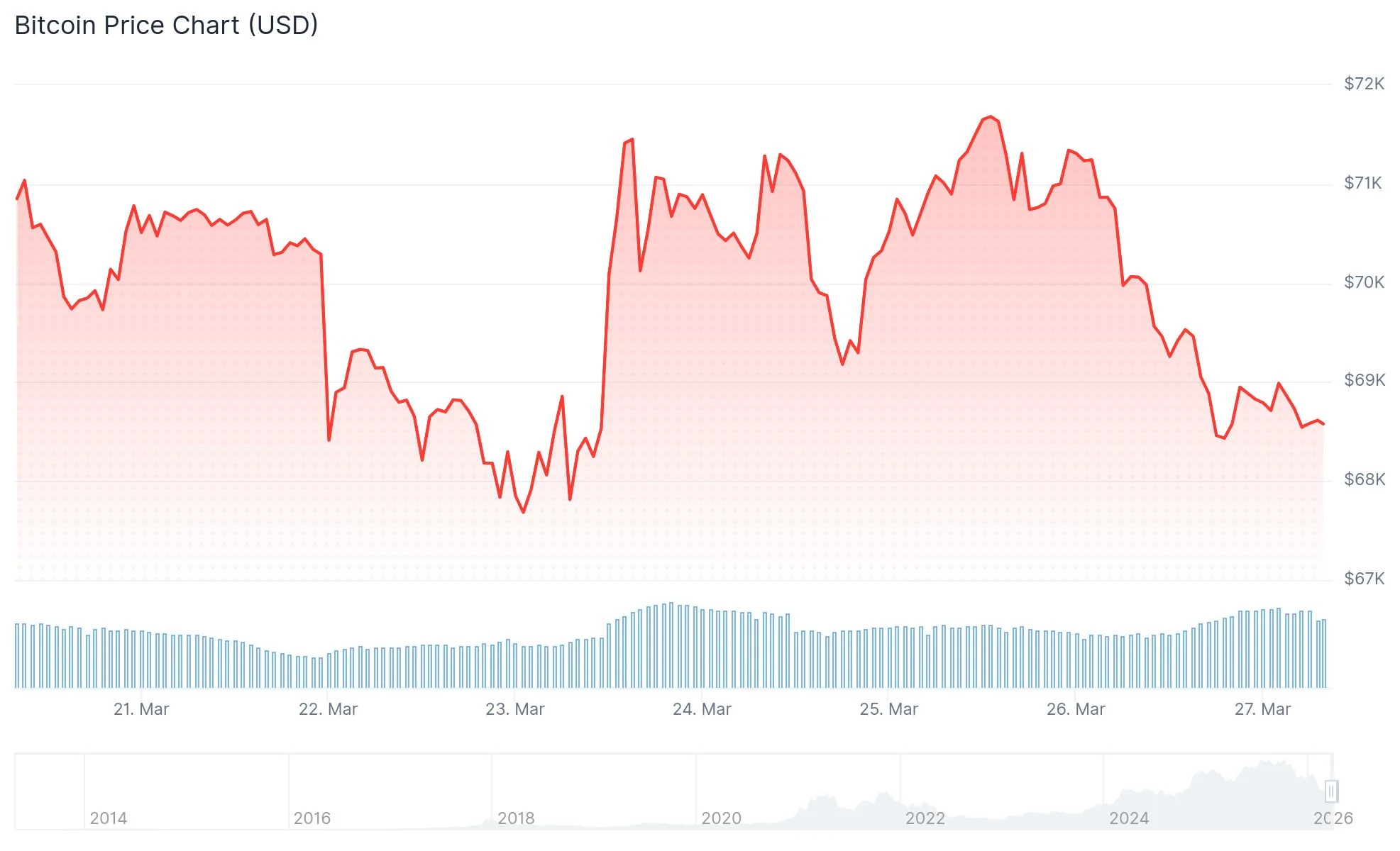
Trump’s Iran Strike Extension: How Bitcoin, Equities, and Crude Oil Are Reacting


