

Federal Reserve Outlook: How the Alarming Consumption Slowdown Reshapes Monetary Policy – DBS Analysis
BitcoinWorld
Federal Reserve Outlook: How the Alarming Consumption Slowdown Reshapes Monetary Policy – DBS Analysis
WASHINGTON, D.C. – March 2025: The Federal Reserve’s economic outlook faces significant recalibration as recent data reveals a pronounced consumption slowdown across multiple sectors. According to comprehensive analysis from DBS Bank, this consumption deceleration represents a critical factor shaping monetary policy decisions through 2025 and beyond. The evolving consumer behavior patterns provide crucial insights into potential economic trajectories.
Federal Reserve Outlook: Analyzing the Consumption Slowdown
The Federal Reserve monitors numerous economic indicators to formulate its monetary policy outlook. Recent consumption data reveals concerning trends across multiple sectors. Retail sales growth has moderated significantly from previous quarters. Consumer spending on durable goods shows particular weakness. Service sector consumption patterns indicate shifting priorities among households.
DBS economists highlight several contributing factors to this consumption slowdown. Elevated interest rates continue to impact consumer borrowing costs. Persistent inflation in essential categories reduces discretionary spending capacity. Labor market normalization affects wage growth expectations. Household balance sheets show increased strain from previous stimulus depletion.
Historical context provides important perspective on current consumption patterns. The post-pandemic consumption surge created unsustainable growth benchmarks. Current normalization reflects more sustainable consumption levels. However, the pace of deceleration exceeds previous economic cycle transitions. This acceleration concerns policymakers monitoring economic stability.
Monetary Policy Implications and Response Framework
The Federal Reserve’s dual mandate requires balancing inflation control with employment support. Consumption represents approximately 70% of U.S. economic activity. Significant consumption slowdowns therefore directly impact monetary policy considerations. DBS analysis suggests the Fed faces complex trade-offs in this environment.
Current monetary policy transmission mechanisms show varied effectiveness. Interest rate increases successfully moderated demand-driven inflation. However, supply-side inflation components remain persistent. The consumption slowdown may reduce demand-side pressure prematurely. This creates potential policy calibration challenges for Federal Reserve officials.
Forward guidance adjustments become increasingly important during consumption transitions. The Federal Reserve must communicate policy intentions clearly. Market expectations require careful management to prevent excessive volatility. DBS research indicates communication strategy evolution represents a critical policy tool. Recent Federal Open Market Committee statements reflect this nuanced approach.
Expert Analysis: DBS Research Methodology
DBS Bank employs sophisticated analytical frameworks to assess consumption trends. Their research incorporates multiple data sources and methodologies. Real-time payment data provides immediate consumption insights. Traditional government statistics offer comprehensive sector coverage. Alternative data sources capture emerging consumption patterns.
The DBS analysis team applies several key analytical approaches:
- High-frequency indicators: Daily and weekly consumption metrics
- Sector decomposition: Detailed analysis across consumption categories
- Geographic variation: Regional consumption pattern differences
- Demographic segmentation: Age and income group consumption behaviors
- Historical comparison: Current patterns versus previous cycles
This comprehensive approach enables robust consumption trend assessment. The methodology accounts for data limitations and measurement challenges. DBS economists emphasize data triangulation for validation. Multiple indicator convergence strengthens analytical conclusions. This rigorous approach supports reliable policy implications.
Economic Impact Assessment and Sector Analysis
The consumption slowdown manifests differently across economic sectors. Understanding these variations provides crucial policy insights. DBS research identifies several distinct consumption patterns emerging in 2025.
| Sector | Growth Rate Change | Primary Drivers |
|---|---|---|
| Retail Goods | -3.2% | Discretionary spending reduction |
| Durable Goods | -4.8% | Higher financing costs |
| Services | -1.9% | Experience spending moderation |
| Essential Goods | +0.7% | Inelastic demand patterns |
| Digital Services | +1.2% | Continued adoption trends |
Regional consumption patterns show significant variation. Coastal metropolitan areas experience more pronounced slowdowns. Midwestern regions demonstrate relative consumption resilience. Southern states show mixed patterns across different categories. These geographic differences complicate national policy responses.
Demographic consumption trends reveal important insights. Younger consumers reduce discretionary spending most significantly. Middle-income households show greatest consumption volatility. Higher-income segments maintain more stable consumption patterns. These demographic variations influence overall economic impact assessments.
Policy Response Framework and Future Scenarios
The Federal Reserve maintains multiple policy response options. Current consumption trends influence which tools receive priority consideration. DBS analysis outlines several potential policy pathways based on consumption evolution.
Interest rate policy represents the primary monetary response mechanism. The Federal Reserve must balance inflation control with growth support. Consumption slowdowns typically suggest reduced inflationary pressure. However, persistent supply-side factors complicate this relationship. Policy calibration requires careful assessment of these competing factors.
Balance sheet policy provides additional response flexibility. Quantitative tightening pace adjustments can influence financial conditions. The Federal Reserve can modify asset runoff schedules based on consumption data. These technical adjustments offer policy fine-tuning capabilities. DBS research suggests these tools gain importance during transition periods.
Forward guidance evolution represents another critical policy dimension. Communication strategy adjustments can shape economic expectations. The Federal Reserve can signal policy intention shifts through statement language. These communications influence consumer and business confidence. Effective guidance can moderate consumption volatility during transitions.
Historical Context and Comparative Analysis
Historical consumption slowdowns provide valuable comparative insights. The 2008 financial crisis created severe consumption contraction. The 2020 pandemic generated unique consumption pattern disruptions. Current conditions differ significantly from both previous episodes.
Several distinguishing characteristics mark the current consumption environment:
- Labor market strength: Unemployment remains near historical lows
- Household balance sheets: Residual strength from previous stimulus
- Inflation context: Moderating but persistent price pressures
- Policy environment: Restrictive monetary stance already in place
- Global conditions: Synchronized growth moderation across economies
These factors create unique policy response requirements. Historical analogies provide limited guidance for current decisions. The Federal Reserve must develop tailored responses based on contemporary conditions. DBS analysis emphasizes this need for customized policy approaches.
Conclusion
The Federal Reserve outlook continues evolving as consumption patterns shift significantly. DBS analysis provides crucial insights into these economic developments. The consumption slowdown represents a key factor shaping monetary policy decisions. Understanding sector variations and demographic patterns enables more effective policy responses. The Federal Reserve must balance multiple considerations in this complex environment. Ongoing consumption monitoring remains essential for appropriate policy calibration. The Federal Reserve outlook will continue reflecting these consumption dynamics through 2025.
FAQs
Q1: What specific consumption indicators most concern the Federal Reserve?
The Federal Reserve closely monitors retail sales data, personal consumption expenditures, consumer confidence surveys, and credit utilization metrics. These indicators provide comprehensive consumption trend insights across different measurement approaches.
Q2: How does DBS Bank’s analysis methodology differ from other financial institutions?
DBS employs unique data triangulation approaches combining traditional statistics with alternative data sources. Their methodology emphasizes real-time payment data integration and sophisticated demographic segmentation techniques for more granular consumption insights.
Q3: What time horizon does the Federal Reserve consider when assessing consumption trends?
The Federal Reserve analyzes consumption data across multiple timeframes including monthly changes, quarterly trends, and annual comparisons. Policy decisions typically emphasize sustained trends rather than temporary fluctuations in consumption patterns.
Q4: How do consumption patterns influence interest rate decisions specifically?
Sustained consumption slowdowns typically reduce demand-side inflationary pressure, potentially supporting interest rate stabilization or reduction. However, the Federal Reserve must balance this against other inflation drivers and employment considerations in their decisions.
Q5: What sectors show the most resilience during consumption slowdowns?
Essential goods and digital services typically demonstrate relative consumption resilience. Healthcare, utilities, and basic necessities maintain stable demand patterns even during broader consumption moderation periods across the economy.
This post Federal Reserve Outlook: How the Alarming Consumption Slowdown Reshapes Monetary Policy – DBS Analysis first appeared on BitcoinWorld.


You May Also Like

SUI Hits New Yearly High As Network Reaches 1,539 TPS In Latest Surge
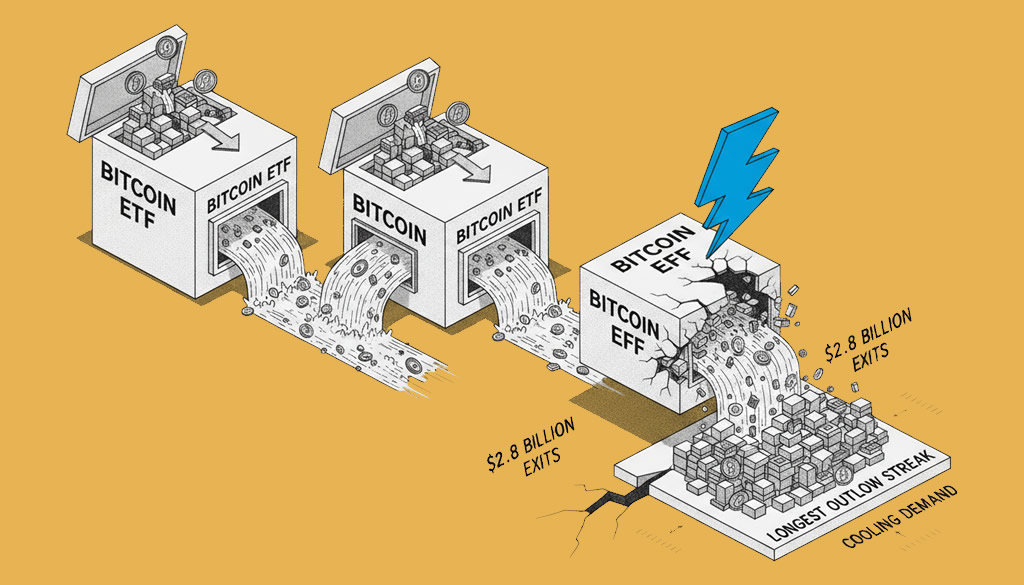
Bitcoin ETFs Record Longest Outflow Streak as $2.8 Billion Exits Funds Amid Cooling Demand
MAGA activist rages at one-time GOP mainstay's claim God will hand midterms to Republicans



