

Trump Policy Signals: Critical Market Risks Identified by Rabobank Analysis
BitcoinWorld
Trump Policy Signals: Critical Market Risks Identified by Rabobank Analysis
WASHINGTON, D.C., March 2025 – Financial markets face significant uncertainty as Rabobank’s latest analysis highlights substantial market risks emerging from Trump policy signals, creating volatility concerns for investors and policymakers alike. The Dutch multinational banking giant’s comprehensive report examines how potential policy shifts could reshape economic landscapes across multiple sectors.
Understanding Trump Policy Signals and Market Reactions
Rabobank’s research team has systematically tracked policy signals from the Trump administration, identifying several key areas of concern. Financial markets typically react to anticipated policy changes before implementation, creating immediate volatility. Consequently, investors must navigate this uncertainty with careful strategy. The banking institution’s analysis reveals that trade policy signals generate the most immediate market responses. Additionally, regulatory environment indications create sector-specific volatility. Furthermore, fiscal policy suggestions affect bond markets significantly. Monetary policy commentary influences currency valuations directly.
Historical data shows that policy uncertainty correlates with increased market volatility. For instance, the VIX index frequently spikes during major policy announcements. Similarly, bond yields demonstrate sensitivity to fiscal policy signals. Moreover, currency markets react swiftly to trade policy indications. Rabobank’s economists emphasize that markets price in expectations rather than actual policies. Therefore, signals create immediate financial impacts. The banking group’s analysis compares current signals to previous administration patterns. This comparison reveals both similarities and concerning differences.
Rabobank’s Methodology for Assessing Market Risks
The Dutch banking institution employs a sophisticated multi-factor analysis framework. Their approach combines quantitative modeling with qualitative assessment. First, they analyze policy statements for consistency and specificity. Second, they measure market reactions to similar historical signals. Third, they assess sector vulnerability to different policy areas. Fourth, they evaluate global interconnectedness effects. This comprehensive methodology provides robust risk assessments.
Rabobank’s risk assessment framework includes:
- Policy Certainty Index: Measures clarity and consistency of policy signals
- Market Sensitivity Score: Quantifies how different markets react to specific policy types
- Sector Vulnerability Analysis: Identifies industries most affected by policy changes
- Global Spillover Assessment: Evaluates international market implications
- Time Horizon Modeling: Projects short, medium, and long-term impacts
Expert Analysis from Rabobank Economists
Rabobank’s chief economist emphasizes that policy signals create market risks through multiple channels. The transmission mechanisms include investor sentiment shifts, capital flow adjustments, and hedging behavior changes. Furthermore, corporate investment decisions often delay during policy uncertainty periods. The banking group’s research indicates that clear, consistent policy communication reduces market volatility. Conversely, contradictory signals amplify financial instability. Their analysis draws on decades of political-economic research. This historical perspective strengthens their current assessments.
Specific Market Risks Identified in the Analysis
Rabobank’s report details several specific market risks requiring investor attention. Trade policy uncertainty creates currency market volatility. Tariff signal fluctuations affect multinational corporations disproportionately. Additionally, regulatory environment changes impact specific sectors differently. Financial services face particular regulatory uncertainty. Meanwhile, energy markets respond to environmental policy signals. Healthcare stocks react to policy indications about drug pricing.
The analysis identifies these primary risk categories:
| Risk Category | Primary Markets Affected | Potential Impact Level |
|---|---|---|
| Trade Policy Uncertainty | Currency, International Stocks | High |
| Regulatory Environment Shifts | Sector-Specific Equities | Medium-High |
| Fiscal Policy Signals | Bond Markets, Deficit-Sensitive Stocks | Medium |
| Monetary Policy Commentary | Interest Rate Sensitive Instruments | Medium |
| Geopolitical Positioning | Commodities, Defense Stocks | Variable |
Market participants must monitor these risk categories continuously. Rabobank recommends specific hedging strategies for each category. Their analysts provide detailed sector-by-sector guidance. This guidance helps investors navigate the complex risk landscape. The banking institution updates its assessments weekly. Consequently, clients receive timely risk management advice.
Historical Context and Comparative Analysis
Rabobank’s analysis places current market risks in historical context. Previous administrations generated different market risk patterns. For example, the Obama administration created healthcare policy uncertainty. Meanwhile, the Bush administration generated defense sector volatility. The Trump administration’s first term produced distinctive market reactions. Trade policy announcements caused significant market movements. Tax policy signals affected corporate earnings expectations. Regulatory changes created energy sector volatility.
The current analysis reveals several important differences from previous periods. First, global economic conditions have changed substantially. Second, market structures have evolved with technological advances. Third, investor behavior demonstrates new patterns. Fourth, policy transmission mechanisms operate differently. Rabobank’s economists note that digital communication accelerates market reactions. Social media amplifies policy signal impacts. Algorithmic trading responds to signals more rapidly. These factors increase market risk levels compared to previous periods.
Global Implications and International Market Effects
Rabobank’s global network provides insights into international market effects. European markets demonstrate particular sensitivity to US trade policy signals. Asian markets react strongly to currency policy indications. Emerging markets face capital flow volatility from US policy uncertainty. The banking group monitors these international connections carefully. Their analysis helps global investors manage cross-border risks. International coordination becomes more challenging during policy uncertainty periods. Central bank communications attempt to stabilize markets. However, policy signal volatility often overwhelms stabilization efforts.
Investor Strategies for Managing Policy-Related Market Risks
Rabobank provides specific recommendations for different investor types. Institutional investors should increase portfolio diversification. Hedge funds might employ volatility-based strategies. Retail investors need education about policy risk management. The banking institution emphasizes several key principles. First, maintain appropriate asset allocation despite uncertainty. Second, avoid overreacting to individual policy signals. Third, focus on long-term investment fundamentals. Fourth, utilize hedging instruments strategically. Fifth, monitor policy developments systematically.
Effective risk management requires these specific actions:
- Regular Policy Monitoring: Track official statements and legislative developments
- Volatility Management: Implement strategies to handle increased market swings
- Sector Rotation: Adjust sector exposure based on policy vulnerability
- Geographic Diversification: Reduce concentration in policy-sensitive regions
- Scenario Planning: Prepare for multiple policy outcome possibilities
Rabobank’s research indicates that prepared investors outperform during uncertainty periods. Their analysis provides actionable guidance for various market conditions. The banking group continues to refine their recommendations as conditions evolve. Clients receive regular updates through multiple channels. This ongoing support helps investors navigate complex risk environments.
Conclusion
Rabobank’s comprehensive analysis reveals significant market risks stemming from Trump policy signals, requiring careful investor attention and strategic response. The Dutch banking institution’s research provides valuable insights for navigating this uncertain period. Markets will continue reacting to policy developments as they emerge. Consequently, ongoing monitoring and adaptive strategies remain essential. The analysis underscores the importance of disciplined investment approaches during policy uncertainty. Ultimately, understanding these market risks enables better financial decision-making across all investor categories.
FAQs
Q1: What specific Trump policy signals concern Rabobank most?
Rabobank identifies trade policy uncertainty as the primary concern, followed by regulatory environment signals and fiscal policy indications that create volatility across multiple market sectors.
Q2: How does Rabobank’s analysis differ from other financial institutions?
Rabobank employs a unique multi-factor framework combining quantitative modeling with qualitative assessment, focusing particularly on policy transmission mechanisms and global interconnectedness effects that many analyses overlook.
Q3: What time horizon does Rabobank use for its market risk assessments?
The banking institution uses three time horizons: short-term (0-3 months) for immediate volatility, medium-term (3-12 months) for policy implementation effects, and long-term (1-3 years) for structural market changes.
Q4: How should retail investors respond to these identified market risks?
Rabobank recommends maintaining disciplined asset allocation, avoiding emotional reactions to individual policy signals, focusing on long-term fundamentals, and considering professional advice for complex risk management strategies.
Q5: Does Rabobank provide ongoing updates to its market risk analysis?
Yes, Rabobank updates its assessments weekly through client communications, research publications, and analyst briefings, ensuring investors receive timely information about evolving policy risks and market conditions.
This post Trump Policy Signals: Critical Market Risks Identified by Rabobank Analysis first appeared on BitcoinWorld.


You May Also Like
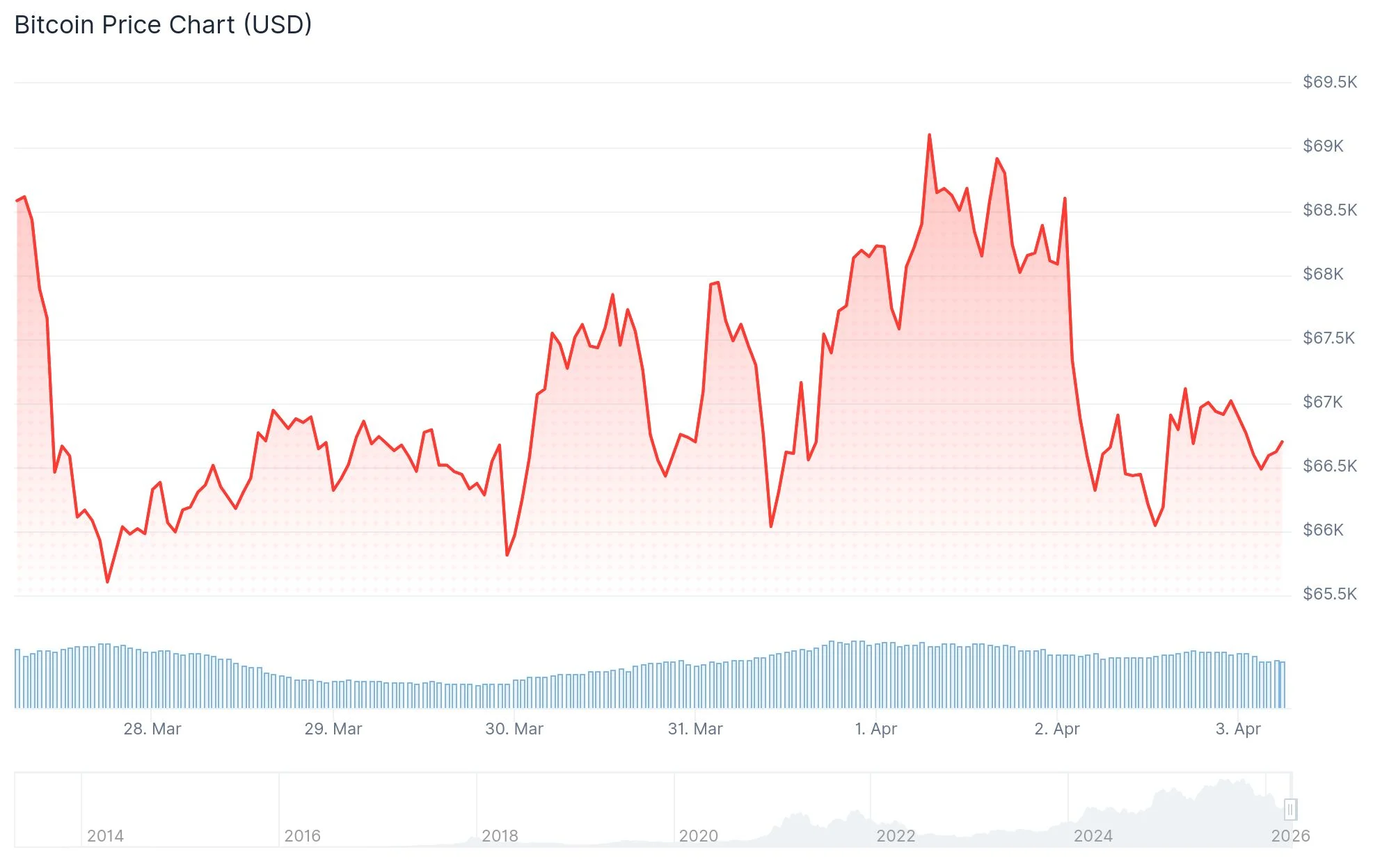
Bitcoin (BTC) Dips Below $67K as Markets Enter Easter Break While Oil Hits 11% Single-Day Surge

Trump's revenge tour will come back to bite him in the you-know-what

Ethereum price today $2,130 — bearish below $2,150; $2,116 key



