BitcoinWorld Intel Leadership: Strategic Shake-Up Unveils New Era for Semiconductor Giant In the fast-evolving world of technology, where every shift in the semiconductor landscape can ripple through data centers, cloud computing, and even the infrastructure supporting cryptocurrencies, Intel is making waves. The chip giant, a foundational pillar of modern computing, is undergoing a significant transformation at its highest levels. This isn’t just a corporate reshuffle; it’s a strategic realignment under CEO Lip-Bu Tan, poised to redefine Intel’s future and its competitive edge in the global tech arena. Intel Leadership Undergoes a Strategic Overhaul: What’s Driving Tan’s Vision? Since Lip-Bu Tan took the helm as CEO in March, Intel has been charting a new course, marked by bold strategic moves and significant Intel leadership changes. The latest announcement signals a pivotal moment for the company, with Michelle Johnston Holthaus, formerly Chief Executive Officer of Intel Products, departing after over three decades. While she will remain a strategic adviser, her departure paves the way for a fresh wave of talent and a redefined organizational structure. This transition underscores Tan’s commitment to agile leadership and a renewed focus on innovation and execution. These shifts are not isolated incidents but part of a broader strategy to streamline operations and enhance Intel’s responsiveness to market demands. The company is clearly signaling a move towards a more specialized and customer-centric approach, aiming to accelerate product development cycles and reinforce its market position against intense competition. The Future is Fabricated: How Custom Silicon is Reshaping Intel’s Strategy One of the most exciting and forward-looking developments is the creation of a new central engineering group, specifically tasked with building a custom silicon business for external clients. This move represents Intel’s ambition to expand its reach beyond its traditional product lines, offering tailored solutions to a diverse customer base. This strategic pivot towards bespoke chip design and manufacturing is critical in an era where specialized chips are becoming increasingly vital for everything from advanced AI accelerators to high-performance computing and niche enterprise solutions. Heading this new group is Srinivasan ‘Srini’ Iyengar, a seasoned expert who joined Intel from Cadence Design Systems in July. His extensive expertise in chip design and verification will be instrumental in positioning Intel as a formidable player in bespoke silicon, directly competing with established foundry services and capitalizing on the burgeoning demand for highly optimized hardware solutions across various industries. New Faces, New Ambitions: Intel’s Play in the Evolving Semiconductor Industry Beyond internal transitions, Intel is injecting new blood into its senior ranks, bringing in top talent from across the competitive semiconductor industry. Kevork Kechichian, formerly of ARM, has joined as the head of Intel’s data center group, a crucial segment for cloud computing, enterprise solutions, and the foundational infrastructure that powers much of the digital economy. Jim Johnson has been appointed Senior Vice President and General Manager of Intel’s client computing group, overseeing the company’s core PC business, which remains a significant revenue driver. Furthermore, Naga Chandrasekaran, Chief Technology and Operations Officer of Intel Foundry, is taking on an expanded role, reinforcing the company’s commitment to its business unit that builds custom chips for outside customers. These strategic hires, combined with the new organizational structure, aim to accelerate product development, foster innovation, and strengthen Intel’s position against fierce competition, ensuring it remains at the forefront of technological advancement and market leadership. Beyond the Core: The Impact on AI Chips and High-Performance Computing The emphasis on custom silicon and the influx of specialized talent have significant implications for the future of AI chips. As artificial intelligence continues to permeate every industry, from healthcare to finance and autonomous systems, the demand for highly efficient, purpose-built AI accelerators is skyrocketing. Intel’s new central engineering group, with its focus on custom solutions, is perfectly positioned to cater to this need, designing chips optimized for specific AI workloads. This could enable significant breakthroughs in machine learning, deep learning, and edge AI, impacting everything from advanced data analytics to intelligent automation. For the broader technology ecosystem, including the infrastructure that supports cryptocurrencies and blockchain technologies, Intel’s advancements in high-performance computing and AI indirectly support the underlying processing power and development of new innovations that rely on robust, efficient hardware. Steering the Giant: The Crucial Role of the Intel CEO in a Shifting Landscape The vision for these transformative changes is clearly being driven by Intel CEO Lip-Bu Tan. His statement, “With Srini leading Central Engineering, we’re aligning innovation and execution more tightly in service to customers… We are laser-focused on delivering world-class products and empowering our engineering teams to move faster and execute with excellence,” highlights a clear strategy: customer-centric innovation and operational excellence. Tan’s leadership is not only about internal restructuring but also about navigating external pressures, such as the recent U.S. government plan to convert existing grants into a 10% stake in Intel. This deal was notably structured to penalize Intel if the company dropped below 50% ownership of its foundry unit, underscoring the strategic national importance of its manufacturing capabilities. These complex geopolitical and economic factors underscore the critical role of strong leadership in guiding Intel through a rapidly evolving and competitive global technology landscape, making Tan’s decisions paramount for the company’s future success. Intel’s recent leadership shake-up and strategic realignments signal a determined effort to reclaim its position at the vanguard of the technology world. By focusing on agile leadership, expanding its custom silicon capabilities, and bringing in top-tier talent, Intel under Lip-Bu Tan is poised for a significant transformation. These bold moves are critical for staying competitive in the rapidly evolving semiconductor industry and for meeting the escalating demands for advanced computing, particularly in the burgeoning fields of AI and high-performance computing. The coming years will reveal the full impact of these changes as Intel strives to build a ‘new Intel’ ready for the challenges and opportunities of the 21st century, solidifying its role as a key player in shaping the future of digital innovation. To learn more about the latest AI chips trends, explore our article on key developments shaping AI features and institutional adoption. This post Intel Leadership: Strategic Shake-Up Unveils New Era for Semiconductor Giant first appeared on BitcoinWorld and is written by Editorial TeamBitcoinWorld Intel Leadership: Strategic Shake-Up Unveils New Era for Semiconductor Giant In the fast-evolving world of technology, where every shift in the semiconductor landscape can ripple through data centers, cloud computing, and even the infrastructure supporting cryptocurrencies, Intel is making waves. The chip giant, a foundational pillar of modern computing, is undergoing a significant transformation at its highest levels. This isn’t just a corporate reshuffle; it’s a strategic realignment under CEO Lip-Bu Tan, poised to redefine Intel’s future and its competitive edge in the global tech arena. Intel Leadership Undergoes a Strategic Overhaul: What’s Driving Tan’s Vision? Since Lip-Bu Tan took the helm as CEO in March, Intel has been charting a new course, marked by bold strategic moves and significant Intel leadership changes. The latest announcement signals a pivotal moment for the company, with Michelle Johnston Holthaus, formerly Chief Executive Officer of Intel Products, departing after over three decades. While she will remain a strategic adviser, her departure paves the way for a fresh wave of talent and a redefined organizational structure. This transition underscores Tan’s commitment to agile leadership and a renewed focus on innovation and execution. These shifts are not isolated incidents but part of a broader strategy to streamline operations and enhance Intel’s responsiveness to market demands. The company is clearly signaling a move towards a more specialized and customer-centric approach, aiming to accelerate product development cycles and reinforce its market position against intense competition. The Future is Fabricated: How Custom Silicon is Reshaping Intel’s Strategy One of the most exciting and forward-looking developments is the creation of a new central engineering group, specifically tasked with building a custom silicon business for external clients. This move represents Intel’s ambition to expand its reach beyond its traditional product lines, offering tailored solutions to a diverse customer base. This strategic pivot towards bespoke chip design and manufacturing is critical in an era where specialized chips are becoming increasingly vital for everything from advanced AI accelerators to high-performance computing and niche enterprise solutions. Heading this new group is Srinivasan ‘Srini’ Iyengar, a seasoned expert who joined Intel from Cadence Design Systems in July. His extensive expertise in chip design and verification will be instrumental in positioning Intel as a formidable player in bespoke silicon, directly competing with established foundry services and capitalizing on the burgeoning demand for highly optimized hardware solutions across various industries. New Faces, New Ambitions: Intel’s Play in the Evolving Semiconductor Industry Beyond internal transitions, Intel is injecting new blood into its senior ranks, bringing in top talent from across the competitive semiconductor industry. Kevork Kechichian, formerly of ARM, has joined as the head of Intel’s data center group, a crucial segment for cloud computing, enterprise solutions, and the foundational infrastructure that powers much of the digital economy. Jim Johnson has been appointed Senior Vice President and General Manager of Intel’s client computing group, overseeing the company’s core PC business, which remains a significant revenue driver. Furthermore, Naga Chandrasekaran, Chief Technology and Operations Officer of Intel Foundry, is taking on an expanded role, reinforcing the company’s commitment to its business unit that builds custom chips for outside customers. These strategic hires, combined with the new organizational structure, aim to accelerate product development, foster innovation, and strengthen Intel’s position against fierce competition, ensuring it remains at the forefront of technological advancement and market leadership. Beyond the Core: The Impact on AI Chips and High-Performance Computing The emphasis on custom silicon and the influx of specialized talent have significant implications for the future of AI chips. As artificial intelligence continues to permeate every industry, from healthcare to finance and autonomous systems, the demand for highly efficient, purpose-built AI accelerators is skyrocketing. Intel’s new central engineering group, with its focus on custom solutions, is perfectly positioned to cater to this need, designing chips optimized for specific AI workloads. This could enable significant breakthroughs in machine learning, deep learning, and edge AI, impacting everything from advanced data analytics to intelligent automation. For the broader technology ecosystem, including the infrastructure that supports cryptocurrencies and blockchain technologies, Intel’s advancements in high-performance computing and AI indirectly support the underlying processing power and development of new innovations that rely on robust, efficient hardware. Steering the Giant: The Crucial Role of the Intel CEO in a Shifting Landscape The vision for these transformative changes is clearly being driven by Intel CEO Lip-Bu Tan. His statement, “With Srini leading Central Engineering, we’re aligning innovation and execution more tightly in service to customers… We are laser-focused on delivering world-class products and empowering our engineering teams to move faster and execute with excellence,” highlights a clear strategy: customer-centric innovation and operational excellence. Tan’s leadership is not only about internal restructuring but also about navigating external pressures, such as the recent U.S. government plan to convert existing grants into a 10% stake in Intel. This deal was notably structured to penalize Intel if the company dropped below 50% ownership of its foundry unit, underscoring the strategic national importance of its manufacturing capabilities. These complex geopolitical and economic factors underscore the critical role of strong leadership in guiding Intel through a rapidly evolving and competitive global technology landscape, making Tan’s decisions paramount for the company’s future success. Intel’s recent leadership shake-up and strategic realignments signal a determined effort to reclaim its position at the vanguard of the technology world. By focusing on agile leadership, expanding its custom silicon capabilities, and bringing in top-tier talent, Intel under Lip-Bu Tan is poised for a significant transformation. These bold moves are critical for staying competitive in the rapidly evolving semiconductor industry and for meeting the escalating demands for advanced computing, particularly in the burgeoning fields of AI and high-performance computing. The coming years will reveal the full impact of these changes as Intel strives to build a ‘new Intel’ ready for the challenges and opportunities of the 21st century, solidifying its role as a key player in shaping the future of digital innovation. To learn more about the latest AI chips trends, explore our article on key developments shaping AI features and institutional adoption. This post Intel Leadership: Strategic Shake-Up Unveils New Era for Semiconductor Giant first appeared on BitcoinWorld and is written by Editorial Team

Intel Leadership: Strategic Shake-Up Unveils New Era for Semiconductor Giant

2025/09/09 07:40
6 min read
For feedback or concerns regarding this content, please contact us at crypto.news@mexc.com

BitcoinWorld

Intel Leadership: Strategic Shake-Up Unveils New Era for Semiconductor Giant

In the fast-evolving world of technology, where every shift in the semiconductor landscape can ripple through data centers, cloud computing, and even the infrastructure supporting cryptocurrencies, Intel is making waves. The chip giant, a foundational pillar of modern computing, is undergoing a significant transformation at its highest levels. This isn’t just a corporate reshuffle; it’s a strategic realignment under CEO Lip-Bu Tan, poised to redefine Intel’s future and its competitive edge in the global tech arena.

Intel Leadership Undergoes a Strategic Overhaul: What’s Driving Tan’s Vision?

Since Lip-Bu Tan took the helm as CEO in March, Intel has been charting a new course, marked by bold strategic moves and significant Intel leadership changes. The latest announcement signals a pivotal moment for the company, with Michelle Johnston Holthaus, formerly Chief Executive Officer of Intel Products, departing after over three decades. While she will remain a strategic adviser, her departure paves the way for a fresh wave of talent and a redefined organizational structure. This transition underscores Tan’s commitment to agile leadership and a renewed focus on innovation and execution. These shifts are not isolated incidents but part of a broader strategy to streamline operations and enhance Intel’s responsiveness to market demands. The company is clearly signaling a move towards a more specialized and customer-centric approach, aiming to accelerate product development cycles and reinforce its market position against intense competition.

The Future is Fabricated: How Custom Silicon is Reshaping Intel’s Strategy

One of the most exciting and forward-looking developments is the creation of a new central engineering group, specifically tasked with building a custom silicon business for external clients. This move represents Intel’s ambition to expand its reach beyond its traditional product lines, offering tailored solutions to a diverse customer base. This strategic pivot towards bespoke chip design and manufacturing is critical in an era where specialized chips are becoming increasingly vital for everything from advanced AI accelerators to high-performance computing and niche enterprise solutions. Heading this new group is Srinivasan ‘Srini’ Iyengar, a seasoned expert who joined Intel from Cadence Design Systems in July. His extensive expertise in chip design and verification will be instrumental in positioning Intel as a formidable player in bespoke silicon, directly competing with established foundry services and capitalizing on the burgeoning demand for highly optimized hardware solutions across various industries.

New Faces, New Ambitions: Intel’s Play in the Evolving Semiconductor Industry

Beyond internal transitions, Intel is injecting new blood into its senior ranks, bringing in top talent from across the competitive semiconductor industry. Kevork Kechichian, formerly of ARM, has joined as the head of Intel’s data center group, a crucial segment for cloud computing, enterprise solutions, and the foundational infrastructure that powers much of the digital economy. Jim Johnson has been appointed Senior Vice President and General Manager of Intel’s client computing group, overseeing the company’s core PC business, which remains a significant revenue driver. Furthermore, Naga Chandrasekaran, Chief Technology and Operations Officer of Intel Foundry, is taking on an expanded role, reinforcing the company’s commitment to its business unit that builds custom chips for outside customers. These strategic hires, combined with the new organizational structure, aim to accelerate product development, foster innovation, and strengthen Intel’s position against fierce competition, ensuring it remains at the forefront of technological advancement and market leadership.

Beyond the Core: The Impact on AI Chips and High-Performance Computing

The emphasis on custom silicon and the influx of specialized talent have significant implications for the future of AI chips. As artificial intelligence continues to permeate every industry, from healthcare to finance and autonomous systems, the demand for highly efficient, purpose-built AI accelerators is skyrocketing. Intel’s new central engineering group, with its focus on custom solutions, is perfectly positioned to cater to this need, designing chips optimized for specific AI workloads. This could enable significant breakthroughs in machine learning, deep learning, and edge AI, impacting everything from advanced data analytics to intelligent automation. For the broader technology ecosystem, including the infrastructure that supports cryptocurrencies and blockchain technologies, Intel’s advancements in high-performance computing and AI indirectly support the underlying processing power and development of new innovations that rely on robust, efficient hardware.

Steering the Giant: The Crucial Role of the Intel CEO in a Shifting Landscape

The vision for these transformative changes is clearly being driven by Intel CEO Lip-Bu Tan. His statement, “With Srini leading Central Engineering, we’re aligning innovation and execution more tightly in service to customers… We are laser-focused on delivering world-class products and empowering our engineering teams to move faster and execute with excellence,” highlights a clear strategy: customer-centric innovation and operational excellence. Tan’s leadership is not only about internal restructuring but also about navigating external pressures, such as the recent U.S. government plan to convert existing grants into a 10% stake in Intel. This deal was notably structured to penalize Intel if the company dropped below 50% ownership of its foundry unit, underscoring the strategic national importance of its manufacturing capabilities. These complex geopolitical and economic factors underscore the critical role of strong leadership in guiding Intel through a rapidly evolving and competitive global technology landscape, making Tan’s decisions paramount for the company’s future success.

Intel’s recent leadership shake-up and strategic realignments signal a determined effort to reclaim its position at the vanguard of the technology world. By focusing on agile leadership, expanding its custom silicon capabilities, and bringing in top-tier talent, Intel under Lip-Bu Tan is poised for a significant transformation. These bold moves are critical for staying competitive in the rapidly evolving semiconductor industry and for meeting the escalating demands for advanced computing, particularly in the burgeoning fields of AI and high-performance computing. The coming years will reveal the full impact of these changes as Intel strives to build a ‘new Intel’ ready for the challenges and opportunities of the 21st century, solidifying its role as a key player in shaping the future of digital innovation.

To learn more about the latest AI chips trends, explore our article on key developments shaping AI features and institutional adoption.

This post Intel Leadership: Strategic Shake-Up Unveils New Era for Semiconductor Giant first appeared on BitcoinWorld and is written by Editorial Team

Market Opportunity
Threshold Logo
Threshold Price(T)
$0.006705
$0.006705$0.006705
+0.23%
USD
Threshold (T) Live Price Chart
Disclaimer: The articles reposted on this site are sourced from public platforms and are provided for informational purposes only. They do not necessarily reflect the views of MEXC. All rights remain with the original authors. If you believe any content infringes on third-party rights, please contact crypto.news@mexc.com for removal. MEXC makes no guarantees regarding the accuracy, completeness, or timeliness of the content and is not responsible for any actions taken based on the information provided. The content does not constitute financial, legal, or other professional advice, nor should it be considered a recommendation or endorsement by MEXC.

You May Also Like

Whales Dump 200 Million XRP in Just 2 Weeks – Is XRP’s Price on the Verge of Collapse?

Whales Dump 200 Million XRP in Just 2 Weeks – Is XRP’s Price on the Verge of Collapse?

Whales offload 200 million XRP leaving market uncertainty behind. XRP faces potential collapse as whales drive major price shifts. Is XRP’s future in danger after massive sell-off by whales? XRP’s price has been under intense pressure recently as whales reportedly offloaded a staggering 200 million XRP over the past two weeks. This massive sell-off has raised alarms across the cryptocurrency community, as many wonder if the market is on the brink of collapse or just undergoing a temporary correction. According to crypto analyst Ali (@ali_charts), this surge in whale activity correlates directly with the price fluctuations seen in the past few weeks. XRP experienced a sharp spike in late July and early August, but the price quickly reversed as whales began to sell their holdings in large quantities. The increased volume during this period highlights the intensity of the sell-off, leaving many traders to question the future of XRP’s value. Whales have offloaded around 200 million $XRP in the last two weeks! pic.twitter.com/MiSQPpDwZM — Ali (@ali_charts) September 17, 2025 Also Read: Shiba Inu’s Price Is at a Tipping Point: Will It Break or Crash Soon? Can XRP Recover or Is a Bigger Decline Ahead? As the market absorbs the effects of the whale offload, technical indicators suggest that XRP may be facing a period of consolidation. The Relative Strength Index (RSI), currently sitting at 53.05, signals a neutral market stance, indicating that XRP could move in either direction. This leaves traders uncertain whether the XRP will break above its current resistance levels or continue to fall as more whales sell off their holdings. Source: Tradingview Additionally, the Bollinger Bands, suggest that XRP is nearing the upper limits of its range. This often points to a potential slowdown or pullback in price, further raising concerns about the future direction of the XRP. With the price currently around $3.02, many are questioning whether XRP can regain its footing or if it will continue to decline. The Aftermath of Whale Activity: Is XRP’s Future in Danger? Despite the large sell-off, XRP is not yet showing signs of total collapse. However, the market remains fragile, and the price is likely to remain volatile in the coming days. With whales continuing to influence price movements, many investors are watching closely to see if this trend will reverse or intensify. The coming weeks will be critical for determining whether XRP can stabilize or face further declines. The combination of whale offloading and technical indicators suggest that XRP’s price is at a crossroads. Traders and investors alike are waiting for clear signals to determine if the XRP will bounce back or continue its downward trajectory. Also Read: Metaplanet’s Bold Move: $15M U.S. Subsidiary to Supercharge Bitcoin Strategy The post Whales Dump 200 Million XRP in Just 2 Weeks – Is XRP’s Price on the Verge of Collapse? appeared first on 36Crypto.
Share
Coinstats2025/09/17 23:42
Wall Street expert predicts 80% Tesla stock crash in 2026
Wall Street expert predicts 80% Tesla stock crash in 2026

The post Wall Street expert predicts 80% Tesla stock crash in 2026 appeared on BitcoinEthereumNews.com. Tesla (NASDAQ: TSLA) FSD – the autonomous driving technology
Share
BitcoinEthereumNews2026/03/16 22:04
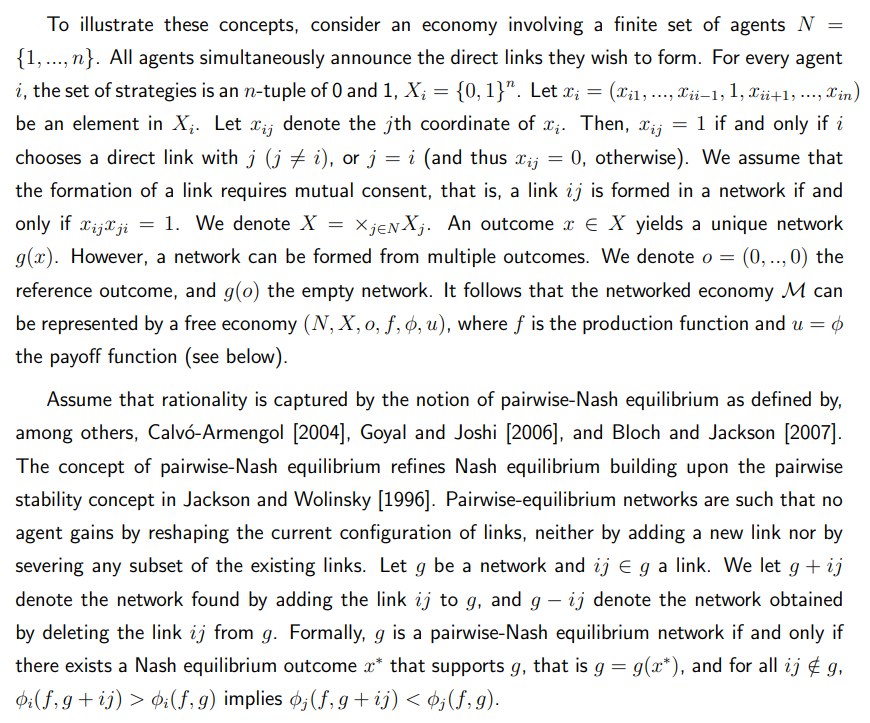
The Economics of Self-Isolation: A Game-Theoretic Analysis of Contagion in a Free Economy

The Economics of Self-Isolation: A Game-Theoretic Analysis of Contagion in a Free Economy

Exploring how the costs of a pandemic can lead to a self-enforcing lockdown in a networked economy, analyzing the resulting changes in network structure and the existence of stable equilibria.
Share
Hackernoon2025/09/17 23:00