Pentagon Underestimated Critical Iran Strait of Hormuz Blockade Threat: CNN Reveals Alarming Intelligence Gap
BitcoinWorld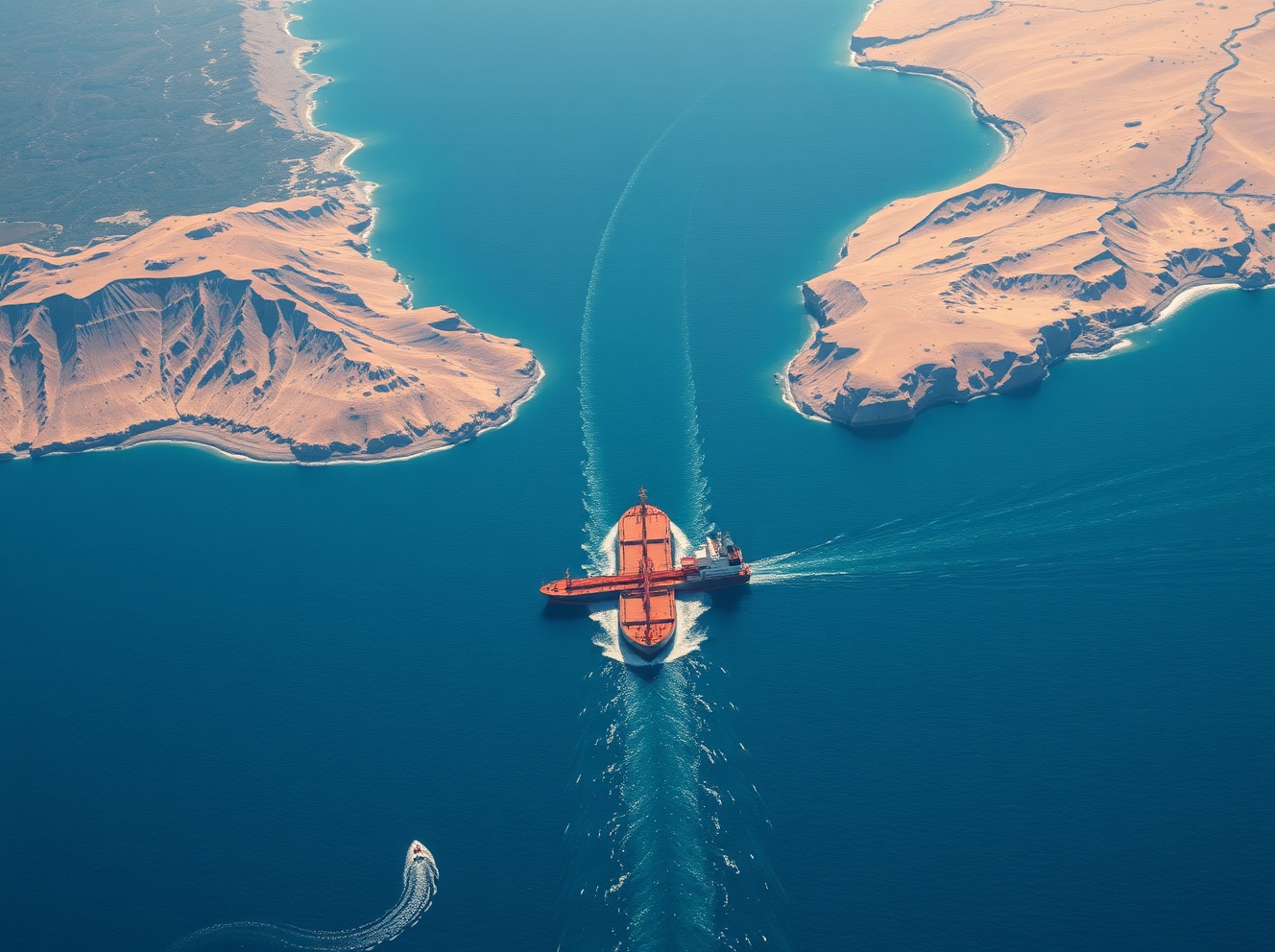
Pentagon Underestimated Critical Iran Strait of Hormuz Blockade Threat: CNN Reveals Alarming Intelligence Gap
WASHINGTON, D.C. – The U.S. Department of Defense significantly miscalculated the probability of Iran blockading the critical Strait of Hormuz, according to a recent CNN investigation that reveals a potentially dangerous intelligence gap in American military planning. This strategic oversight, confirmed by multiple sources within the Pentagon and National Security Council, occurred during preparations for potential regional military operations. Consequently, the administration failed to fully account for the severe global repercussions of such a blockade, which experts consider one of the most catastrophic scenarios for international energy markets and geopolitical stability.
Pentagon Underestimated Iran’s Strait of Hormuz Blockade Calculus
CNN’s reporting, based on confidential sources familiar with defense planning sessions, indicates that U.S. intelligence assessments consistently downplayed Iran’s willingness to execute a full-scale closure of the strategic waterway. Military planners apparently focused more on conventional conflict scenarios rather than asymmetric economic warfare. The Strait of Hormuz serves as the world’s most important oil transit chokepoint, with approximately 21 million barrels of oil passing through daily. This volume represents nearly 21% of global petroleum liquid consumption and 30% of all seaborne traded oil. A blockade would immediately trigger a global energy crisis, spiking oil prices and disrupting supply chains worldwide. Historical context reveals Iran has repeatedly threatened closure during periods of heightened tension, notably in 2011-2012 and 2019, but analysts previously assessed the economic self-harm as too great for Tehran to follow through.
Geopolitical and Economic Implications of a Potential Closure
The economic ramifications of a Strait of Hormuz blockade would be immediate and severe. Global oil prices could potentially double within days, triggering inflationary pressures across developed and developing economies. Furthermore, shipping insurance rates for the Persian Gulf region would skyrocket, making commercial transit prohibitively expensive. Regional allies, including Saudi Arabia, the United Arab Emirates, and Qatar, would lose their primary export route, devastating their economies. The United States Strategic Petroleum Reserve, while substantial, contains only enough oil to offset a complete closure for approximately 90 days. International response would likely involve naval escorts for commercial tankers, increasing the risk of direct military confrontation between Iranian forces and a U.S.-led coalition. European and Asian nations, heavily dependent on Gulf oil, would face urgent energy security dilemmas, potentially fracturing the unified international front against Iran’s nuclear program.
Military and Intelligence Assessment Failures
Several factors contributed to the intelligence miscalculation. First, analysts reportedly overemphasized Iran’s conventional military weaknesses compared to U.S. naval power in the Fifth Fleet’s area of operations. Second, they underestimated Tehran’s capability to employ asymmetric, deniable tactics such as naval mines, swarming attacks by fast boats, or anti-ship missile batteries positioned along the coast. Third, assessment models may have undervalued the ideological and political drivers within Iran’s Revolutionary Guard Corps (IRGC), which controls the nation’s naval asymmetric warfare units. The IRGC has consistently demonstrated a higher risk tolerance than Iran’s regular military or political leadership. Recent naval exercises, including the ‘Great Prophet’ drills, have explicitly practiced blockade and chokepoint closure tactics, providing visible indicators of capability and intent that some analysts believe were not sufficiently weighted in U.S. threat assessments.
Historical Precedents and Evolving Iranian Strategy
Iran’s history of targeting shipping in the Gulf provides crucial context often cited by regional security experts. During the 1980s ‘Tanker War,’ Iran and Iraq attacked hundreds of commercial vessels. More recently, in 2019, Iran was blamed for mine attacks on four tankers near the Strait of Hormuz and the seizure of a British-flagged tanker. These events demonstrated both capability and a willingness to disrupt commerce short of a full blockade. Iran’s strategy has evolved to include sophisticated drone and missile technology, making a potential blockade more feasible today than in prior decades. The table below outlines key escalatory actions by Iran in the Strait since 2019:
| Date | Incident | Method | Outcome |
|---|---|---|---|
| May 2019 | Tanker Sabotage | Limpet Mines | Four vessels damaged |
| June 2019 | U.S. Drone Shootdown | Surface-to-Air Missile | RQ-4A Global Hawk destroyed |
| July 2019 | Tanker Seizure | IRGC Fast Boat Raid | British tanker Stena Impero captured |
| January 2024 | Seizure of Oil Tanker | Helicopter Insertion | Advantage Sweet captured |
These incidents form a pattern of increasing assertiveness. Military analysts note that Iran has developed layered defensive systems along its coast, including:
- Anti-ship missile batteries (e.g., Ghadir, Noor, and newer Kheibar missiles)
- Swarm boat units equipped with machine guns and rocket-propelled grenades
- Submarine and midget submarine forces capable of laying minefields
- Coastal radar and surveillance networks to monitor shipping traffic
Global Energy Security and Alternative Routes
The global energy system lacks viable short-term alternatives to the Strait of Hormuz. While pipelines exist, their capacity cannot replace maritime shipping. The major alternatives include:
- The Abqaiq–Yanbu pipeline across Saudi Arabia (5 million barrels per day capacity)
- The East–West Pipeline (Petroline) in Saudi Arabia (3.2 million bpd, currently operating below capacity)
- The UAE bypass pipeline from Habshan to Fujairah (1.5 million bpd)
Collectively, these pipelines could reroute less than half of the Strait’s normal daily flow. Additionally, longer shipping routes around Africa’s Cape of Good Hope would add 10-15 days to transit times and significantly increase costs. Strategic petroleum reserves held by International Energy Agency members total approximately 1.5 billion barrels, equivalent to 75 days of Hormuz shipments. This buffer is inadequate for a prolonged crisis, highlighting the extreme vulnerability of the global economy to this single geographic point.
Expert Analysis on Deterrence and Diplomacy
Security scholars emphasize that credible deterrence requires accurate assessment of an adversary’s red lines and cost-benefit calculations. The reported intelligence failure suggests U.S. models may have misjudged Iran’s threshold for action. Dr. Samantha Carter, a senior fellow at the Center for Strategic and International Studies, notes, “Deterrence rests on understanding what your adversary values and what they fear. If our assessment underestimated Iran’s willingness to absorb economic pain for strategic gain, then our deterrent posture was fundamentally misaligned.” Diplomatic efforts to secure the waterway have included proposals for regional security dialogues and confidence-building measures, but these have gained little traction amid broader tensions over Iran’s nuclear program and regional proxy activities. The Joint Comprehensive Plan of Action (JCPOA) nuclear deal, now effectively dormant, contained no specific provisions regarding Strait security.
Conclusion
The revelation that the Pentagon underestimated the risk of an Iran Strait of Hormuz blockade exposes a critical vulnerability in U.S. strategic planning and global energy security frameworks. This intelligence gap carries profound implications for military preparedness, economic stability, and diplomatic engagement with Tehran. Moving forward, defense planners must incorporate more robust analysis of asymmetric threats and Iran’s evolving risk calculus. The global community, meanwhile, must accelerate efforts to diversify energy routes and supplies to reduce collective dependence on this single, precarious chokepoint. The Strait of Hormuz remains the world’s most consequential maritime passage, and its security demands more accurate threat assessment and coordinated international safeguards.
FAQs
Q1: What is the Strait of Hormuz and why is it so important?
The Strait of Hormuz is a narrow waterway between Oman and Iran connecting the Persian Gulf with the Gulf of Oman and the Arabian Sea. It is critically important because approximately 21 million barrels of oil pass through it daily, representing about 21% of global petroleum consumption and a third of all seaborne traded oil.
Q2: How could Iran realistically blockade the Strait of Hormuz?
Iran could employ asymmetric tactics including naval mines, swarming attacks by fast attack craft, anti-ship missile batteries along its coast, submarine operations, and seizures of commercial vessels. A full physical blockade is challenging, but Iran could significantly disrupt or halt shipping through harassment, threat of attack, and mining campaigns.
Q3: What would be the immediate global impact of a blockade?
Global oil prices would spike dramatically, potentially doubling within days. Shipping insurance rates would become prohibitive, supply chains would be disrupted, and nations dependent on Gulf oil would face immediate energy shortages, likely triggering a global economic recession.
Q4: What military forces are present in the region to keep the Strait open?
The U.S. Navy’s Fifth Fleet is headquartered in Bahrain and maintains a significant presence, including aircraft carrier strike groups during periods of tension. Several regional nations, including the UK and France, also conduct patrols. The International Maritime Security Construct (IMSC) was formed in 2019 to enhance security, but its capabilities would be tested by a determined Iranian blockade effort.
Q5: Are there any alternative routes for Gulf oil if the Strait closes?
Limited alternatives exist via pipelines across Saudi Arabia and the UAE, but their combined capacity falls short of maritime shipping volumes. The Saudi Petroline and Abu Dhabi’s Habshan-Fujairah pipeline could reroute some oil, while longer sea routes around Africa would add significant time and cost.
This post Pentagon Underestimated Critical Iran Strait of Hormuz Blockade Threat: CNN Reveals Alarming Intelligence Gap first appeared on BitcoinWorld.


You May Also Like

Markets are moving toward a new global financial crisis. These are the tripwires that would confirm it

AI, Robotics, and Defense: Which Stock Sectors Could Outperform Over the Next 5 Years