South Korean Crypto Regulation: A Crucial Review to Separate Exchange Functions for Enhanced Security
BitcoinWorld
South Korean Crypto Regulation: A Crucial Review to Separate Exchange Functions for Enhanced Security
SEOUL, South Korea – Financial authorities in South Korea have initiated a pivotal review that could fundamentally reshape the nation’s cryptocurrency landscape. The review focuses on the potential separation of core functions within virtual asset exchanges, a move driven by security concerns and the need for global regulatory alignment. This development follows a formal notification to the National Assembly by the Financial Services Commission (FSC), signaling a significant step toward more mature and secure digital asset markets.
South Korean Authorities Review Crypto Exchange Structure
Currently, South Korean virtual asset exchanges operate under a unified model. This model combines three critical functions: brokerage, custody, and settlement. Consequently, a single entity manages customer trades, holds user assets, and finalizes transactions. However, this integrated approach presents inherent risks. The FSC’s review, detailed in a document obtained by The Herald Business, questions this status quo. Authorities plan to consider introducing a separate custody business model during the second phase of the nation’s virtual asset legislation.
This review is not occurring in a vacuum. It draws upon two key observations. First, specialized Virtual Asset Service Providers (VASPs) that already handle custody independently exist in the market. Second, the European Union’s landmark Markets in Crypto-Assets (MiCA) regulation explicitly defines custody as an independent, licensable service. Therefore, South Korea’s review represents a strategic effort to enhance consumer protection and align with evolving international standards.
The Drive for Enhanced Security and Global Alignment
The push to separate exchange functions stems primarily from security imperatives. Consolidating custody with trading creates a concentrated point of failure. A security breach at an integrated exchange could compromise both trading operations and the stored assets of millions of users. By segregating custody, authorities aim to create a more resilient ecosystem. A dedicated custody provider would implement specialized, bank-grade security protocols, significantly raising the barrier for malicious actors.
Furthermore, the influence of the EU’s MiCA framework is profound. As a comprehensive regulatory package, MiCA sets a clear precedent for other major economies. By defining and regulating crypto-asset custody as a distinct activity, MiCA provides a blueprint for risk management. South Korean regulators are actively studying this model to ensure their domestic framework remains competitive and interoperable on the global stage. This alignment is crucial for fostering international investment and cross-border crypto services.
Expert Analysis on Market Impact and Implementation
Financial policy analysts highlight several potential impacts of this regulatory shift. Initially, the operational costs for exchanges may increase as they adapt to new partnership models with licensed custodians. However, this cost is widely viewed as an investment in systemic trust. Over the long term, a robust custody regime could attract institutional investors who have been hesitant to enter the Korean market due to custody-related concerns.
The implementation timeline remains a critical factor. The review is part of the second legislative phase, suggesting deliberate, measured progress. Authorities will likely engage in extensive consultations with industry stakeholders, including existing exchanges, potential custody specialists, and consumer advocacy groups. This phased approach aims to balance innovation with stability, avoiding disruptive shocks to the market while methodically building a safer environment.
Historical Context and the Path Forward
South Korea’s cryptocurrency journey has been marked by both rapid adoption and cautious regulation. Following the boom of 2017 and subsequent market volatility, regulators implemented strict know-your-customer (KYC) and anti-money laundering (AML) rules. The current review of exchange functions represents the next logical step in this maturation process. It moves beyond user identification to address the fundamental architectural risks within the trading infrastructure itself.
The global trend is clearly moving toward functional separation. Beyond the EU, other jurisdictions are scrutinizing the bundled exchange model. South Korea’s proactive review positions it as a leader in Asia-Pacific crypto governance. The decision will influence regional policy discussions and could set a standard for neighboring markets. Ultimately, the goal is to create a framework where innovation thrives within clear, secure boundaries.
Conclusion
The review by South Korean authorities to separate crypto exchange functions marks a decisive moment for the nation’s digital asset industry. Driven by the dual engines of security enhancement and global regulatory alignment, this move seeks to dismantle the risky consolidation of brokerage, custody, and settlement. By learning from specialized custodians and frameworks like MiCA, South Korea is building a more resilient and trustworthy market. This evolution will likely strengthen investor confidence and solidify the country’s position in the global cryptocurrency ecosystem. The outcome of this review will be a key indicator of how mature economies structurally safeguard the future of finance.
FAQs
Q1: What specific functions are South Korean authorities reviewing for separation?
The review focuses on separating the combined functions of brokerage (facilitating trades), custody (holding user assets), and settlement (finalizing transactions) that are currently handled by a single virtual asset exchange.
Q2: Why is the EU’s MiCA regulation important for South Korea’s review?
MiCA is important because it establishes custody as a standalone, regulated service. South Korean authorities are using this international benchmark to inform their own regulatory framework, ensuring global compatibility and adopting proven risk-management practices.
Q3: How could separating custody make cryptocurrency exchanges more secure?
Separating custody creates a dedicated entity focused solely on securing assets. This specialization allows for stronger security protocols, reduces the single point of failure present in integrated exchanges, and limits the impact of a breach on trading operations.
Q4: What is the expected timeline for this regulatory change?
The change is under review for the “second phase” of virtual asset legislation. This indicates it is not an immediate change but part of a longer-term, deliberate legislative process that will involve further study and industry consultation.
Q5: How might this affect ordinary cryptocurrency investors in South Korea?
For ordinary investors, the primary effect should be enhanced security for their held assets. While exchanges may adjust fees or procedures, the goal is to provide a more protected environment, potentially increasing overall market trust and stability.
This post South Korean Crypto Regulation: A Crucial Review to Separate Exchange Functions for Enhanced Security first appeared on BitcoinWorld.


You May Also Like
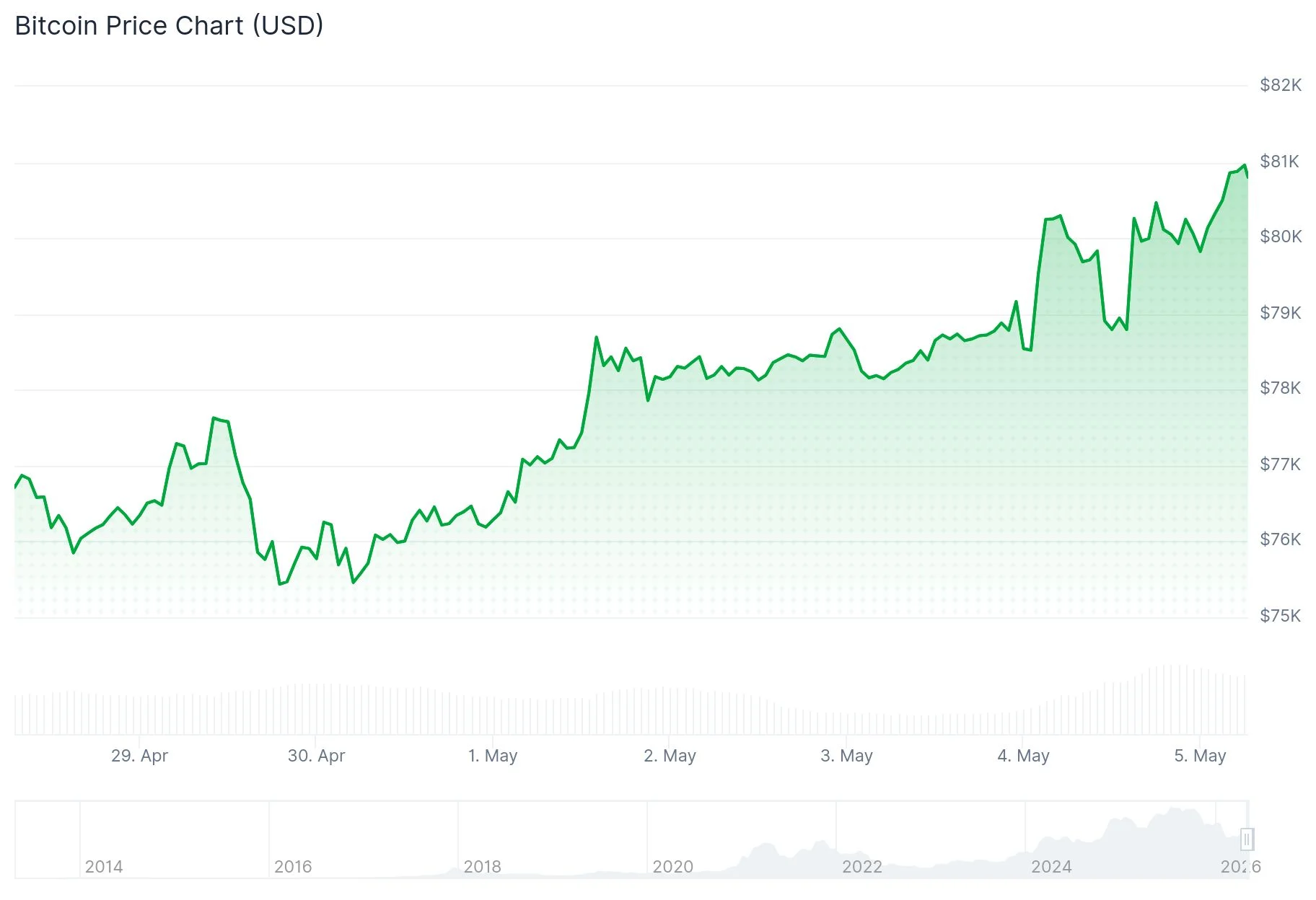
Bitcoin (BTC) Surges to $81,300: Traders Set Sights on $84K CME Futures Gap

TRM Labs and Hypernative Labs Secure Crypto Transactions