Prediction Markets Face Groundbreaking Crackdown: US Democrats Propose Sweeping Ban on Insider Betting
BitcoinWorld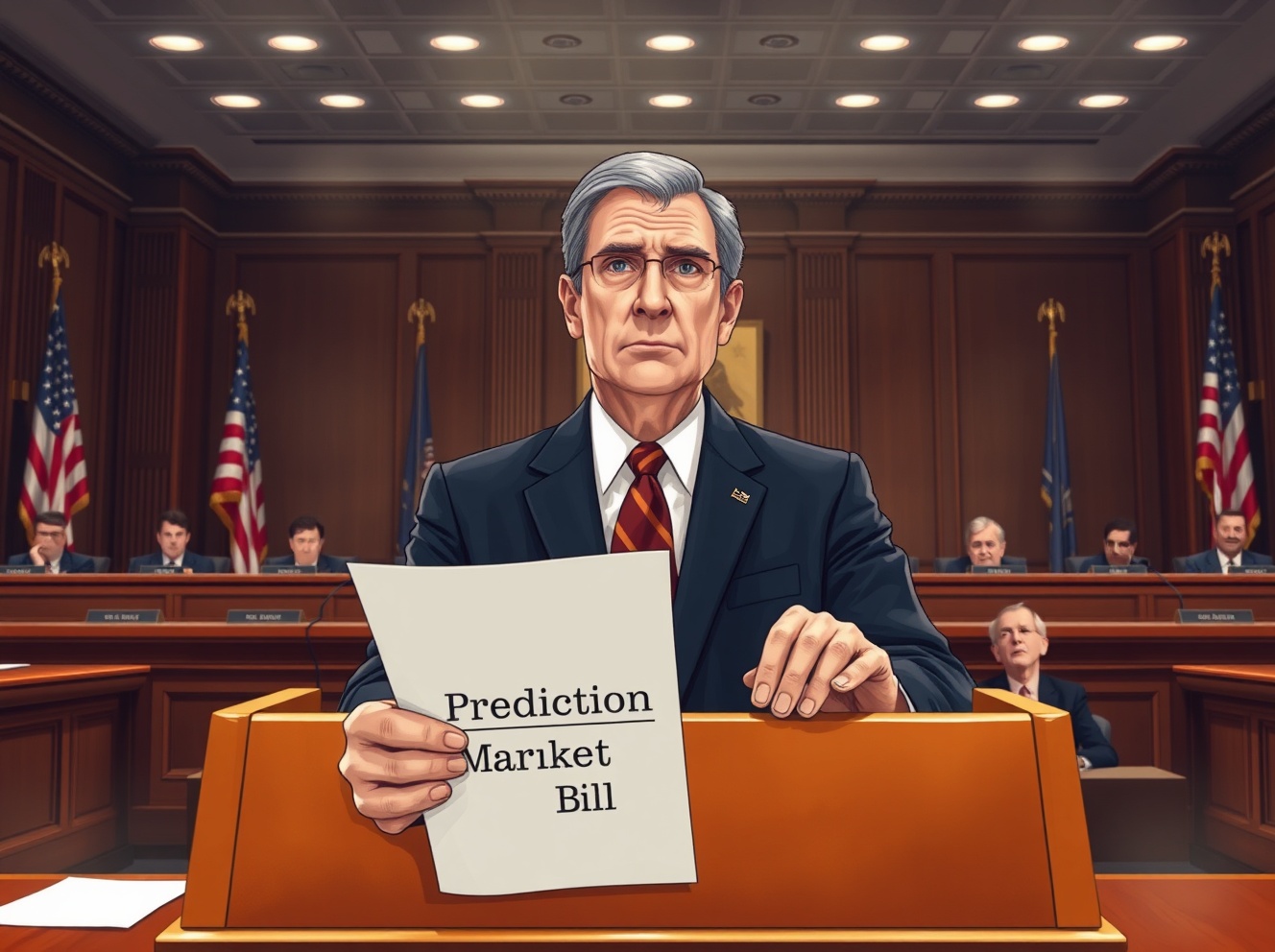
Prediction Markets Face Groundbreaking Crackdown: US Democrats Propose Sweeping Ban on Insider Betting
WASHINGTON, D.C., March 2025 – Democratic lawmakers have introduced groundbreaking legislation targeting prediction markets with a comprehensive ban on insider betting for sensitive events. This proposed bill represents one of the most significant regulatory interventions in the rapidly evolving prediction markets sector. Consequently, it aims to prevent individuals with privileged information from profiting through wagers on government actions, military operations, and cultural outcomes.
Prediction Markets Face Unprecedented Regulatory Scrutiny
Democratic legislators, led by key members of financial oversight committees, are pushing for this prohibition. Specifically, the bill targets wagers on events where participants might possess non-public information. According to legislative documents reviewed by CoinDesk, the prohibition would cover several specific categories. For instance, it includes potential military operations in geopolitical hotspots like Venezuela and Iran. Additionally, it extends to government policy announcements and intelligence-related activities.
Furthermore, the legislation addresses terrorism-related events and potential assassination attempts. Lawmakers express particular concern about markets that could incentivize harmful actions. Meanwhile, the proposal also encompasses cultural and entertainment events. These include bets on Super Bowl halftime performers and major award ceremony winners. Insiders in these industries often know results before public announcements.
Understanding the Legislative Framework and Rationale
The proposed legislation builds upon existing financial regulations against insider trading. However, it explicitly extends these principles to prediction markets. Lawmakers argue that current securities laws inadequately cover these emerging platforms. Therefore, they require specific statutory language. The bill’s sponsors cite several recent incidents that demonstrated potential vulnerabilities.
Historical Context and Regulatory Evolution
Prediction markets have operated in various forms for decades. Initially, they focused primarily on political elections and sports outcomes. Recently, however, platforms have expanded into more sensitive territories. Consequently, regulatory agencies have struggled to maintain appropriate oversight. The Commodity Futures Trading Commission (CFTC) currently oversees some prediction markets. Nevertheless, significant jurisdictional gaps remain.
Several academic studies have examined prediction market efficiency. Researchers from the University of Chicago and MIT have published influential papers. These studies generally find that prediction markets often aggregate information effectively. However, they also identify potential manipulation risks. Legislative staff reportedly consulted these studies while drafting the current proposal.
Key provisions in the proposed legislation include:
- Explicit prohibition on trading with material non-public information
- Enhanced reporting requirements for prediction market operators
- Civil and criminal penalties for violations
- Whistleblower protections for individuals reporting abuses
- Coordination requirements between regulatory agencies
Potential Impacts on Prediction Market Operators and Participants
Industry analysts anticipate significant operational changes if this legislation passes. Major prediction platforms would need to implement sophisticated monitoring systems. These systems would detect potentially problematic trading patterns. Additionally, they would require enhanced know-your-customer procedures. Platform operators might need to restrict certain event categories entirely.
Market participants would face new compliance obligations. Professional traders and institutional investors would need internal controls. These controls would prevent accidental violations. Retail participants might encounter reduced market access. Some platforms could limit participation to prevent regulatory issues.
The legislation could affect market liquidity and efficiency. Reduced participation might decrease trading volumes. However, increased integrity could attract more conservative participants. The net effect remains uncertain according to financial analysts.
Comparative Analysis with Traditional Financial Markets
Traditional securities markets have well-established insider trading prohibitions. The Securities and Exchange Commission (SEC) enforces these rules vigorously. Prediction markets currently lack equivalent regulatory frameworks. This legislative proposal aims to create parity. However, important differences exist between prediction markets and traditional securities.
| Aspect | Traditional Securities Markets | Prediction Markets (Proposed) |
|---|---|---|
| Regulatory Body | SEC, FINRA | CFTC, potentially new oversight |
| Insider Trading Definition | Well-established case law | New statutory definition |
| Enforcement Mechanisms | Sophisticated surveillance systems | Developing monitoring approaches |
| Penalty Structures | Fines, disgorgement, imprisonment | Similar penalties proposed |
Political Landscape and Legislative Prospects
The bill faces uncertain prospects in a divided Congress. Democratic sponsors have emphasized bipartisan concerns about market integrity. However, Republican responses have been mixed. Some conservative lawmakers support free market principles. Others share concerns about national security implications. Committee hearings will likely explore these tensions extensively.
Industry groups have begun formulating responses. The Prediction Market Industry Association has scheduled emergency meetings. Meanwhile, civil liberties organizations have expressed First Amendment concerns. They argue that prediction markets represent information exchange mechanisms. Therefore, they deserve protection as speech.
Administration officials have provided cautious comments. Treasury Department representatives acknowledge regulatory gaps. However, they emphasize careful consideration of unintended consequences. The White House has not yet taken an official position. Observers expect clearer signals after committee markups.
International Implications and Global Coordination
Other countries are monitoring this legislative development closely. European regulators have considered similar measures. The United Kingdom’s Financial Conduct Authority has studied prediction market risks. Asian jurisdictions have taken varied approaches. Singapore maintains relatively permissive regulations. China prohibits most prediction market activities entirely.
International coordination presents challenges. Prediction markets often operate across borders. Jurisdictional conflicts could complicate enforcement. The legislation includes provisions for international cooperation. These provisions mirror existing financial information sharing agreements.
Conclusion
The proposed ban on insider betting represents a watershed moment for prediction markets regulation. Democratic lawmakers aim to prevent information abuse in sensitive domains. Their legislation addresses military, governmental, and cultural events specifically. The outcome will significantly influence prediction market development globally. Consequently, market participants should monitor legislative progress carefully. This proposal could fundamentally reshape how prediction markets operate and who can participate in them.
FAQs
Q1: What exactly would the proposed legislation prohibit?
The bill would ban individuals from placing bets on prediction markets when they possess material non-public information about the event’s outcome. This specifically includes wagers on government actions, military operations, terrorism, assassinations, and certain cultural events where insiders might have advance knowledge.
Q2: How would this legislation affect regular prediction market users?
Regular users without insider information would likely continue participating, though platforms might implement stricter verification processes. Some event categories might become unavailable, and trading volumes could temporarily decrease during the regulatory transition period.
Q3: What penalties would violators face under this proposal?
The legislation proposes both civil and criminal penalties similar to traditional insider trading violations. These could include substantial fines, disgorgement of profits, and potential imprisonment for severe violations, particularly those involving national security information.
Q4: How does this compare to existing financial regulations?
While traditional securities markets have long prohibited insider trading, prediction markets have operated in a regulatory gray area. This legislation explicitly extends similar principles to prediction markets, creating more consistent oversight across different types of financial information markets.
Q5: What’s the likelihood this legislation will become law?
Political analysts give the proposal moderate chances of passage, possibly with significant amendments. The bill has stronger prospects in the Democratic-controlled Senate than the Republican-controlled House, and its final form will likely emerge from extensive committee negotiations and potential bipartisan compromise.
This post Prediction Markets Face Groundbreaking Crackdown: US Democrats Propose Sweeping Ban on Insider Betting first appeared on BitcoinWorld.


You May Also Like

XRP Overtakes Bitcoin and Ether in South Korean Trading Volumes, Echoing Historical Retail Front-Running Patterns

Solana PreStocks Fall After Anthropic and OpenAI Alerts