

Federal Reserve’s Critical Decision: Barr Signals Prolonged Rate Hold as Inflation Defies Targets
BitcoinWorld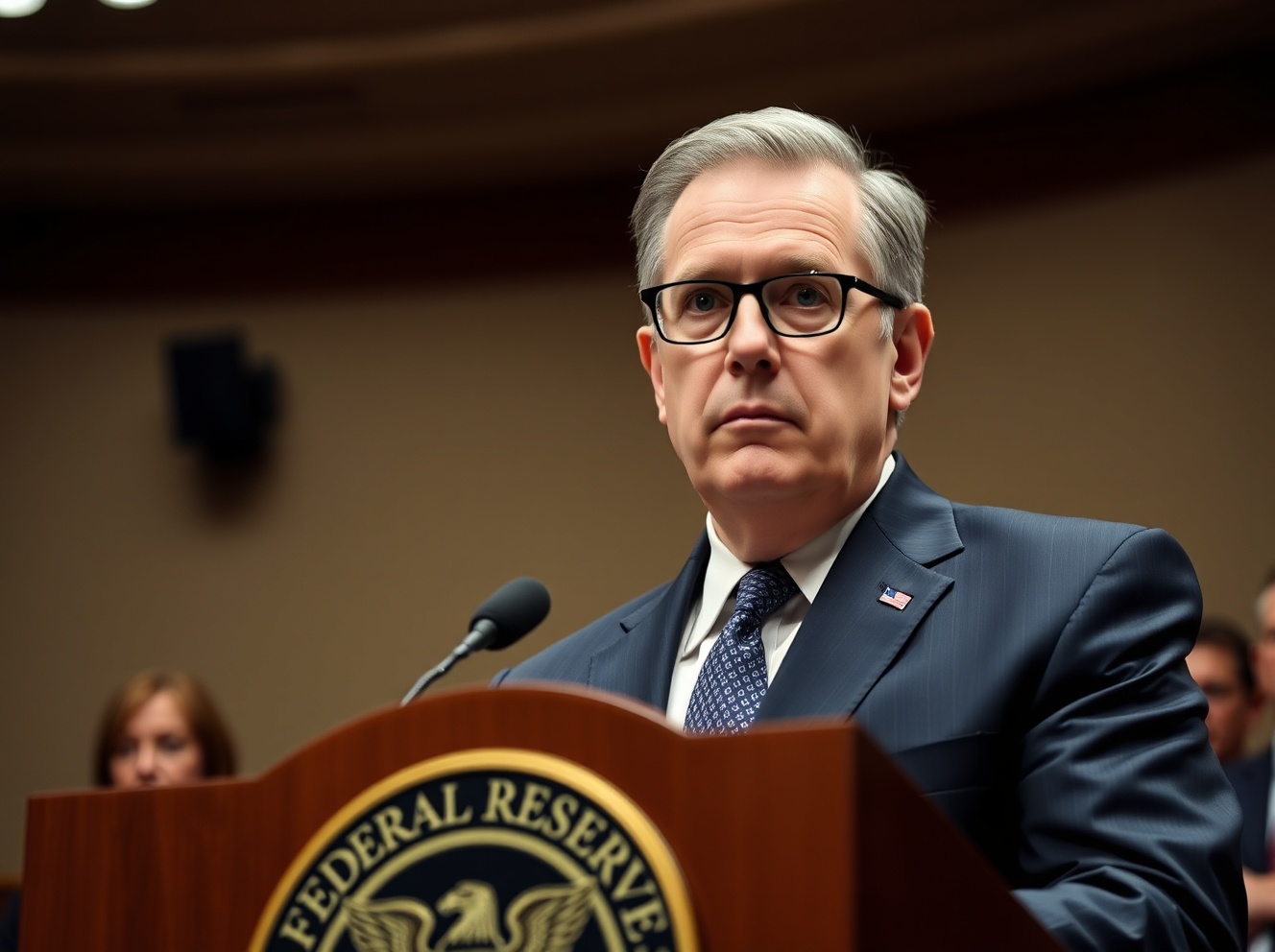
Federal Reserve’s Critical Decision: Barr Signals Prolonged Rate Hold as Inflation Defies Targets
WASHINGTON, D.C. — Federal Reserve Vice Chair for Supervision Michael Barr delivered a significant monetary policy signal this week, indicating that interest rates may need to remain at current levels for an extended period as inflation continues to exceed the central bank’s 2% target. This announcement comes amid persistent price pressures that have challenged policymakers throughout 2024 and into 2025.
Federal Reserve’s Stance on Interest Rates and Inflation
The Federal Reserve maintains its dual mandate of price stability and maximum employment. Consequently, the central bank has implemented a series of interest rate adjustments since 2022. Currently, the federal funds rate stands between 5.25% and 5.50%, representing its highest level in over two decades. Recent economic data shows inflation remaining stubbornly above the Fed’s target, with the Personal Consumption Expenditures (PCE) price index, the Fed’s preferred inflation gauge, registering at 2.8% year-over-year in the latest reading.
Michael Barr emphasized this persistent inflationary pressure during his recent congressional testimony. He stated that monetary policy appears “sufficiently restrictive” but requires more time to achieve its intended effects. The Fed’s approach now focuses on maintaining current rates rather than implementing further increases. This strategic patience reflects growing confidence that existing policy measures will eventually curb inflation without triggering a severe economic downturn.
Understanding the Inflation Landscape
Several factors contribute to the current inflationary environment. Housing costs continue to rise significantly, while services inflation remains elevated despite some moderation in goods prices. Labor market conditions also play a crucial role, with wage growth exceeding productivity gains in certain sectors. The Fed monitors multiple indicators to assess inflation trends comprehensively.
Key inflation metrics include:
- Core PCE: Excluding volatile food and energy prices
- Consumer Price Index (CPI): Broader measure of consumer goods
- Services Inflation: Particularly sensitive to wage pressures
- Shelter Costs: Largest component of consumer spending
Recent data reveals that while goods inflation has moderated substantially, services inflation remains problematic. This persistence suggests that achieving the 2% target will require additional time and sustained policy restraint.
Historical Context and Policy Evolution
The current monetary policy stance represents a significant evolution from the pandemic-era approach. During 2020-2021, the Fed maintained near-zero interest rates and substantial asset purchases to support economic recovery. However, as inflation surged in 2022, the central bank initiated its most aggressive tightening cycle since the 1980s. This historical context helps explain why policymakers now emphasize patience rather than additional rate hikes.
Previous tightening cycles provide valuable lessons. The Volcker-era policies of the early 1980s successfully tamed double-digit inflation but triggered a severe recession. More recently, the 2004-2006 tightening cycle preceded the global financial crisis. Current Fed officials, including Barr, reference these historical episodes when formulating today’s more measured approach.
Economic Impacts and Market Reactions
Financial markets have responded cautiously to the Fed’s messaging. Treasury yields have stabilized following initial volatility, while equity markets show measured reactions. The policy stance affects various economic sectors differently. For instance, housing markets face continued pressure from elevated mortgage rates, while consumer spending shows resilience despite higher borrowing costs.
The following table illustrates key economic indicators:
| Indicator | Current Level | Pre-Pandemic Average |
|---|---|---|
| Federal Funds Rate | 5.25%-5.50% | 0.25%-0.50% |
| Core PCE Inflation | 2.8% | 1.6% |
| Unemployment Rate | 4.0% | 3.7% |
| 10-Year Treasury Yield | 4.2% | 2.3% |
Business investment shows particular sensitivity to interest rate levels. Many corporations have delayed capital expenditure decisions pending greater clarity on the rate trajectory. Similarly, international considerations influence Fed decisions, as divergent monetary policies across major economies create exchange rate pressures and capital flow considerations.
Expert Perspectives on Policy Duration
Economic analysts offer varied interpretations of Barr’s comments. Some emphasize the data-dependent nature of Fed policy, noting that any significant deterioration in employment conditions could prompt earlier rate cuts. Others highlight inflation expectations, which remain anchored near the 2% target despite current price pressures. This anchoring provides policymakers with additional flexibility to maintain current rates without triggering destabilizing expectations.
Former Fed officials and academic economists generally support the current approach. They argue that premature easing could reignite inflationary pressures, necessitating even more aggressive tightening later. Conversely, maintaining restrictive policy for too long risks unnecessary economic damage. This balancing act represents the core challenge for current policymakers.
Global Monetary Policy Coordination
The Federal Reserve does not operate in isolation. Other major central banks face similar challenges with inflation moderation. The European Central Bank and Bank of England have also maintained restrictive policies, though their specific approaches differ based on regional economic conditions. This global context influences Fed decisions, particularly regarding exchange rates and international capital flows.
Emerging market economies face particular challenges from U.S. monetary policy. Higher interest rates in developed economies typically strengthen the U.S. dollar, creating debt servicing difficulties for countries with dollar-denominated obligations. The Fed considers these international spillover effects when formulating policy, though domestic considerations remain paramount under its congressional mandate.
Conclusion
Federal Reserve Vice Chair Michael Barr’s comments signal a patient approach to monetary policy as inflation gradually moderates toward the 2% target. The central bank appears committed to maintaining current interest rate levels until convincing evidence emerges that price stability is sustainably achieved. This cautious stance reflects lessons from previous policy cycles and acknowledges the complex economic landscape of 2025. Market participants should prepare for extended period of restrictive monetary policy as the Fed prioritizes its inflation mandate while monitoring employment conditions and financial stability risks.
FAQs
Q1: What did Michael Barr say about interest rates?
Federal Reserve Vice Chair Michael Barr indicated that interest rates may need to remain at current levels for an extended period due to inflation persisting above the Fed’s 2% target. He emphasized that policy appears “sufficiently restrictive” but requires time to fully impact the economy.
Q2: Why is the Fed keeping rates high if inflation is decreasing?
While inflation has moderated from peak levels, it remains above the Fed’s 2% target. Policymakers want to ensure inflation returns sustainably to target before considering rate cuts, avoiding premature easing that could reignite price pressures.
Q3: How long might rates remain at current levels?
The Fed has not specified a timeline, emphasizing data dependence. Most analysts expect rates to remain elevated through much of 2025, with potential gradual reductions beginning late 2025 or early 2026 if inflation continues to moderate.
Q4: What economic indicators does the Fed watch most closely?
The Fed primarily monitors the Personal Consumption Expenditures (PCE) price index, particularly core PCE excluding food and energy. They also track employment data, wage growth, consumer spending, and inflation expectations.
Q5: How do current interest rates compare to historical levels?
Current rates between 5.25% and 5.50% represent the highest level since 2001. However, they remain below peaks seen in the early 1980s when the federal funds rate exceeded 19% during the Volcker disinflation period.
This post Federal Reserve’s Critical Decision: Barr Signals Prolonged Rate Hold as Inflation Defies Targets first appeared on BitcoinWorld.


You May Also Like
Strategy Buys 535 BTC, Total Holdings Hit 818,869 BTC

Saylor's Strategy resumes BTC accumulation with $43M million purchase




