A wave of crypto ETF applications hit the SEC on Tuesday, with five distinct filings spanning Avalanche infrastructure to Bonk meme coin as issuers push into increasingly exotic territory. The lineup includes Bitwise’s spot Avalanche ETF, Defiance ETFs built around Bitcoin and Ethereum basis trades, Tuttle’s “Income Blast” funds covering Bonk, Litecoin, and Sui, plus T-Rex’s leveraged 2x Orbs ETF. ETF Institute co-founder Nate Geraci warned, “You all have no idea what’s coming over the next few months” as floodgates open beyond traditional Bitcoin and Ethereum products. The filings expand an already swelling roster of over 92 crypto ETF applications pending before regulators, with most facing October and November deadlines. The surge comes as REX-Osprey’s XRP and Dogecoin ETFs are confirmed to launch on Thursday using the faster 40 Act structure. The Act is an alternative pathways to market that bypass traditional SEC approval bottlenecks. Bitcoin ETFs recorded $292 million in net inflows while Ethereum products saw $61.74 million in outflows on September 16.Source: SosoValue Analysts assign varying approval odds to the new applications, with infrastructure tokens, such as Avalanche, receiving the highest chances. At the same time, memecoins and basis trading products face “more scrutiny” from regulators concerned about their volatility and liquidity profiles. Infrastructure Tokens Lead Approval Odds While Exotic Products Face Steeper Climb Bitwise joins VanEck and Grayscale in pursuing institutional-grade Avalanche exposure, with analysts calling AVAX the “highest chance of approval because it’s a simple product relative to others.” The infrastructure positioning and established market cap provide regulatory comfort compared to more speculative alternatives. The basis trade approach represents the “first of its kind” and will likely face “more scrutiny” given its complexity. For instance, Tuttle Capital Management became the second U.S. fund manager filing for spot Bonk ETF exposure alongside “Income Blast” products covering long-tail altcoins. This follows Safety Shot’s $25M BONK treasury strategy launched earlier in August. However, analysts warn memecoin-linked products face steeper climbs due to concerns over “volatility and liquidity” compared to established infrastructure tokens. The SEC provided clarity in February that memecoins aren’t securities. Most analysts believed that infrastructure coins like Avalanche are “close enough to Ether” to warrant strong consideration for approval. Beyond crypto ETFs, Bitwise also filed for a Stablecoin & Tokenization ETF. The institution aims to address the institutional demand for exposure to programmable money and real-world asset tokenization trends, which are accelerating across traditional finance integration with blockchain infrastructure. Generic Listing Standards Could Trigger Simultaneous Product Launch Wave Bloomberg analyst Eric Balchunas attributes systematic SEC delays to coordination with generic listing standards requested by Cboe and NYSE in July. The institutions proposed amendments that would allow for automatic crypto ETF listings without requiring case-by-case regulatory review, potentially eliminating the current 240-day process. Generic standards would accelerate multiple product launches simultaneously, rather than having them staggered and requiring separate approvals. Similar to Nate, Balchunas also expects a “flood of ETFs probably in a couple months” following anticipated October approval of streamlined procedures that could address accumulated demand across altcoin categories. The SEC extended Franklin Templeton’s Solana and XRP ETF decisions to November 14 while postponing BlackRock’s Ethereum staking amendment to October 30. Prediction markets assign 99% approval probability for Solana ETFs and 96% for XRP products as institutional confidence builds around regulatory clarity. Similarly, Dogecoin maintains a 96% approval odds despite its origins as a meme coin.Source: Polymarket Current uncertainty affects over 90 crypto ETF applications spanning diverse digital assets beyond Bitcoin and Ethereum. Solana and XRP currently lead the list of applications. Solana treasury companies position tens of billions in accumulation funds, anticipating approvals, while institutional demand continues building with Bitcoin ETFs recording consecutive daily inflows. The filing blitz occurs as President Trump’s pro-crypto stance creates regulatory optimism, with Chair Atkins declaring “Crypto’s time has come” at international forums. Additionally, Atkins’ “Project Crypto” initiative is also working towards modernizing securities rules and unifying digital asset frameworks amid growing institutional pressureA wave of crypto ETF applications hit the SEC on Tuesday, with five distinct filings spanning Avalanche infrastructure to Bonk meme coin as issuers push into increasingly exotic territory. The lineup includes Bitwise’s spot Avalanche ETF, Defiance ETFs built around Bitcoin and Ethereum basis trades, Tuttle’s “Income Blast” funds covering Bonk, Litecoin, and Sui, plus T-Rex’s leveraged 2x Orbs ETF. ETF Institute co-founder Nate Geraci warned, “You all have no idea what’s coming over the next few months” as floodgates open beyond traditional Bitcoin and Ethereum products. The filings expand an already swelling roster of over 92 crypto ETF applications pending before regulators, with most facing October and November deadlines. The surge comes as REX-Osprey’s XRP and Dogecoin ETFs are confirmed to launch on Thursday using the faster 40 Act structure. The Act is an alternative pathways to market that bypass traditional SEC approval bottlenecks. Bitcoin ETFs recorded $292 million in net inflows while Ethereum products saw $61.74 million in outflows on September 16.Source: SosoValue Analysts assign varying approval odds to the new applications, with infrastructure tokens, such as Avalanche, receiving the highest chances. At the same time, memecoins and basis trading products face “more scrutiny” from regulators concerned about their volatility and liquidity profiles. Infrastructure Tokens Lead Approval Odds While Exotic Products Face Steeper Climb Bitwise joins VanEck and Grayscale in pursuing institutional-grade Avalanche exposure, with analysts calling AVAX the “highest chance of approval because it’s a simple product relative to others.” The infrastructure positioning and established market cap provide regulatory comfort compared to more speculative alternatives. The basis trade approach represents the “first of its kind” and will likely face “more scrutiny” given its complexity. For instance, Tuttle Capital Management became the second U.S. fund manager filing for spot Bonk ETF exposure alongside “Income Blast” products covering long-tail altcoins. This follows Safety Shot’s $25M BONK treasury strategy launched earlier in August. However, analysts warn memecoin-linked products face steeper climbs due to concerns over “volatility and liquidity” compared to established infrastructure tokens. The SEC provided clarity in February that memecoins aren’t securities. Most analysts believed that infrastructure coins like Avalanche are “close enough to Ether” to warrant strong consideration for approval. Beyond crypto ETFs, Bitwise also filed for a Stablecoin & Tokenization ETF. The institution aims to address the institutional demand for exposure to programmable money and real-world asset tokenization trends, which are accelerating across traditional finance integration with blockchain infrastructure. Generic Listing Standards Could Trigger Simultaneous Product Launch Wave Bloomberg analyst Eric Balchunas attributes systematic SEC delays to coordination with generic listing standards requested by Cboe and NYSE in July. The institutions proposed amendments that would allow for automatic crypto ETF listings without requiring case-by-case regulatory review, potentially eliminating the current 240-day process. Generic standards would accelerate multiple product launches simultaneously, rather than having them staggered and requiring separate approvals. Similar to Nate, Balchunas also expects a “flood of ETFs probably in a couple months” following anticipated October approval of streamlined procedures that could address accumulated demand across altcoin categories. The SEC extended Franklin Templeton’s Solana and XRP ETF decisions to November 14 while postponing BlackRock’s Ethereum staking amendment to October 30. Prediction markets assign 99% approval probability for Solana ETFs and 96% for XRP products as institutional confidence builds around regulatory clarity. Similarly, Dogecoin maintains a 96% approval odds despite its origins as a meme coin.Source: Polymarket Current uncertainty affects over 90 crypto ETF applications spanning diverse digital assets beyond Bitcoin and Ethereum. Solana and XRP currently lead the list of applications. Solana treasury companies position tens of billions in accumulation funds, anticipating approvals, while institutional demand continues building with Bitcoin ETFs recording consecutive daily inflows. The filing blitz occurs as President Trump’s pro-crypto stance creates regulatory optimism, with Chair Atkins declaring “Crypto’s time has come” at international forums. Additionally, Atkins’ “Project Crypto” initiative is also working towards modernizing securities rules and unifying digital asset frameworks amid growing institutional pressure

Crypto ETF Filings Flood SEC with Avalanche, Sui, and Bonk Products as Issuers Test Limits

A wave of crypto ETF applications hit the SEC on Tuesday, with five distinct filings spanning Avalanche infrastructure to Bonk meme coin as issuers push into increasingly exotic territory.

The lineup includes Bitwise’s spot Avalanche ETF, Defiance ETFs built around Bitcoin and Ethereum basis trades, Tuttle’s “Income Blast” funds covering Bonk, Litecoin, and Sui, plus T-Rex’s leveraged 2x Orbs ETF.

ETF Institute co-founder Nate Geraci warned, “You all have no idea what’s coming over the next few months” as floodgates open beyond traditional Bitcoin and Ethereum products.

The filings expand an already swelling roster of over 92 crypto ETF applications pending before regulators, with most facing October and November deadlines.

The surge comes as REX-Osprey’s XRP and Dogecoin ETFs are confirmed to launch on Thursday using the faster 40 Act structure. The Act is an alternative pathways to market that bypass traditional SEC approval bottlenecks.

Bitcoin ETFs recorded $292 million in net inflows while Ethereum products saw $61.74 million in outflows on September 16.
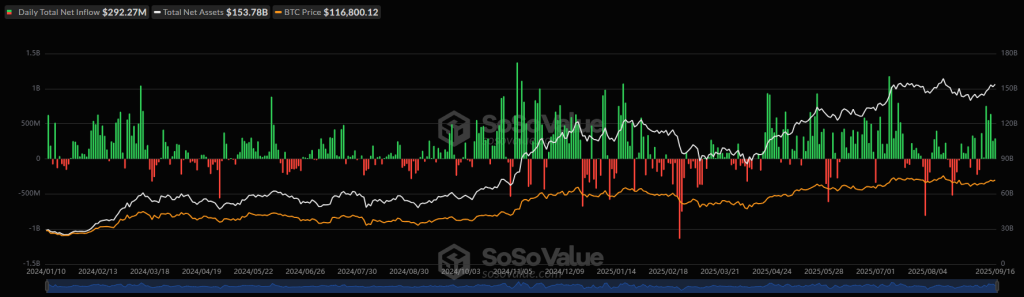
Crypto ETF Filings Flood SEC with Avalanche, Sui, and Bonk Products as Issuers Test LimitsSource: SosoValue

Analysts assign varying approval odds to the new applications, with infrastructure tokens, such as Avalanche, receiving the highest chances.

At the same time, memecoins and basis trading products face “more scrutiny” from regulators concerned about their volatility and liquidity profiles.

Infrastructure Tokens Lead Approval Odds While Exotic Products Face Steeper Climb

Bitwise joins VanEck and Grayscale in pursuing institutional-grade Avalanche exposure, with analysts calling AVAX the “highest chance of approval because it’s a simple product relative to others.

The infrastructure positioning and established market cap provide regulatory comfort compared to more speculative alternatives.

The basis trade approach represents the “first of its kind” and will likely face “more scrutiny” given its complexity.

For instance, Tuttle Capital Management became the second U.S. fund manager filing for spot Bonk ETF exposure alongside “Income Blast” products covering long-tail altcoins.

This follows Safety Shot’s $25M BONK treasury strategy launched earlier in August.

However, analysts warn memecoin-linked products face steeper climbs due to concerns over “volatility and liquidity” compared to established infrastructure tokens.

The SEC provided clarity in February that memecoins aren’t securities. Most analysts believed that infrastructure coins like Avalanche are “close enough to Ether” to warrant strong consideration for approval.

Beyond crypto ETFs, Bitwise also filed for a Stablecoin & Tokenization ETF.

The institution aims to address the institutional demand for exposure to programmable money and real-world asset tokenization trends, which are accelerating across traditional finance integration with blockchain infrastructure.

Generic Listing Standards Could Trigger Simultaneous Product Launch Wave

Bloomberg analyst Eric Balchunas attributes systematic SEC delays to coordination with generic listing standards requested by Cboe and NYSE in July.

The institutions proposed amendments that would allow for automatic crypto ETF listings without requiring case-by-case regulatory review, potentially eliminating the current 240-day process.

Generic standards would accelerate multiple product launches simultaneously, rather than having them staggered and requiring separate approvals.

Similar to Nate, Balchunas also expects a “flood of ETFs probably in a couple months” following anticipated October approval of streamlined procedures that could address accumulated demand across altcoin categories.

The SEC extended Franklin Templeton’s Solana and XRP ETF decisions to November 14 while postponing BlackRock’s Ethereum staking amendment to October 30.

Prediction markets assign 99% approval probability for Solana ETFs and 96% for XRP products as institutional confidence builds around regulatory clarity.

Similarly, Dogecoin maintains a 96% approval odds despite its origins as a meme coin.

Crypto ETF Filings Flood SEC with Avalanche, Sui, and Bonk Products as Issuers Test LimitsSource: Polymarket

Current uncertainty affects over 90 crypto ETF applications spanning diverse digital assets beyond Bitcoin and Ethereum. Solana and XRP currently lead the list of applications.

Solana treasury companies position tens of billions in accumulation funds, anticipating approvals, while institutional demand continues building with Bitcoin ETFs recording consecutive daily inflows.

The filing blitz occurs as President Trump’s pro-crypto stance creates regulatory optimism, with Chair Atkins declaring “Crypto’s time has come” at international forums.

Additionally, Atkins’ “Project Crypto” initiative is also working towards modernizing securities rules and unifying digital asset frameworks amid growing institutional pressure.


Market Opportunity
SUI Logo
SUI Price(SUI)
$1.5166
$1.5166$1.5166
-2.48%
USD
SUI (SUI) Live Price Chart
Disclaimer: The articles reposted on this site are sourced from public platforms and are provided for informational purposes only. They do not necessarily reflect the views of MEXC. All rights remain with the original authors. If you believe any content infringes on third-party rights, please contact service@support.mexc.com for removal. MEXC makes no guarantees regarding the accuracy, completeness, or timeliness of the content and is not responsible for any actions taken based on the information provided. The content does not constitute financial, legal, or other professional advice, nor should it be considered a recommendation or endorsement by MEXC.

You May Also Like

Google's AP2 protocol has been released. Does encrypted AI still have a chance?

Google's AP2 protocol has been released. Does encrypted AI still have a chance?

Following the MCP and A2A protocols, the AI Agent market has seen another blockbuster arrival: the Agent Payments Protocol (AP2), developed by Google. This will clearly further enhance AI Agents' autonomous multi-tasking capabilities, but the unfortunate reality is that it has little to do with web3AI. Let's take a closer look: What problem does AP2 solve? Simply put, the MCP protocol is like a universal hook, enabling AI agents to connect to various external tools and data sources; A2A is a team collaboration communication protocol that allows multiple AI agents to cooperate with each other to complete complex tasks; AP2 completes the last piece of the puzzle - payment capability. In other words, MCP opens up connectivity, A2A promotes collaboration efficiency, and AP2 achieves value exchange. The arrival of AP2 truly injects "soul" into the autonomous collaboration and task execution of Multi-Agents. Imagine AI Agents connecting Qunar, Meituan, and Didi to complete the booking of flights, hotels, and car rentals, but then getting stuck at the point of "self-payment." What's the point of all that multitasking? So, remember this: AP2 is an extension of MCP+A2A, solving the last mile problem of AI Agent automated execution. What are the technical highlights of AP2? The core innovation of AP2 is the Mandates mechanism, which is divided into real-time authorization mode and delegated authorization mode. Real-time authorization is easy to understand. The AI Agent finds the product and shows it to you. The operation can only be performed after the user signs. Delegated authorization requires the user to set rules in advance, such as only buying the iPhone 17 when the price drops to 5,000. The AI Agent monitors the trigger conditions and executes automatically. The implementation logic is cryptographically signed using Verifiable Credentials (VCs). Users can set complex commission conditions, including price ranges, time limits, and payment method priorities, forming a tamper-proof digital contract. Once signed, the AI Agent executes according to the conditions, with VCs ensuring auditability and security at every step. Of particular note is the "A2A x402" extension, a technical component developed by Google specifically for crypto payments, developed in collaboration with Coinbase and the Ethereum Foundation. This extension enables AI Agents to seamlessly process stablecoins, ETH, and other blockchain assets, supporting native payment scenarios within the Web3 ecosystem. What kind of imagination space can AP2 bring? After analyzing the technical principles, do you think that's it? Yes, in fact, the AP2 is boring when it is disassembled alone. Its real charm lies in connecting and opening up the "MCP+A2A+AP2" technology stack, completely opening up the complete link of AI Agent's autonomous analysis+execution+payment. From now on, AI Agents can open up many application scenarios. For example, AI Agents for stock investment and financial management can help us monitor the market 24/7 and conduct independent transactions. Enterprise procurement AI Agents can automatically replenish and renew without human intervention. AP2's complementary payment capabilities will further expand the penetration of the Agent-to-Agent economy into more scenarios. Google obviously understands that after the technical framework is established, the ecological implementation must be relied upon, so it has brought in more than 60 partners to develop it, almost covering the entire payment and business ecosystem. Interestingly, it also involves major Crypto players such as Ethereum, Coinbase, MetaMask, and Sui. Combined with the current trend of currency and stock integration, the imagination space has been doubled. Is web3 AI really dead? Not entirely. Google's AP2 looks complete, but it only achieves technical compatibility with Crypto payments. It can only be regarded as an extension of the traditional authorization framework and belongs to the category of automated execution. There is a "paradigm" difference between it and the autonomous asset management pursued by pure Crypto native solutions. The Crypto-native solutions under exploration are taking the "decentralized custody + on-chain verification" route, including AI Agent autonomous asset management, AI Agent autonomous transactions (DeFAI), AI Agent digital identity and on-chain reputation system (ERC-8004...), AI Agent on-chain governance DAO framework, AI Agent NPC and digital avatars, and many other interesting and fun directions. Ultimately, once users get used to AI Agent payments in traditional fields, their acceptance of AI Agents autonomously owning digital assets will also increase. And for those scenarios that AP2 cannot reach, such as anonymous transactions, censorship-resistant payments, and decentralized asset management, there will always be a time for crypto-native solutions to show their strength? The two are more likely to be complementary rather than competitive, but to be honest, the key technological advancements behind AI Agents currently all come from web2AI, and web3AI still needs to keep up the good work!
Share
PANews2025/09/18 07:00
Zama to Conduct Sealed-Bid Dutch Auction Using Encryption Tech

Zama to Conduct Sealed-Bid Dutch Auction Using Encryption Tech

Zama unveils innovative public token auction, using proprietary encryption. Bidding begins January 21, 2026. Key details on protocol and market impact.Read more
Share
Coinstats2026/01/20 18:13
Fed Finally Cuts Interest Rates – Crypto Boom is About to Begin

Fed Finally Cuts Interest Rates – Crypto Boom is About to Begin

The federal funds rate now stands in a range of 4.00% to 4.25%, a level that reflects a delicate balancing […] The post Fed Finally Cuts Interest Rates – Crypto Boom is About to Begin appeared first on Coindoo.
Share
Coindoo2025/09/18 02:01