Evangelicals forced into a reckoning — thanks to Trump
Since the beginning of President Donald Trump’s political career, writes the Nation, “pundits and religious observers have been asking themselves…just how a thrice-married casino owner who mocks opponents, savors vengeance, and revels in cruelty could become the hero of millions of devout Christians.” In 2016, he won 81 percent of the white evangelical vote — higher than George W. Bush, Mitt Romney, or John McCain in the preceding elections. Then in 2020, Trump secured 85 percent of Americans who both self-identified as evangelicals and attended church regularly. Finally in 2024, he yet again took over 80 percent of the evangelical vote.
Now in recent weeks, amidst Trump’s bizarre fight with the Pope, “Trump’s Christian right supporters have had to reckon anew with the fact that their purported values and those of their president are deeply misaligned.” From his decidedly un-Christian actions, to his beef with the Pope, to sharing photos of himself as Jesus, Trump “is a man who believes he is above faith and superior to those who profess it.”
What explains this “cognitive dissonance” on the part of evangelicals who profess Christian values on one hand but vote for a man who flaunts them on the other? “Trump is the ultimate American televangelist,” who “seized on a central truth about evangelism in the postmodern age: It is a style, not a theology.” This attracted a Christian audience that had been fed on flashy televangelism for decades.
As the Nation explains, Trump appeals to the same 20th-century revivalist landscape that produced the likes of Oral Roberts, Billy Graham, and now White House senior faith advisor Paula White-Cain: ministers who leveraged spectacle, cultural grievances, the defeat of enemies, and promises “that material success signaled divine favor” to draw evangelical masses raised on TV and consumerism. The future president took these lessons and applied them to his political rallies.
“Trump does not argue policy. He does not try to persuade with logic. He uses repetition over explanation and emotional intensity over coherence,” explains the Nation. “He regularly warns of an imminent apocalypse. He demands loyalty. He testifies. He reassures the devout…He also names his enemies, who happen to be the same groups that have dogged televangelists through the modern era.”
While some have argued the novelty of his “presidential bully pulpit,” the Nation notes that “Trump did not invent a new political style; he refashioned a religious style to transform politics. He merged his idiosyncratic form of pseudo-populist authoritarianism with classic revivalist evangelicalism. He has perfected the evangelical style in American politics” to the point where the two are indistinguishable.
Judging by the backlash against his AI-Jesus photo, says the Nation, “Donald Trump may have erred in promoting himself as a latter-day messiah,” but one thing is hard to deny: “he is the televangelist meme incarnate.”
- george conway
- noam chomsky
- civil war
- Kayleigh mcenany
- Melania trump
- drudge report
- paul krugman
- Lindsey graham
- Lincoln project
- al franken bill maher
- People of praise
- Ivanka trump
- eric trump


You May Also Like
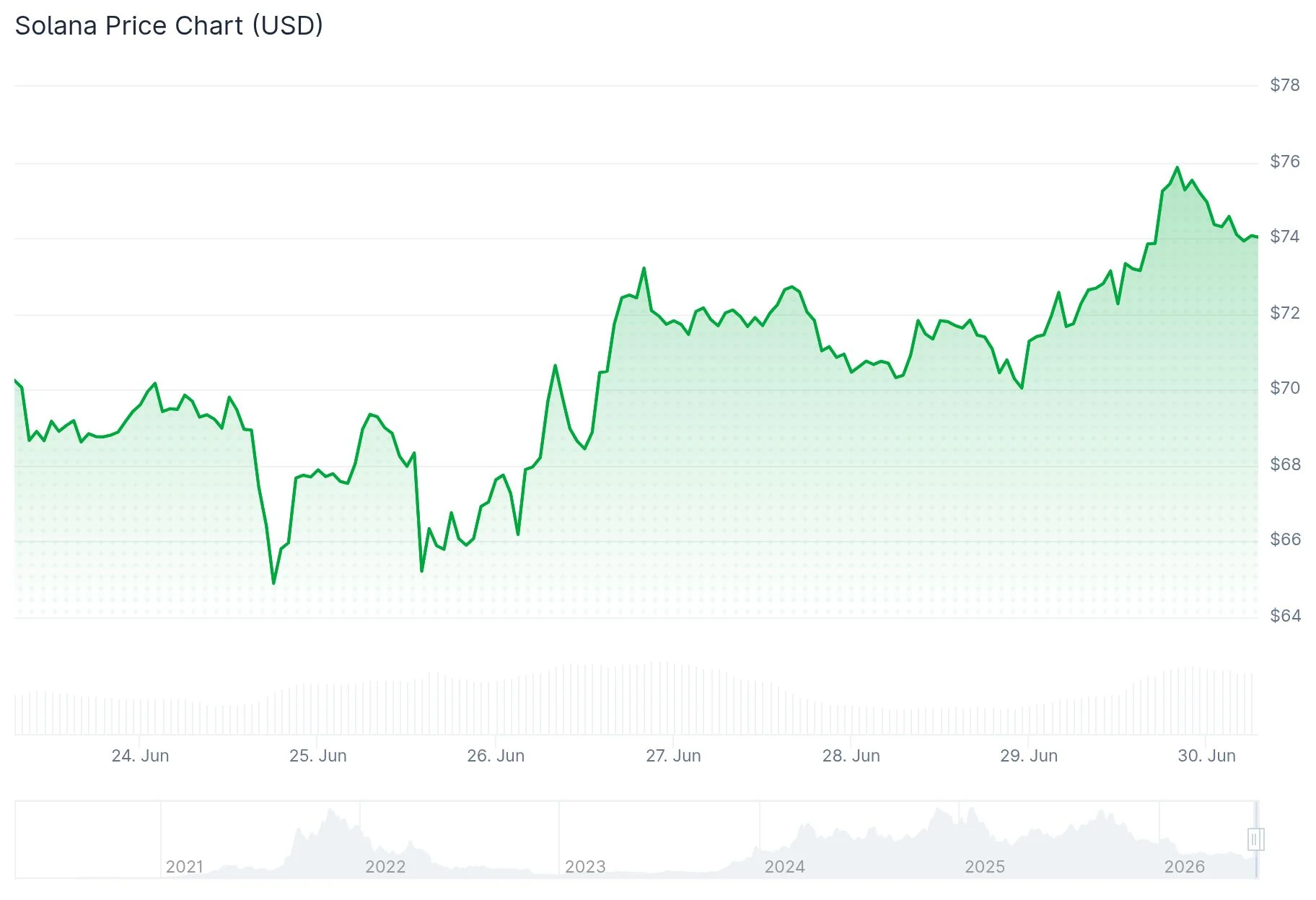
Solana (SOL) Faces Critical Juncture: $50 Downside or $150 Breakout Ahead

Siren (SIREN) Plunges 26.7% in 24 Hours: On-Chain Data Reveals Troubling Pattern