BitcoinWorld Unveiling the Crypto Fear & Greed Index: Why Fear Persists at 44 The cryptocurrency market is a dynamic landscape, often swayed by collective emotion. Currently, the Crypto Fear & Greed Index stands at 44, a slight uptick from yesterday but still firmly entrenched in the “fear” category. This crucial indicator helps us gauge the prevailing sentiment among investors, offering a snapshot of whether market participants are feeling overly cautious or excessively optimistic. Understanding this index is vital for anyone navigating the volatile world of digital assets. What Does the Crypto Fear & Greed Index Tell Us About Market Mood? When the Crypto Fear & Greed Index leans towards fear, it typically suggests that investors are hesitant, potentially selling off assets, or avoiding new investments due to price uncertainty. A score of 44, while not “extreme fear,” still highlights a prevailing sense of caution. This sentiment can sometimes present unique opportunities for those who are prepared to act contrary to the crowd, remembering the old adage: “Be fearful when others are greedy, and greedy when others are fearful.” How is the Crypto Fear & Greed Index Calculated for Accuracy? The strength of the Crypto Fear & Greed Index lies in its multi-faceted approach to measuring market sentiment. It doesn’t rely on a single data point but rather aggregates several key factors, each weighted to provide a comprehensive overview. This robust methodology aims to present a balanced perspective, minimizing bias from any one source. Here’s a breakdown of its components: Volatility (25%): This measures the current price fluctuations of Bitcoin compared to its average levels over the last 30 and 90 days. Higher volatility often signals fear. Trading Volume (25%): High trading volumes in a negative market can indicate strong selling pressure, suggesting fear. Conversely, high volume with rising prices can signal greed. Social Media Mentions (15%): An analysis of cryptocurrency-related hashtags and posts across various social media platforms. High engagement and negative sentiment can push the index towards fear. Surveys (15%): Polling investors directly provides a qualitative insight into their current market outlook. This component helps capture direct sentiment. Bitcoin Dominance (10%): An increase in Bitcoin’s market capitalization dominance often indicates investors are moving away from altcoins into the perceived safety of Bitcoin, a sign of fear in the broader altcoin market. Google Search Volume (10%): Tracking search queries related to cryptocurrencies, particularly those indicating market trends or price predictions, offers a glimpse into retail investor interest and potential panic or excitement. Navigating Crypto Markets with the Crypto Fear & Greed Index Understanding the current reading of the Crypto Fear & Greed Index can be a powerful tool for investors, but it’s important to use it wisely. While it doesn’t offer direct buy or sell signals, it provides context. For instance, prolonged periods of “extreme fear” (scores below 20) have historically coincided with market bottoms, potentially indicating good entry points for long-term investors. Conversely, “extreme greed” (scores above 75) might suggest a market correction is on the horizon. However, relying solely on this index would be a mistake. It should always be used in conjunction with fundamental analysis, technical analysis, and a clear understanding of your own risk tolerance. The index serves best as a complementary indicator, helping you to assess the emotional temperature of the market and perhaps counter your own inherent biases. Understanding the Psychology Behind the Crypto Fear & Greed Index The human elements of fear and greed are deeply ingrained in financial markets, and the Crypto Fear & Greed Index beautifully illustrates this. Fear often leads to panic selling, causing prices to drop further, while greed can drive irrational exuberance, pushing asset values beyond sustainable levels. These emotions create cycles that are evident in market behavior. When fear dominates, investors tend to make decisions based on emotion rather than logic, often selling at a loss to avoid further pain. Conversely, during periods of greed, the fear of missing out (FOMO) can lead to speculative buying, often by those who are new to the market or less experienced. Recognizing these emotional patterns, both in yourself and in the broader market, is a significant step towards becoming a more disciplined and successful investor. The Crypto Fear & Greed Index remains a vital barometer for understanding the collective psyche of the crypto market. Its current reading of 44, signaling persistent fear, serves as a reminder that caution still prevails. By understanding its components and how to interpret its signals, investors can gain valuable insights, helping them to make more informed and less emotionally driven decisions in the often-turbulent world of cryptocurrencies. Stay informed, stay rational, and let data guide your path. Frequently Asked Questions (FAQs) What is the Crypto Fear & Greed Index? The Crypto Fear & Greed Index is a tool that measures the current sentiment of the cryptocurrency market. It ranges from 0 (extreme fear) to 100 (extreme greed), indicating whether investors are feeling fearful or optimistic. How is “fear” different from “extreme fear” on the index? “Fear” (typically 25-49) suggests general caution and uncertainty among investors. “Extreme Fear” (0-24) indicates widespread panic, significant selling pressure, and a strong belief that prices will fall further. Can the Crypto Fear & Greed Index predict market bottoms or tops? While the index can offer strong indications, it is not a direct predictive tool. Historically, extreme fear has often coincided with market bottoms, and extreme greed with market tops, but it should be used with other analytical methods. What factors influence the Crypto Fear & Greed Index? The index is influenced by six key factors: volatility, trading volume, social media mentions, investor surveys, Bitcoin’s market capitalization dominance, and Google search volume. Is the Crypto Fear & Greed Index only for Bitcoin? While Bitcoin’s data plays a significant role due to its market dominance, the index is designed to reflect the overall sentiment of the broader cryptocurrency market, not just Bitcoin specifically. Did this article help you better understand the Crypto Fear & Greed Index? Share your insights with your friends and fellow crypto enthusiasts on social media! Your shares help us bring valuable information to more people. To learn more about the latest crypto market trends, explore our article on key developments shaping Bitcoin price action. This post Unveiling the Crypto Fear & Greed Index: Why Fear Persists at 44 first appeared on BitcoinWorld.BitcoinWorld Unveiling the Crypto Fear & Greed Index: Why Fear Persists at 44 The cryptocurrency market is a dynamic landscape, often swayed by collective emotion. Currently, the Crypto Fear & Greed Index stands at 44, a slight uptick from yesterday but still firmly entrenched in the “fear” category. This crucial indicator helps us gauge the prevailing sentiment among investors, offering a snapshot of whether market participants are feeling overly cautious or excessively optimistic. Understanding this index is vital for anyone navigating the volatile world of digital assets. What Does the Crypto Fear & Greed Index Tell Us About Market Mood? When the Crypto Fear & Greed Index leans towards fear, it typically suggests that investors are hesitant, potentially selling off assets, or avoiding new investments due to price uncertainty. A score of 44, while not “extreme fear,” still highlights a prevailing sense of caution. This sentiment can sometimes present unique opportunities for those who are prepared to act contrary to the crowd, remembering the old adage: “Be fearful when others are greedy, and greedy when others are fearful.” How is the Crypto Fear & Greed Index Calculated for Accuracy? The strength of the Crypto Fear & Greed Index lies in its multi-faceted approach to measuring market sentiment. It doesn’t rely on a single data point but rather aggregates several key factors, each weighted to provide a comprehensive overview. This robust methodology aims to present a balanced perspective, minimizing bias from any one source. Here’s a breakdown of its components: Volatility (25%): This measures the current price fluctuations of Bitcoin compared to its average levels over the last 30 and 90 days. Higher volatility often signals fear. Trading Volume (25%): High trading volumes in a negative market can indicate strong selling pressure, suggesting fear. Conversely, high volume with rising prices can signal greed. Social Media Mentions (15%): An analysis of cryptocurrency-related hashtags and posts across various social media platforms. High engagement and negative sentiment can push the index towards fear. Surveys (15%): Polling investors directly provides a qualitative insight into their current market outlook. This component helps capture direct sentiment. Bitcoin Dominance (10%): An increase in Bitcoin’s market capitalization dominance often indicates investors are moving away from altcoins into the perceived safety of Bitcoin, a sign of fear in the broader altcoin market. Google Search Volume (10%): Tracking search queries related to cryptocurrencies, particularly those indicating market trends or price predictions, offers a glimpse into retail investor interest and potential panic or excitement. Navigating Crypto Markets with the Crypto Fear & Greed Index Understanding the current reading of the Crypto Fear & Greed Index can be a powerful tool for investors, but it’s important to use it wisely. While it doesn’t offer direct buy or sell signals, it provides context. For instance, prolonged periods of “extreme fear” (scores below 20) have historically coincided with market bottoms, potentially indicating good entry points for long-term investors. Conversely, “extreme greed” (scores above 75) might suggest a market correction is on the horizon. However, relying solely on this index would be a mistake. It should always be used in conjunction with fundamental analysis, technical analysis, and a clear understanding of your own risk tolerance. The index serves best as a complementary indicator, helping you to assess the emotional temperature of the market and perhaps counter your own inherent biases. Understanding the Psychology Behind the Crypto Fear & Greed Index The human elements of fear and greed are deeply ingrained in financial markets, and the Crypto Fear & Greed Index beautifully illustrates this. Fear often leads to panic selling, causing prices to drop further, while greed can drive irrational exuberance, pushing asset values beyond sustainable levels. These emotions create cycles that are evident in market behavior. When fear dominates, investors tend to make decisions based on emotion rather than logic, often selling at a loss to avoid further pain. Conversely, during periods of greed, the fear of missing out (FOMO) can lead to speculative buying, often by those who are new to the market or less experienced. Recognizing these emotional patterns, both in yourself and in the broader market, is a significant step towards becoming a more disciplined and successful investor. The Crypto Fear & Greed Index remains a vital barometer for understanding the collective psyche of the crypto market. Its current reading of 44, signaling persistent fear, serves as a reminder that caution still prevails. By understanding its components and how to interpret its signals, investors can gain valuable insights, helping them to make more informed and less emotionally driven decisions in the often-turbulent world of cryptocurrencies. Stay informed, stay rational, and let data guide your path. Frequently Asked Questions (FAQs) What is the Crypto Fear & Greed Index? The Crypto Fear & Greed Index is a tool that measures the current sentiment of the cryptocurrency market. It ranges from 0 (extreme fear) to 100 (extreme greed), indicating whether investors are feeling fearful or optimistic. How is “fear” different from “extreme fear” on the index? “Fear” (typically 25-49) suggests general caution and uncertainty among investors. “Extreme Fear” (0-24) indicates widespread panic, significant selling pressure, and a strong belief that prices will fall further. Can the Crypto Fear & Greed Index predict market bottoms or tops? While the index can offer strong indications, it is not a direct predictive tool. Historically, extreme fear has often coincided with market bottoms, and extreme greed with market tops, but it should be used with other analytical methods. What factors influence the Crypto Fear & Greed Index? The index is influenced by six key factors: volatility, trading volume, social media mentions, investor surveys, Bitcoin’s market capitalization dominance, and Google search volume. Is the Crypto Fear & Greed Index only for Bitcoin? While Bitcoin’s data plays a significant role due to its market dominance, the index is designed to reflect the overall sentiment of the broader cryptocurrency market, not just Bitcoin specifically. Did this article help you better understand the Crypto Fear & Greed Index? Share your insights with your friends and fellow crypto enthusiasts on social media! Your shares help us bring valuable information to more people. To learn more about the latest crypto market trends, explore our article on key developments shaping Bitcoin price action. This post Unveiling the Crypto Fear & Greed Index: Why Fear Persists at 44 first appeared on BitcoinWorld.

Unveiling the Crypto Fear & Greed Index: Why Fear Persists at 44

BitcoinWorld
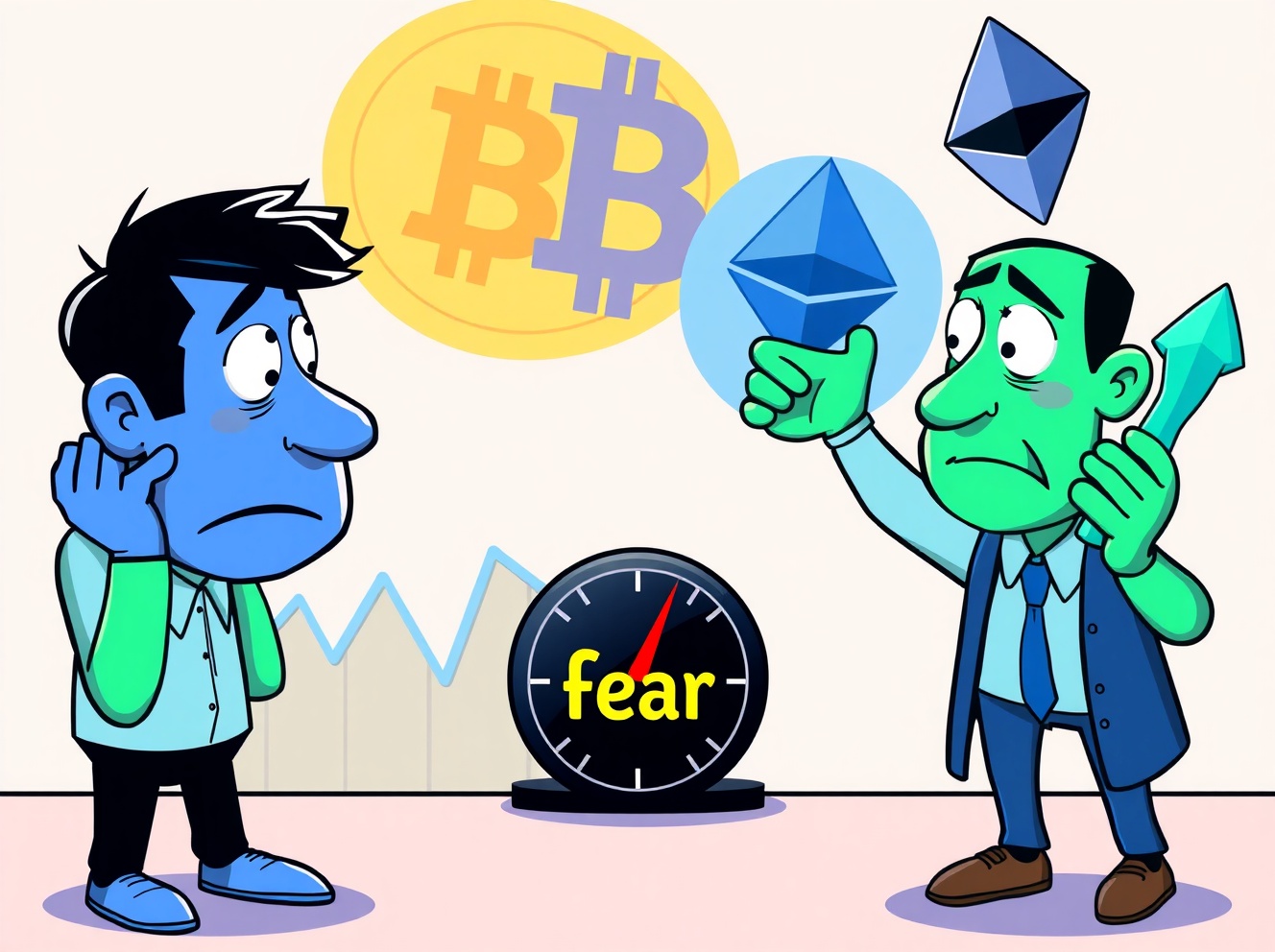
Unveiling the Crypto Fear & Greed Index: Why Fear Persists at 44

The cryptocurrency market is a dynamic landscape, often swayed by collective emotion. Currently, the Crypto Fear & Greed Index stands at 44, a slight uptick from yesterday but still firmly entrenched in the “fear” category. This crucial indicator helps us gauge the prevailing sentiment among investors, offering a snapshot of whether market participants are feeling overly cautious or excessively optimistic. Understanding this index is vital for anyone navigating the volatile world of digital assets.

What Does the Crypto Fear & Greed Index Tell Us About Market Mood?

When the Crypto Fear & Greed Index leans towards fear, it typically suggests that investors are hesitant, potentially selling off assets, or avoiding new investments due to price uncertainty. A score of 44, while not “extreme fear,” still highlights a prevailing sense of caution. This sentiment can sometimes present unique opportunities for those who are prepared to act contrary to the crowd, remembering the old adage: “Be fearful when others are greedy, and greedy when others are fearful.”

How is the Crypto Fear & Greed Index Calculated for Accuracy?

The strength of the Crypto Fear & Greed Index lies in its multi-faceted approach to measuring market sentiment. It doesn’t rely on a single data point but rather aggregates several key factors, each weighted to provide a comprehensive overview. This robust methodology aims to present a balanced perspective, minimizing bias from any one source.

Here’s a breakdown of its components:

  • Volatility (25%): This measures the current price fluctuations of Bitcoin compared to its average levels over the last 30 and 90 days. Higher volatility often signals fear.
  • Trading Volume (25%): High trading volumes in a negative market can indicate strong selling pressure, suggesting fear. Conversely, high volume with rising prices can signal greed.
  • Social Media Mentions (15%): An analysis of cryptocurrency-related hashtags and posts across various social media platforms. High engagement and negative sentiment can push the index towards fear.
  • Surveys (15%): Polling investors directly provides a qualitative insight into their current market outlook. This component helps capture direct sentiment.
  • Bitcoin Dominance (10%): An increase in Bitcoin’s market capitalization dominance often indicates investors are moving away from altcoins into the perceived safety of Bitcoin, a sign of fear in the broader altcoin market.
  • Google Search Volume (10%): Tracking search queries related to cryptocurrencies, particularly those indicating market trends or price predictions, offers a glimpse into retail investor interest and potential panic or excitement.

Understanding the current reading of the Crypto Fear & Greed Index can be a powerful tool for investors, but it’s important to use it wisely. While it doesn’t offer direct buy or sell signals, it provides context. For instance, prolonged periods of “extreme fear” (scores below 20) have historically coincided with market bottoms, potentially indicating good entry points for long-term investors. Conversely, “extreme greed” (scores above 75) might suggest a market correction is on the horizon.

However, relying solely on this index would be a mistake. It should always be used in conjunction with fundamental analysis, technical analysis, and a clear understanding of your own risk tolerance. The index serves best as a complementary indicator, helping you to assess the emotional temperature of the market and perhaps counter your own inherent biases.

Understanding the Psychology Behind the Crypto Fear & Greed Index

The human elements of fear and greed are deeply ingrained in financial markets, and the Crypto Fear & Greed Index beautifully illustrates this. Fear often leads to panic selling, causing prices to drop further, while greed can drive irrational exuberance, pushing asset values beyond sustainable levels. These emotions create cycles that are evident in market behavior.

When fear dominates, investors tend to make decisions based on emotion rather than logic, often selling at a loss to avoid further pain. Conversely, during periods of greed, the fear of missing out (FOMO) can lead to speculative buying, often by those who are new to the market or less experienced. Recognizing these emotional patterns, both in yourself and in the broader market, is a significant step towards becoming a more disciplined and successful investor.

The Crypto Fear & Greed Index remains a vital barometer for understanding the collective psyche of the crypto market. Its current reading of 44, signaling persistent fear, serves as a reminder that caution still prevails. By understanding its components and how to interpret its signals, investors can gain valuable insights, helping them to make more informed and less emotionally driven decisions in the often-turbulent world of cryptocurrencies. Stay informed, stay rational, and let data guide your path.

Frequently Asked Questions (FAQs)

What is the Crypto Fear & Greed Index?

The Crypto Fear & Greed Index is a tool that measures the current sentiment of the cryptocurrency market. It ranges from 0 (extreme fear) to 100 (extreme greed), indicating whether investors are feeling fearful or optimistic.

How is “fear” different from “extreme fear” on the index?

“Fear” (typically 25-49) suggests general caution and uncertainty among investors. “Extreme Fear” (0-24) indicates widespread panic, significant selling pressure, and a strong belief that prices will fall further.

Can the Crypto Fear & Greed Index predict market bottoms or tops?

While the index can offer strong indications, it is not a direct predictive tool. Historically, extreme fear has often coincided with market bottoms, and extreme greed with market tops, but it should be used with other analytical methods.

What factors influence the Crypto Fear & Greed Index?

The index is influenced by six key factors: volatility, trading volume, social media mentions, investor surveys, Bitcoin’s market capitalization dominance, and Google search volume.

Is the Crypto Fear & Greed Index only for Bitcoin?

While Bitcoin’s data plays a significant role due to its market dominance, the index is designed to reflect the overall sentiment of the broader cryptocurrency market, not just Bitcoin specifically.

Did this article help you better understand the Crypto Fear & Greed Index? Share your insights with your friends and fellow crypto enthusiasts on social media! Your shares help us bring valuable information to more people.

To learn more about the latest crypto market trends, explore our article on key developments shaping Bitcoin price action.

This post Unveiling the Crypto Fear & Greed Index: Why Fear Persists at 44 first appeared on BitcoinWorld.


Market Opportunity
Threshold Logo
Threshold Price(T)
$0.009466
$0.009466$0.009466
+1.63%
USD
Threshold (T) Live Price Chart
Disclaimer: The articles reposted on this site are sourced from public platforms and are provided for informational purposes only. They do not necessarily reflect the views of MEXC. All rights remain with the original authors. If you believe any content infringes on third-party rights, please contact service@support.mexc.com for removal. MEXC makes no guarantees regarding the accuracy, completeness, or timeliness of the content and is not responsible for any actions taken based on the information provided. The content does not constitute financial, legal, or other professional advice, nor should it be considered a recommendation or endorsement by MEXC.

You May Also Like

MAXI DOGE Holders Diversify into $GGs for Fast-Growth 2025 Crypto Presale Opportunities

MAXI DOGE Holders Diversify into $GGs for Fast-Growth 2025 Crypto Presale Opportunities

Presale crypto tokens have become some of the most active areas in Web3, offering early access to projects that blend culture, finance, and technology. Investors are constantly searching for the best crypto presale to buy right now, comparing new token presales across different niches. MAXI DOGE has gained attention for its meme-driven energy, but early [...] The post MAXI DOGE Holders Diversify into $GGs for Fast-Growth 2025 Crypto Presale Opportunities appeared first on Blockonomi.
Share
Blockonomi2025/09/18 00:00
UK crypto holders brace for FCA’s expanded regulatory reach

UK crypto holders brace for FCA’s expanded regulatory reach

The post UK crypto holders brace for FCA’s expanded regulatory reach appeared on BitcoinEthereumNews.com. British crypto holders may soon face a very different landscape as the Financial Conduct Authority (FCA) moves to expand its regulatory reach in the industry. A new consultation paper outlines how the watchdog intends to apply its rulebook to crypto firms, shaping everything from asset safeguarding to trading platform operation. According to the financial regulator, these proposals would translate into clearer protections for retail investors and stricter oversight of crypto firms. UK FCA plans Until now, UK crypto users mostly encountered the FCA through rules on promotions and anti-money laundering checks. The consultation paper goes much further. It proposes direct oversight of stablecoin issuers, custodians, and crypto-asset trading platforms (CATPs). For investors, that means the wallets, exchanges, and coins they rely on could soon be subject to the same governance and resilience standards as traditional financial institutions. The regulator has also clarified that firms need official authorization before serving customers. This condition should, in theory, reduce the risk of sudden platform failures or unclear accountability. David Geale, the FCA’s executive director of payments and digital finance, said the proposals are designed to strike a balance between innovation and protection. He explained: “We want to develop a sustainable and competitive crypto sector – balancing innovation, market integrity and trust.” Geale noted that while the rules will not eliminate investment risks, they will create consistent standards, helping consumers understand what to expect from registered firms. Why does this matter for crypto holders? The UK regulatory framework shift would provide safer custody of assets, better disclosure of risks, and clearer recourse if something goes wrong. However, the regulator was also frank in its submission, arguing that no rulebook can eliminate the volatility or inherent risks of holding digital assets. Instead, the focus is on ensuring that when consumers choose to invest, they do…
Share
BitcoinEthereumNews2025/09/17 23:52
Bank of Canada cuts rate to 2.5% as tariffs and weak hiring hit economy

Bank of Canada cuts rate to 2.5% as tariffs and weak hiring hit economy

The Bank of Canada lowered its overnight rate to 2.5% on Wednesday, responding to mounting economic damage from US tariffs and a slowdown in hiring. The quarter-point cut was the first since March and met predictions from markets and economists. Governor Tiff Macklem, speaking in Ottawa, said the decision was unanimous. “With a weaker economy […]
Share
Cryptopolitan2025/09/17 23:09