

AI-Powered Breakthrough in CT Scans: Faster, Smarter Material Imaging

:::info Authors:
(1) Jiandong Wang, Shenzhen Xilaiheng Medical Electronics, (HORRON), China and Centre for Medical Engineering and Technology, University of Dundee, DD1 4HN, UK (jack@horron.com);
(2) Alessandro Perelli, Centre for Medical Engineering and Technology, University of Dundee, DD1 4HN, UK (aperelli001@dundee.ac.uk).
:::
Table of Links
Abstract and 1 Introduction
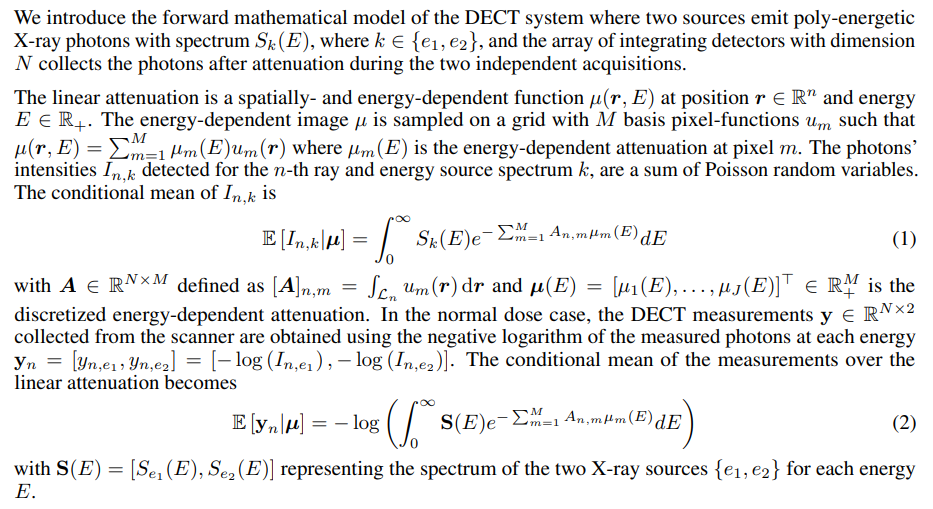
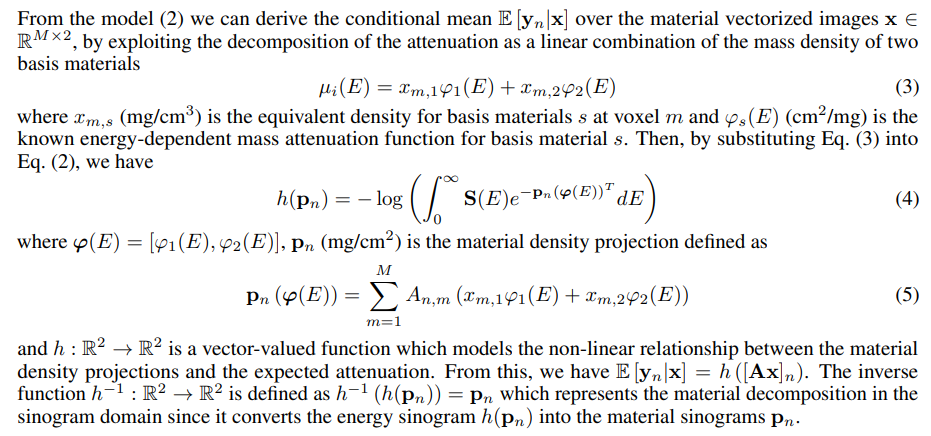
- Dual-Energy CT Forward Model
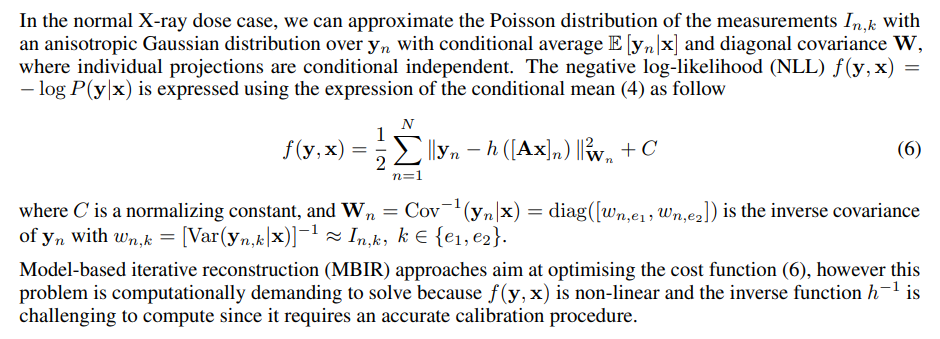
- [Model-based Optimization Problem]()
- End-to-End Model-based Deep Learning for Material Decomposition (E2E-Decomp)
- Numerical Results
- Conclusion
- Compliance with Ethical Standards and References
Abstract
Dual energy X-ray Computed Tomography (DECT) enables to automatically decompose materials in clinical images without the manual segmentation using the dependency of the Xray linear attenuation with energy. In this work we propose a deep learning procedure called End-to-End Material Decomposition (E2E-DEcomp) for quantitative material decomposition which directly convert the CT projection data into material images. The algorithm is based on incorporating the knowledge of the spectral model DECT system into the deep learning training loss and combining a data-learned prior in the material image domain. Furthermore, the training does not require any energy-based images in the dataset but rather only sinogram and material images. We show the effectiveness of the proposed direct E2E-DEcomp method on the AAPM spectral CT dataset Sidky and Pan [2023] compared with state of the art supervised deep learning networks.
1 Introduction
Dual-energy computed tomography (DECT) is one spectral CT technology which is based on the deployment of two X-ray sources at different energies which can potentially allow to discriminate different materials in a specimen or to reconstruct virtual mono-energetic images which is of utmost interest in clinical imaging applications and industrial non-destructive testing Mendonça et al. [2013]. The dependency of the attenuation coefficient of different materials respect to the X-ray energy can be leveraged in the DECT material decomposition procedure whose aim is to estimate each pixel’s value as a linear combination of two different basis materials Johnson et al. [2007].
\ Different approaches have been developed to obtain material images: the image domain techniques are based on first reconstructing independently the energy dependent attenuation in each pixel Maaß et al. [2009]. The majority of the proposed networks such as U-Net Nadkarni et al. [2022] and generative adversarial network (GAN) Shi et al. [2021] are trained with a supervised learning approach which requires the pair of energy reconstructed Dual-energy computed tomography (DECT) images and basis material segmented images in the dataset. However these methods do not account from the beam-hardening effect, caused by the poly-energetic nature of the X-ray source. Moreover this approach leads to propagate the estimation errors from the reconstruction to the subsequent material decomposition.
\ In order to account for the beam-hardening effect, one-step methods directly estimate basis materials images from Cai et al. [2013] measurements projects by leveraging a model-based optimization function to minimize. However because of the highly non-linear due to the energies X-ray source coupling, this leads to minimize non-convex cost functions which require high computational cost Long and Fessler [2014].
\ An alternative approach is based on decomposing the high and low energy sinogram into two independent measurements which correspond to a single basis material. Different approximations of the decomposition function that convert the dual energy sinograms into materials independent sinograms have been proposed in Alvarez and Macovski [1976]. Afterwards each material sinogram is converted into the image domain using model-based optimization methods Mechlem et al. [2018] with spatial regularization.
\ Recently, other works have exploited the paradigm of combining deep learning and the knowledge of the physics of the DECT model within the optimisation problem. The one-step material decomposition is implemented using supervised unrolling algorithms in Eguizabal et al. [2022], Perelli and Andersen [2021] or using the Noise2Inverse framework which uses pair of sub-sampled noisy sinograms and training dataset Fang et al. [2021]. One limitation of these methods is the computational cost of the iterative solver which hinders the usage in applications which require strict time constraints.
\ In this work, we propose a new optimization framework called End-to-End Material Decomposition (E2EDEcomp) based on the idea to directly embedding the material decomposition function into the model-based optimization function. The optimization problem to solve becomes linear and the mapping is learned from the data during the iteration procedure of the solver.
\ Furthermore, the proposed method does not require any system calibration procedures to determine the material decomposition function as needed in previous approaches. The designed cost function contains the data consistency term in the material sinogram domain and a regularization term, acting in the material image domain, which is learned through an implicit denoising neural network-based function.
2 Dual-Energy CT Forward Model
\
3 Model-based Optimization Problem
\
:::info This paper is available on arxiv under CC BY 4.0 DEED license.
:::
\
You May Also Like

Two companies account for 97% of the market, and transaction volume surges by 1100%: Predicting the reshaping of the market landscape and the next wave of entrepreneurial opportunities.

The U.S. Securities and Exchange Commission (SEC) dismissed charges against Justin Sun and the Tron Foundation; Rainberry agreed to pay a $10 million fine.
