The post Merchant adoption of digital assets has stalled appeared on BitcoinEthereumNews.com. Disclosure: The views and opinions expressed here belong solely to the author and do not represent the views and opinions of crypto.news’ editorial. Although we’re seeing digital assets increasingly utilised across the financial ecosystem, merchant adoption remains stagnant when compared to consumer uptake. For me, the primary issue is not a lack of technological advancement; it’s the significant gap in education and a disconnect between what digital asset brands are promoting and what merchants actually need. Summary Merchants remain hesitant to adopt crypto payments due to a lack of clear education, practical demos, and trust in new technology. Stablecoins emerge as the most viable solution, offering faster settlements, reduced fees, and protection against volatility — especially in cross-border payments. Industry missteps — focusing on hype and competition rather than real merchant pain points — have slowed adoption. Building trust through education, government endorsement, and proven case studies is key to unlocking mass merchant adoption. If we fix this disconnect, there are huge benefits for all parties. New technology ultimately allows merchants the ability to move money across borders swiftly, cost-effectively, and securely, while also reducing settlement times dramatically. It’s a tale as old as time: those businesses that adopt new technology have a competitive advantage versus slower movers, with better cash flow, an increase in consumer loyalty, and better relationships with suppliers. So if the benefits are clearly there, why is there a gap? The disconnect between hype and reality I believe the primary reason for the stalled adoption of digital assets by merchants is a lack of educational material around the technological changes. One of the biggest hurdles is the lack of ‘show and tell’ education for traditional merchants. They need to understand the practical benefits of digital asset infrastructure, such as the speed and transparency of stablecoin settlements.… The post Merchant adoption of digital assets has stalled appeared on BitcoinEthereumNews.com. Disclosure: The views and opinions expressed here belong solely to the author and do not represent the views and opinions of crypto.news’ editorial. Although we’re seeing digital assets increasingly utilised across the financial ecosystem, merchant adoption remains stagnant when compared to consumer uptake. For me, the primary issue is not a lack of technological advancement; it’s the significant gap in education and a disconnect between what digital asset brands are promoting and what merchants actually need. Summary Merchants remain hesitant to adopt crypto payments due to a lack of clear education, practical demos, and trust in new technology. Stablecoins emerge as the most viable solution, offering faster settlements, reduced fees, and protection against volatility — especially in cross-border payments. Industry missteps — focusing on hype and competition rather than real merchant pain points — have slowed adoption. Building trust through education, government endorsement, and proven case studies is key to unlocking mass merchant adoption. If we fix this disconnect, there are huge benefits for all parties. New technology ultimately allows merchants the ability to move money across borders swiftly, cost-effectively, and securely, while also reducing settlement times dramatically. It’s a tale as old as time: those businesses that adopt new technology have a competitive advantage versus slower movers, with better cash flow, an increase in consumer loyalty, and better relationships with suppliers. So if the benefits are clearly there, why is there a gap? The disconnect between hype and reality I believe the primary reason for the stalled adoption of digital assets by merchants is a lack of educational material around the technological changes. One of the biggest hurdles is the lack of ‘show and tell’ education for traditional merchants. They need to understand the practical benefits of digital asset infrastructure, such as the speed and transparency of stablecoin settlements.…

Merchant adoption of digital assets has stalled

Disclosure: The views and opinions expressed here belong solely to the author and do not represent the views and opinions of crypto.news’ editorial.

Although we’re seeing digital assets increasingly utilised across the financial ecosystem, merchant adoption remains stagnant when compared to consumer uptake. For me, the primary issue is not a lack of technological advancement; it’s the significant gap in education and a disconnect between what digital asset brands are promoting and what merchants actually need.

Summary

  • Merchants remain hesitant to adopt crypto payments due to a lack of clear education, practical demos, and trust in new technology.
  • Stablecoins emerge as the most viable solution, offering faster settlements, reduced fees, and protection against volatility — especially in cross-border payments.
  • Industry missteps — focusing on hype and competition rather than real merchant pain points — have slowed adoption.
  • Building trust through education, government endorsement, and proven case studies is key to unlocking mass merchant adoption.

If we fix this disconnect, there are huge benefits for all parties. New technology ultimately allows merchants the ability to move money across borders swiftly, cost-effectively, and securely, while also reducing settlement times dramatically. It’s a tale as old as time: those businesses that adopt new technology have a competitive advantage versus slower movers, with better cash flow, an increase in consumer loyalty, and better relationships with suppliers. So if the benefits are clearly there, why is there a gap?

The disconnect between hype and reality

I believe the primary reason for the stalled adoption of digital assets by merchants is a lack of educational material around the technological changes. One of the biggest hurdles is the lack of ‘show and tell’ education for traditional merchants. They need to understand the practical benefits of digital asset infrastructure, such as the speed and transparency of stablecoin settlements.

The conversation the industry has had with merchants up to this point has focused too much on a technological shift and not enough on the necessary mindset shift for business owners. Instead of highlighting client benefits, the intense competition among digital asset providers to hoover up clients has actually hindered adoption. This is reminiscent of the initial challenges with contactless payments, where mass adoption was only achieved after a concerted effort to bridge the gap with education and building trust. The issue is just as much about a change in mindset as it is about a change in technology. Many business owners are inherently wired to reject change or anything they perceive as risky, especially when finances and payments are involved.

Merchants want solutions that solve their real pain points: cost, integration, volatility, and customer demand. While many businesses have been attracted to the lower transaction fees and faster settlements offered by crypto payments, volatility remains a significant concern. This is where stablecoins play a crucial role. They reduce the risk of value fluctuations while maintaining the benefits of blockchain transactions. The ability to receive and settle funds quickly is a huge advantage for merchants, and stablecoins are particularly well-suited for this, especially for cross-border transactions where traditional methods incur high conversion costs and can only be completed during limited time windows.

Unlocking trust

To make crypto payments viable at scale, we need to build trust. Increased government promotion of stablecoins and the use of trusted spokespeople are crucial steps for gaining traction and trust among merchants. My belief is that authorities similar to the United Kingdom’s Competition and Markets Authority, or CMA, which typically advocate for consumer benefit, have a huge role to play in promoting stablecoins as the future of money movement. However, there still exists an “old school mentality” and a disconnect between traditional banks and authorities.

While the path forward may seem complicated, the potential for growth is immense. The primary competitive advantage for merchants adopting stablecoin-based payments is the ability to receive and settle funds faster. Although political influences and currency valuation will continue to impact crypto due to its reliance on fiat-backed coins, the digital infrastructure will become even more advanced within the next three years, which should lead to greater merchant adoption.

Bridging this trust gap requires a unified effort to move past the hype and focus on the practical, tangible benefits for merchants. By prioritising education and clear communication, we can unlock new growth opportunities for both businesses and the broader digital asset ecosystem. This involves not only showcasing the speed and cost-effectiveness of stablecoins but also demonstrating how they can help businesses eliminate chargebacks, reach new global markets, and improve cash flow.

My view has always been that the future of payments is digital, but new technology alone is not going to get merchants there. What we need is to build trust. Only once we have that can we start to see mass merchant adoption.

Kreeson Thathiah

Kreeson Thathiah is the Group CFO of XBD Group. He is an accomplished finance executive with 20 years of financial services experience, steering XBD’s financial strategy and global payments expansion, having previously worked at eToro as their UK CFO and Global Director of Payments.

Source: https://crypto.news/merchant-adoption-of-digital-assets-has-stalled/

Market Opportunity
Notcoin Logo
Notcoin Price(NOT)
$0,0003674
$0,0003674$0,0003674
-0,70%
USD
Notcoin (NOT) Live Price Chart
Disclaimer: The articles reposted on this site are sourced from public platforms and are provided for informational purposes only. They do not necessarily reflect the views of MEXC. All rights remain with the original authors. If you believe any content infringes on third-party rights, please contact service@support.mexc.com for removal. MEXC makes no guarantees regarding the accuracy, completeness, or timeliness of the content and is not responsible for any actions taken based on the information provided. The content does not constitute financial, legal, or other professional advice, nor should it be considered a recommendation or endorsement by MEXC.

You May Also Like

Tom Lee’s BitMine approaches 50% of goal to hold 5% Ethereum supply

Tom Lee’s BitMine approaches 50% of goal to hold 5% Ethereum supply

The post Tom Lee’s BitMine approaches 50% of goal to hold 5% Ethereum supply appeared on BitcoinEthereumNews.com. Key Takeaways Tom Lee’s Bitmine Immersion (BMNR) have reached nearly 50% of their goal to hold 5% of Ethereum’s total supply. BMNR has been steadily increasing its Ethereum holdings by buying during market dips, reflecting an institutional acquisition strategy. Tom Lee-led Bitmine Immersion (BMNR) is approaching 50% of its goal to hold 5% of Ethereum’s total supply. BMNR has been methodically increasing its Ethereum holdings through targeted purchases during market dips, aligning with Lee’s vision of positioning the company as a major institutional holder of the asset. Lee’s approach with BMNR mirrors strategies seen in other crypto-focused firms, emphasizing Ethereum as a key reserve asset amid growing regulatory clarity in the US. Ethereum remains a dominant blockchain network increasingly adopted by institutions for its smart contract capabilities and layer 2 scaling solutions. Source: https://cryptobriefing.com/tom-lee-bmnr-ethereum-treasury-strategy/
Share
BitcoinEthereumNews2025/10/03 08:46
Pippin (PIPPIN) Price Prediction 2026–2030: Can PIPPIN Hit $0.70 Soon?

Pippin (PIPPIN) Price Prediction 2026–2030: Can PIPPIN Hit $0.70 Soon?

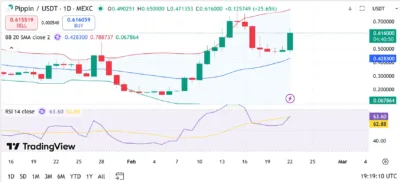
PIPPIN has surged sharply on the daily timeframe, printing a powerful bullish candle with over 25% gains. RSI is holding above 60, signaling strengthening momentum
Share
Coinstats2026/02/23 04:29
‘Love Island Games’ Season 2 Release Schedule—When Do New Episodes Come Out?

‘Love Island Games’ Season 2 Release Schedule—When Do New Episodes Come Out?

The post ‘Love Island Games’ Season 2 Release Schedule—When Do New Episodes Come Out? appeared on BitcoinEthereumNews.com. LOVE ISLAND GAMES — Episode 201 — Pictured: Ariana Madix — (Photo by: Ben Symons/PEACOCK via Getty Images) Ben Symons/PEACOCK via Getty Images We’ve got a text! It’s time for another season of Love Island Games. With fan-favorites returning in hopes of winning the $250,000 cash prize, read on to learn more about Love Island Games Season 2, including the release schedule so you don’t miss a second of drama. Love Island Games is a spinoff in the Love Island franchise that first premiered in 2023. The show follows a similar format to the original series, but with one major twist: all contestants are returning Islanders from previous seasons of Love Island from around the world, including the USA, UK, Australia and more. Another big difference is that games take on much more importance in Love Island Games than the mothership version, with the results “determining advantages, risks, and even who stays and who goes,” according to Peacock. Vanderpump Rules star Ariana Madix is taking over hosting duties for Love Island Games Season 2, replacing Love Island UK star Maya Jama who hosted the first season. Iain Stirling returns as the show’s narrator, while UK alum Maura Higgins will continue to host the Saturday show Love Island: Aftersun. ForbesWho’s In The ‘Love Island Games’ Season 2 Cast? Meet The IslandersBy Monica Mercuri Jack Fowler and Justine Ndiba were named the first-ever winners of Love Island Games in 2023. Justine had previously won Love Island USA Season 2 with Caleb Corprew, while Jack was a contestant on Love Island UK Season 4. In March 2024, Fowler announced on his Instagram story that he and Justine decided to remain “just friends.” The Season 2 premiere revealed the first couples of the season: Andrea Carmona and Charlie Georgios, Andreina Santos-Marte and Tyrique Hyde,…
Share
BitcoinEthereumNews2025/09/18 04:50