

When Desire Is Designed: The Hidden Politics of the Feed
The old world of discipline forced conformity through violence. Sovereigns built social cohesion through their absolute ability to seize, conscript, imprison, and kill. In the 18th century, a person did what was demanded of them to avoid the stick.
But as Han reminds us, disciplinary power is of limited efficiency. Those who wield it risk uprisings while cultivating a populace that fears, grumbles, and obeys out of resentment. By contrast, the new world of freedom is far more effective. It doesn’t command, it seduces, enlisting our willing participation by scripting our desires.
Thanks for reading Unindexed! Subscribe for free to receive new posts and support my work.
Discipline commanded action, but technology pushes us to exploit ourselves gleefully. Instead of dodging the stick, we rush headlong toward their carrot.
The Feed as the Machine of Desire
The brilliance of today’s system is that it no longer needs an overseer; we volunteer our labor. Every post, like, or share becomes unpaid work that feeds the machine. We build our identities as brands, optimize our output, and call it self-expression. In fact, it’s more like self-exploitation.
The line between leisure and labor is dissolving. Increasingly, our downtime is monetized, and our emotions are mined. Unlike the old factory floor, there is no ‘outside’ to escape to. The feed is ever-present, and we return to it as often as an addiction, while calling ourselves free.
So, social media doesn’t command. It only needs to arrange the signs from which we learn what to desire.
Think of the clothes you see someone you admire wearing and how that image lingers. Repeated often enough, conforming to their style feels almost imperative. To imitate is to build yourself in the image you want to see.
What we rarely acknowledge is that the image is not of our own design. To understand why, it’s useful to review some brief theory.
Lacan reminds us that desire is not an instinct but a language. We learn what to want by reading the signals around us. Today, those signals flow through social platforms. Likes, hashtags, trending sounds, aesthetics, emojis — they whisper what is desirable, what is worthy, what belongs in the society we inhabit. To ignore them is to risk exclusion, to silently admit you don’t belong.
Similarly, Baudrillard argued that consumption is never about the object itself but about the meaning attached to it. We don’t buy products; we buy their symbolic charge — the status, belonging, or identity they bestow. And the same is true of our feeds.
Posts aren’t neutral information; they’re tokens of taste. We consume them to become. And as Bataille observed, desire doesn’t stop at the limits of personal utility — it spills into excess.
The feed is engineered to capture that overflow: the endless scroll, the churn of memes, the impulse to share every detail of our lives. It ensures satisfaction never quite arrives, turning wanting itself into the product.
In this sense, the feed is not a neutral channel of communication but a machine that converts attention into hunger and hunger into further attention. A cycle that manufactures our deepest desires with extraordinary precision through the computational power of big data.
\
Why This Matters Now: The Hidden Logic of Our Feeds
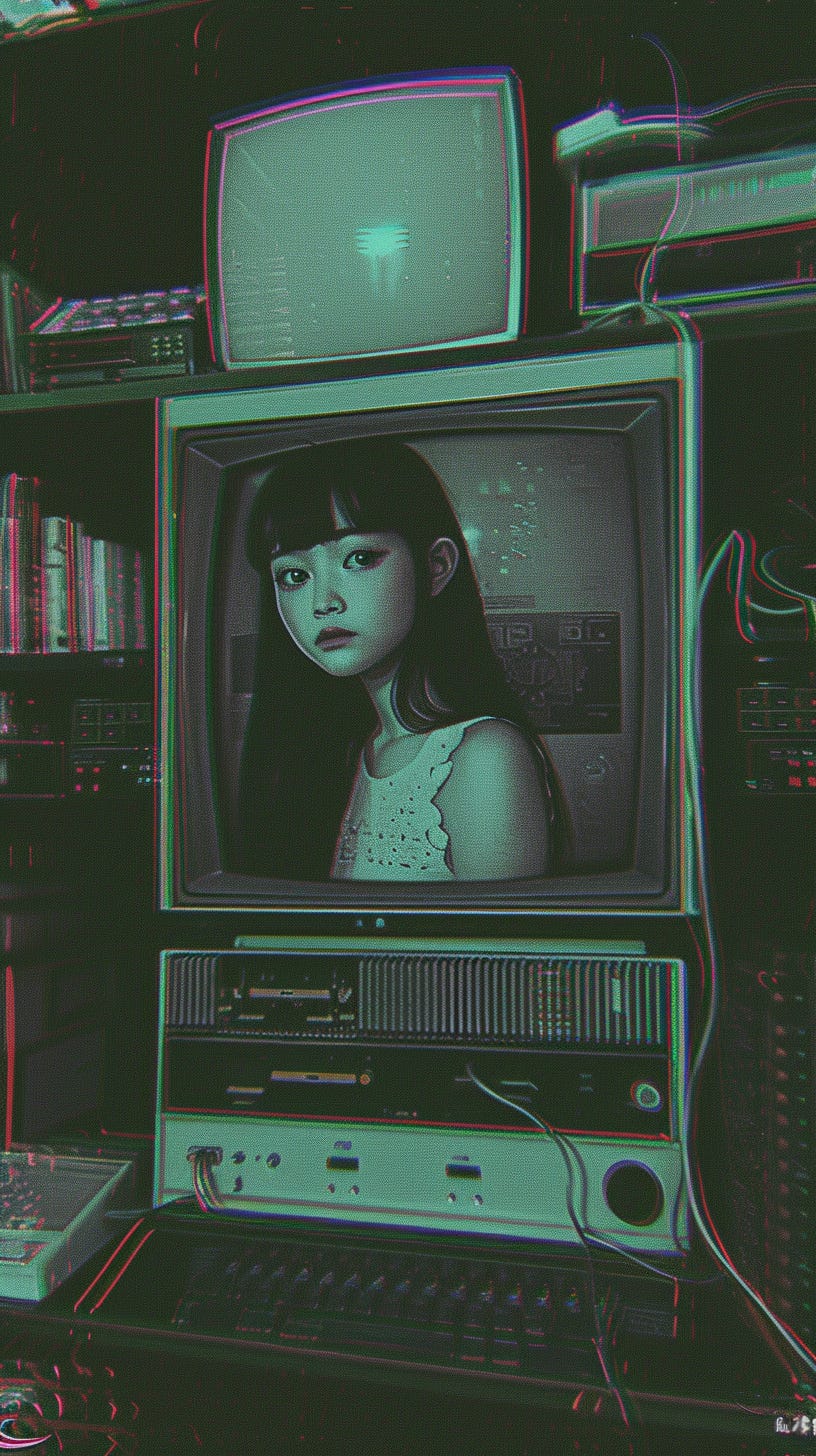
The genius of the feed lies in its emotional heft. It doesn’t persuade us with arguments — it pulls on envy, curiosity, loneliness, and boredom, turning our most fragile states into levers.
The emotions cycle endlessly:
- Curiosity slips into restlessness.
- Envy mutates into aspiration.
- Loneliness becomes a hunt for signs of connection.
- Boredom dissolves into the willingness to consume anything at all.
This is not a side effect; it is the business model. Dissatisfaction is the product. The feed works so well because satisfaction never quite arrives. If it did, we wouldn’t keep coming back.
When you feel restless, you scroll. When you scroll, the system profits.
From the outside, it looks like infinite freedom and choice. From the inside, it feels like compulsion: the itch to check, the brief spike of affirmation, the hollow drop when nothing satisfies.
This is why our growing infatuation with social media isn’t harmless. We may appear to have infinite content and infinite options at our fingertips, but in practice, we train the feed on our insecurities — and it feeds them back to us.
The machine offers a narrow menu of desires shaped by our weaknesses. We aren’t choosing from endless options. We’re choosing from a loop of curated traps — an infinity that collapses into a narrow array.
What To Do About It
If the feed manufactures desire, we have two choices: to let it keep rewriting our neural pathways around a narrow menu of wants, or to reclaim the practice of wanting for ourselves.
That doesn’t necessarily mean deleting every account and escaping into the woods. It means learning to notice what the machine is scripting into you — and deciding, consciously, whether to accept it.
One way is through desire hygiene. Curate your inputs. Follow people and projects that expand you, not those that hollow you out. Prune feeds the way you prune a garden: cut back what spreads without purpose. And Time-box your scrolling. Step outside the algorithmic stream long enough to let other signals in — books, long conversations, offline experiences.
Another strategy is to shift from consumption to creation. Even small acts of making — a post, a sketch, a note — interrupt the cycle of passive absorption. They remind you that attention can flow outward, not just inward.
Finally, practice an audit of attention. Ask yourself periodically: what does the feed make me want right now? How much of that is really mine? The point isn’t to renounce desire but to reclaim it — to speak in your own language rather than in the hashtags and trends assigned to you.
Freedom today doesn’t mean avoiding influence altogether. It means recognizing how deeply influence is wired into the infrastructure of our lives — and learning to treat desire as a practice we can write ourselves.
Reclaiming Hunger
Byung-Chul Han is right: power today doesn’t repress us, it seduces us. Our feeds have ditched the stick to rule with the promise of infinite “yes.” They keep us hungry by feeding us endlessly without ever letting us get full.
To live inside this loop is to mistake compulsion for freedom. To resist it is to decide what we want from outside the algorithm’s menu — to look beyond the recycled desires of our favorite creators.
Social media today is like the cheap Chinese buffet down the street. An endless spread, where most plates look delicious, but nothing ever really satisfies. To step away is to learn to cook for ourselves. It may be slower and less efficient to do things yourself. But it is infinitely more nourishing and imperative to finding happiness today, in my opinion.
Ultimately, freedom today means refusing to let the machine dictate the shape of our hunger. The question isn’t whether we can eliminate desire — of course, we can’t. It’s who gets to write the language of that desire: the algorithm, or us.
You May Also Like

Franklin Templeton CEO Dismisses 50bps Rate Cut Ahead FOMC

While Bitcoin Stagnates, Gold Breaks Record After Record! Is the Situation Too Bad for BTC? Bloomberg Analyst Explains!
