

PA Daily | Global stock markets plummeted; BTC fell below $75,000, ETH fell below $1,500
Today's news tips:
S&P 500 futures fell 20% from their February all-time highs, and U.S. tech stocks fell across the board before the market opened
Major European stock indices fell sharply, and French bank stocks were suspended at the opening
Japanese and South Korean stock markets suffer heavy losses
Taiwan's stock market closed down 9.7%, the largest drop in history
Analyst Eugene: Although BTC may not be at the bottom at present, it has been bought around $75,000
Matrixport: The possibility of BTC retesting $73,392 is gradually increasing, and $87,000 has become a key resistance
Hyperliquid whale long 47,200 ETH with 20x leverage, liquidation price is $1,391.7
The liquidation price of more than 440,000 ETH on the chain is concentrated above $1,000, equivalent to about $640 million
Regulatory/Macro
S&P 500 futures fell 20% from their February all-time highs, and U.S. tech stocks fell across the board before the market opened
According to Jinshi data, the S&P 500 index futures fell 20% from its historical high in February. U.S. technology stocks fell across the board before the market opened, and none of the "Big Seven" was spared, including Apple (AAPL.O) fell 5.4%, Tesla (TSLA.O) fell 10% at one point, Intel (INTC.O) fell 4.8%, and Meta Platforms (META.O) fell 6.1%. Automakers also performed weakly, with General Motors (GM.N) falling 4.9% and Ford Motor (FN) falling 3%.
Major European stock indices fell sharply, and French bank stocks were suspended at the opening
Major European stock indices opened sharply lower. The Euro Stoxx 50 index fell 6.2%, the German DAX index fell 7.1%, the British FTSE 100 index fell 4.1%, the Italian FTSE MIB index fell 7.4%, and the Spanish IBEX 35 index fell 4.9%. In addition, French bank stocks were suspended at the opening, and the French CAC 40 index opened down more than 2%.
Japanese and South Korean stock markets suffer heavy losses
The Nikkei 225 index closed at 31,136.58 points, down 2,644.00 points, or 7.83%, on Monday, April 7. It once fell below the 31,000 mark to a new low since October 2023. South Korea's KOSPI index closed at 2,328.03 points, down 137.39 points, or 5.57%, on Monday, April 7, and once fell to its lowest level in more than 17 months.
Taiwan's stock market closed down 9.7%, the largest drop in history
(China) Taiwan's weighted index closed down 2065.87 points, or 9.7%, at 19232.35 points on April 7 (Monday), setting a record for the largest drop in history, and triggered a circuit breaker at one point during the session. The previous record for the largest drop in the Taiwan stock market was a drop of 8.57% on August 5, 2024, and the largest drop point record was also set on the same day, with a sharp drop of 1854.59 points during the session.
Hong Kong Securities and Futures Commission: Licensed virtual asset trading platforms are allowed to provide pledge services
The Hong Kong Securities and Futures Commission has officially released pledge-related guidelines for licensed virtual asset trading platforms and approved virtual asset funds, which state that licensed virtual asset trading platforms are allowed to provide pledge services, including providing pledges for virtual asset spot ETFs. Pledges allow investors to lock up their virtual assets to support blockchain networks and earn returns, but due to the risks involved, the Securities and Futures Commission will implement additional safeguards, including requiring licensed platforms to keep pledged virtual assets and setting an upper limit on the proportion of virtual asset spot ETFs that can be pledged to manage liquidity risks. Cai Fengyi, executive director of the investment products department of the Hong Kong Securities and Futures Commission, said that the Hong Kong Securities and Futures Commission is expanding the scope of eligible virtual asset targets. Initially, virtual asset spot ETFs mainly focused on Bitcoin and Ethereum. Now more virtual assets have met the conditions for retail trading on licensed platforms, which will pave the way for the diversification of ETF products, such as a single ETF that tracks a basket of virtual assets.
Nikkei 225 index fell 8.4%
The Nikkei 225 index fell 8.4%. After the KOSPI 200 index futures fell 5%, the Korea Exchange activated the KOSPI's sidecar suspension mechanism and suspended program trading for 5 minutes.
U.S. federal agencies must report crypto holdings to the Treasury Secretary, but audit results may not be made public
According to Eleanor Terrett, White House officials revealed that federal agencies must report their cryptocurrency holdings to Treasury Secretary Scott Bessent by tomorrow (April 7, Eastern Time). However, the executive order only requires the report to be submitted to Bessent and does not force the public disclosure of audit results. It is unclear whether or when this information will be made public.
Nasdaq futures fell more than 5.5%, S&P 500 futures fell more than 4.7%
At the opening of Monday, Nasdaq futures fell by more than 5.5% at the beginning of the session, S&P 500 futures fell by more than 4.7%, Dow futures fell by more than 4%, and WTI crude oil fell by 4%. Spot silver fell by more than 2%. Non-US currencies fell, and the yen rose by more than 1% due to risk aversion.
Viewpoint
Analyst Eugene: Although BTC may not be at the bottom at present, it has been bought around $75,000
Crypto analyst Eugene said that he first bought spot BTC when the price was close to $75k, which was the first operation since the liquidation of major positions in January. He believes that the current price may not be the bottom, but it is close to the long-term layout range that he is satisfied with. He expects that the $74-76k area will provide some support. If MicroStrategy's Michael Saylor does not sell BTC, the price may stabilize at $52k; if a sell-off occurs, $25k may become a new target. In addition, Eugene pointed out that despite the low market sentiment and the increase in panic, prices usually do not fall in a straight line. He believes that today's 5% drop in pre-market futures in US stocks is an extreme event and it is worth paying attention to the subsequent rebound opportunities. He plans to make short-term operations through the rebound of BTC and SOL in the short term, while increasing long-term positions when prices fall further.
Matrixport: The possibility of BTC retesting $73,392 is gradually increasing, and $87,000 has become a key resistance
Matrixport's analysis today pointed out that despite Bitcoin's strong resilience, the possibility of retesting the 38.2% Fibonacci retracement level (about $73,392) is gradually increasing. Currently, Bitcoin has been blocked at the 23.6% retracement level (about $87,000) many times, which has become a key resistance. The report pointed out that Trump's latest tariff policy has triggered widespread market liquidation, and the background of rising risk aversion has put pressure on Bitcoin prices. In addition, U.S. consumers' concerns about inflation have intensified, and Federal Reserve Chairman Powell recently hinted at maintaining the current interest rate stance, which may limit Bitcoin's room to benefit from loose policies in the short term.
Project News
Binance will suspend Syscoin deposits and withdrawals to support its network upgrade
Binance announced that it will suspend deposits and withdrawals of Syscoin (SYS) network tokens to support its network upgrade and hard fork at block height 2,010,345. The upgrade is expected to be completed at 08:30 on April 8.
Aave's cumulative borrowing interest on the Ethereum network exceeds $1 billion
According to Token Terminal data, the cumulative interest paid by borrowers of the decentralized lending protocol Aave on the Ethereum network has exceeded the $1 billion mark.
Important data
CoinShares: Digital assets outflowed $240 million last week, and Bitcoin outflowed $207 million
CoinShares' latest weekly report shows that the total net outflow of digital asset investment products last week reached $240 million, which may be related to the economic growth concerns caused by the recent news of US trade tariffs. Among them, Bitcoin outflowed $207 million, and the net inflow from the beginning of the year remained at $1.3 billion. Ethereum outflowed $37.7 million, Solana and Sui outflowed $1.8 million and $4.7 million respectively, while Ton Coin recorded a net inflow of $1.1 million. Despite this, the total scale of digital asset management remained stable at $132.6 billion, an increase of 0.8% from the previous week. In contrast, the MSCI Global Equity Index fell 8.5% during the same period.
Hyperliquid whale long 47,200 ETH with 20x leverage, liquidation price is $1,391.7
According to Ember's monitoring, the Hyperliquid 50x whale transferred 4.52 million USDC as margin and opened 47,200 more ETH at 20 times the opening price of $1,459, with a total value of approximately $69 million, and the liquidation price was $1,391.7.
Zkasino scammers closed their 20x leveraged ETH position on Hyperliquid, losing $27.1 million
According to Onchain Lens, the Zkasino scammer who defrauded more than $40 million closed his 20x leveraged ETH position on the Hyperliquid platform, and ultimately suffered a total loss of $27.1 million. Earlier news, ZigZag: Many people accused ZKasino of defaulting on payments or fraud, and the $40 million ecological fund it announced was not real.
The liquidation price of more than 440,000 ETH on the chain is concentrated above $1,000, equivalent to about $640 million
According to Ember's monitoring, the liquidation prices of more than 440,000 ETH (about US$640 million) on the chain are concentrated above US$1,000, mainly involving the following five whale addresses: 53,074 ETH, borrowed US$46.68 million, and the liquidation price is US$1,495; 24,690 ETH, borrowed US$21.7 million, and the liquidation price is US$1,274; 210,000 ETH, borrowed US$144.8 million, and the liquidation price is US$1,172; 100,394 ETH, borrowed US$78.4 million, and the liquidation price is US$1,132; 55,000 ETH, borrowed US$34.6 million, and the liquidation price is US$1,070.
Ethereum whales face 53,074 ETH liquidation risk, worth about $77 million
According to Lookonchain monitoring, as the price of ETH fell below $1,500, a whale address was at risk of liquidation, involving 53,074 ETH, worth about $77 million. If the address fails to increase collateral or repay debt within 40 minutes, liquidation will be triggered.
Ethereum Gas Fees Surge to 77.93 Gwei
According to the latest data from OKX, Ethereum Gas fees have soared and are currently at 77.93 Gwei. The current ETH price is temporarily reported at $1,452.
In the past hour, the entire network has liquidated more than 340 million US dollars, mainly long orders
According to Coinglass data, the cryptocurrency market had a total liquidation of $343 million in the past hour, of which $329 million was liquidated for long orders and $13.3859 million was liquidated for short orders. BTC had a liquidation of $122 million; ETH had a liquidation of $90.3395 million.
BTC falls below $75,000, down 9.18% on the day
The OKX market data shows that BTC has just fallen below $75,000 and is currently trading at $74,968.00 per coin, down 9.18% on the day.
ETH falls below $1,500, down 15.19% on the day
The OKX market data shows that ETH has just fallen below $1,500 and is currently trading at $1,492.35 per coin, down 15.19% on the day.
The giant whale "7 Siblings" purchased another 24,817 ETH, with a cumulative floating loss of US$64 million
According to Lookonchain monitoring, the whale "7 Siblings" once again purchased 24,817 ETH at a price of $1,700 per ETH, spending $42.2 million. Since February 3, it has spent a total of about $229.7 million to buy 103,543 ETH, with an average cost of $2,219, and currently has a floating loss of about $64 million. The whale currently holds more than 1.21 million ETH through two wallets, with a market value of about $1.93 billion.
Liquidation of 67,500 ETH whale positions triggers chain decline
According to Ember's monitoring, a whale's total 67,500 ETH (about $105 million) mortgage loan position was completely liquidated when ETH fell to $1,650. Although it added 2,160 ETH at 1 a.m. to reduce the liquidation risk, ETH continued to fall and eventually triggered liquidation at 6 a.m. to repay its $74.4 million DAI loan.


You May Also Like

How Imee reacted to Sara’s trash talk vs her late father
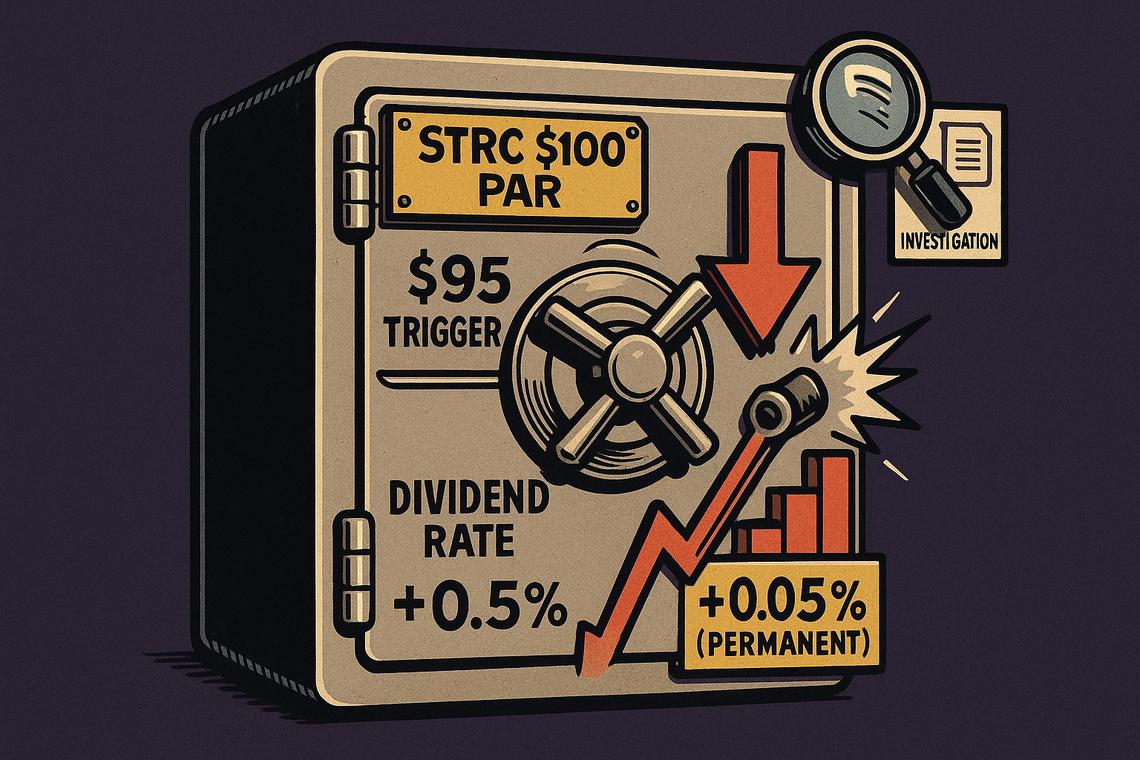
STRC preferred stock dividend hits 12% — every increase is permanent
Ether Approaches $2K on Bitmine ETH Purchase and Robinhood L2 News



