How a Crypto Derivatives Exchange Should Define Mark Price
The Right Balance Between Theoretical Price and Orderbook Reality
Mark Price is one of the most important numbers inside a derivatives exchange. It determines when liquidations trigger, how margin is calculated, and whether traders feel the system is fair and robust.
A robust derivatives venue needs a Mark Price that is accurate, manipulation-resistant, and stable. Achieving all three requires blending two key signals:
- Theoretical Price (Theo)
- Orderbook-Implied Price (OB-Mid)
The challenge is not choosing one or the other, but understanding when each should dominate.
What Theo Represents: The Safety Anchor
Theo is a fair-value estimate built from external market
- for spot / perp: a multi-exchange index
- for dated future / options: a pricing model under certain assumptions
Theo does not tell you where liquidations can actually execute. Its role is different:
It acts as a guardrail when:
- an asset has thin liquidity on the venue
- manipulation orders unrealistically shift the book
- wrong or stale prices are mistakenly placed
If the exchange blindly trusts the orderbook in these scenarios, users can be unfairly liquidated – or the exchange itself may take unnecessary risk.
Theo is the price that says:
What OB-Mid Represents: The Executable Reality
Orderbook-implied price (depth-weighted mid, or model fitting) captures:
- real executable levels
- liquidity and depth conditions
This is crucial because liquidations must reflect where the market can actually trade.
When liquidity is normal, OB-Mid is far more informative than Theo.
OB-Mid answers the practical question:
The Correct Design: A Corridor Between Theo and OB-Mid
Use OB-Mid when the market is healthy.
Use Theo when market signals become unreliable.
1. Compute Theo.
2. Compute OB-Mid.
3. Define a threshold Δ.
4. Apply the rule:
- If OB-Mid lies within Theo ± Δ → use OB-Mid
- Otherwise → use Theo ± Δ
On top of this, exchanges apply smoothing (moving average or filtering) to prevent unnecessary mark spikes.
This blended structure ensures:
- fairer liquidations
- resistance to manipulation
- smoother price evolution
- alignment with global markets
- robustness for thin or unstable orderbooks
In simple terms:
Why This Matters Even More for Altcoins
BTC and ETH typically have:
- deep liquidity
- tight spreads
- stable external references
OB-Mid can dominate most of the time.
But altcoins often face:
- fragmented markets
- thin books
- sudden spread jumps
- low cost of influencing OB-Mid
In these cases, an exchange relying solely on orderbook signals becomes vulnerable.
Theo must take a larger role, and the threshold Δ should expand dynamically based on liquidity conditions.
Conclusion
A robust Mark Price must reflect real execution while being protected by fair-value boundaries.
The correct framework is not Theo versus OB-Mid, but a dynamic interaction:
- OB-Mid = primary signal for actual trading conditions
- Theo = protective barrier against noise, errors, and manipulation
This corridor approach reflects the modern standard at a time when crypto regulation is progressing but still far from broad. As the regulatory landscape continues to mature, exchanges must design robust and automated safeguards to protect both themselves and their users – rather than relying on market stability or assuming that regulation will catch every form of manipulation.
How a Crypto Derivatives Exchange Should Define Mark Price was originally published in Coinmonks on Medium, where people are continuing the conversation by highlighting and responding to this story.


You May Also Like
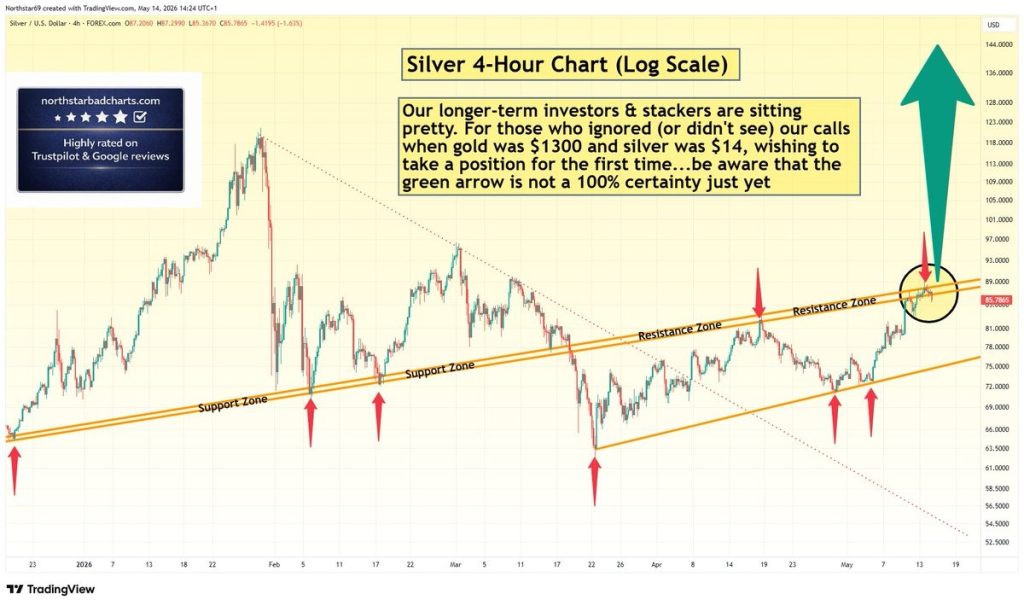
Silver Price Warning: Green Arrow Setup Is Not Confirmed – Wait for Clear Signal

Facebook spotlights African cinema in 6th ‘Made by Africa, loved by the world’ campaign