The Reasons Behind Today’s Bitcoin Crash

Today, the price of Bitcoin has fallen below $97,000 for the first time since May.
In reality, this crash began on Tuesday, after briefly surpassing $107,000, but it intensified precisely between yesterday and today.
Yesterday, for instance, it fell below $100,000 for the third time this November, after not doing so for four and a half months. That decline seemed to have halted just below $98,000, but last night the drop continued down to below $97,000.
The Reasons Behind the Bitcoin (BTC) Price Crash
There are several reasons behind this crash.
One thing, however, is certain: it was primarily triggered by the American markets.
Yesterday, in fact, the US stock markets experienced significant losses, although the decline then halted at the levels of November 6.
It is possible that in the last month and a half there has been a small liquidity crisis on the US stock exchanges due to the shutdown.
The shutdown, in fact, completely halted U.S. government payments, causing hundreds of billions of dollars to accumulate in U.S. government accounts, which inevitably remained stagnant there at least until yesterday.
It is true that the shutdown has ended, but the majority of that liquidity is still held in government accounts and will be fully released only over the coming weeks.
Since prices on the US stock exchanges were very high, yesterday the decline was ultimately intense, dragging down Bitcoin as well.
The Forecasts
This phase of difficulty is expected to continue through the weekend, but it might start to recover from Monday onwards.
On one hand, the sell-off on Bitcoin has been significant, to the point where it seems inevitable that in the short term it is almost ready to take a break.
On the other hand, starting next week, the minor liquidity crisis in the American markets is expected to begin to subside, thanks to the release of government funds.
It is therefore possible that these could be the last days of the bearish phase, and that it may be followed by a period of greater calm next week.
The Dollar Index
However, there is also something quite curious that suggests there might be a rebound later on.
In fact, the Dollar Index has already started pricing in the release of liquidity that has been accumulated and locked over the past month and a half on the US government’s accounts.
The point is not only that the medium-term price trend of Bitcoin tends to be inversely correlated with the Dollar Index (while in the short term such correlation may not exist, as is happening now), but also that there is no speculation on the Dollar Index.
The price movements in recent days on risk-on assets in the American markets, including Bitcoin, are evidently influenced by speculation and emotion. Fear, in short, is taking the lead.
Instead, not only is the Dollar Index not an asset to speculate on (but merely an index), but more importantly, it is not an index easily influenced by speculation or fear.
And so, amidst a scenario dominated by fear over risk-on assets, the Dollar Index completely disregards this and declines, correctly and rationally pricing in the upcoming certain release of dollars by the US government.
At this point, as soon as the emotional and speculative phase that the markets are currently experiencing comes to an end, the rational dynamic of the inverse correlation with DXY could once again prevail on Bitcoin’s price.


You May Also Like
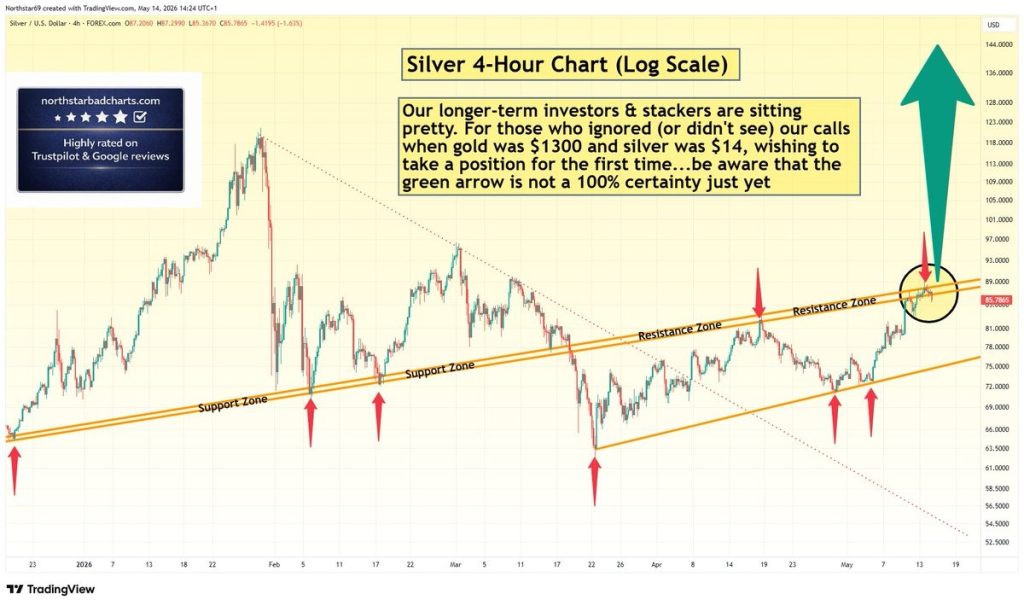
Silver Price Warning: Green Arrow Setup Is Not Confirmed – Wait for Clear Signal

Facebook spotlights African cinema in 6th ‘Made by Africa, loved by the world’ campaign