BitcoinWorld Shocking Move: Grant Cardone Leads Massive JPMorgan Boycott Over Strategy Crisis In a stunning development that’s shaking the financial world, prominent real estate investor Grant Cardone has declared war on banking giant JPMorgan Chase. The Grant Cardone JPMorgan boycott represents a dramatic stand against what many in the crypto community see as institutional attacks on emerging financial technologies. This bold move comes after JPMorgan issued warnings […] This post Shocking Move: Grant Cardone Leads Massive JPMorgan Boycott Over Strategy Crisis first appeared on BitcoinWorld.BitcoinWorld Shocking Move: Grant Cardone Leads Massive JPMorgan Boycott Over Strategy Crisis In a stunning development that’s shaking the financial world, prominent real estate investor Grant Cardone has declared war on banking giant JPMorgan Chase. The Grant Cardone JPMorgan boycott represents a dramatic stand against what many in the crypto community see as institutional attacks on emerging financial technologies. This bold move comes after JPMorgan issued warnings […] This post Shocking Move: Grant Cardone Leads Massive JPMorgan Boycott Over Strategy Crisis first appeared on BitcoinWorld.

Shocking Move: Grant Cardone Leads Massive JPMorgan Boycott Over Strategy Crisis

2025/11/24 13:40
4 min read
For feedback or concerns regarding this content, please contact us at crypto.news@mexc.com

BitcoinWorld

Shocking Move: Grant Cardone Leads Massive JPMorgan Boycott Over Strategy Crisis

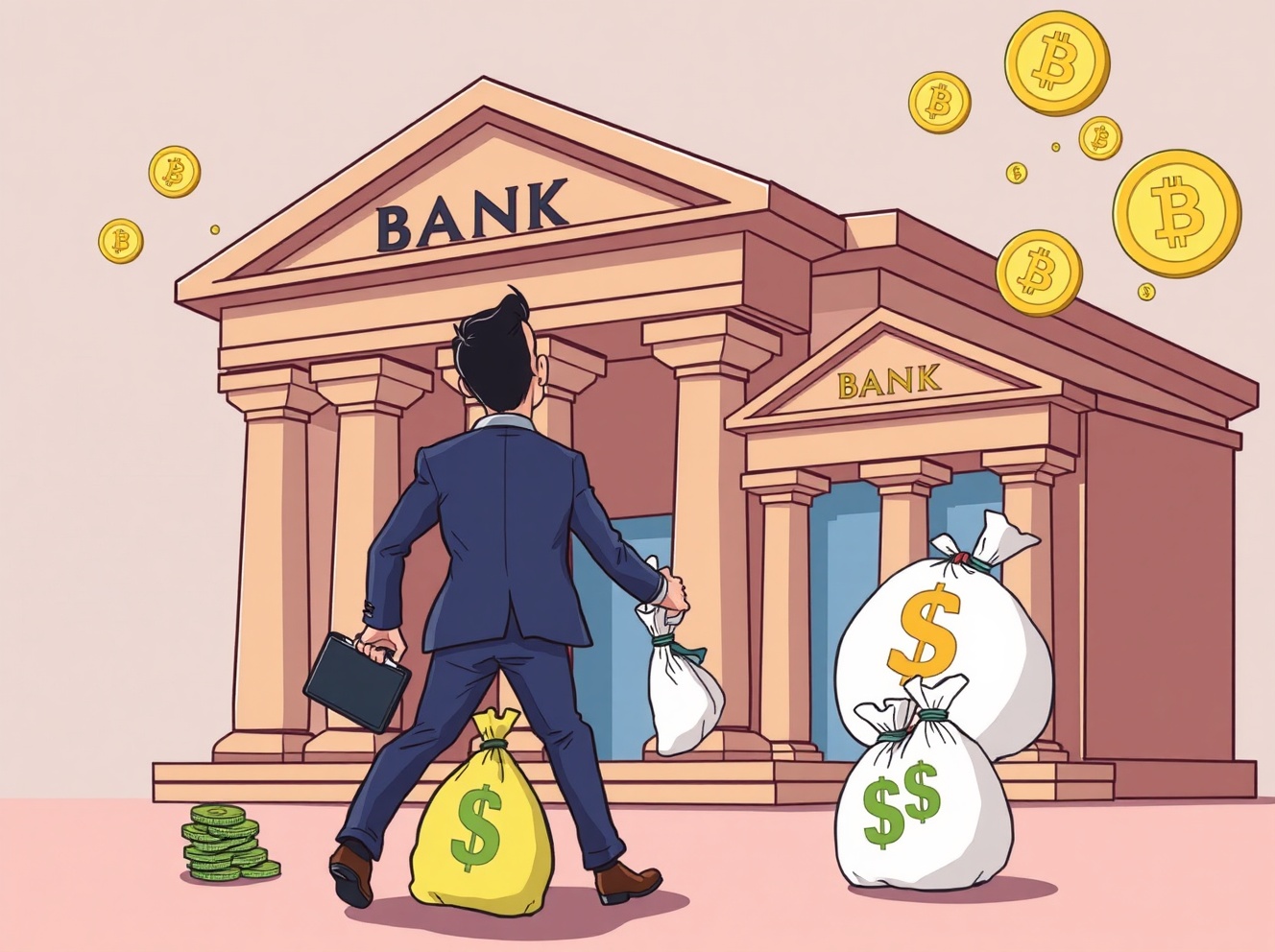
In a stunning development that’s shaking the financial world, prominent real estate investor Grant Cardone has declared war on banking giant JPMorgan Chase. The Grant Cardone JPMorgan boycott represents a dramatic stand against what many in the crypto community see as institutional attacks on emerging financial technologies. This bold move comes after JPMorgan issued warnings about potential massive outflows from Strategy, triggering a chain reaction across markets.

Why Is Grant Cardone Leading This JPMorgan Boycott?

The Grant Cardone JPMorgan boycott began when the banking behemoth published a report predicting Strategy could face up to $2.8 billion in outflows if removed from the MSCI index. Cardone responded immediately by closing his JPMorgan accounts and transferring his funds to Wells Fargo. Moreover, he publicly urged concerned investors to stop using Chase credit cards, calling for collective action against what he perceives as anti-competitive behavior.

This dramatic escalation highlights the growing tension between traditional financial institutions and the cryptocurrency sector. The banking giant’s warning caused Strategy’s stock price to plummet below $200, hitting a yearly low of around $170 last Friday. Consequently, crypto community members have rallied behind Cardone’s protest, describing the situation as a coordinated attack on innovation.

What Does This Boycott Mean for Investors?

The Grant Cardone JPMorgan boycott represents more than just one investor’s protest. It signals a fundamental shift in how successful investors view traditional banking relationships. Here are the key implications:

  • Institutional credibility at stake – Major banks face growing scrutiny over their crypto positions
  • Investor migration – High-net-worth individuals are reconsidering banking partnerships
  • Market volatility – Banking reports can significantly impact crypto-related stocks
  • Regulatory attention – Such public disputes often attract regulatory review

Furthermore, this situation demonstrates how quickly financial alliances can change in today’s digital economy. The speed at which Cardone moved his accounts underscores the fluid nature of modern banking relationships.

How Are Markets Reacting to This Banking Protest?

The immediate market reaction to the Grant Cardone JPMorgan boycott has been significant. Strategy’s stock experienced sharp declines, while other crypto-related assets showed increased volatility. However, the broader impact extends beyond price movements. This protest has sparked crucial conversations about:

  • Banking transparency in crypto reporting
  • Institutional influence on emerging technologies
  • Investor protection in volatile markets
  • The future of bank-crypto relationships

Market analysts are closely watching whether other prominent investors will join Cardone’s protest. The potential for a wider movement could reshape how traditional banks approach cryptocurrency analysis and reporting.

What Can We Learn From This Financial Standoff?

The Grant Cardone JPMorgan boycott teaches us several important lessons about modern finance. First, individual investors now have platforms to challenge institutional narratives. Second, the lines between traditional and digital finance continue to blur. Most importantly, this situation shows that financial credibility works both ways – institutions must maintain trust with their clients just as investors must trust their financial partners.

This protest also highlights the growing power of social proof in financial decisions. When respected investors like Cardone take public stands, they influence market sentiment and individual investment choices.

Frequently Asked Questions

Why did Grant Cardone start boycotting JPMorgan?

Cardone initiated the boycott after JPMorgan warned about potential massive outflows from Strategy, which he viewed as an unfair attack on the company and its investors.

How much money did Cardone move from JPMorgan?

While exact figures aren’t disclosed, Cardone confirmed he closed all his JPMorgan accounts and transferred his funds to Wells Fargo.

What impact did JPMorgan’s report have on Strategy’s stock?

The report caused Strategy’s stock price to fall sharply, dropping below $200 and hitting a yearly low of around $170.

Are other investors joining the boycott?

While Cardone has urged others to join, the full extent of participation remains unclear as the movement develops.

What does this mean for cryptocurrency investors?

This situation highlights ongoing tensions between traditional banks and crypto markets, suggesting investors should monitor institutional positions carefully.

Could this boycott affect other banking relationships?

Potentially yes, as it may encourage other investors to reconsider their banking partnerships based on institutional crypto positions.

Join the Conversation

This developing story represents a crucial moment in the relationship between traditional finance and cryptocurrency markets. Share this article with fellow investors and join the discussion about the future of banking and digital assets. Your voice matters in shaping how financial institutions approach emerging technologies.

To learn more about the latest cryptocurrency trends, explore our article on key developments shaping cryptocurrency institutional adoption.

This post Shocking Move: Grant Cardone Leads Massive JPMorgan Boycott Over Strategy Crisis first appeared on BitcoinWorld.

Disclaimer: The articles reposted on this site are sourced from public platforms and are provided for informational purposes only. They do not necessarily reflect the views of MEXC. All rights remain with the original authors. If you believe any content infringes on third-party rights, please contact crypto.news@mexc.com for removal. MEXC makes no guarantees regarding the accuracy, completeness, or timeliness of the content and is not responsible for any actions taken based on the information provided. The content does not constitute financial, legal, or other professional advice, nor should it be considered a recommendation or endorsement by MEXC.

You May Also Like

The Channel Factories We’ve Been Waiting For

The Channel Factories We’ve Been Waiting For

The post The Channel Factories We’ve Been Waiting For appeared on BitcoinEthereumNews.com. Visions of future technology are often prescient about the broad strokes while flubbing the details. The tablets in “2001: A Space Odyssey” do indeed look like iPads, but you never see the astronauts paying for subscriptions or wasting hours on Candy Crush.  Channel factories are one vision that arose early in the history of the Lightning Network to address some challenges that Lightning has faced from the beginning. Despite having grown to become Bitcoin’s most successful layer-2 scaling solution, with instant and low-fee payments, Lightning’s scale is limited by its reliance on payment channels. Although Lightning shifts most transactions off-chain, each payment channel still requires an on-chain transaction to open and (usually) another to close. As adoption grows, pressure on the blockchain grows with it. The need for a more scalable approach to managing channels is clear. Channel factories were supposed to meet this need, but where are they? In 2025, subnetworks are emerging that revive the impetus of channel factories with some new details that vastly increase their potential. They are natively interoperable with Lightning and achieve greater scale by allowing a group of participants to open a shared multisig UTXO and create multiple bilateral channels, which reduces the number of on-chain transactions and improves capital efficiency. Achieving greater scale by reducing complexity, Ark and Spark perform the same function as traditional channel factories with new designs and additional capabilities based on shared UTXOs.  Channel Factories 101 Channel factories have been around since the inception of Lightning. A factory is a multiparty contract where multiple users (not just two, as in a Dryja-Poon channel) cooperatively lock funds in a single multisig UTXO. They can open, close and update channels off-chain without updating the blockchain for each operation. Only when participants leave or the factory dissolves is an on-chain transaction…
Share
BitcoinEthereumNews2025/09/18 00:09
The Federal Reserve cut interest rates by 25 basis points, and Powell said this was a risk management cut


The Federal Reserve cut interest rates by 25 basis points, and Powell said this was a risk management cut

PANews reported on September 18th, according to the Securities Times, that at 2:00 AM Beijing time on September 18th, the Federal Reserve announced a 25 basis point interest rate cut, lowering the federal funds rate from 4.25%-4.50% to 4.00%-4.25%, in line with market expectations. The Fed's interest rate announcement triggered a sharp market reaction, with the three major US stock indices rising briefly before quickly plunging. The US dollar index plummeted, briefly hitting a new low since 2025, before rebounding sharply, turning a decline into an upward trend. The sharp market volatility was closely tied to the subsequent monetary policy press conference held by Federal Reserve Chairman Powell. He stated that the 50 basis point rate cut lacked broad support and that there was no need for a swift adjustment. Today's move could be viewed as a risk-management cut, suggesting the Fed will not enter a sustained cycle of rate cuts. Powell reiterated the Fed's unwavering commitment to maintaining its independence. Market participants are currently unaware of the risks to the Fed's independence. The latest published interest rate dot plot shows that the median expectation of Fed officials is to cut interest rates twice more this year (by 25 basis points each), one more than predicted in June this year. At the same time, Fed officials expect that after three rate cuts this year, there will be another 25 basis point cut in 2026 and 2027.
Share
PANews2025/09/18 06:54
Solana Sees $10M Capital Rotation, Eyes $100 Breakout

Solana Sees $10M Capital Rotation, Eyes $100 Breakout

The post Solana Sees $10M Capital Rotation, Eyes $100 Breakout appeared on BitcoinEthereumNews.com. Capital rotation into Solana accelerated this week as traders
Share
BitcoinEthereumNews2026/03/18 00:18