

[OPINION] Hybrid constitutional solution to crisis
Corruption has long shaped political life in ways that weaken public institutions, distort trust and limit development. But every so often, a generation emerges that refuses to accept a system that older generations learned to endure. Today, that generation is visible in the streets, the universities and online spaces. Young people are powering a nationwide wave of anti-corruption protests that differ from earlier movements in scale, coordination and moral urgency.
As the protests continue to grow, one question has become central to public debate: What is the endgame?
Legal scenarios
Legal scenarios involve reforms that take place within existing rules. These routes are the most controlled and predictable, although they are also the most susceptible to political interference.
The first visible legal reaction to mass outrage often takes the form of investigations or charges against officials involved in scandals. Whether these lead to genuine accountability depends entirely on the independence of courts and prosecutors. When institutions are strong, public pressure can be transformed into meaningful consequences. When institutions are weak, these legal gestures merely create the illusion of action, protecting powerful figures while sacrificing only those who can be easily replaced.
Unfortunately, this is the case in the Philippines as we have seen in the Marcos Sr., Arroyo, and Napoles corruption cases. Decades later, unbelievably, many of the cases have not been resolved with finality. Moreover, we know that most of the so-called “big fish” escaped accountability, the only exception being the conviction of Imelda Marcos in one case which is still pending appeal.
We should not pretend that the legal and judicial system will respond more effectively this time. Unless legal and judicial reforms are accelerated, we will see a similar result for the flood control cases.
Constitutional scenarios
Constitutional scenarios arise when the public recognizes that corruption is not merely the result of individual misconduct but is embedded in the structure of political power itself. These pathways involve more fundamental reforms.
One possibility is the pursuit of targeted constitutional amendments that address long-standing weaknesses. These amendments often focus on narrowing the broad immunities enjoyed by the executive branch, reinforcing the independence of the judiciary so that judges can act without political pressure, creating enforceable rules against political dynasties rather than aspirational statements and developing stronger frameworks for citizen oversight. Such amendments seek not only to curb the potential for abuse, but also to make it more difficult for political elites to manipulate the system.
Another constitutional scenario involves convening a constitutional convention. When trust in institutions collapses and public pressure becomes overwhelming, governments sometimes turn to a broader consultative process that allows citizens, experts, civil society groups, and political actors to rethink parts of the governance system.
I believe it is now time to consider the calling of a constitutional convention. The political will of the President and relentless pressure on Congress can make this happen.
A hybrid scenario: leadership resignations and a multi-stakeholder approach
Beyond strictly legal or constitutional pathways, some civic and political groups have begun to discuss a complex hybrid scenario that blends constitutional procedures with extra-constitutional public pressure.
In this scenario, sustained protests, combined with political negotiations, would lead President Ferdinand Marcos Jr. and Vice President Sara Duterte to voluntarily resign. The emphasis on voluntary resignation is crucial because it grounds the process in the constitution rather than in forcible removal.
Of course, impeachment is an option. Already, the grounds for impeaching Vice President Duterte exist. It remains, however, to be seen whether evidence of President Marcos’ complicity in corruption is proven beyond the allegations of Zaldy Co.
If voluntary resignations or impeachments occur, constitutional succession would place Senate President Vicente Sotto in the position of acting president, as he would be the highest-ranking official in the line of succession not implicated in the controversy
Once in office, the acting president could convene a multi-stakeholder group that brings together representatives from civil society, youth movements, academia, business, local leaders and various political groups. The group would not possess executive authority. Instead, its role would be to advise and shape a comprehensive reform agenda that Congress would be urged to consider.
When the Senate President becomes acting president, he must call for elections in 60 days. But it might be prudent for Congress to quickly pass a constitutional amendment to extend the transition period to six to nine months, enough time to pass critical legislation or even convene a constitutional convention.
The reforms frequently discussed in this scenario include establishing enforceable anti-dynasty rules that finally give teeth to provisions that have long been ignored, overhauling the party-list system so it cannot be captured by political clans, and creating anti-oligarchy safeguards that use competition policy, corporate transparency and campaign finance rules to reduce the outsized influence of wealthy families.
Other proposals focus on rebalancing the powers of government to ensure stronger checks on the executive, as well as strengthening judicial independence so that courts can more effectively confront corruption wherever it appears.
Supporters of this hybrid approach argue that it could break the political deadlock that has stalled reform for decades and create momentum for structural change. Critics warn that even if voluntary, leadership resignations prompted by public pressure risk blurring the boundaries of constitutional order and could create precedents vulnerable to misuse.
This, to me, is the best option. For sure, we cannot wait until the 2028 elections. Something will break soon, and it’s better to get ahead of the curve with this hybrid constitutional solution. And definitely, the option of a civilian-military junta is the worst pathway to take.
The youth as the decisive force
The endgame of the anti-corruption protests remains uncertain. What is already clear is that the youth have changed the national conversation. Their persistence has placed corruption, accountability, and systemic failure at the center of public debate.Whether the movement leads to negotiated reform, electoral realignment or deeper institutional reconstruction, one truth is clear: the youth have made it impossible for the country to treat corruption as an unfortunate norm.
They are not simply demanding a better future. They are actively shaping it. The country’s institutions must now decide whether to evolve with them or be transformed by the force of their conviction. – Rappler.com


You May Also Like
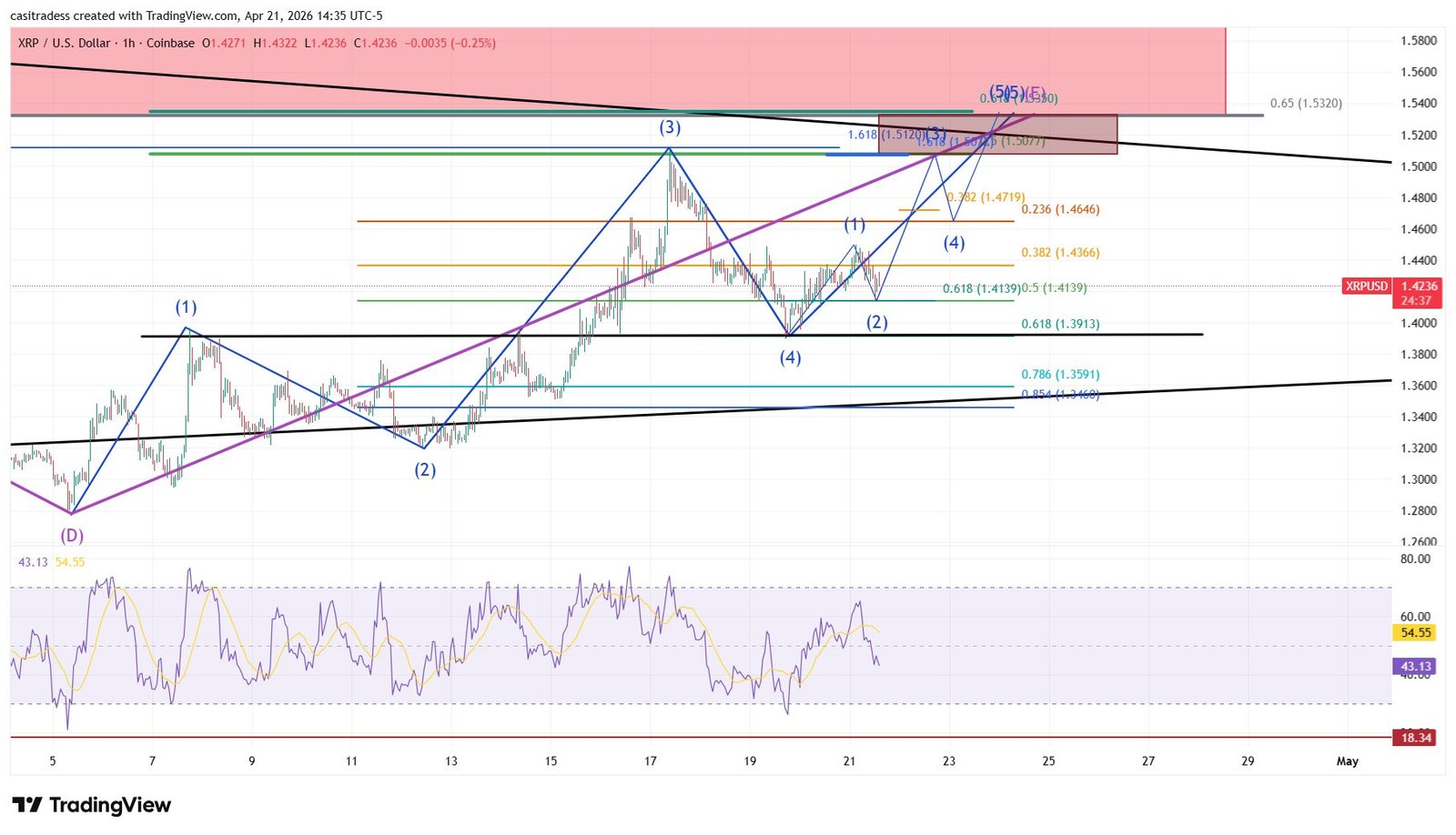
XRP Lands on SoFi as Bank Expands Crypto Access: What’s Next for Price?

WTI Oil eases to $87.50 amid a fragile US-Iran ceasefire




