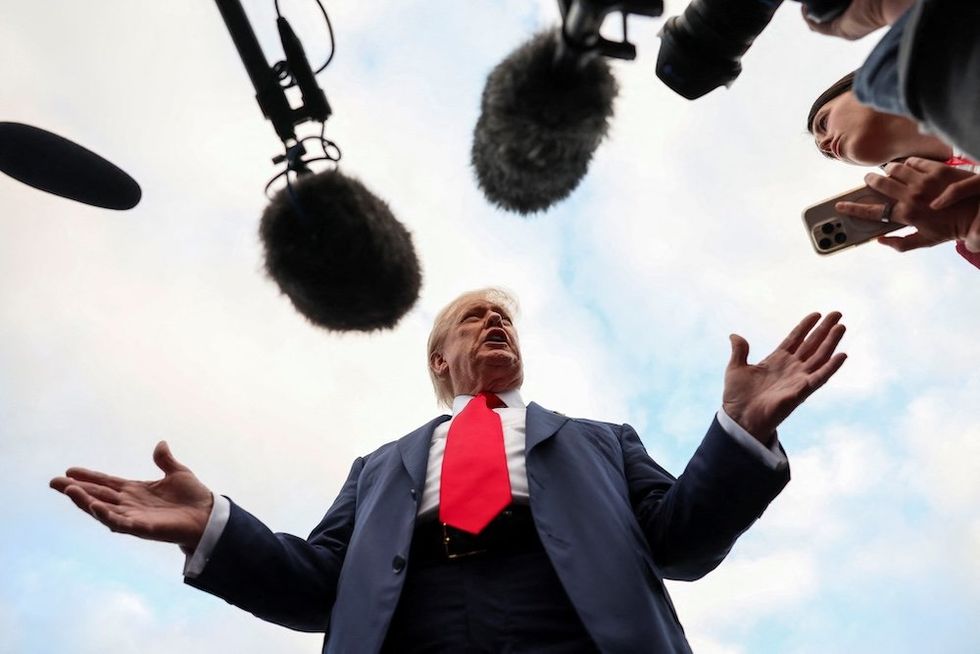
The post Trump Proposes Revolutionary Tax Strategy Using Tariff Revenue appeared on BitcoinEthereumNews.com. In a stunning economic announcement, President Donald Trump has revealed plans for a significant income tax cut that could reshape America’s fiscal landscape. This bold proposal aims to reduce the tax burden on American workers while leveraging an unconventional funding source: tariff revenue. What Does Trump’s Income Tax Cut Plan Actually Mean? President Trump’s proposal centers on using revenue generated from tariffs to fund reductions in income taxes. This approach represents a fundamental shift in how the government might collect and redistribute funds. The income tax cut would potentially put more money back into the pockets of American taxpayers. According to multiple media reports, the President believes tariff collections could cover a substantial portion of the proposed income tax reduction. This strategy connects international trade policy directly with domestic tax relief, creating an innovative economic model. How Would This Income Tax Cut Actually Work? The mechanics behind this income tax cut proposal involve several key components. First, tariffs collected on imported goods would flow into government coffers. Then, these funds would offset the revenue loss from lowering income tax rates. Key aspects of the plan include: Reduced income tax rates across multiple brackets Increased reliance on tariff revenue Potential changes to international trade relationships Possible impacts on consumer prices What Are the Potential Benefits of This Income Tax Cut Strategy? This innovative approach to funding an income tax cut offers several potential advantages. American workers could see immediate benefits through higher take-home pay. Moreover, businesses might experience reduced payroll costs and increased consumer spending power. The income tax cut could stimulate economic growth by putting more disposable income in circulation. However, the success of this strategy depends heavily on maintaining sufficient tariff revenue streams while managing potential trade relationship impacts. Could This Income Tax Cut Face Implementation Challenges? While the… The post Trump Proposes Revolutionary Tax Strategy Using Tariff Revenue appeared on BitcoinEthereumNews.com. In a stunning economic announcement, President Donald Trump has revealed plans for a significant income tax cut that could reshape America’s fiscal landscape. This bold proposal aims to reduce the tax burden on American workers while leveraging an unconventional funding source: tariff revenue. What Does Trump’s Income Tax Cut Plan Actually Mean? President Trump’s proposal centers on using revenue generated from tariffs to fund reductions in income taxes. This approach represents a fundamental shift in how the government might collect and redistribute funds. The income tax cut would potentially put more money back into the pockets of American taxpayers. According to multiple media reports, the President believes tariff collections could cover a substantial portion of the proposed income tax reduction. This strategy connects international trade policy directly with domestic tax relief, creating an innovative economic model. How Would This Income Tax Cut Actually Work? The mechanics behind this income tax cut proposal involve several key components. First, tariffs collected on imported goods would flow into government coffers. Then, these funds would offset the revenue loss from lowering income tax rates. Key aspects of the plan include: Reduced income tax rates across multiple brackets Increased reliance on tariff revenue Potential changes to international trade relationships Possible impacts on consumer prices What Are the Potential Benefits of This Income Tax Cut Strategy? This innovative approach to funding an income tax cut offers several potential advantages. American workers could see immediate benefits through higher take-home pay. Moreover, businesses might experience reduced payroll costs and increased consumer spending power. The income tax cut could stimulate economic growth by putting more disposable income in circulation. However, the success of this strategy depends heavily on maintaining sufficient tariff revenue streams while managing potential trade relationship impacts. Could This Income Tax Cut Face Implementation Challenges? While the…

Trump Proposes Revolutionary Tax Strategy Using Tariff Revenue

In a stunning economic announcement, President Donald Trump has revealed plans for a significant income tax cut that could reshape America’s fiscal landscape. This bold proposal aims to reduce the tax burden on American workers while leveraging an unconventional funding source: tariff revenue.

What Does Trump’s Income Tax Cut Plan Actually Mean?

President Trump’s proposal centers on using revenue generated from tariffs to fund reductions in income taxes. This approach represents a fundamental shift in how the government might collect and redistribute funds. The income tax cut would potentially put more money back into the pockets of American taxpayers.

According to multiple media reports, the President believes tariff collections could cover a substantial portion of the proposed income tax reduction. This strategy connects international trade policy directly with domestic tax relief, creating an innovative economic model.

How Would This Income Tax Cut Actually Work?

The mechanics behind this income tax cut proposal involve several key components. First, tariffs collected on imported goods would flow into government coffers. Then, these funds would offset the revenue loss from lowering income tax rates.

Key aspects of the plan include:

  • Reduced income tax rates across multiple brackets
  • Increased reliance on tariff revenue
  • Potential changes to international trade relationships
  • Possible impacts on consumer prices

What Are the Potential Benefits of This Income Tax Cut Strategy?

This innovative approach to funding an income tax cut offers several potential advantages. American workers could see immediate benefits through higher take-home pay. Moreover, businesses might experience reduced payroll costs and increased consumer spending power.

The income tax cut could stimulate economic growth by putting more disposable income in circulation. However, the success of this strategy depends heavily on maintaining sufficient tariff revenue streams while managing potential trade relationship impacts.

Could This Income Tax Cut Face Implementation Challenges?

While the income tax cut proposal sounds promising, several hurdles could emerge. Congress must approve any significant tax changes, and political opposition might complicate passage. Additionally, fluctuating tariff revenues could create budget uncertainty.

International trade partners might respond with their own tariffs, potentially affecting American exports. The income tax cut’s sustainability also depends on maintaining consistent trade flows and tariff collections over time.

What Makes This Income Tax Cut Different From Previous Proposals?

This income tax cut stands apart because of its unique funding mechanism. Unlike traditional tax cuts funded through spending reductions or increased borrowing, this plan uses tariff revenue as the primary offset. This creates a direct link between trade policy and domestic tax relief.

The income tax cut proposal represents a departure from conventional fiscal thinking. It suggests that protectionist trade policies could finance domestic economic benefits, potentially reshaping how governments approach revenue generation.

Conclusion: A Revolutionary Approach to Tax Policy

President Trump’s income tax cut proposal marks a significant departure from traditional economic thinking. By linking tariff revenue to domestic tax relief, this plan could redefine how governments balance international trade and domestic fiscal policy. The success of this income tax cut will depend on careful implementation and ongoing evaluation of its economic impacts.

Frequently Asked Questions

How would tariff revenue fund the income tax cut?

Money collected from tariffs on imported goods would be used to replace revenue lost from lowering income tax rates, creating a new funding stream for tax relief.

When might this income tax cut take effect?

The timeline depends on congressional approval and implementation details. The process could take several months or longer if political negotiations become complex.

Would all taxpayers benefit from this income tax cut?

While details are still emerging, the proposal appears aimed at providing broad-based tax relief, though specific impacts might vary across income brackets.

How might this affect international trade relationships?

Increased reliance on tariff revenue could strain trade partnerships, potentially leading to retaliatory measures from other countries.

What are the risks of funding tax cuts through tariffs?

Primary risks include trade disruption, potential consumer price increases, and revenue volatility if trade patterns change significantly.

How does this compare to previous tax cut proposals?

This approach is unique in its direct linkage between tariff collections and income tax reductions, representing an innovative funding mechanism.

Found this analysis of Trump’s income tax cut proposal insightful? Share this article with others who might benefit from understanding this revolutionary economic strategy. Your shares help spread important policy information across social media platforms.

To learn more about the latest economic policy trends, explore our article on key developments shaping fiscal policy and future economic strategies.

Disclaimer: The information provided is not trading advice, Bitcoinworld.co.in holds no liability for any investments made based on the information provided on this page. We strongly recommend independent research and/or consultation with a qualified professional before making any investment decisions.

Source: https://bitcoinworld.co.in/trump-income-tax-cut-tariffs/

Market Opportunity
OFFICIAL TRUMP Logo
OFFICIAL TRUMP Price(TRUMP)
$5.639
$5.639$5.639
+1.40%
USD
OFFICIAL TRUMP (TRUMP) Live Price Chart
Disclaimer: The articles reposted on this site are sourced from public platforms and are provided for informational purposes only. They do not necessarily reflect the views of MEXC. All rights remain with the original authors. If you believe any content infringes on third-party rights, please contact service@support.mexc.com for removal. MEXC makes no guarantees regarding the accuracy, completeness, or timeliness of the content and is not responsible for any actions taken based on the information provided. The content does not constitute financial, legal, or other professional advice, nor should it be considered a recommendation or endorsement by MEXC.

You May Also Like

Vitalik Buterin Reaffirms Original 2014 Ethereum Vision With Modern Web3 Technology Stack

Vitalik Buterin Reaffirms Original 2014 Ethereum Vision With Modern Web3 Technology Stack

TLDR: Ethereum proof-of-stake transition and ZK-EVM scaling solutions effectively realize the 2014 sharding vision. Waku evolved from Whisper to power decentralized
Share
Blockonomi2026/01/14 17:17
CME Group to Launch Solana and XRP Futures Options

CME Group to Launch Solana and XRP Futures Options

The post CME Group to Launch Solana and XRP Futures Options appeared on BitcoinEthereumNews.com. An announcement was made by CME Group, the largest derivatives exchanger worldwide, revealed that it would introduce options for Solana and XRP futures. It is the latest addition to CME crypto derivatives as institutions and retail investors increase their demand for Solana and XRP. CME Expands Crypto Offerings With Solana and XRP Options Launch According to a press release, the launch is scheduled for October 13, 2025, pending regulatory approval. The new products will allow traders to access options on Solana, Micro Solana, XRP, and Micro XRP futures. Expiries will be offered on business days on a monthly, and quarterly basis to provide more flexibility to market players. CME Group said the contracts are designed to meet demand from institutions, hedge funds, and active retail traders. According to Giovanni Vicioso, the launch reflects high liquidity in Solana and XRP futures. Vicioso is the Global Head of Cryptocurrency Products for the CME Group. He noted that the new contracts will provide additional tools for risk management and exposure strategies. Recently, CME XRP futures registered record open interest amid ETF approval optimism, reinforcing confidence in contract demand. Cumberland, one of the leading liquidity providers, welcomed the development and said it highlights the shift beyond Bitcoin and Ethereum. FalconX, another trading firm, added that rising digital asset treasuries are increasing the need for hedging tools on alternative tokens like Solana and XRP. High Record Trading Volumes Demand Solana and XRP Futures Solana futures and XRP continue to gain popularity since their launch earlier this year. According to CME official records, many have bought and sold more than 540,000 Solana futures contracts since March. A value that amounts to over $22 billion dollars. Solana contracts hit a record 9,000 contracts in August, worth $437 million. Open interest also set a record at 12,500 contracts.…
Share
BitcoinEthereumNews2025/09/18 01:39
U.S. politician makes super suspicious war stock trade

U.S. politician makes super suspicious war stock trade

The post U.S. politician makes super suspicious war stock trade appeared on BitcoinEthereumNews.com. Representative Gilbert Cisneros of California drew much attention
Share
BitcoinEthereumNews2026/01/14 17:27