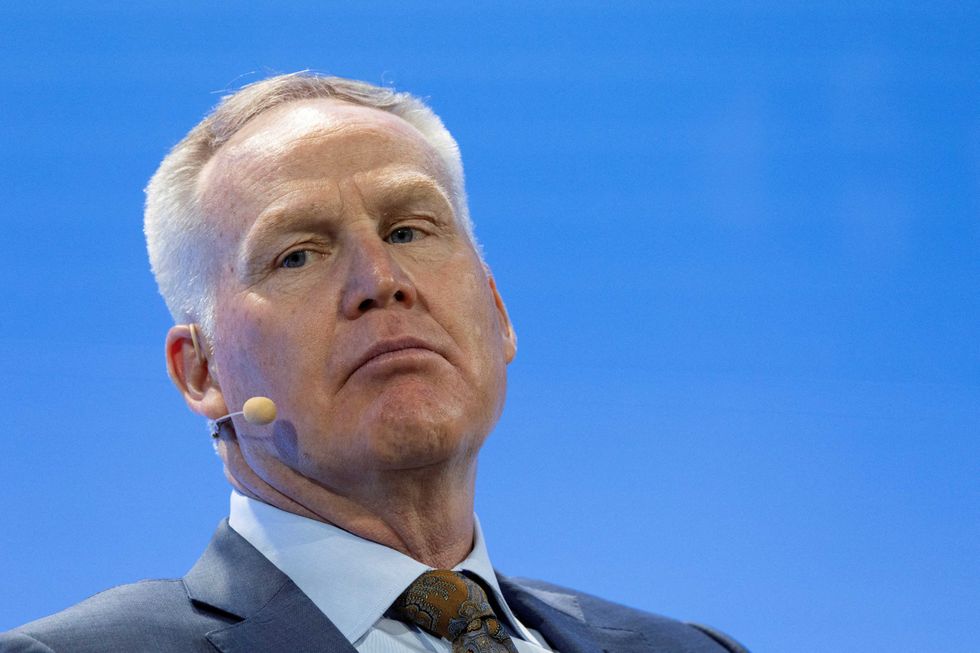
The post UN human rights chief warns of AI misuse and corporate power appeared on BitcoinEthereumNews.com. Homepage > News > Business > UN human rights chief warns of AI misuse and corporate power United Nations High Commissioner for Human Rights Volker Türk has warned that major companies and rapidly evolving technologies, such as artificial intelligence (AI), are creating new challenges for addressing human rights abuses, while urging governments and businesses to step up. Speaking at the opening of the 14th UN Forum on Business and Human Rights in Geneva, Türk cautioned that without proper checks in place, new tools like generative AI could be misused. “When powerful tech giants introduce new technologies, such as generative artificial intelligence, human rights can be the first casualty,” he said. “Generative AI holds tremendous promise, but its exploitation for purely political or economic benefit can manipulate, distort and distract.” He added that “the threats to several human rights, including privacy, political participation, free expression and work are clear and present.” Türk also pointed to the increasing influence of corporate power on social change, stressing that companies must institute rules, safeguards, and independent oversight to keep pace with innovation. “Corporate power has grown significantly, based largely on the accumulation of personal and corporate wealth among a handful of players. In some cases, this exceeds the economies of entire countries, and we know that if power is not constrained by law, it can lead to abuse and subjugation,” he said. “Without proper safeguards and regulations, AI systems have the potential to turn into a modern-day Frankenstein’s monster.” The UN human rights chief called on governments to come together to prevent such an outcome, while urging tech companies to “choose a different path.” “They can seize the opportunity to build digital technologies that advance human rights and serve the public good,” said Türk. Worker and climate concerns In terms of other specific concerns,… The post UN human rights chief warns of AI misuse and corporate power appeared on BitcoinEthereumNews.com. Homepage > News > Business > UN human rights chief warns of AI misuse and corporate power United Nations High Commissioner for Human Rights Volker Türk has warned that major companies and rapidly evolving technologies, such as artificial intelligence (AI), are creating new challenges for addressing human rights abuses, while urging governments and businesses to step up. Speaking at the opening of the 14th UN Forum on Business and Human Rights in Geneva, Türk cautioned that without proper checks in place, new tools like generative AI could be misused. “When powerful tech giants introduce new technologies, such as generative artificial intelligence, human rights can be the first casualty,” he said. “Generative AI holds tremendous promise, but its exploitation for purely political or economic benefit can manipulate, distort and distract.” He added that “the threats to several human rights, including privacy, political participation, free expression and work are clear and present.” Türk also pointed to the increasing influence of corporate power on social change, stressing that companies must institute rules, safeguards, and independent oversight to keep pace with innovation. “Corporate power has grown significantly, based largely on the accumulation of personal and corporate wealth among a handful of players. In some cases, this exceeds the economies of entire countries, and we know that if power is not constrained by law, it can lead to abuse and subjugation,” he said. “Without proper safeguards and regulations, AI systems have the potential to turn into a modern-day Frankenstein’s monster.” The UN human rights chief called on governments to come together to prevent such an outcome, while urging tech companies to “choose a different path.” “They can seize the opportunity to build digital technologies that advance human rights and serve the public good,” said Türk. Worker and climate concerns In terms of other specific concerns,…

UN human rights chief warns of AI misuse and corporate power

United Nations High Commissioner for Human Rights Volker Türk has warned that major companies and rapidly evolving technologies, such as artificial intelligence (AI), are creating new challenges for addressing human rights abuses, while urging governments and businesses to step up.

Speaking at the opening of the 14th UN Forum on Business and Human Rights in Geneva, Türk cautioned that without proper checks in place, new tools like generative AI could be misused.

“When powerful tech giants introduce new technologies, such as generative artificial intelligence, human rights can be the first casualty,” he said. “Generative AI holds tremendous promise, but its exploitation for purely political or economic benefit can manipulate, distort and distract.”

He added that “the threats to several human rights, including privacy, political participation, free expression and work are clear and present.”

Türk also pointed to the increasing influence of corporate power on social change, stressing that companies must institute rules, safeguards, and independent oversight to keep pace with innovation.

“Corporate power has grown significantly, based largely on the accumulation of personal and corporate wealth among a handful of players. In some cases, this exceeds the economies of entire countries, and we know that if power is not constrained by law, it can lead to abuse and subjugation,” he said. “Without proper safeguards and regulations, AI systems have the potential to turn into a modern-day Frankenstein’s monster.”

The UN human rights chief called on governments to come together to prevent such an outcome, while urging tech companies to “choose a different path.”

“They can seize the opportunity to build digital technologies that advance human rights and serve the public good,” said Türk.

Worker and climate concerns

In terms of other specific concerns, Türk also highlighted the struggles facing workers across many sectors, particularly migrant workers, women, and people in informal jobs.

He noted that some governments are rolling back laws that require companies to respect human rights in their operations, calling the trend “worrying” and urging these countries to reverse course.

He also highlighted the global climate emergency as another area of concern that affects human rights.

“Corporate power imbalances also play out in the climate emergency,” said Türk. “The fossil fuel industry is generating massive profits while devastating some of the poorest communities and countries in the world.”

To meet some of these challenges, the High Commissioner announced a new Office of the High Commissioner for Human Rights (OHCHR) Helpdesk on Business and Human Rights, which will offer guidance on implementing new UN-backed principles.

Türk closed out his speech with a call for stronger global cooperation, at what he described as “an exceptionally difficult moment” for human rights systems.

“Human rights are about—and for—all of us,” he said. “We need to make sure they guide the decisions shaping our future.”

UN focused on AI

High Commissioner Türk’s plea for action on AI is in keeping with an increased focus on the trending technology from the UN.

Earlier this year, the UN Conference on Trade and Development (UNCTAD) published a report revealing that despite AI’s meteoric rise, its advancement and control are still held in the hands of a few elites.

It noted that 100 companies, most of which are based in China or the United States, have made 40% of the global private investment in AI research and development.

In addition, it found that AI is still the preserve of developed economies, which dictate how it’s trained, what data to use, its applications, and limitations. The UNCTAD noted that nearly 120 developing nations have been almost entirely left out of the global AI discussions.

The report warned that these nations, most of which are in the global south, will be disproportionately affected by AI advancements.

More recently, in October, the UN Educational, Scientific, and Cultural Organization (UNESCO) launched an initiative seeking to capitalize on AI to boost development in Africa.

At G20’s ‘AI for Africa Conference 2025’ in Cape Town, South Africa, UNESCO unveiled new initiatives it said would spur the adoption of AI in the continent, creating employment, boosting access to government services, and protecting human rights.

“Today, alongside the African Union and the South African presidency of the G20, we are working to put artificial intelligence at the service of Africa,” said UNESCO Director-General Audrey Azoulay. “Our goal is to spur endogenous momentum in Africa, by training talent, adapting institutions and responding to African priorities. Only in this way will artificial intelligence meet the real needs of the people.”

As part of its commitment, UNESCO announced it would train at least 15,000 civil servants across the region on AI, the opportunities it presents to African governments, and the challenges that hinder its adoption.

In order for artificial intelligence (AI) to work right within the law and thrive in the face of growing challenges, it needs to integrate an enterprise blockchain system that ensures data input quality and ownership—allowing it to keep data safe while also guaranteeing the immutability of data. Check out CoinGeek’s coverage on this emerging tech to learn more why Enterprise blockchain will be the backbone of AI.

Watch | Alex Ball on the future of tech: AI development and entrepreneurship

frameborder=”0″ allow=”accelerometer; autoplay; clipboard-write; encrypted-media; gyroscope; picture-in-picture; web-share” referrerpolicy=”strict-origin-when-cross-origin” allowfullscreen>

Source: https://coingeek.com/un-human-rights-chief-warns-of-ai-misuse-and-corporate-power/

Market Opportunity
null Logo
null Price(null)
--
----
USD
null (null) Live Price Chart
Disclaimer: The articles reposted on this site are sourced from public platforms and are provided for informational purposes only. They do not necessarily reflect the views of MEXC. All rights remain with the original authors. If you believe any content infringes on third-party rights, please contact service@support.mexc.com for removal. MEXC makes no guarantees regarding the accuracy, completeness, or timeliness of the content and is not responsible for any actions taken based on the information provided. The content does not constitute financial, legal, or other professional advice, nor should it be considered a recommendation or endorsement by MEXC.

You May Also Like

Fed forecasts only one rate cut in 2026, a more conservative outlook than expected

Fed forecasts only one rate cut in 2026, a more conservative outlook than expected

The post Fed forecasts only one rate cut in 2026, a more conservative outlook than expected appeared on BitcoinEthereumNews.com. Federal Reserve Chairman Jerome Powell talks to reporters following the regular Federal Open Market Committee meetings at the Fed on July 30, 2025 in Washington, DC. Chip Somodevilla | Getty Images The Federal Reserve is projecting only one rate cut in 2026, fewer than expected, according to its median projection. The central bank’s so-called dot plot, which shows 19 individual members’ expectations anonymously, indicated a median estimate of 3.4% for the federal funds rate at the end of 2026. That compares to a median estimate of 3.6% for the end of this year following two expected cuts on top of Wednesday’s reduction. A single quarter-point reduction next year is significantly more conservative than current market pricing. Traders are currently pricing in at two to three more rate cuts next year, according to the CME Group’s FedWatch tool, updated shortly after the decision. The gauge uses prices on 30-day fed funds futures contracts to determine market-implied odds for rate moves. Here are the Fed’s latest targets from 19 FOMC members, both voters and nonvoters: Zoom In IconArrows pointing outwards The forecasts, however, showed a large difference of opinion with two voting members seeing as many as four cuts. Three officials penciled in three rate reductions next year. “Next year’s dot plot is a mosaic of different perspectives and is an accurate reflection of a confusing economic outlook, muddied by labor supply shifts, data measurement concerns, and government policy upheaval and uncertainty,” said Seema Shah, chief global strategist at Principal Asset Management. The central bank has two policy meetings left for the year, one in October and one in December. Economic projections from the Fed saw slightly faster economic growth in 2026 than was projected in June, while the outlook for inflation was updated modestly higher for next year. There’s a lot of uncertainty…
Share
BitcoinEthereumNews2025/09/18 02:59
Pump.fun CEO to Call Low-Cap Gem to Test New ‘Callouts’ Feature — Is a 100x Incoming?

Pump.fun CEO to Call Low-Cap Gem to Test New ‘Callouts’ Feature — Is a 100x Incoming?

Pump.fun has rolled out a new social feature that is already stirring debate across Solana’s meme coin scene, after founder Alon Cohen said he would personally
Share
CryptoNews2026/01/16 06:26
Iran’s Crypto Use Reaches $7.8 Billion Amid Protests

Iran’s Crypto Use Reaches $7.8 Billion Amid Protests

Iran's crypto usage hit $7.8 billion in 2025, fueled by protests and economic instability, says Chainalysis.
Share
bitcoininfonews2026/01/16 05:51