WASS: Stakeholders discuss how stablecoins can give Africans a better deal
If you’ve ever sent money to a relative abroad or received cash from one, you already know the pain. The fees that swallow your money. The days of waiting. The exchange rate that somehow always works against you. This is why stablecoins have become the talk of the town.
That frustration is exactly why hundreds of policymakers, tech founders, and financial experts converged on Abuja last week for the West Africa Stablecoin Summit (WASS) 2025. Their mission?
To figure out how stablecoins (digital currencies pegged to the US dollar) can finally give Africans a better deal.
The numbers tell the story. Nigeria alone processed nearly $22 billion in stablecoin transactions between July 2023 and June 2024, making it Africa’s largest market by far. Meanwhile, sending money to Sub-Saharan Africa through traditional channels still costs an average of 8.37%.
This is the highest in the world. For a family receiving $200 from a relative in London, that’s almost $17 lost to middlemen.
Read also: BMONI wants to redefine finance for young Africans using stablecoins and biometric technology
“We are talking about digital money that moves fast, settles instantly, and helps people to do business across borders without issues or stress,” Hammed Afenifere, CEO of Oneremit, told attendees at the summit. “You pay a supplier today, they receive it today, without any bank in between.”
The event, hosted by the Africa Stablecoin Network at Aduvie Hall in Jahi, featured everything from policy debates to product launches. The biggest moment came with the unveiling of YDPay, a new platform designed to make swapping naira for stablecoins, and back again, as simple as using your banking app.
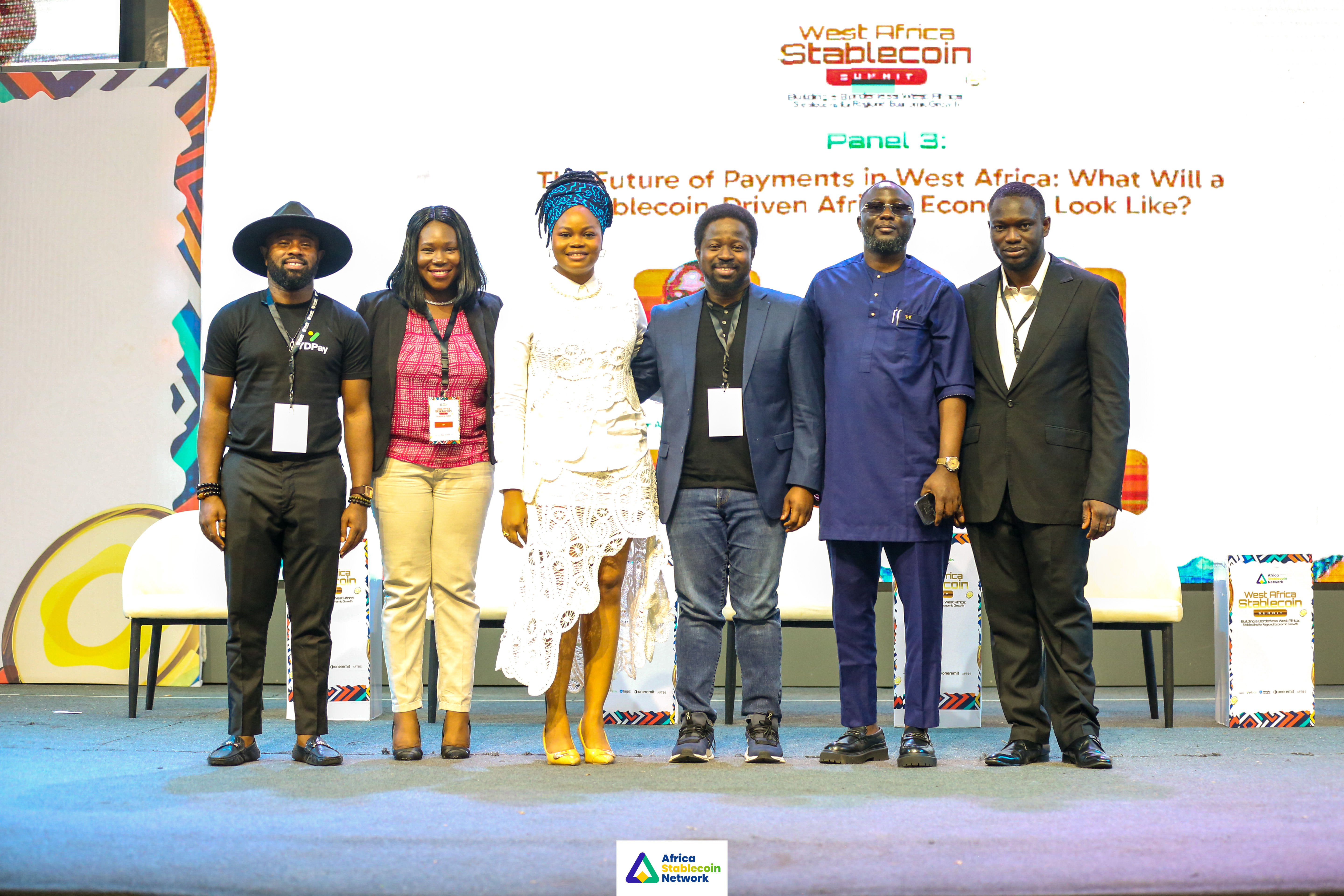 Stablecoins summit in Abuja
“Money had to go digital, and with stablecoins, money became more digital,” said Chike Okonkwo, YDPay’s Marketing Manager. He didn’t mince words about the stakes: any finance professional who ignores stablecoins, he warned, would be “leaving a lot of money on the table.”
The timing matters. Nigeria’s Investment and Securities Act 2025 has positioned the country as Africa’s first to formally regulate stablecoins. This is a sharp turn from the days when the Central Bank banned banks from dealing with crypto altogether.
That ban, lifted in late 2023, had only pushed trading underground onto peer-to-peer platforms.
But regulation brings its own questions. Gbenga Omosuyi from Sphere Labs noted that even global frameworks like America’s STABLE Act haven’t figured out how to handle yield-bearing stablecoins, i.e. tokens that pay interest on your holdings. “Regulation has to catch up,” he said.
The summit’s president, Nathaniel Luz, set an ambitious tone from the start. “The future is being written, and it is being written right here, right now, by the people in this room,” he told attendees, reminding them that private currencies existed long before Bitcoin.
The difference now is speed, reach, and the smartphone in nearly every Nigerian’s pocket.
For ordinary Nigerians squeezed by inflation that peaked above 30% earlier this year, stablecoins have become more than a tech curiosity. They’re a way to hold dollars digitally when physical greenbacks are scarce and black-market rates are brutal.
They’re how freelancers on Upwork get paid without losing a chunk to conversion fees. They’re how small traders import goods from China without the headache of SWIFT delays.
As Obinna Iwuno, President of SiBAN, put it simply: “This conference is a need whose time has come.”
Watch the video of the summit below:


You May Also Like

Spot CVD Chart Reveals Critical Bitcoin Support Levels as Institutional Orders Surge on April 2

Fed Day Dry Powder: Cryptoquant Analyst Tracks $7.6B Stablecoin Pile on Exchanges