What to Know: Strategy’s reduced 2025 $BTC yield targets and its $1.44B cash reserve underscore the volatility of pure corporate Bitcoin exposure. Capital is rotating away from single-stock Bitcoin proxies and toward direct Bitcoin ecosystem plays, especially Layer-2 infrastructure with fee and activity capture. Bitcoin Hyper integrates Bitcoin’s security with SVM throughput to deliver sub-second smart contracts and low-fee DeFi, gaming, and payments. As Bitcoin Layer-2 competition heats up, networks offering strong tooling, low latency, and aligned economic incentives may outperform passive $BTC treasury strategies. Strategy’s move to slash its 2025 profit and $BTC yield targets to build a $1.44B cash reserve is a blunt reminder of how violent Bitcoin treasury cycles can be, even for professional managers. When a flagship listed proxy for $BTC suddenly prioritizes cash over coin, it forces you to reassess risk. For traders who’ve been using Strategy shares as a levered Bitcoin bet, that pivot underlines a structural problem: you’re still exposed to a single company’s capital-allocation decisions. Earnings calls, dilution, debt covenants and regulatory scrutiny can hit your Bitcoin play even if $BTC itself trades sideways or higher. That’s why more capital is quietly rotating from corporate treasuries and listed stocks toward infrastructure and ecosystem exposure. Instead of asking whether one boardroom will stay max long $BTC, investors are asking which rails will capture fees, users and activity as Bitcoin matures beyond digital gold. In that rotation, Bitcoin Hyper ($HYPER) is emerging as one of the higher-beta ideas on the radar: a Bitcoin Layer 2 that integrates the Solana Virtual Machine (SVM) to deliver sub-second execution and high-throughput smart contracts on top of Bitcoin’s settlement layer. For traders seeking upside without tying everything to a single stock, it’s a very different proposition from owning Strategy. Why Bitcoin Ecosystem Bets Are Replacing Single-Stock Proxies Strategy’s balance-sheet shift highlights a basic reality: listed companies are constrained by shareholders, auditors and macro cycles. They can’t run 100% Bitcoin exposure indefinitely without occasionally de-risking, even if their brand is built on being all in on $BTC. At the same time, Bitcoin itself still settles around 7 transactions per second on L1, with fees frequently spiking into several dollars during congestion. That bottleneck has kept most DeFi, gaming and NFT experimentation on chains like Ethereum, Solana and Base, while Bitcoin remains underused capital sitting in cold storage. Bitcoin Hyper attempts to unlock Bitcoin’s idle trillions, but with a very specific approach: pairing Bitcoin settlement with an SVM-powered execution layer. For investors moving away from corporate proxies, these kinds of rails are increasingly how they try to capture long-term ecosystem upside rather than quarterly treasury decisions. For a deeper dive into how this works in practice, see what Bitcoin Hyper is planning in our guide. Bitcoin Hyper’s SVM Layer 2 Pitch to Bitcoin Holders Where Bitcoin Hyper gets interesting is the architecture. It uses Bitcoin L1 purely as the settlement and security root, while a real-time SVM Layer 2 handles high-speed execution. Blocks finalize in sub-second intervals, with transactions costing a tiny fraction of a cent, targeting performance that the team claims can exceed Solana’s own throughput under load. That SVM integration matters because it imports Solana’s developer tooling and parallel execution model straight into the Bitcoin orbit. Rust-based smart contracts, SPL-compatible tokens adapted for this L2, and familiar SDKs give builders a fast path to port DeFi, NFT and gaming primitives without reinventing everything for a bespoke VM. On-chain, the system relies on a single trusted sequencer that batches transactions and periodically anchors state to Bitcoin. A decentralized canonical bridge manages $BTC transfers in and out of the Layer 2, allowing wrapped $BTC to move into high-speed environments for swaps, lending, staking and in-game economies, then settle back to L1 when needed. The market seems to be paying attention. The Bitcoin Hyper presale has raised $28.8M, with tokens at $0.013365, signaling early conviction that a Solana-grade execution layer attached to Bitcoin’s security could capture meaningful user and fee flow over time. Learn how to buy $HYPER before the chance is gone. Whale investors have invested heavily: $274K whale $HYPER purchase $379K whale $HYPER purchase $500K whale $HYPER purchase That interest comes in part due to $HYPER’s price potential: our $HYPER price prediction shows it could go from $0.013365 to $0.08625 by the end of 2026, delivering 545% potential gains to current investors. For yield hunters, $HYPER also bakes in staking, with rewards tied to community and governance participation and a 7-day vesting window for presale stakers. If Strategy’s cash hoard is a bet on surviving the next volatility wave, Bitcoin Hyper is a bet that the next wave drives more activity, not just more hoarding. Consider if $HYPER fits your thesis before joining the presale. This article is for informational purposes only and does not constitute financial, investment, or trading advice; always do your own research. Authored by Aaron Walker for NewsBTC – https://www.newsbtc.com/strategy-bitcoin-cash-reserve-boosts-bitcoin-hyper-layer-2What to Know: Strategy’s reduced 2025 $BTC yield targets and its $1.44B cash reserve underscore the volatility of pure corporate Bitcoin exposure. Capital is rotating away from single-stock Bitcoin proxies and toward direct Bitcoin ecosystem plays, especially Layer-2 infrastructure with fee and activity capture. Bitcoin Hyper integrates Bitcoin’s security with SVM throughput to deliver sub-second smart contracts and low-fee DeFi, gaming, and payments. As Bitcoin Layer-2 competition heats up, networks offering strong tooling, low latency, and aligned economic incentives may outperform passive $BTC treasury strategies. Strategy’s move to slash its 2025 profit and $BTC yield targets to build a $1.44B cash reserve is a blunt reminder of how violent Bitcoin treasury cycles can be, even for professional managers. When a flagship listed proxy for $BTC suddenly prioritizes cash over coin, it forces you to reassess risk. For traders who’ve been using Strategy shares as a levered Bitcoin bet, that pivot underlines a structural problem: you’re still exposed to a single company’s capital-allocation decisions. Earnings calls, dilution, debt covenants and regulatory scrutiny can hit your Bitcoin play even if $BTC itself trades sideways or higher. That’s why more capital is quietly rotating from corporate treasuries and listed stocks toward infrastructure and ecosystem exposure. Instead of asking whether one boardroom will stay max long $BTC, investors are asking which rails will capture fees, users and activity as Bitcoin matures beyond digital gold. In that rotation, Bitcoin Hyper ($HYPER) is emerging as one of the higher-beta ideas on the radar: a Bitcoin Layer 2 that integrates the Solana Virtual Machine (SVM) to deliver sub-second execution and high-throughput smart contracts on top of Bitcoin’s settlement layer. For traders seeking upside without tying everything to a single stock, it’s a very different proposition from owning Strategy. Why Bitcoin Ecosystem Bets Are Replacing Single-Stock Proxies Strategy’s balance-sheet shift highlights a basic reality: listed companies are constrained by shareholders, auditors and macro cycles. They can’t run 100% Bitcoin exposure indefinitely without occasionally de-risking, even if their brand is built on being all in on $BTC. At the same time, Bitcoin itself still settles around 7 transactions per second on L1, with fees frequently spiking into several dollars during congestion. That bottleneck has kept most DeFi, gaming and NFT experimentation on chains like Ethereum, Solana and Base, while Bitcoin remains underused capital sitting in cold storage. Bitcoin Hyper attempts to unlock Bitcoin’s idle trillions, but with a very specific approach: pairing Bitcoin settlement with an SVM-powered execution layer. For investors moving away from corporate proxies, these kinds of rails are increasingly how they try to capture long-term ecosystem upside rather than quarterly treasury decisions. For a deeper dive into how this works in practice, see what Bitcoin Hyper is planning in our guide. Bitcoin Hyper’s SVM Layer 2 Pitch to Bitcoin Holders Where Bitcoin Hyper gets interesting is the architecture. It uses Bitcoin L1 purely as the settlement and security root, while a real-time SVM Layer 2 handles high-speed execution. Blocks finalize in sub-second intervals, with transactions costing a tiny fraction of a cent, targeting performance that the team claims can exceed Solana’s own throughput under load. That SVM integration matters because it imports Solana’s developer tooling and parallel execution model straight into the Bitcoin orbit. Rust-based smart contracts, SPL-compatible tokens adapted for this L2, and familiar SDKs give builders a fast path to port DeFi, NFT and gaming primitives without reinventing everything for a bespoke VM. On-chain, the system relies on a single trusted sequencer that batches transactions and periodically anchors state to Bitcoin. A decentralized canonical bridge manages $BTC transfers in and out of the Layer 2, allowing wrapped $BTC to move into high-speed environments for swaps, lending, staking and in-game economies, then settle back to L1 when needed. The market seems to be paying attention. The Bitcoin Hyper presale has raised $28.8M, with tokens at $0.013365, signaling early conviction that a Solana-grade execution layer attached to Bitcoin’s security could capture meaningful user and fee flow over time. Learn how to buy $HYPER before the chance is gone. Whale investors have invested heavily: $274K whale $HYPER purchase $379K whale $HYPER purchase $500K whale $HYPER purchase That interest comes in part due to $HYPER’s price potential: our $HYPER price prediction shows it could go from $0.013365 to $0.08625 by the end of 2026, delivering 545% potential gains to current investors. For yield hunters, $HYPER also bakes in staking, with rewards tied to community and governance participation and a 7-day vesting window for presale stakers. If Strategy’s cash hoard is a bet on surviving the next volatility wave, Bitcoin Hyper is a bet that the next wave drives more activity, not just more hoarding. Consider if $HYPER fits your thesis before joining the presale. This article is for informational purposes only and does not constitute financial, investment, or trading advice; always do your own research. Authored by Aaron Walker for NewsBTC – https://www.newsbtc.com/strategy-bitcoin-cash-reserve-boosts-bitcoin-hyper-layer-2


Strategy Cash Pivot Lifts Bitcoin Hyper Narrative

2025/12/02 18:26

What to Know:

  • Strategy’s reduced 2025 $BTC yield targets and its $1.44B cash reserve underscore the volatility of pure corporate Bitcoin exposure.
  • Capital is rotating away from single-stock Bitcoin proxies and toward direct Bitcoin ecosystem plays, especially Layer-2 infrastructure with fee and activity capture.
  • Bitcoin Hyper integrates Bitcoin’s security with SVM throughput to deliver sub-second smart contracts and low-fee DeFi, gaming, and payments.
  • As Bitcoin Layer-2 competition heats up, networks offering strong tooling, low latency, and aligned economic incentives may outperform passive $BTC treasury strategies.

Strategy’s move to slash its 2025 profit and $BTC yield targets to build a $1.44B cash reserve is a blunt reminder of how violent Bitcoin treasury cycles can be, even for professional managers.

When a flagship listed proxy for $BTC suddenly prioritizes cash over coin, it forces you to reassess risk.

For traders who’ve been using Strategy shares as a levered Bitcoin bet, that pivot underlines a structural problem: you’re still exposed to a single company’s capital-allocation decisions.

Earnings calls, dilution, debt covenants and regulatory scrutiny can hit your Bitcoin play even if $BTC itself trades sideways or higher.

That’s why more capital is quietly rotating from corporate treasuries and listed stocks toward infrastructure and ecosystem exposure.

Instead of asking whether one boardroom will stay max long $BTC, investors are asking which rails will capture fees, users and activity as Bitcoin matures beyond digital gold.

In that rotation, Bitcoin Hyper ($HYPER) is emerging as one of the higher-beta ideas on the radar: a Bitcoin Layer 2 that integrates the Solana Virtual Machine (SVM) to deliver sub-second execution and high-throughput smart contracts on top of Bitcoin’s settlement layer.

For traders seeking upside without tying everything to a single stock, it’s a very different proposition from owning Strategy.

Why Bitcoin Ecosystem Bets Are Replacing Single-Stock Proxies

Strategy’s balance-sheet shift highlights a basic reality: listed companies are constrained by shareholders, auditors and macro cycles. They can’t run 100% Bitcoin exposure indefinitely without occasionally de-risking, even if their brand is built on being all in on $BTC.

At the same time, Bitcoin itself still settles around 7 transactions per second on L1, with fees frequently spiking into several dollars during congestion.

That bottleneck has kept most DeFi, gaming and NFT experimentation on chains like Ethereum, Solana and Base, while Bitcoin remains underused capital sitting in cold storage.

Bitcoin Hyper attempts to unlock Bitcoin’s idle trillions, but with a very specific approach: pairing Bitcoin settlement with an SVM-powered execution layer.

For investors moving away from corporate proxies, these kinds of rails are increasingly how they try to capture long-term ecosystem upside rather than quarterly treasury decisions. For a deeper dive into how this works in practice, see what Bitcoin Hyper is planning in our guide.

Bitcoin Hyper’s SVM Layer 2 Pitch to Bitcoin Holders

Where Bitcoin Hyper gets interesting is the architecture. It uses Bitcoin L1 purely as the settlement and security root, while a real-time SVM Layer 2 handles high-speed execution.

Blocks finalize in sub-second intervals, with transactions costing a tiny fraction of a cent, targeting performance that the team claims can exceed Solana’s own throughput under load.

That SVM integration matters because it imports Solana’s developer tooling and parallel execution model straight into the Bitcoin orbit.

Rust-based smart contracts, SPL-compatible tokens adapted for this L2, and familiar SDKs give builders a fast path to port DeFi, NFT and gaming primitives without reinventing everything for a bespoke VM.

On-chain, the system relies on a single trusted sequencer that batches transactions and periodically anchors state to

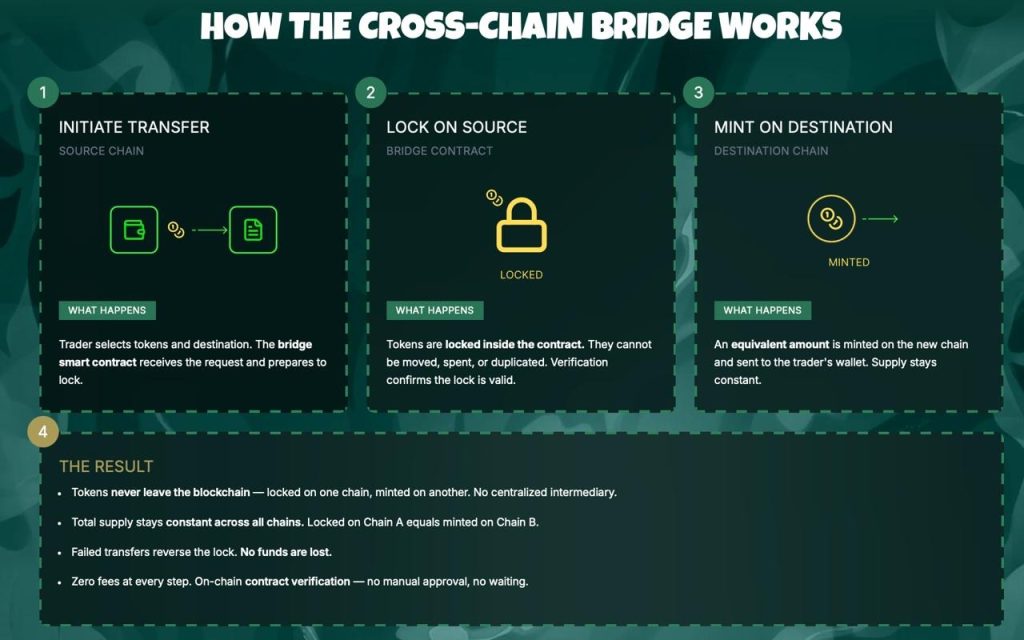
Bitcoin. A decentralized canonical bridge manages $BTC transfers in and out of the Layer 2, allowing wrapped $BTC to move into high-speed environments for swaps, lending, staking and in-game economies, then settle back to L1 when needed.

The market seems to be paying attention. The Bitcoin Hyper presale has raised $28.8M, with tokens at $0.013365, signaling early conviction that a Solana-grade execution layer attached to Bitcoin’s security could capture meaningful user and fee flow over time.

Learn how to buy $HYPER before the chance is gone.

Whale investors have invested heavily:

  • $274K whale $HYPER purchase
  • $379K whale $HYPER purchase
  • $500K whale $HYPER purchase

That interest comes in part due to $HYPER’s price potential: our $HYPER price prediction shows it could go from $0.013365 to $0.08625 by the end of 2026, delivering 545% potential gains to current investors.

For yield hunters, $HYPER also bakes in staking, with rewards tied to community and governance participation and a 7-day vesting window for presale stakers.

If Strategy’s cash hoard is a bet on surviving the next volatility wave, Bitcoin Hyper is a bet that the next wave drives more activity, not just more hoarding.

Consider if $HYPER fits your thesis before joining the presale.

This article is for informational purposes only and does not constitute financial, investment, or trading advice; always do your own research.

Authored by Aaron Walker for NewsBTC – https://www.newsbtc.com/strategy-bitcoin-cash-reserve-boosts-bitcoin-hyper-layer-2

Disclaimer: The articles reposted on this site are sourced from public platforms and are provided for informational purposes only. They do not necessarily reflect the views of MEXC. All rights remain with the original authors. If you believe any content infringes on third-party rights, please contact service@support.mexc.com for removal. MEXC makes no guarantees regarding the accuracy, completeness, or timeliness of the content and is not responsible for any actions taken based on the information provided. The content does not constitute financial, legal, or other professional advice, nor should it be considered a recommendation or endorsement by MEXC.

You May Also Like

Strive’s $500M Bitcoin ATM Program Could Boost Stock Value Up to 30x in 10 Years

Strive’s $500M Bitcoin ATM Program Could Boost Stock Value Up to 30x in 10 Years

The post Strive’s $500M Bitcoin ATM Program Could Boost Stock Value Up to 30x in 10 Years appeared on BitcoinEthereumNews.com. Strive’s $500M SATA ATM program enables the issuance of preferred stock to fund Bitcoin acquisitions, enhance financial flexibility, and support long-term growth. This strategic move, filed with the SEC on December 9, 2025, positions the company to hold more BTC while potentially boosting stock value through compounding effects over 20 years. Strive’s $500M SATA ATM targets Bitcoin purchases and corporate expansion to build lasting financial strength. Financial projections suggest the stock could multiply 30 times in 10 years due to Bitcoin’s growth and leverage strategies. With 7,525 BTC already held as of November 7, 2025, sustained demand for SATA could elevate stock prices to $1,160 by year 20, per analyst models. Discover how Strive’s $500M SATA ATM program fuels Bitcoin strategy and stock growth. Learn projections, goals, and impacts in this detailed analysis. Stay ahead in crypto finance—explore now! What is Strive’s $500M SATA ATM Program? Strive’s $500M SATA ATM program is an at-the-market offering designed to issue up to $500 million in Variable Rate Series A Perpetual Preferred Stock, known as SATA. This initiative, detailed in a sales agreement filed with the Securities and Exchange Commission on December 9, 2025, provides Strive with flexible capital-raising options without fixed timelines or pricing commitments. The proceeds will primarily support Bitcoin holdings, acquisitions, debt repayment, and other corporate needs, reinforcing the company’s commitment to digital assets. How Does the SATA ATM Structure Support Bitcoin Growth? The SATA ATM allows Strive to sell shares opportunistically through broker-dealers, adapting to market conditions for optimal pricing. This structure minimizes dilution risks while generating funds for strategic investments. As of November 7, 2025, Strive already holds 7,525 BTC, and additional acquisitions via this program could amplify exposure to Bitcoin’s potential appreciation. Financial analyst Adam Livingston highlights the program’s role in “long-term intelligent leverage on Bitcoin,” enabling…
Share
BitcoinEthereumNews2025/12/10 23:15
Health Insurers To Cover Covid Vaccines Despite RFK, Jr. Moves

Health Insurers To Cover Covid Vaccines Despite RFK, Jr. Moves

The post Health Insurers To Cover Covid Vaccines Despite RFK, Jr. Moves appeared on BitcoinEthereumNews.com. The nation’s biggest health insurance companies will continue to cover vaccinations – including those against Covid-19 and seasonal flu – previously recommended by a federal advisory committee, America’s Health Insurance Plans said Wednesday, Sept. 17, 2025. In this photo is a free flu and Covid-19 vaccine shots available sign, CVS, Queens, New York. (Photo by: Lindsey Nicholson/Universal Images Group via Getty Images) UCG/Universal Images Group via Getty Images The nation’s biggest health insurance companies will continue to cover vaccinations – including those against Covid-19 and seasonal flu – previously recommended by a federal advisory committee. The announcement by America’s Health Insurance Plans (AHIP), which includes CVS Health’s Aetna, Humana, Cigna, Centene and an array of Blue Cross and Blue Shield plans as members, comes ahead of the first meeting of the reconstituted Advisory Committee on Immunization Practices, which now has new members chosen by U.S. Health and Human Services Secretary Robert F. Kennedy Jr., a vaccine critic. “Health plans are committed to maintaining and ensuring affordable access to vaccines,” AHIP said in a statement Wednesday. “Health plan coverage decisions for immunizations are grounded in each plan’s ongoing, rigorous review of scientific and clinical evidence, and continual evaluation of multiple sources of data.” The move by AHIP is good news for millions of Americans at a time of year when they flock to drugstores, pharmacies, physician’s offices and outpatient clinics to get their seasonal flu and Covid shots. Kennedy’s changes to U.S. vaccine policy have created confusion across the country over whether certain vaccines long covered by insurance would continue to be. AHIP has now provided some clarity for millions of Americans. “Health plans will continue to cover all ACIP-recommended immunizations that were recommended as of September 1, 2025, including updated formulations of the COVID-19 and influenza vaccines, with no cost-sharing…
Share
BitcoinEthereumNews2025/09/18 03:11