Most crypto losses don’t come from market swings — they come from weak security. Your first decision is simple: custodial or non-custodial storage? Custodial = convenience but third-party risk. Non-custodial = full control but full responsibility. If you choose self-custody, protect your seed phrase offline, beware phishing, and always double-check transactions. Crypto security isn’t a one-time setup — it’s a habit.Most crypto losses don’t come from market swings — they come from weak security. Your first decision is simple: custodial or non-custodial storage? Custodial = convenience but third-party risk. Non-custodial = full control but full responsibility. If you choose self-custody, protect your seed phrase offline, beware phishing, and always double-check transactions. Crypto security isn’t a one-time setup — it’s a habit.

Is Your Crypto Safe? A Look at Custody & Security

2025/12/02 12:43
3 min read
For feedback or concerns regarding this content, please contact us at crypto.news@mexc.com

\

The Fundamental Choice: Who Really Controls Your Keys?

At the heart of crypto ownership lies a simple concept: private keys. These cryptographic strings of data grant you access to your coins. As the saying goes, "not your keys, not your crypto." This brings you to a critical question: will you trust a third party with your keys, or do you take full control?

  • Custodial Storage: Think of it as a traditional bank. A third party, usually a cryptocurrency exchange like Coinbase or Binance, holds your private keys.
  • Pros: It’s convenient. You can easily trade assets and recover your account if you forget your password.
  • Cons: You are trusting the exchange's security. If the exchange gets hacked or freezes your account, your funds are at risk.
  • Non-Custodial Storage: In this model, you are your own bank. You have sole control over your private keys.
  • Pros: You have complete sovereignty over your funds. No one can freeze or seize your assets without your keys.
  • Cons: With great power comes great responsibility. If you lose your keys, your funds are gone forever. There is no customer support to call.

Diving into Non-Custodial Wallets: Your Personal Vault

If you choose the path of self-sovereignty, you have several options for non-custodial wallets.

  • Software Wallets: These are applications for your computer or smartphone, such as MetaMask or Trust Wallet. They are convenient for frequent transactions but are connected to the internet, making them "hot wallets" and susceptible to online threats like malware.

  • Hardware Wallets: These are physical devices (similar to a USB drive) that store your private keys offline in "cold storage." Brands like Ledger and Trezor are popular choices. Because the keys never touch an internet-connected device, they are considered the gold standard for security, protecting you from hacking and phishing attempts.

Advanced Security Strategies (Beyond the Obvious)

The infographic above covers the basics, but true security lies in the details.

  1. Protect Your Seed Phrase Like a Treasure: When you set up a non-custodial wallet, you are given a 12- or 24-word "seed phrase." This is the master key to all your crypto.

  2. Never store it digitally. Do not take a screenshot, save it in a text file, or email it to yourself. Write it down and store it in a secure, private physical location. For maximum durability, consider stamping it onto a metal plate.

  3. Never share it. No legitimate support team will ever ask for your seed phrase. Anyone who does is trying to scam you.

  4. Beware of Phishing: Scammers create fake websites or send emails that appear to come from legitimate services to trick you into revealing your keys or seed phrase. Always double-check the URL and be skeptical of unsolicited messages.

  5. Practice Safe Transactions: Before sending a large amount, always send a small test transaction first to ensure the address is correct. Cryptocurrency transactions are irreversible.

Security is a Process, Not a Destination

Choosing between custodial and non-custodial storage depends on your comfort with technology and your tolerance for risk. While exchanges offer convenience, non-custodial wallets provide true ownership.

Regardless of your choice, security is not a one-time setup — it's an ongoing process. Take a moment today to review your security practices.

Now over to you: What is the one security tip you swear by that wasn't mentioned here? 

\

Market Opportunity
Safe Token Logo
Safe Token Price(SAFE)
$0.102
$0.102$0.102
-0.68%
USD
Safe Token (SAFE) Live Price Chart
Disclaimer: The articles reposted on this site are sourced from public platforms and are provided for informational purposes only. They do not necessarily reflect the views of MEXC. All rights remain with the original authors. If you believe any content infringes on third-party rights, please contact crypto.news@mexc.com for removal. MEXC makes no guarantees regarding the accuracy, completeness, or timeliness of the content and is not responsible for any actions taken based on the information provided. The content does not constitute financial, legal, or other professional advice, nor should it be considered a recommendation or endorsement by MEXC.

You May Also Like

Why YouCam AI API is the Secret Weapon for E-Commerce Startups
Why YouCam AI API is the Secret Weapon for E-Commerce Startups

 The New Standard of Personalized Shopping In an era where digital engagement dictates market share, the transition from “browsing” to “buying” depends on confidence
Share
Techbullion2026/03/25 14:34
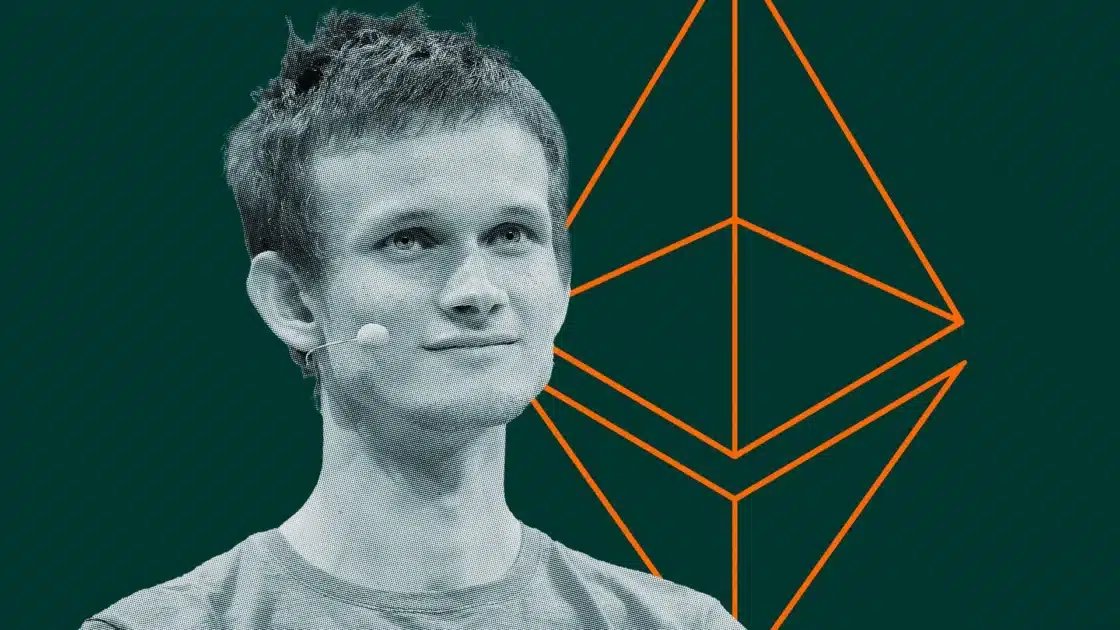
Vitalik Buterin Reveals Ethereum’s Bold Plan to Stay Quantum-Secure and Simple!

Vitalik Buterin Reveals Ethereum’s Bold Plan to Stay Quantum-Secure and Simple!

Buterin unveils Ethereum’s strategy to tackle quantum security challenges ahead. Ethereum focuses on simplifying architecture while boosting security for users. Ethereum’s market stability grows as Buterin’s roadmap gains investor confidence. Ethereum founder Vitalik Buterin has unveiled his long-term vision for the blockchain, focusing on making Ethereum quantum-secure while maintaining its simplicity for users. Buterin presented his roadmap at the Japanese Developer Conference, and splits the future of Ethereum into three phases: short-term, mid-term, and long-term. Buterin’s most ambitious goal for Ethereum is to safeguard the blockchain against the threats posed by quantum computing.  The danger of such future developments is that the future may call into question the cryptographic security of most blockchain systems, and Ethereum will be able to remain ahead thanks to more sophisticated mathematical techniques to ensure the safety and integrity of its protocols. Buterin is committed to ensuring that Ethereum evolves in a way that not only meets today’s security challenges but also prepares for the unknowns of tomorrow. Also Read: Ethereum Giant The Ether Machine Takes Major Step Toward Going Public! However, in spite of such high ambitions, Buterin insisted that Ethereum also needed to simplify its architecture. An important aspect of this vision is to remove unnecessary complexity and make Ethereum more accessible and maintainable without losing its strong security capabilities. Security and simplicity form the core of Buterin’s strategy, as they guarantee that the users of Ethereum experience both security and smooth processes. Focus on Speed and Efficiency in the Short-Term In the short term, Buterin aims to enhance Ethereum’s transaction efficiency, a crucial step toward improving scalability and reducing transaction costs. These advantages are attributed to the fact that, within the mid-term, Ethereum is planning to enhance the speed of transactions in layer-2 networks. According to Butterin, this is part of Ethereum’s expansion, particularly because there is still more need to use blockchain technology to date. The other important aspect of Ethereum’s development is the layer-2 solutions. Buterin supports an approach in which the layer-2 networks are dependent on layer-1 to perform some essential tasks like data security, proof, and censorship resistance. This will enable the layer-2 systems of Ethereum to be concerned with verifying and sequencing transactions, which will improve the overall speed and efficiency of the network. Ethereum’s Market Stability Reflects Confidence in Long-Term Strategy Ethereum’s market performance has remained solid, with the cryptocurrency holding steady above $4,000. Currently priced at $4,492.15, Ethereum has experienced a slight 0.93% increase over the last 24 hours, while its trading volume surged by 8.72%, reaching $34.14 billion. These figures point to growing investor confidence in Ethereum’s long-term vision. The crypto community remains optimistic about Ethereum’s future, with many predicting the price could rise to $5,500 by mid-October. Buterin’s clear, forward-thinking strategy continues to build trust in Ethereum as one of the most secure and scalable blockchain platforms in the market. Also Read: Whales Dump 200 Million XRP in Just 2 Weeks – Is XRP’s Price on the Verge of Collapse? The post Vitalik Buterin Reveals Ethereum’s Bold Plan to Stay Quantum-Secure and Simple! appeared first on 36Crypto.
Share
Coinstats2025/09/18 01:22
Resilient Pair Softens Below 111.00 Amidst Prevailing Bullish Momentum

Resilient Pair Softens Below 111.00 Amidst Prevailing Bullish Momentum

The post Resilient Pair Softens Below 111.00 Amidst Prevailing Bullish Momentum appeared on BitcoinEthereumNews.com. AUD/JPY Price Forecast: Resilient Pair Softens
Share
BitcoinEthereumNews2026/03/25 14:01