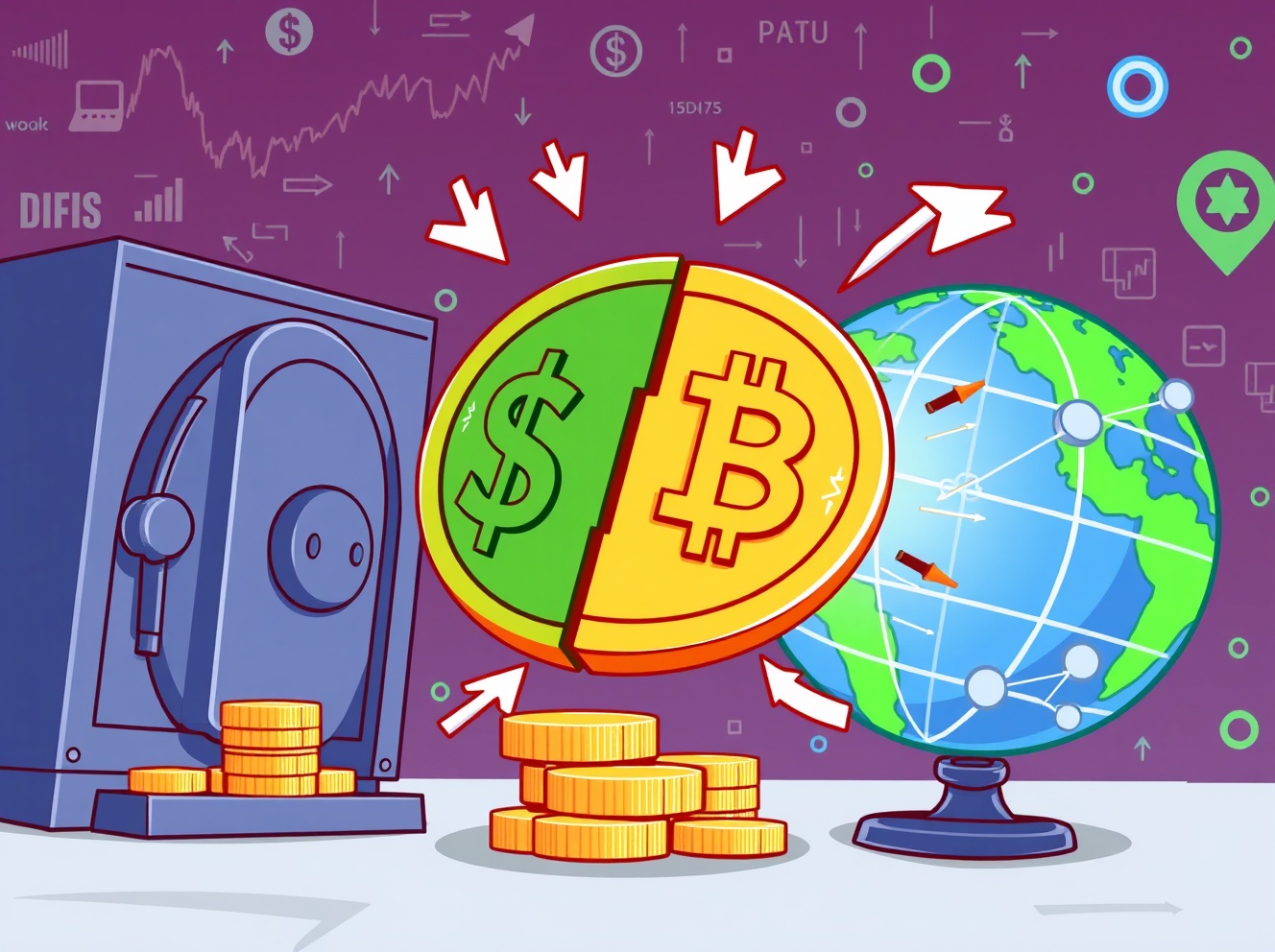
BitcoinWorld Stablecoins: The Surprising New Contender for Global Dollar Liquidity Could the digital tokens in your crypto wallet actually help fund the U.S. government? A recent Bloomberg analysis reveals a fascinating debate: experts are divided on whether stablecoins will become a powerful new source of dollar liquidity or simply reshuffle existing money. This discussion sits at the critical intersection of cryptocurrency innovation and global finance. […] This post Stablecoins: The Surprising New Contender for Global Dollar Liquidity first appeared on BitcoinWorld.BitcoinWorld Stablecoins: The Surprising New Contender for Global Dollar Liquidity Could the digital tokens in your crypto wallet actually help fund the U.S. government? A recent Bloomberg analysis reveals a fascinating debate: experts are divided on whether stablecoins will become a powerful new source of dollar liquidity or simply reshuffle existing money. This discussion sits at the critical intersection of cryptocurrency innovation and global finance. […] This post Stablecoins: The Surprising New Contender for Global Dollar Liquidity first appeared on BitcoinWorld.

Stablecoins: The Surprising New Contender for Global Dollar Liquidity

2025/12/04 16:35
5 min read
For feedback or concerns regarding this content, please contact us at crypto.news@mexc.com

BitcoinWorld

Stablecoins: The Surprising New Contender for Global Dollar Liquidity

Could the digital tokens in your crypto wallet actually help fund the U.S. government? A recent Bloomberg analysis reveals a fascinating debate: experts are divided on whether stablecoins will become a powerful new source of dollar liquidity or simply reshuffle existing money. This discussion sits at the critical intersection of cryptocurrency innovation and global finance.

What Exactly Is the Stablecoin Dollar Liquidity Debate?

Bloomberg highlights a central question with major implications. If stablecoin legislation passes in the U.S., these digital assets pegged to the dollar could create massive new demand for U.S. Treasurys. Think of it this way: to back each digital stablecoin, companies would need to hold real dollar assets, often U.S. government debt. This potential influx of capital could lower government borrowing costs and reinforce the dollar’s global dominance. However, the opposing view is cautious. Skeptics argue this growth might not create new money but simply pull it from bank deposits or money market funds.

Why Are Traditional Finance Experts Skeptical?

The path for stablecoins to become a true source of dollar liquidity is not guaranteed. Bloomberg notes several significant hurdles that temper optimism:

  • Limited Use Cases: Beyond crypto trading, real-world adoption for payments and remittances is still growing.
  • Regulatory Uncertainty: Without clear rules from Congress, large-scale institutional adoption remains stalled.
  • Trust Issues: Past failures in the sector make users and regulators wary.
  • Slow Market Penetration: Widespread public and merchant acceptance is a gradual process.

Therefore, the traditional financial sector questions if stablecoins can genuinely unlock new demand or if they will just compete with existing dollar instruments.

The Potential Impact on U.S. Debt and Global Finance

Let’s explore the optimistic scenario. If stablecoins see explosive growth, the mechanism is straightforward. For every new dollar-pegged stablecoin minted, the issuer must acquire a corresponding dollar asset. This could directly translate into increased purchases of U.S. Treasurys. The potential benefits are compelling:

  • Lower Borrowing Costs: Increased demand for U.S. debt can reduce the interest rates the government pays.
  • Dollar Strength: It could cement the dollar’s role as the world’s primary reserve currency in the digital age.
  • Financial Innovation: It creates a novel bridge between decentralized finance and traditional monetary systems.

This vision positions stablecoins not just as a crypto tool, but as a potential pillar of modern dollar liquidity.

What’s the Realistic Future for Stablecoin Adoption?

The journey from niche to mainstream is the core challenge. For stablecoins to fulfill their potential as a major source of dollar liquidity, they must move beyond crypto exchanges. They need to become a preferred tool for:

  • Cross-border payments and remittances
  • Everyday retail transactions
  • Corporate treasury management

This requires not only technological reliability but also regulatory clarity and a seismic shift in public trust. The current divide in outlook, as reported by Bloomberg, stems from whether you believe this adoption will happen quickly or incrementally.

Conclusion: A Pivotal Moment for Digital Assets

The debate over stablecoins and dollar liquidity is more than a financial technicality. It’s a referendum on the future role of digital assets in the global economy. Will they become a transformative new source of capital, or a digital repackaging of the old system? The answer hinges on adoption, regulation, and market trust. One thing is clear: the outcome will significantly shape the next decade of both cryptocurrency and traditional finance.

Frequently Asked Questions (FAQs)

Q1: What are stablecoins?
A1: Stablecoins are a type of cryptocurrency designed to have a stable value, typically pegged to a fiat currency like the U.S. dollar. They aim to combine the benefits of digital assets with the price stability of traditional money.

Q2: How could stablecoins increase demand for U.S. Treasurys?
A2: If a stablecoin is pegged to the dollar, its issuer often holds U.S. dollar assets, like Treasurys, as collateral. More stablecoins in circulation could mean these issuers need to buy more Treasurys to back them, increasing demand.

Q3: What is meant by ‘dollar liquidity’?
A3: Dollar liquidity refers to the availability of U.S. dollars for lending, borrowing, and transactions in the global financial system. A new ‘source’ would mean a new, large pool of dollars entering this system.

Q4: Why is the traditional finance sector skeptical?
A4: Traditional institutions question whether stablecoins will attract truly new money or simply divert funds from existing products like bank deposits and money market funds. They also cite regulatory and trust barriers.

Q5: What needs to happen for stablecoins to succeed as a liquidity source?
A5> Key requirements include clear U.S. legislation, broader real-world use cases beyond crypto trading, building public trust after past failures, and achieving widespread adoption for payments.

Q6: Could this debate affect the average crypto user?
A6> Absolutely. Positive regulatory developments could lead to more secure, widely accepted stablecoins for everyday use. Conversely, stringent rules or a loss of confidence could limit their utility and growth.

Found this analysis of stablecoins and global finance insightful? The debate about their future is crucial for investors and tech enthusiasts alike. Share this article on social media to spark a conversation with your network about the evolving role of digital assets in our financial system.

To learn more about the latest cryptocurrency trends, explore our article on key developments shaping stablecoin regulation and institutional adoption.

This post Stablecoins: The Surprising New Contender for Global Dollar Liquidity first appeared on BitcoinWorld.

Market Opportunity
Ambire Wallet Logo
Ambire Wallet Price(WALLET)
$0.01038
$0.01038$0.01038
-0.19%
USD
Ambire Wallet (WALLET) Live Price Chart
Disclaimer: The articles reposted on this site are sourced from public platforms and are provided for informational purposes only. They do not necessarily reflect the views of MEXC. All rights remain with the original authors. If you believe any content infringes on third-party rights, please contact crypto.news@mexc.com for removal. MEXC makes no guarantees regarding the accuracy, completeness, or timeliness of the content and is not responsible for any actions taken based on the information provided. The content does not constitute financial, legal, or other professional advice, nor should it be considered a recommendation or endorsement by MEXC.

You May Also Like

Trump Brothers’ American Bitcoin Hits BTC Milestone as Stock Falls to Lowest Price Since IPO

Trump Brothers’ American Bitcoin Hits BTC Milestone as Stock Falls to Lowest Price Since IPO

The post Trump Brothers’ American Bitcoin Hits BTC Milestone as Stock Falls to Lowest Price Since IPO appeared on BitcoinEthereumNews.com. In brief American Bitcoin
Share
BitcoinEthereumNews2026/03/31 01:01
What the Ethereum Economic Zone (EEZ) Means for ETH’s Future

What the Ethereum Economic Zone (EEZ) Means for ETH’s Future

The Ethereum Economic Zone (EEZ) is a new framework backed by the Ethereum Foundation, Gnosis, and Zisk that aims to address one of Ethereum’s biggest structural
Share
Ethnews2026/03/31 01:12
USDH Power Struggle Ignites Stablecoin “Bidding Wars” Across DeFi: Bloomberg

USDH Power Struggle Ignites Stablecoin “Bidding Wars” Across DeFi: Bloomberg

A heated contest for control over a new dollar-pegged token has set the stage for what analysts say could define the next phase of the stablecoin industry. According to Bloomberg, a bidding war unfolded on Hyperliquid, one of crypto’s fastest-growing trading platforms, with the prize being the right to issue USDH, its native stablecoin. The competition drew some of the sector’s most prominent names, including Paxos, Sky, and Ethena, who later withdrew their bid, alongside the lesser-known Native Markets, a startup backed by Stripe stablecoin subsidiary Bridge. Hyperliquid Stablecoin Race Shows Branding and Partnerships Matter as Much as Tech Over the weekend, Hyperliquid’s validators, the contributors who secure the network and vote on key decisions, awarded the USDH contract to Native Markets over the weekend. Despite its relatively new status, the firm’s connection with Stripe helped it outpace more established rivals. Stablecoins underpin decentralized finance by providing a dollar-backed medium for collateral, settlement, and payments across applications. What began as a grassroots, community-led sector has evolved into a battleground for institutions and payment companies seeking revenue from interest on reserves. Circle, for example, shares proceeds from its USDC with Coinbase under a partnership designed to stabilize earnings during market swings. The Hyperliquid contest offered a rare glimpse into just how intense competition has become. Paxos pledged to take no revenue until USDH surpassed $1 billion in circulation. Agora offered to share 100% of net revenue with Hyperliquid, while Ethena put forward 95%. All were outbid by Native Markets, whose ties to Stripe’s $1.1 billion acquisition of Bridge and subsequent rollout of the Tempo blockchain positioned it as a strong contender. “Every stablecoin issuer is extremely desperate for supply,” said Zaheer Ebtikar, co-founder of Split Capital. “They are willing to publicly announce how much they are willing to offer. It just shows it’s a very tough business for stablecoin issuers.” While USDC remains dominant on Hyperliquid with more than $5.6 billion in deposits, the arrival of USDH could shift flows and revenue dynamics. Paxos co-founder Bhau Kotecha said the firm sees the exchange’s growth as an important opportunity, while Agora’s co-founder Nick van Eck warned that awarding the contract to a vertically integrated issuer risked undermining decentralization. Regulatory positioning also factored into the debate. Paxos operates under a New York trust charter and is seeking a federal license, while Bridge holds money transmitter approvals in 30 states. Native Markets, in a blog post, cited regulatory flexibility and deployment speed as reasons for its selection. Hyperliquid said the strong engagement from its community validated the process. Circle CEO Jeremy Allaire dismissed concerns over USDC’s status, noting on X that competition benefits the ecosystem. Analysts suggested that fears of centralization may be exaggerated, noting that Hyperliquid is likely to remain neutral and support multiple stablecoins. Still, the contest over USDH highlighted a new reality for stablecoins: branding, partnerships, and business strategy are becoming as decisive as technology. Native Markets Secures USDH Stablecoin Mandate on Hyperliquid Hyperliquid has concluded its governance vote for the USDH stablecoin, awarding the mandate to Native Markets after a closely watched process that drew weeks of community debate and rival proposals. USDH, described by Hyperliquid as a “Hyperliquid-first, compliant, and natively minted” dollar-backed token, is intended to reduce the platform’s dependence on USDC and strengthen its spot markets. Validators on the decentralized exchange voted in favor of Native Markets, a relatively new player backed by Stripe’s Bridge subsidiary, over established contenders including Paxos and Ethena. The outcome followed a string of proposals offering aggressive revenue-sharing terms to win validator support, underscoring the scale of incentives attached to controlling USDH. Hyperliquid’s exchange has become a critical hub for stablecoin liquidity, with $5.7 billion in USDC, around 8% of its total supply, currently held on the network. At prevailing treasury yields, that translates to an estimated $200 million to $220 million in annual revenue for Circle, underlining why a native alternative could be transformative. Hyperliquid’s validators, who secure the network and vote on key decisions, selected Native Markets following an on-chain governance process that concluded September 15. Native Markets has laid out a phased rollout for USDH, beginning with capped minting and redemption trials before expanding into spot markets. Its reserves will be managed in cash and treasuries by BlackRock, with on-chain tokenization through Superstate and Bridge. Yield from those reserves will be split between Hyperliquid’s Assistance Fund and ecosystem development. The launch of USDH comes as Hyperliquid records record profits from perpetual futures trading, with $106 million in revenue in August alone, and prepares to slash spot trading fees by 80% to bolster liquidity. Analysts say the move positions Hyperliquid to capture more of the stablecoin economics internally, marking a significant step in its bid to rival the largest players in decentralized finance
Share
CryptoNews2025/09/18 00:48