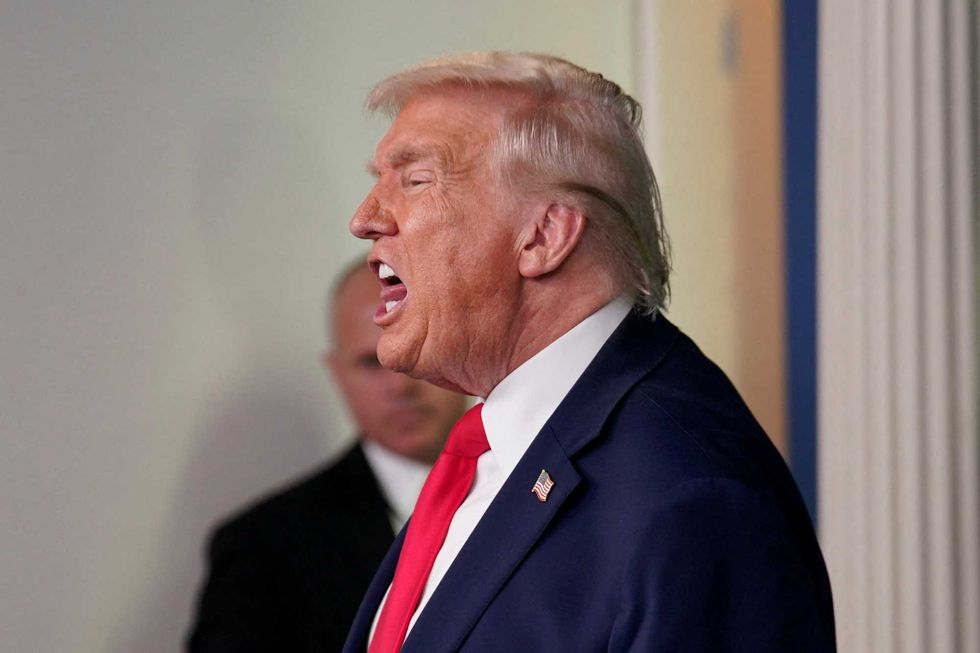
The Kenyan government opted for a private, negotiated sale to Vodafone rather than a public offer through the Nairobi Securities Exchange (NSE).The Kenyan government opted for a private, negotiated sale to Vodafone rather than a public offer through the Nairobi Securities Exchange (NSE).

Why Kenya kept retail investors out of its biggest Safaricom sale yet

Kenya’s decision to sell a 15% stake in Safaricom directly to Vodafone for KES 204.3 billion ($1.57 billion) from the share sale itself, rising to KES 244.5 billion ($1.88 billion) after an added upfront dividend payment, is locking out retail and institutional local investors from the largest equity transaction in the country’s history, reopening an old debate about who gets access to state asset sales.

The Kenyan government opted for a private, negotiated sale to Vodafone rather than a public offer through the Nairobi Securities Exchange (NSE). The deal gives Vodafone a 55% majority in Safaricom and cuts the state’s holding to 20%, with public investors left at 25%. 

Treasury Cabinet Secretary John Mbadi defended the structure on Thursday, saying the choice was driven by price and fiscal urgency rather than market access. 

“This partial 15% divestiture will generate approximately KES 244.5 billion in aggregate proceeds,” Mbadi said at a Safaricom briefing. “It is important to note that this transaction has gained us a 23.6% premium on the 6-month volume weighted average price.”

The government says Vodafone paid a 23.6% premium to Safaricom’s six-month volume-weighted average price, buying the shares at KES 34 ($0.26) each. That premium, treasury argues, outweighed the benefits of a broader public sale.

Vodafone echoed that logic, saying the transaction balanced fiscal needs with long-term strategy. “Vodafone offered a premium, making it the most financially sound option,” the company said in a statement. “A globally experienced majority shareholder delivers more than just capital.”

The structure means Kenyan pension funds, savings and credit cooperative organisations (SACCOs), and retail investors were denied the chance to bid for a larger slice of the country’s most reliable dividend stock. 

In contrast to past privatisations such as KenGen and Safaricom’s IPO, where public participation was central, this transaction was negotiated behind closed doors and will only be disclosed in full through regulatory filings after the fact.

Treasury insists the proceeds will not be used for day-to-day spending. Mbadi said the funds will serve as seed capital for a planned National Infrastructure Fund and Sovereign Wealth Fund, once parliament approves their legal framework.

Vodafone added that it would also make an upfront payment instead of future dividends on the government’s remaining 20%, giving the treasury additional short-term cash cover.

Even so, Safaricom now moves from state-backed national champion to fully foreign-led operator, while local investors remain locked at the margins of the biggest balance-sheet reshuffle in Kenya’s capital markets in more than a decade.

Besides parliament, the deal still requires additional approval from the Capital Markets Authority (CMA), the Competition Authority (CAK), and sector regulators. 

Market Opportunity
WHY Logo
WHY Price(WHY)
$0.00000001325
$0.00000001325$0.00000001325
-7.53%
USD
WHY (WHY) Live Price Chart
Disclaimer: The articles reposted on this site are sourced from public platforms and are provided for informational purposes only. They do not necessarily reflect the views of MEXC. All rights remain with the original authors. If you believe any content infringes on third-party rights, please contact service@support.mexc.com for removal. MEXC makes no guarantees regarding the accuracy, completeness, or timeliness of the content and is not responsible for any actions taken based on the information provided. The content does not constitute financial, legal, or other professional advice, nor should it be considered a recommendation or endorsement by MEXC.

You May Also Like

UK Looks to US to Adopt More Crypto-Friendly Approach

UK Looks to US to Adopt More Crypto-Friendly Approach

The post UK Looks to US to Adopt More Crypto-Friendly Approach appeared on BitcoinEthereumNews.com. The UK and US are reportedly preparing to deepen cooperation on digital assets, with Britain looking to copy the Trump administration’s crypto-friendly stance in a bid to boost innovation.  UK Chancellor Rachel Reeves and US Treasury Secretary Scott Bessent discussed on Tuesday how the two nations could strengthen their coordination on crypto, the Financial Times reported on Tuesday, citing people familiar with the matter.  The discussions also involved representatives from crypto companies, including Coinbase, Circle Internet Group and Ripple, with executives from the Bank of America, Barclays and Citi also attending, according to the report. The agreement was made “last-minute” after crypto advocacy groups urged the UK government on Thursday to adopt a more open stance toward the industry, claiming its cautious approach to the sector has left the country lagging in innovation and policy.  Source: Rachel Reeves Deal to include stablecoins, look to unlock adoption Any deal between the countries is likely to include stablecoins, the Financial Times reported, an area of crypto that US President Donald Trump made a policy priority and in which his family has significant business interests. The Financial Times reported on Monday that UK crypto advocacy groups also slammed the Bank of England’s proposal to limit individual stablecoin holdings to between 10,000 British pounds ($13,650) and 20,000 pounds ($27,300), claiming it would be difficult and expensive to implement. UK banks appear to have slowed adoption too, with around 40% of 2,000 recently surveyed crypto investors saying that their banks had either blocked or delayed a payment to a crypto provider.  Many of these actions have been linked to concerns over volatility, fraud and scams. The UK has made some progress on crypto regulation recently, proposing a framework in May that would see crypto exchanges, dealers, and agents treated similarly to traditional finance firms, with…
Share
BitcoinEthereumNews2025/09/18 02:21
TrendX Taps Trusta AI to Develop Safer and Smarter Web3 Network

TrendX Taps Trusta AI to Develop Safer and Smarter Web3 Network

The purpose of collaboration is to advance the Web3 landscape by combining the decentralized infrastructure of TrendX with AI-led capabilities of Trusta AI.
Share
Blockchainreporter2025/09/18 01:07
Academic Publishing and Fairness: A Game-Theoretic Model of Peer-Review Bias

Academic Publishing and Fairness: A Game-Theoretic Model of Peer-Review Bias

Exploring how biases in the peer-review system impact researchers' choices, showing how principles of fairness relate to the production of scientific knowledge based on topic importance and hardness.
Share
Hackernoon2025/09/17 23:15