Bitcoin is again trading under the shadow of a potential yen carry-trade shock as markets head into the 9–10 December FOMC meeting and a likely hawkish turn from the Bank of Japan at the December 18-19 meeting. The setup echoes last summer’s episode, when a policy shift in Tokyo triggered rapid deleveraging across risk assets, including crypto. Will The Bitcoin Price Crash Next Week? Analyst Benjamin Cowen explicitly links today’s environment to that July shock. He reminded followers that “in July 2024, the Fed cut rates while the BOJ raised rates, leading to the unwind of the carry trade. Bitcoin capitulated into it, and found a low 1 week later.” He added, “Good chance this happens again on December 10th (Fed cuts, BOJ raises rates). So maybe Bitcoin finds a low mid-Dec?” The precise sequencing last year was more nuanced – markets aggressively priced Fed easing while the BoJ surprised with a hike – but the core mechanism Cowen highlights is the same: when US policy is moving toward looser conditions just as Japan tightens, the long-running yen carry trade becomes unstable and high-beta assets sell off hard. Related Reading: Bitcoin Signals Bear Market: One Thing Could Flip It, Says CryptoQuant CEO Truflation’s thread lays out why this matters for Bitcoin and the wider crypto market. Large institutions and commercial banks “borrow money in Yen where interest rates are historically and famously low, and use that money to invest in the US.” They can park the funds in interest-bearing instruments to “earn healthy 3–4%” on the spread, or “more often, they invest in stocks and bonds to get way more.” This is reinforced by a BoJ policy of keeping the yen cheap against the dollar. The danger arises when stocks fall and the yen starts to rise or is expected to rise. Then “institutional and Commercial borrowers may exit, so as not to get stuck with significant losses on their Yen debts.” They “sell whatever assets they purchased in the US and get back into Yen to pay back their loans in Japan, resulting in a cascade of US asset sales and Yen purchases.” After “years of Yen carry trade being a relatively safe way for big banks and institutional investors to make easy money,” even a modest normalization can force broad, mechanical de-risking — and Bitcoin, as a liquid, leveraged risk asset, sits directly in that firing line. Crypto trader Kevin (@Kev_Capital_TA) underscores how tight the current window is. He notes that “we have the Fed’s preferred measure to track inflation via the Core PCE inflation and then the FOMC all in the next six days,” followed by a BoJ press conference on 19 December that will be “massive for Dollar, short end and long end of the yield curve not to mention Yen carry trade fears.” In a separate post, he stresses that “the JP10Y continues to make new highs. Pretty big deal folks,” highlighting that Japanese yields are grinding higher into that meeting and increasing pressure on the BoJ to act. Related Reading: US Sen. Lummis Hints At US Bitcoin Buy With ‘Franklin’ Meme A few days ago, BitMEX founder Arthur Hayes connected that macro repricing directly to Bitcoin’s latest leg down. “BTC dumped cause BOJ put Dec rate hike in play. USDJPY 155–160 makes BOJ hawkish,” he argues, framing the sell-off as a funding shock rather than a crypto-native event. Into December, futures and economist surveys put the probability of a Fed cut at roughly 80–87% for the 9–10 December meeting, even as the committee remains divided. At the same time, the BoJ is openly signalling it will “consider the pros and cons” of a hike at its 18–19 December meeting, with markets now pricing a high likelihood of tightening and 10-year JGB yields near multi-decade highs. That combination — Fed easing expectations plus BoJ tightening risk — is exactly the configuration that threatens the yen carry and makes a repeat of July 2024’s pattern plausible: a sharp flush in Bitcoin and other risk assets, followed by a bottom once forced deleveraging runs its course. At press time, BTC traded at $92,235. Featured image created with DALL.E, chart from TradingView.comBitcoin is again trading under the shadow of a potential yen carry-trade shock as markets head into the 9–10 December FOMC meeting and a likely hawkish turn from the Bank of Japan at the December 18-19 meeting. The setup echoes last summer’s episode, when a policy shift in Tokyo triggered rapid deleveraging across risk assets, including crypto. Will The Bitcoin Price Crash Next Week? Analyst Benjamin Cowen explicitly links today’s environment to that July shock. He reminded followers that “in July 2024, the Fed cut rates while the BOJ raised rates, leading to the unwind of the carry trade. Bitcoin capitulated into it, and found a low 1 week later.” He added, “Good chance this happens again on December 10th (Fed cuts, BOJ raises rates). So maybe Bitcoin finds a low mid-Dec?” The precise sequencing last year was more nuanced – markets aggressively priced Fed easing while the BoJ surprised with a hike – but the core mechanism Cowen highlights is the same: when US policy is moving toward looser conditions just as Japan tightens, the long-running yen carry trade becomes unstable and high-beta assets sell off hard. Related Reading: Bitcoin Signals Bear Market: One Thing Could Flip It, Says CryptoQuant CEO Truflation’s thread lays out why this matters for Bitcoin and the wider crypto market. Large institutions and commercial banks “borrow money in Yen where interest rates are historically and famously low, and use that money to invest in the US.” They can park the funds in interest-bearing instruments to “earn healthy 3–4%” on the spread, or “more often, they invest in stocks and bonds to get way more.” This is reinforced by a BoJ policy of keeping the yen cheap against the dollar. The danger arises when stocks fall and the yen starts to rise or is expected to rise. Then “institutional and Commercial borrowers may exit, so as not to get stuck with significant losses on their Yen debts.” They “sell whatever assets they purchased in the US and get back into Yen to pay back their loans in Japan, resulting in a cascade of US asset sales and Yen purchases.” After “years of Yen carry trade being a relatively safe way for big banks and institutional investors to make easy money,” even a modest normalization can force broad, mechanical de-risking — and Bitcoin, as a liquid, leveraged risk asset, sits directly in that firing line. Crypto trader Kevin (@Kev_Capital_TA) underscores how tight the current window is. He notes that “we have the Fed’s preferred measure to track inflation via the Core PCE inflation and then the FOMC all in the next six days,” followed by a BoJ press conference on 19 December that will be “massive for Dollar, short end and long end of the yield curve not to mention Yen carry trade fears.” In a separate post, he stresses that “the JP10Y continues to make new highs. Pretty big deal folks,” highlighting that Japanese yields are grinding higher into that meeting and increasing pressure on the BoJ to act. Related Reading: US Sen. Lummis Hints At US Bitcoin Buy With ‘Franklin’ Meme A few days ago, BitMEX founder Arthur Hayes connected that macro repricing directly to Bitcoin’s latest leg down. “BTC dumped cause BOJ put Dec rate hike in play. USDJPY 155–160 makes BOJ hawkish,” he argues, framing the sell-off as a funding shock rather than a crypto-native event. Into December, futures and economist surveys put the probability of a Fed cut at roughly 80–87% for the 9–10 December meeting, even as the committee remains divided. At the same time, the BoJ is openly signalling it will “consider the pros and cons” of a hike at its 18–19 December meeting, with markets now pricing a high likelihood of tightening and 10-year JGB yields near multi-decade highs. That combination — Fed easing expectations plus BoJ tightening risk — is exactly the configuration that threatens the yen carry and makes a repeat of July 2024’s pattern plausible: a sharp flush in Bitcoin and other risk assets, followed by a bottom once forced deleveraging runs its course. At press time, BTC traded at $92,235. Featured image created with DALL.E, chart from TradingView.com

Why Bitcoin Traders Fear A Repeat Of July 2024’s Crash Next Week

2025/12/05 16:00
4 min read
For feedback or concerns regarding this content, please contact us at crypto.news@mexc.com

Bitcoin is again trading under the shadow of a potential yen carry-trade shock as markets head into the 9–10 December FOMC meeting and a likely hawkish turn from the Bank of Japan at the December 18-19 meeting. The setup echoes last summer’s episode, when a policy shift in Tokyo triggered rapid deleveraging across risk assets, including crypto.

Will The Bitcoin Price Crash Next Week?

Analyst Benjamin Cowen explicitly links today’s environment to that July shock. He reminded followers that “in July 2024, the Fed cut rates while the BOJ raised rates, leading to the unwind of the carry trade. Bitcoin capitulated into it, and found a low 1 week later.” He added, “Good chance this happens again on December 10th (Fed cuts, BOJ raises rates). So maybe Bitcoin finds a low mid-Dec?”

The precise sequencing last year was more nuanced – markets aggressively priced Fed easing while the BoJ surprised with a hike – but the core mechanism Cowen highlights is the same: when US policy is moving toward looser conditions just as Japan tightens, the long-running yen carry trade becomes unstable and high-beta assets sell off hard.

Truflation’s thread lays out why this matters for Bitcoin and the wider crypto market. Large institutions and commercial banks “borrow money in Yen where interest rates are historically and famously low, and use that money to invest in the US.” They can park the funds in interest-bearing instruments to “earn healthy 3–4%” on the spread, or “more often, they invest in stocks and bonds to get way more.” This is reinforced by a BoJ policy of keeping the yen cheap against the dollar.

The danger arises when stocks fall and the yen starts to rise or is expected to rise. Then “institutional and Commercial borrowers may exit, so as not to get stuck with significant losses on their Yen debts.” They “sell whatever assets they purchased in the US and get back into Yen to pay back their loans in Japan, resulting in a cascade of US asset sales and Yen purchases.” After “years of Yen carry trade being a relatively safe way for big banks and institutional investors to make easy money,” even a modest normalization can force broad, mechanical de-risking — and Bitcoin, as a liquid, leveraged risk asset, sits directly in that firing line.

Crypto trader Kevin (@Kev_Capital_TA) underscores how tight the current window is. He notes that “we have the Fed’s preferred measure to track inflation via the Core PCE inflation and then the FOMC all in the next six days,” followed by a BoJ press conference on 19 December that will be “massive for Dollar, short end and long end of the yield curve not to mention Yen carry trade fears.” In a separate post, he stresses that “the JP10Y continues to make new highs. Pretty big deal folks,” highlighting that Japanese yields are grinding higher into that meeting and increasing pressure on the BoJ to act.

A few days ago, BitMEX founder Arthur Hayes connected that macro repricing directly to Bitcoin’s latest leg down. “BTC dumped cause BOJ put Dec rate hike in play. USDJPY 155–160 makes BOJ hawkish,” he argues, framing the sell-off as a funding shock rather than a crypto-native event.

Into December, futures and economist surveys put the probability of a Fed cut at roughly 80–87% for the 9–10 December meeting, even as the committee remains divided. At the same time, the BoJ is openly signalling it will “consider the pros and cons” of a hike at its 18–19 December meeting, with markets now pricing a high likelihood of tightening and 10-year JGB yields near multi-decade highs.

That combination — Fed easing expectations plus BoJ tightening risk — is exactly the configuration that threatens the yen carry and makes a repeat of July 2024’s pattern plausible: a sharp flush in Bitcoin and other risk assets, followed by a bottom once forced deleveraging runs its course.

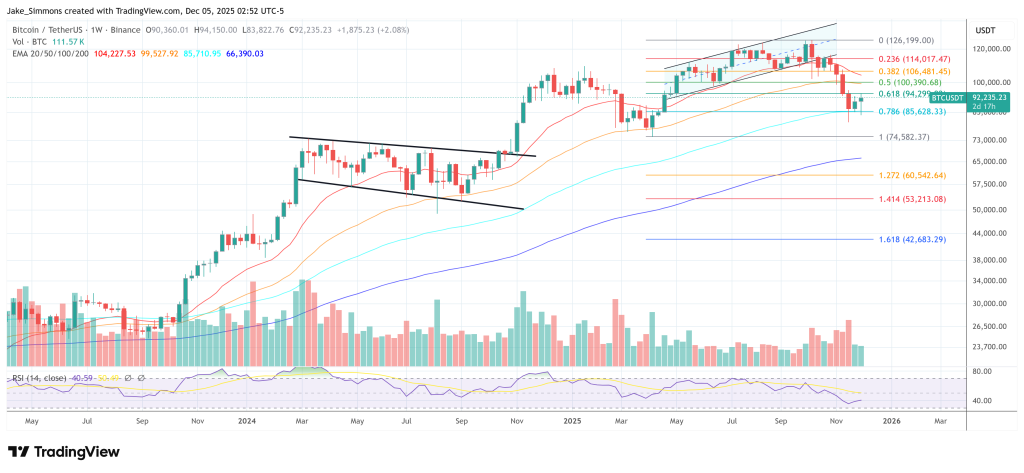
At press time, BTC traded at $92,235.

Bitcoin price
Market Opportunity
Shadow Logo
Shadow Price(SHADOW)
$0.6855
$0.6855$0.6855
-8.63%
USD
Shadow (SHADOW) Live Price Chart
Disclaimer: The articles reposted on this site are sourced from public platforms and are provided for informational purposes only. They do not necessarily reflect the views of MEXC. All rights remain with the original authors. If you believe any content infringes on third-party rights, please contact crypto.news@mexc.com for removal. MEXC makes no guarantees regarding the accuracy, completeness, or timeliness of the content and is not responsible for any actions taken based on the information provided. The content does not constitute financial, legal, or other professional advice, nor should it be considered a recommendation or endorsement by MEXC.

You May Also Like

Cashing In On University Patents Means Giving Up On Our Innovation Future

Cashing In On University Patents Means Giving Up On Our Innovation Future

The post Cashing In On University Patents Means Giving Up On Our Innovation Future appeared on BitcoinEthereumNews.com. “It’s a raid on American innovation that would deliver pennies to the Treasury while kneecapping the very engine of our economic and medical progress,” writes Pipes. Getty Images Washington is addicted to taxing success. Now, Commerce Secretary Howard Lutnick is floating a plan to skim half the patent earnings from inventions developed at universities with federal funding. It’s being sold as a way to shore up programs like Social Security. In reality, it’s a raid on American innovation that would deliver pennies to the Treasury while kneecapping the very engine of our economic and medical progress. Yes, taxpayer dollars support early-stage research. But the real payoff comes later—in the jobs created, cures discovered, and industries launched when universities and private industry turn those discoveries into real products. By comparison, the sums at stake in patent licensing are trivial. Universities collectively earn only about $3.6 billion annually in patent income—less than the federal government spends on Social Security in a single day. Even confiscating half would barely register against a $6 trillion federal budget. And yet the damage from such a policy would be anything but trivial. The true return on taxpayer investment isn’t in licensing checks sent to Washington, but in the downstream economic activity that federally supported research unleashes. Thanks to the bipartisan Bayh-Dole Act of 1980, universities and private industry have powerful incentives to translate early-stage discoveries into real-world products. Before Bayh-Dole, the government hoarded patents from federally funded research, and fewer than 5% were ever licensed. Once universities could own and license their own inventions, innovation exploded. The result has been one of the best returns on investment in government history. Since 1996, university research has added nearly $2 trillion to U.S. industrial output, supported 6.5 million jobs, and launched more than 19,000 startups. Those companies pay…
Share
BitcoinEthereumNews2025/09/18 03:26
Subaru Motors Finance Reviews 2026

Subaru Motors Finance Reviews 2026

If you’re at a Subaru dealership, your heart is set on the perfect Outback or Forester. The salesperson asks, “Would you like to finance it today?” That’s where
Share
Fintechzoom2026/03/08 10:55
Shiba Inu Price Prediction: Dubai Cracks Down on KuCoin as Pepeto Outpaces DOGE and SHIB With $7.4M Raised

Shiba Inu Price Prediction: Dubai Cracks Down on KuCoin as Pepeto Outpaces DOGE and SHIB With $7.4M Raised

SHIB trades near cycle lows, but Pepeto is outpacing every Shiba Inu price prediction with $7.4M raised and a full exchange ecosystem approaching launch as Dubai
Share
Techbullion2026/03/08 10:54