Online gambling activities in Nigeria have reached a significant level, with new reports revealing the market has surged…Online gambling activities in Nigeria have reached a significant level, with new reports revealing the market has surged…

How poverty and lack are funding Nigeria’s N5.6trn online gambling market

5 min read

Online gambling activities in Nigeria have reached a significant level, with new reports revealing the market has surged to an estimated N5.6 trillion in value. 

While the surge shows the continuous growth of sports betting, casinos and gambling among Nigerians, it has raised serious concerns over the increased dependence of a large part of the Nigerian population on online gambling for survival. 

Firstly, amid poverty and economic hardship, a significant amount is being spent on online gambling. Secondly, the increase in smartphone usage, flexibility of digital payment and the struggle for daily survival, especially among Nigerian youth, are fueling the gambling market. 

According to Dr Emomotimi Agama, Director-General of the Securities and Exchange Commission, Nigeria (SEC), about 60 million Nigerians spend $5.5 million daily on gambling. This means that, at least, 1 in every 4 Nigerians engages in gambling. This also shows that a large part of the population prefers everyday risk-taking to the 3 million active Nigerians in the capital market. 

Another 2023 report corroborates the above submission. The report, by the National Lottery Trust Fund (NLTF), revealed that around 65 million Nigerians engage in regular betting activities, with an average daily expenditure of $15 per person. During that year, the agency noted that about 14 million bets and payments were made online in Nigeria every day. 

How poverty and lack is funding Nigeria's N5.6trn online gambling

As online gambling offers instant returns and an alternative source of income, the market is projected to grow nearly 10% and reach more than $366 million by 2027.

The drivers 

    Gambling is a larger term that includes both physical centres and online platforms where gamblers can stake using their smartphones. Commercial gambling encompasses many activities, including lotteries, number games, sports betting, horse betting, poker and other card games, casino table games, and electronic gaming machines

    However, sports betting is popular in Nigeria due to the already-established grounds. Engaging in online gambling has become easier with the creation of an online account whose payments are linked to the owner’s bank account.

    Online gambling activities are gaining prominence among Nigerian youths, picturing it as a fast means to escape poverty. While risks abound in the market, the convenience it brings is a contributing factor. Others include peer influence and the availability of experts who provide betting codes.
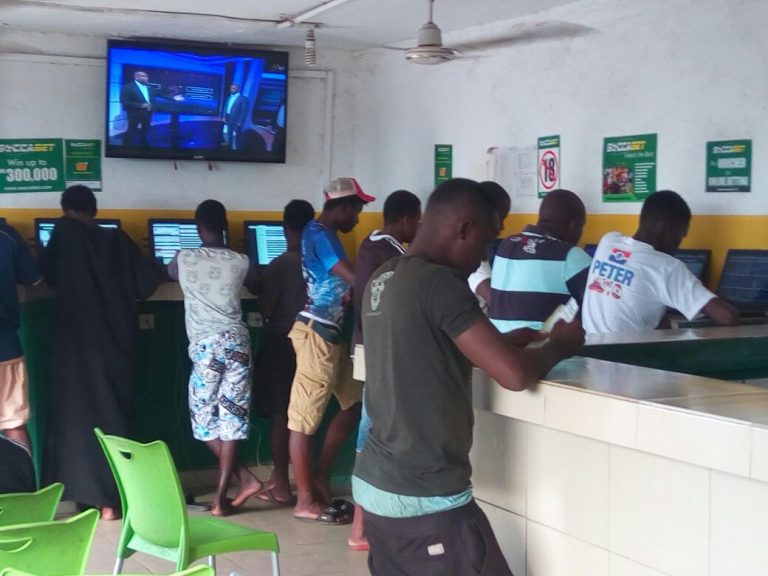
    Sports betting: Nigerian lawmaker denies moving motion to banA betting hub

    In their desperate state and survival mode, online gambling offers hope for quick riches with minimal initial capital or stake. For instance, using as low as N100 or N200 to a possible 6-digit win offers a life-changing opportunity and serves as a motivator. The fact that ample success stories exist is enough to keep the hopes of youths high and maintain consistency in the game.

    However, with consistency comes addiction. Gamblers can be hell-bent on spending a higher proportion of their income on betting, which potentially leads to deeper poverty. As online gambling receives more funding, the addiction fuels more gambling behaviour. 

    For Nigerian youths who want to keep up to expected standards, unemployment, underemployment, frequent financial hardship and social marginalisation can create emotional tension and psychological distress. To some, gambling can be used as a temporary escape or a coping mechanism to alleviate stress and despair, further fueling the behaviour. 

    To some extent, online gambling has become a side hustle, an alternative source of income and what many youths consider a means of escaping poverty. The fact that the market offers quick returns despite its risky nature, is easily accessible and requires limited expert guidance, is fueling its adoption among Nigerians, especially youths. 

    Also Read: See full list of legal and illegal gambling platforms in Lagos State.

    The mixed bag

    On a positive note, the gambling industry creates jobs, generates revenue for the Nigerian government, and offers investment opportunities for market stakeholders. While internet penetration is a leading factor in its surge, the rate of commercialisation, marketing and rise in popularity are also factors. 

    Meanwhile, rather than being a solution to poverty, online gambling tends to undermine the economic resilience of individuals and families, diverting funds from essential needs and perpetuating a cycle of debt and poverty.
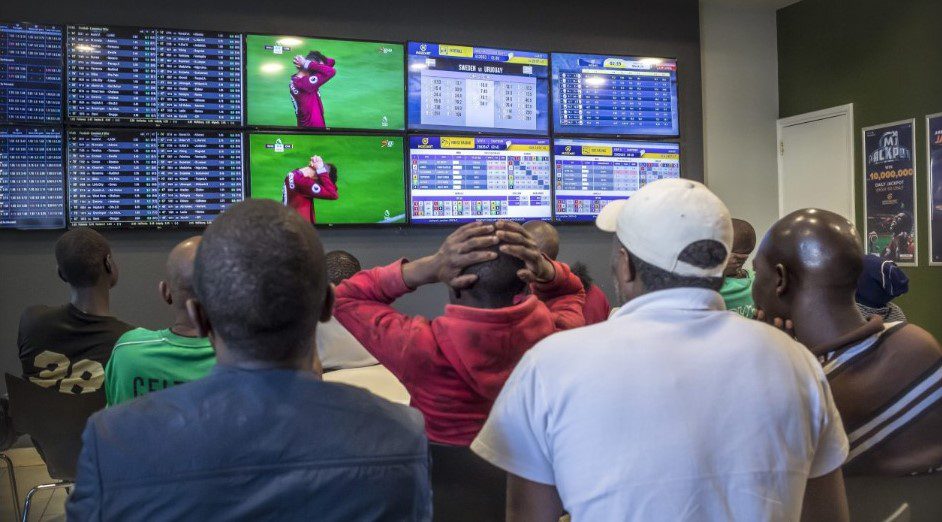
    Online GamblingGambling (Image Credit: Rest of World)

    Experts posit that people who gamble at harmful levels generate around 60% of losses and can threaten health, leading to increased incidents of mental illness and suicide. Other social issues include relationship breakdown, domestic violence, financial distress, and potential involvement in theft and fraud.

    Online gambling can drive poverty by diverting household spending from essential goods and services. Also, the activity has been revealed as a common way to launder money obtained through illegal activities.

    In some cases, it takes a serious therapy session or spiritual intervention to alleviate addiction to gambling.

    The future 

    Industry analysts estimate global gambling revenue will reach $700 billion by 2028, driven by smartphone use in low and middle-income countries. In Nigeria, the market is expected to reach N531 trillion ($366 million) by 2027.

    As adoption rates are expected to skyrocket, experts acknowledge the need for stable regulation to rebuild public trust and attract long-term capital.

    In Nigeria, for instance, the dispute over who regulates gambling activities remains unresolved. This follows the Supreme Court’s November 2024 verdict that nullified the National Lottery Act, ruling that gaming falls under state rather than federal jurisdiction. Amid the lack of clarity, a proposed Central Gaming Bill intended to harmonise licensing, taxation and standards has advanced through the National Assembly. 

    The ongoing dispute had slowed efforts to regularise both online gambling and physical betting activities, thereby creating a hole in a market that’s witnessing rapid growth.

    Also Read: Inside Nigeria’s online gambling boom and the fintech platforms powering it. 

    Disclaimer: The articles reposted on this site are sourced from public platforms and are provided for informational purposes only. They do not necessarily reflect the views of MEXC. All rights remain with the original authors. If you believe any content infringes on third-party rights, please contact service@support.mexc.com for removal. MEXC makes no guarantees regarding the accuracy, completeness, or timeliness of the content and is not responsible for any actions taken based on the information provided. The content does not constitute financial, legal, or other professional advice, nor should it be considered a recommendation or endorsement by MEXC.

    You May Also Like

    Shocking OpenVPP Partnership Claim Draws Urgent Scrutiny

    Shocking OpenVPP Partnership Claim Draws Urgent Scrutiny

    The post Shocking OpenVPP Partnership Claim Draws Urgent Scrutiny appeared on BitcoinEthereumNews.com. The cryptocurrency world is buzzing with a recent controversy surrounding a bold OpenVPP partnership claim. This week, OpenVPP (OVPP) announced what it presented as a significant collaboration with the U.S. government in the innovative field of energy tokenization. However, this claim quickly drew the sharp eye of on-chain analyst ZachXBT, who highlighted a swift and official rebuttal that has sent ripples through the digital asset community. What Sparked the OpenVPP Partnership Claim Controversy? The core of the issue revolves around OpenVPP’s assertion of a U.S. government partnership. This kind of collaboration would typically be a monumental endorsement for any private cryptocurrency project, especially given the current regulatory climate. Such a partnership could signify a new era of mainstream adoption and legitimacy for energy tokenization initiatives. OpenVPP initially claimed cooperation with the U.S. government. This alleged partnership was said to be in the domain of energy tokenization. The announcement generated considerable interest and discussion online. ZachXBT, known for his diligent on-chain investigations, was quick to flag the development. He brought attention to the fact that U.S. Securities and Exchange Commission (SEC) Commissioner Hester Peirce had directly addressed the OpenVPP partnership claim. Her response, delivered within hours, was unequivocal and starkly contradicted OpenVPP’s narrative. How Did Regulatory Authorities Respond to the OpenVPP Partnership Claim? Commissioner Hester Peirce’s statement was a crucial turning point in this unfolding story. She clearly stated that the SEC, as an agency, does not engage in partnerships with private cryptocurrency projects. This response effectively dismantled the credibility of OpenVPP’s initial announcement regarding their supposed government collaboration. Peirce’s swift clarification underscores a fundamental principle of regulatory bodies: maintaining impartiality and avoiding endorsements of private entities. Her statement serves as a vital reminder to the crypto community about the official stance of government agencies concerning private ventures. Moreover, ZachXBT’s analysis…
    Share
    BitcoinEthereumNews2025/09/18 02:13
    United States Building Permits Change dipped from previous -2.8% to -3.7% in August

    United States Building Permits Change dipped from previous -2.8% to -3.7% in August

    The post United States Building Permits Change dipped from previous -2.8% to -3.7% in August appeared on BitcoinEthereumNews.com. Information on these pages contains forward-looking statements that involve risks and uncertainties. Markets and instruments profiled on this page are for informational purposes only and should not in any way come across as a recommendation to buy or sell in these assets. You should do your own thorough research before making any investment decisions. FXStreet does not in any way guarantee that this information is free from mistakes, errors, or material misstatements. It also does not guarantee that this information is of a timely nature. Investing in Open Markets involves a great deal of risk, including the loss of all or a portion of your investment, as well as emotional distress. All risks, losses and costs associated with investing, including total loss of principal, are your responsibility. The views and opinions expressed in this article are those of the authors and do not necessarily reflect the official policy or position of FXStreet nor its advertisers. The author will not be held responsible for information that is found at the end of links posted on this page. If not otherwise explicitly mentioned in the body of the article, at the time of writing, the author has no position in any stock mentioned in this article and no business relationship with any company mentioned. The author has not received compensation for writing this article, other than from FXStreet. FXStreet and the author do not provide personalized recommendations. The author makes no representations as to the accuracy, completeness, or suitability of this information. FXStreet and the author will not be liable for any errors, omissions or any losses, injuries or damages arising from this information and its display or use. Errors and omissions excepted. The author and FXStreet are not registered investment advisors and nothing in this article is intended…
    Share
    BitcoinEthereumNews2025/09/18 02:20
    CME Group to launch Solana and XRP futures options in October

    CME Group to launch Solana and XRP futures options in October

    The post CME Group to launch Solana and XRP futures options in October appeared on BitcoinEthereumNews.com. CME Group is preparing to launch options on SOL and XRP futures next month, giving traders new ways to manage exposure to the two assets.  The contracts are set to go live on October 13, pending regulatory approval, and will come in both standard and micro sizes with expiries offered daily, monthly and quarterly. The new listings mark a major step for CME, which first brought bitcoin futures to market in 2017 and added ether contracts in 2021. Solana and XRP futures have quickly gained traction since their debut earlier this year. CME says more than 540,000 Solana contracts (worth about $22.3 billion), and 370,000 XRP contracts (worth $16.2 billion), have already been traded. Both products hit record trading activity and open interest in August. Market makers including Cumberland and FalconX plan to support the new contracts, arguing that institutional investors want hedging tools beyond bitcoin and ether. CME’s move also highlights the growing demand for regulated ways to access a broader set of digital assets. The launch, which still needs the green light from regulators, follows the end of XRP’s years-long legal fight with the US Securities and Exchange Commission. A federal court ruling in 2023 found that institutional sales of XRP violated securities laws, but programmatic exchange sales did not. The case officially closed in August 2025 after Ripple agreed to pay a $125 million fine, removing one of the biggest uncertainties hanging over the token. This is a developing story. This article was generated with the assistance of AI and reviewed by editor Jeffrey Albus before publication. Get the news in your inbox. Explore Blockworks newsletters: Source: https://blockworks.co/news/cme-group-solana-xrp-futures
    Share
    BitcoinEthereumNews2025/09/17 23:55