The king of the market this time also successfully traded on a large scale, and took the initiative to liquidate his positions when market liquidity was insufficient, performing an extreme operation that triggered the market's worship.The king of the market this time also successfully traded on a large scale, and took the initiative to liquidate his positions when market liquidity was insufficient, performing an extreme operation that triggered the market's worship.

From Livermore to Crypto Whales: A century-long trading war, revealing the offensive and defensive game behind the $300 million order on Hyperliquid

2025/03/13 09:03

Author: Frank, PANews

"Of all the days in my career as a stock trader, I remember this day most vividly. It was the day that my profits exceeded $1 million for the first time. It marked the first successful close of my trading strategy that I had planned. Everything I had foreseen was now a fact of the past. But beyond all this was this: my wild dream had become a reality.

For this day, I am the king of the market!"

——Reminiscences of a Stock Operator
From Livermore to Crypto Whales: A century-long trading war, revealing the offensive and defensive game behind the $300 million order on Hyperliquid

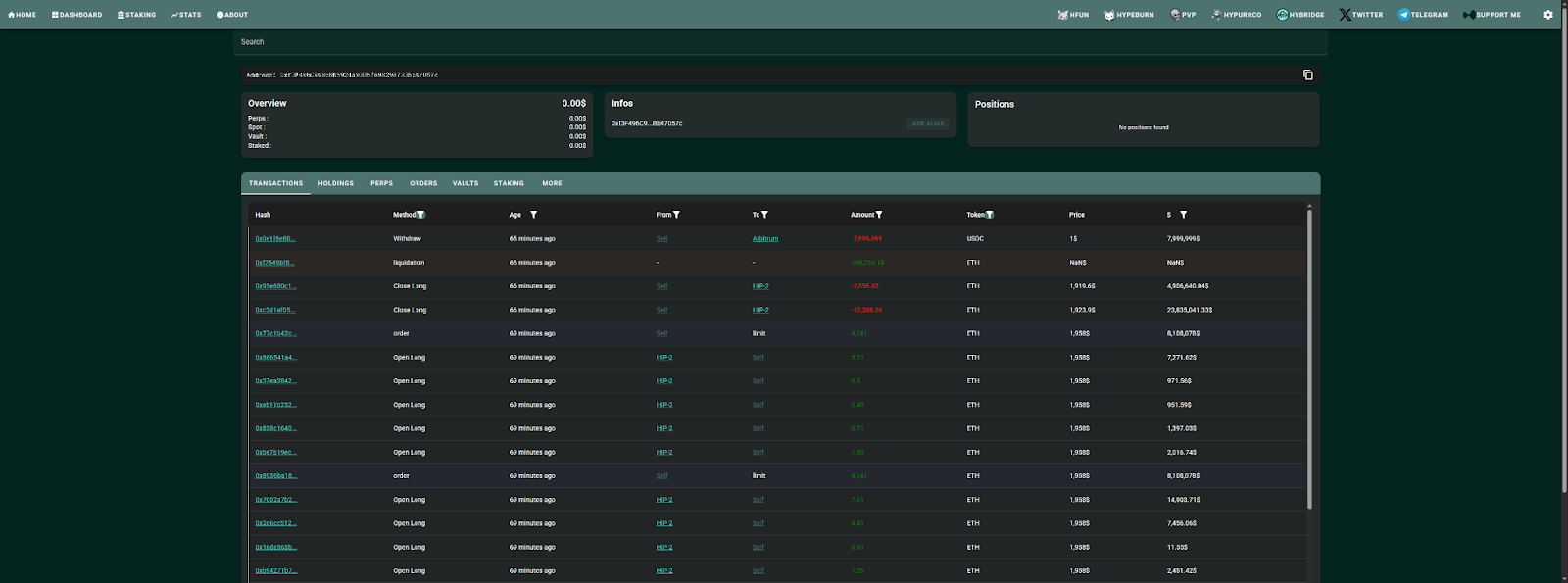
More than a hundred years ago, the legendary stock trader Livermore used this sentence to describe his success. A hundred years later, the same scene seems to be happening again in the crypto market. Coincidentally, the king of the market this time also successfully traded on a large scale, and took the initiative to blow up his position when the market liquidity was insufficient, performing an extreme operation and causing the market to worship him. The difference is that the profits of the king of the market this time were paid by the exchange.

Reincarnation of the Century: The Ghost of Wall Street Reborn on the Chain

This whale, who once invested $6 million to buy ETH and BTC with 50x leverage and made $6.8 million just before Trump announced that five crypto assets including BTC, ETH, SOL, ADA, and XRP would be added to the strategic reserve of crypto assets, has repeatedly made profits in the market in the past month and once again fought a classic battle that will be recorded in the history of Hyperliquid.

On March 12, the whale again opened a 50-fold long position of 160,000 ETH, withdrew $8 million in funds, and then liquidated its position, ultimately making a profit of approximately $1.8 million, while the Hyperliquid exchange lost $4 million.

This situation seems logically bizarre, but in essence it is an attempt to profit from the "loophole" in Hyperliquid's on-chain transactions.

Let's review the operation process of this giant whale:

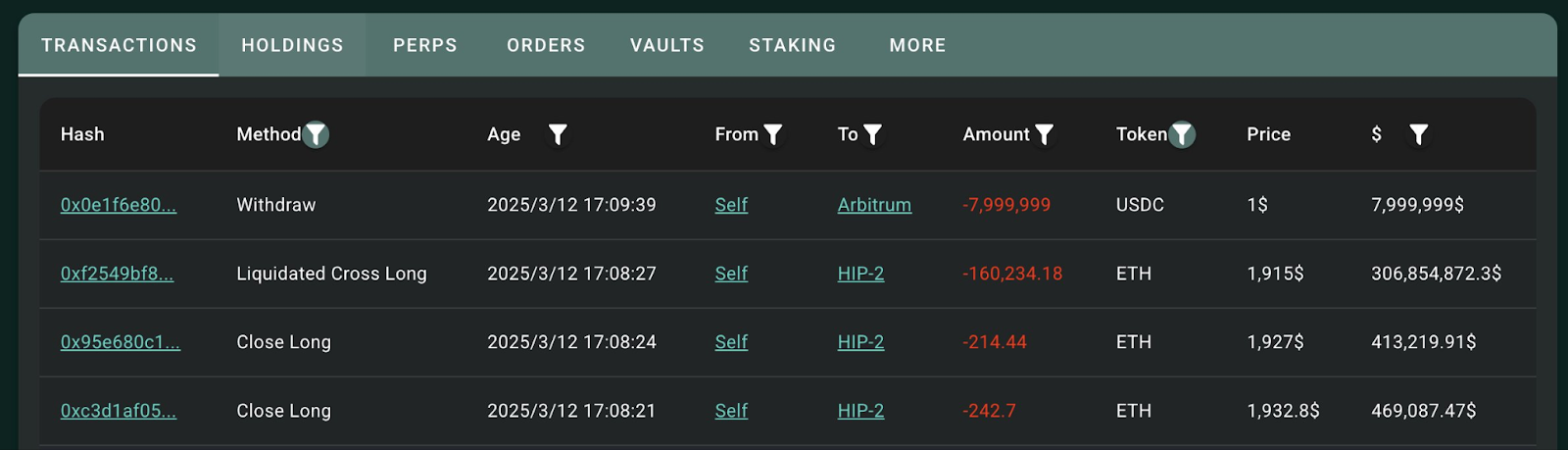
At 6:54 on March 12, the address deposited $3.48 million to Hyperliquid through the cross-chain bridge and opened a position of 17,000 ETH (worth $31.2 million).

The address then increased its position to 21,790 ETH (worth $40.85 million) by replenishing margin and continuing to expand its position.

Subsequently, the address continued to increase its holdings, raising the total ETH position to 170,000 (valued at $343 million), with a paper profit of $8.59 million.

During this process, the address used a total of US$15.21 million in deposit.

Ultimately, by closing positions and withdrawing margin, he recovered $17.08 million and made a profit of $1.87 million.

From Livermore to Crypto Whales: A century-long trading war, revealing the offensive and defensive game behind the $300 million order on Hyperliquid

From Livermore to Crypto Whales: A century-long trading war, revealing the offensive and defensive game behind the $300 million order on Hyperliquid

In the last operation, the user withdrew $8 million in funds and retained approximately $6.13 million as margin, waiting for forced liquidation.

Hunting time: the precise calculation behind the 170,000 ETH position

Why do whales do this instead of waiting for profits to close their positions?

In this process, the whale has two options: one is to close the position directly, with a paper profit of $8.59 million. This operation maximizes the benefits. However, the opponent on the chain may not be able to take such a large order at one time, and can only wait for the price to continue to fall and reduce profits before the transaction can be completed. Once the $343 million order is actively closed, it may greatly affect the market trend and cause a significant reduction in profits.

Therefore, the whale chose the second option, withdrawing the margin and part of the profit (i.e. closing part of the position and then withdrawing the remaining margin), keeping the margin at the minimum standard of 50x leverage. In this way, if the market continues to rise, he will be able to make greater profits and can choose to continue to close the position in batches. If the market falls sharply, his position will be liquidated in a 2% drop. But because he has withdrawn $17.08 million in funds, the overall profit has already reached $1.87 million. Therefore, even if the position is liquidated, it will not lead to actual losses.

This seemed like a crazy gambler's operation, but in the end he chose a conservative profit strategy.

Afterwards, according to the data released by Hyperliquid, Hyperliquid lost $4 million that day (including some profits from copying orders), while the whale realized a profit of more than $1.8 million.

In fact, from the profit and loss ratio, the whale invested about $15.21 million and realized a profit of $1.87 million, with a profit margin of about 12.2%. In terms of percentage and amount, it is not as much as the address when Trump announced that ADA and SOL were selected for strategic reserves.

Aftershocks and revelations: Driving the evolution of on-chain exchanges

From a market perspective, this operation ultimately led to an exchange buying order, which is an extremely rare occurrence. However, this situation seems to be only possible on Hyperliquid.

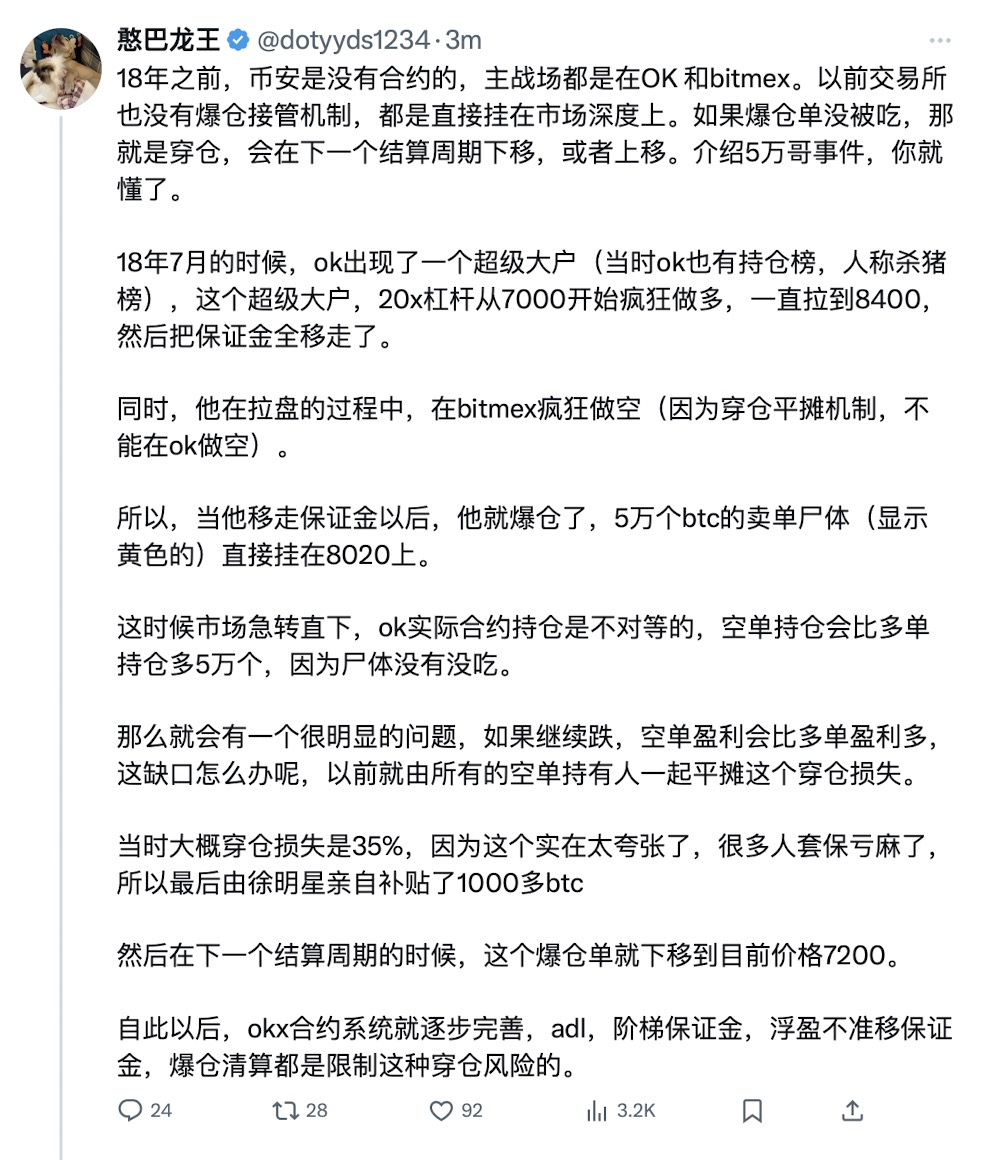
According to KOL Hanbalongwang’s tweet, a similar incident occurred in the OK Exchange in 2018. The same method was used, and the margin was withdrawn after making a profit, causing the market to reach the liquidation price and no counterparty could absorb it, resulting in the exchange buying the order.
From Livermore to Crypto Whales: A century-long trading war, revealing the offensive and defensive game behind the $300 million order on Hyperliquid

After the OK incident, various centralized exchanges added a tiered margin system to keep users’ margins within a reasonable range. This incident seems to have taught a lesson to the emerging on-chain exchange Hyperliquid. Since the DEX trading method was adopted throughout the process, there was no risk control for the margin requirements.

As a result, when the whale's position was blown up, the market lacked sufficient liquidity to take over the forced liquidation order, so Hyperliquid had to pay out of its own pocket to be the counterparty. HLP data shows that the loss of $4 million is almost equal to Hyperliquid's profit for the entire month. As of March 10, Hyperliquid's HLP revenue has accumulated to $63.5 million, so even if this order lost money, there is still a profit of nearly $60 million left.

However, given that this incident has sparked heated discussions on social media, there may be users who will follow the whale’s lead in future operations. Hyperliquid also immediately announced that in order to avoid similar problems, it would adjust the leverage ratio of BTC to 40 times and ETH to 25 times.

As for whether this method will fundamentally shake Hyperliquid, we can understand this possibility through calculation: Hyperliquid's HLP pool currently still holds nearly $60 million in funds. Based on the maximum leverage of BTC at 40 times, the maximum risk of a position loss can be $2.4 billion. From this perspective, it seems that few users have the strength to match it. When facing general market orders, the market counterparty is all that is needed to smooth it out.

Looking back at the whole incident, we can see that this whale may have conducted multiple tests before completing this operation. Zhu Su, co-founder of Three Arrows Capital, speculated that the reason why this address was able to take such a big risk was because he shorted on Binance Exchange during the same period of time. It is equivalent to the order status of long and short hedging, and it was because he found that Hyperliquid's mechanism of liquidation was different from that of centralized exchanges that he chose to start from there.
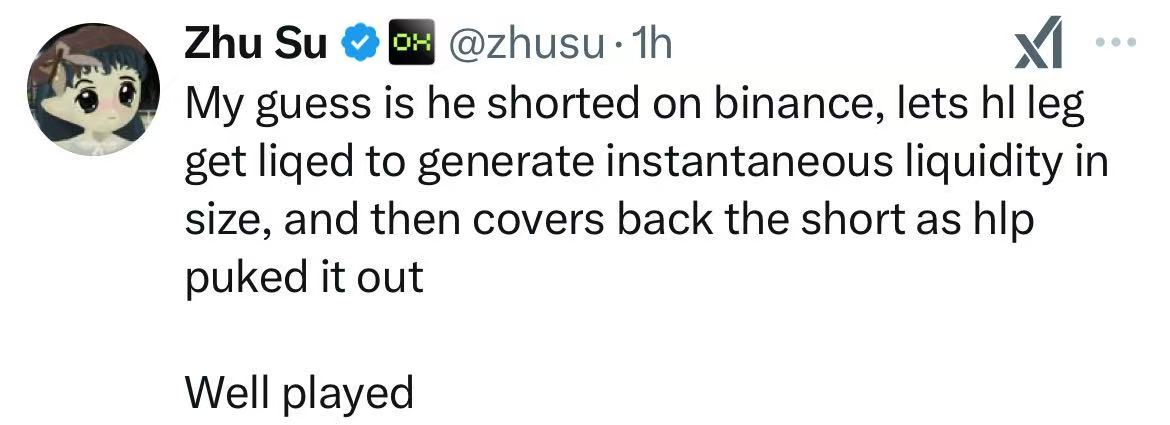
From Livermore to Crypto Whales: A century-long trading war, revealing the offensive and defensive game behind the $300 million order on Hyperliquid

In fact, this operation method is not a magical innovation. As mentioned at the beginning, Livermore had accidentally achieved a similar effect a hundred years ago. It was just that Livermore chose to actively go long and close his positions for the survival of the market. In today's market, there are exchanges to cover this phenomenon, which has enabled the phenomenon of users cutting back on exchanges. However, the space for this operation method is probably closed again from now on, and it will be difficult for similar platforms to achieve similar effects in the future.

For exchanges, this is another case of learning a lesson at a cost. For retail investors, such operations are short-lived, an individual phenomenon of finding loopholes and making profits, and have no significance for reproducing operations. They are just a topic of conversation that people enjoy talking about in a boring trend.


Market Opportunity
SQUID MEME Logo
SQUID MEME Price(GAME)
$33.1336
$33.1336$33.1336
+0.19%
USD
SQUID MEME (GAME) Live Price Chart
Disclaimer: The articles reposted on this site are sourced from public platforms and are provided for informational purposes only. They do not necessarily reflect the views of MEXC. All rights remain with the original authors. If you believe any content infringes on third-party rights, please contact service@support.mexc.com for removal. MEXC makes no guarantees regarding the accuracy, completeness, or timeliness of the content and is not responsible for any actions taken based on the information provided. The content does not constitute financial, legal, or other professional advice, nor should it be considered a recommendation or endorsement by MEXC.

You May Also Like

Stablecoin startup Bastion completes $14.6 million in new funding round, led by Coinbase Ventures

Stablecoin startup Bastion completes $14.6 million in new funding round, led by Coinbase Ventures

PANews reported on September 24 that according to Fortune magazine, the stablecoin startup Bastion completed a new round of financing of US$14.6 million led by Coinbase Ventures. Other investors in this round included the venture capital arm of Japanese technology giant Sony, the venture capital arm of South Korean mobile phone manufacturer Samsung, the cryptocurrency arm of venture capital firm Andreessen Horowitz (a16z), and cryptocurrency venture capital firm Hashed. Bastion is a white-label stablecoin issuer. Instead of hiring lawyers to obtain regulatory approvals or software developers to write code, companies can hire Bastion to more easily launch their own stablecoins. Bastion's differentiated advantage lies in its comprehensive stablecoin service offering, including a cryptocurrency wallet for clients to hold their tokens and channels for converting stablecoins into cash in 70 countries, including the United States.
Share
PANews2025/09/24 20:09
Jerome Powell’s Press Conference: Crucial Insights Unveiled for the Market’s Future

Jerome Powell’s Press Conference: Crucial Insights Unveiled for the Market’s Future

BitcoinWorld Jerome Powell’s Press Conference: Crucial Insights Unveiled for the Market’s Future The financial world, including the dynamic cryptocurrency market, often hangs on every word from the Federal Reserve. Recently, Jerome Powell’s press conference following the Federal Open Market Committee (FOMC) meeting concluded, leaving investors and analysts dissecting his remarks for clues about the future economic direction. This event is always a pivotal moment, shaping expectations for inflation, interest rates, and the overall stability of global markets. What Were the Key Takeaways from Jerome Powell’s Press Conference? During Jerome Powell’s press conference, the Fed Chair provided an update on the central bank’s monetary policy decisions and its economic outlook. His statements often reiterate the Fed’s dual mandate: achieving maximum employment and stable prices. This time was no different, with a strong emphasis on managing persistent inflation. Key points from the recent discussion included: Inflation Control: Powell emphasized the Fed’s unwavering commitment to bringing inflation back down to its 2% target. He reiterated that the fight against rising prices remains the top priority, even if it entails some economic slowdown. Interest Rate Policy: While the Fed’s stance on future interest rate adjustments was discussed, the path remains data-dependent. Powell indicated that decisions would continue to be made meeting-by-meeting, based on incoming economic data. Economic Projections: The updated Summary of Economic Projections (SEP) offered insights into the Fed’s forecasts for GDP growth, unemployment, and inflation. These projections help market participants gauge the central bank’s expectations for the economy’s trajectory. Quantitative Tightening (QT): The ongoing process of reducing the Fed’s balance sheet, known as quantitative tightening, was also a topic. This reduction in liquidity in the financial system has broad implications for asset prices. How Did Jerome Powell’s Remarks Impact Cryptocurrency Markets? The conclusion of Jerome Powell’s press conference often sends ripples through traditional financial markets, and cryptocurrencies are increasingly sensitive to these macroeconomic shifts. Digital assets, once thought to be uncorrelated, now frequently react to the Fed’s monetary policy signals. Higher interest rates, for instance, tend to make riskier assets like cryptocurrencies less attractive. This is because investors might prefer safer, interest-bearing investments. Consequently, we often see increased volatility in Bitcoin (BTC) and Ethereum (ETH) prices immediately following such announcements. The tightening of financial conditions, driven by the Fed, reduces overall liquidity in the system, which can put downward pressure on asset valuations across the board. However, some argue that this growing correlation signifies crypto’s increasing integration into the broader financial ecosystem. It suggests that institutional investors and mainstream finance are now paying closer attention to digital assets, treating them more like other risk-on investments. Navigating the Economic Landscape After Jerome Powell’s Press Conference For cryptocurrency investors, understanding the implications of Jerome Powell’s press conference is crucial for making informed decisions. The Fed’s policy trajectory directly influences the availability of capital and investor sentiment, which are key drivers for crypto valuations. Here are some actionable insights for navigating this environment: Stay Informed: Regularly monitor Fed announcements and economic data releases. Understanding the macroeconomic backdrop is as important as analyzing individual crypto projects. Assess Risk Tolerance: In periods of economic uncertainty and tighter monetary policy, a reassessment of personal risk tolerance is wise. Diversification within your crypto portfolio and across different asset classes can mitigate potential downsides. Focus on Fundamentals: While market sentiment can be swayed by macro news, projects with strong fundamentals, clear use cases, and robust development teams tend to perform better in the long run. Long-Term Perspective: Cryptocurrency markets are known for their volatility. Adopting a long-term investment horizon can help weather short-term fluctuations driven by macro events like Fed meetings. The challenges include potential continued volatility and reduced liquidity. However, opportunities may arise from market corrections, allowing strategic investors to accumulate assets at lower prices. In summary, Jerome Powell’s press conference provides essential guidance on the Fed’s economic strategy. Its conclusions have a profound impact on financial markets, including the dynamic world of cryptocurrencies. Staying informed, understanding the nuances of monetary policy, and maintaining a strategic investment approach are paramount for navigating the evolving economic landscape. The Fed’s actions underscore the interconnectedness of traditional finance and the burgeoning digital asset space. Frequently Asked Questions (FAQs) Q1: What is the Federal Open Market Committee (FOMC)? A1: The FOMC is the monetary policy-making body of the Federal Reserve System. It sets the federal funds rate target and directs open market operations, influencing the availability of money and credit in the U.S. economy. Q2: How do the Fed’s interest rate decisions typically affect cryptocurrency markets? A2: Generally, when the Fed raises interest rates, it makes borrowing more expensive and reduces liquidity in the financial system. This often leads investors to shy away from riskier assets like cryptocurrencies, potentially causing prices to decline. Conversely, lower rates can stimulate investment in riskier assets. Q3: What does “data-dependent” mean in the context of Fed policy? A3: “Data-dependent” means that the Federal Reserve’s future monetary policy decisions, such as interest rate adjustments, will primarily be based on the latest economic data. This includes inflation reports, employment figures, and GDP growth, rather than a predetermined schedule. Q4: Should I change my cryptocurrency investment strategy based on Jerome Powell’s press conference? A4: While it’s crucial to be aware of the macroeconomic environment shaped by Jerome Powell’s press conference, drastic changes to a well-researched investment strategy may not always be necessary. It’s recommended to review your portfolio, assess your risk tolerance, and consider if your strategy aligns with the current economic outlook, focusing on long-term fundamentals. If you found this analysis helpful, please consider sharing it with your network! Your insights and shares help us reach more readers interested in the intersection of traditional finance and the exciting world of cryptocurrencies. Spread the word! To learn more about the latest crypto market trends, explore our article on key developments shaping Bitcoin price action. This post Jerome Powell’s Press Conference: Crucial Insights Unveiled for the Market’s Future first appeared on BitcoinWorld.
Share
Coinstats2025/09/18 16:25
Best Crypto to Buy as Saylor & Crypto Execs Meet in US Treasury Council

Best Crypto to Buy as Saylor & Crypto Execs Meet in US Treasury Council

The post Best Crypto to Buy as Saylor & Crypto Execs Meet in US Treasury Council appeared on BitcoinEthereumNews.com. Michael Saylor and a group of crypto executives met in Washington, D.C. yesterday to push for the Strategic Bitcoin Reserve Bill (the BITCOIN Act), which would see the U.S. acquire up to 1M $BTC over five years. With Bitcoin being positioned yet again as a cornerstone of national monetary policy, many investors are turning their eyes to projects that lean into this narrative – altcoins, meme coins, and presales that could ride on the same wave. Read on for three of the best crypto projects that seem especially well‐suited to benefit from this macro shift:  Bitcoin Hyper, Best Wallet Token, and Remittix. These projects stand out for having a strong use case and high adoption potential, especially given the push for a U.S. Bitcoin reserve.   Why the Bitcoin Reserve Bill Matters for Crypto Markets The strategic Bitcoin Reserve Bill could mark a turning point for the U.S. approach to digital assets. The proposal would see America build a long-term Bitcoin reserve by acquiring up to one million $BTC over five years. To make this happen, lawmakers are exploring creative funding methods such as revaluing old gold certificates. The plan also leans on confiscated Bitcoin already held by the government, worth an estimated $15–20B. This isn’t just a headline for policy wonks. It signals that Bitcoin is moving from the margins into the core of financial strategy. Industry figures like Michael Saylor, Senator Cynthia Lummis, and Marathon Digital’s Fred Thiel are all backing the bill. They see Bitcoin not just as an investment, but as a hedge against systemic risks. For the wider crypto market, this opens the door for projects tied to Bitcoin and the infrastructure that supports it. 1. Bitcoin Hyper ($HYPER) – Turning Bitcoin Into More Than Just Digital Gold The U.S. may soon treat Bitcoin as…
Share
BitcoinEthereumNews2025/09/18 00:27