Critical Challenge for Bitcoin Miners in 2026: The AI Temptation
BitcoinWorld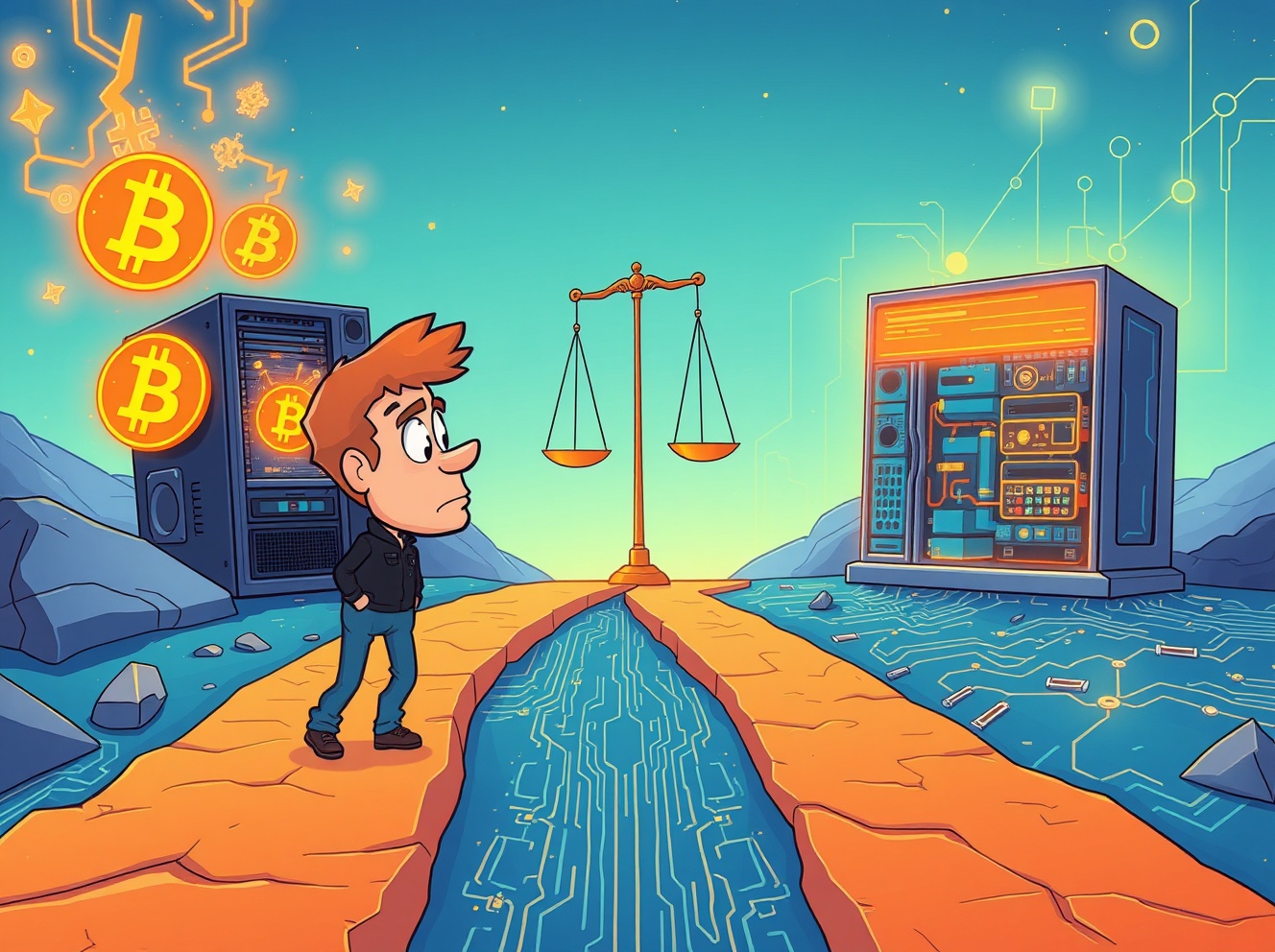
Critical Challenge for Bitcoin Miners in 2026: The AI Temptation
Imagine running a business where your core operation suddenly faces a tempting, potentially more profitable alternative. This is the exact dilemma confronting Bitcoin miners as we look toward 2026. According to industry expert Nick Hansen, CEO of Luxor mining pool, the sector’s top challenge won’t be hardware or energy costs, but the strategic pull of artificial intelligence. How will miners navigate this critical fork in the road?
Why Is Balancing AI the Top Challenge for Bitcoin Miners?
Nick Hansen’s insight cuts to the core of a modern industrial shift. Bitcoin miners operate specialized data centers perfect for high-performance computing (HPC). However, AI services often promise higher, more stable returns than the volatile crypto mining rewards. The challenge isn’t just technical; it’s a fundamental business strategy question. Should these firms pivot completely, diversify, or stay the course? Hansen emphasizes that finding the right balance remains exceptionally difficult, making this the defining issue for the coming years.
The Current Pressure on Mining Profitability
To understand the temptation, look at today’s market. Bitcoin’s price has fallen roughly 30% from its recent peak. This directly squeezes the revenue for Bitcoin miners who earn block rewards. In response, a noticeable trend has emerged. Publicly traded mining companies are actively rebranding. You’ll now see them marketed as “computing” or “digital infrastructure” firms. This strategic move allows them to pivot between two revenue streams:
- Cryptocurrency Mining: Their original, cyclical business tied to Bitcoin’s price.
- AI Computing Services: A potentially more lucrative and stable contract-based model.
The goal is clear: maximize profit without fully abandoning their roots in the blockchain ecosystem.
A Strategic Crossroads: Mining vs. AI Computing
What does this balancing act look like in practice? For Bitcoin miners, it’s a daily operational puzzle. Their facilities house powerful GPUs and ASICs that can be repurposed. Running AI workloads, however, requires different software, client contracts, and often, a shift in company culture from a crypto-native focus to a broader tech service model. Hansen points out that the infrastructure is similar, but the business models are worlds apart. One is speculative and reward-based; the other is contractual and service-oriented. Juggling both demands exceptional management and foresight.
The 2026 Outlook: Interest Rates and Bitcoin’s Fate
Timing is everything. Hansen highlights a potential game-changer for 2026: Federal Reserve policy. If the Fed begins an interest rate-cutting cycle that year, we could see a significant shift. Lower rates typically weaken the US dollar, making hard assets like Bitcoin more attractive. This could lead to:
- A rising Bitcoin price
- Improved mining profitability
- Reduced pressure to pivot entirely to AI
This macroeconomic factor adds another layer of complexity to the strategic planning for Bitcoin miners. Do they bet on a crypto resurgence or lock in AI contracts now?
Actionable Insights for the Evolving Miner
For mining operations navigating this transition, several key strategies emerge. First, flexibility in hardware use is paramount. Investing in equipment that can efficiently switch between mining and AI tasks provides a crucial hedge. Second, building a dual-track business development team is essential—one that understands crypto markets and another that can secure enterprise AI contracts. Finally, maintaining a strong balance sheet to weather Bitcoin’s volatility while exploring AI opportunities is the prudent path forward. The most successful Bitcoin miners of 2026 will likely be those who master this hybrid model.
Conclusion: The Delicate Balance Ahead
The journey for Bitcoin miners is entering its most sophisticated phase. The challenge is no longer just about securing cheap electricity or the latest hardware. It’s a high-stakes strategic decision between the foundational world of cryptocurrency and the booming frontier of artificial intelligence. As 2026 approaches, the miners who carefully calibrate their operations, remain agile, and watch macroeconomic signals like interest rates will be best positioned to thrive. The industry’s future will be written by those who can successfully walk this tightrope.
Frequently Asked Questions (FAQs)
Why are Bitcoin miners interested in AI?
Bitcoin miners possess data centers with powerful computing hardware (GPUs, ASICs) that can also run complex artificial intelligence workloads. With AI service contracts often offering more stable and potentially higher returns than volatile crypto rewards, it represents a logical diversification.
Can the same hardware mine Bitcoin and run AI?
There is overlap, but it’s not perfect. Some hardware, like certain GPUs, can be versatile. However, specialized Bitcoin ASIC miners are less efficient for general AI work. The most flexible operations use hardware that can be optimized for both tasks.
What happens to Bitcoin security if miners switch to AI?
If a significant portion of the mining hash rate moves away from the network, it could theoretically impact security by making the network less decentralized. However, the Bitcoin protocol adjusts mining difficulty, and a core group of miners is likely to remain, ensuring network stability.
How do interest rates affect Bitcoin mining?
Lower interest rates tend to weaken the US dollar, making alternative stores of value like Bitcoin more attractive. This can drive up Bitcoin’s price, increasing the value of mining rewards and improving profitability for miners, reducing the urgency to pivot to AI.
Are any major mining companies already doing this?
Yes. Several publicly traded mining firms have started rebranding as “high-performance computing” or “digital infrastructure” companies. They are actively marketing their ability to provide AI computing services alongside their traditional mining operations.
Is this shift good or bad for the crypto industry?
It’s a sign of maturation. It shows mining is becoming a more sophisticated, financially disciplined industry. While it may lead to some hash rate fluctuation, it encourages miners to be efficient and resilient, which can strengthen the ecosystem long-term.
Found this analysis of the critical challenge for Bitcoin miners insightful? The balance between AI and mining will define the next era of crypto infrastructure. Share this article on Twitter or LinkedIn to continue the conversation with your network.
To learn more about the latest Bitcoin trends, explore our article on key developments shaping Bitcoin institutional adoption.
This post Critical Challenge for Bitcoin Miners in 2026: The AI Temptation first appeared on BitcoinWorld.

You May Also Like

Aave DAO to Shut Down 50% of L2s While Doubling Down on GHO

New Crypto Investors Are Backing Layer Brett Over Dogecoin After Topping The Meme Coin Charts This Month