

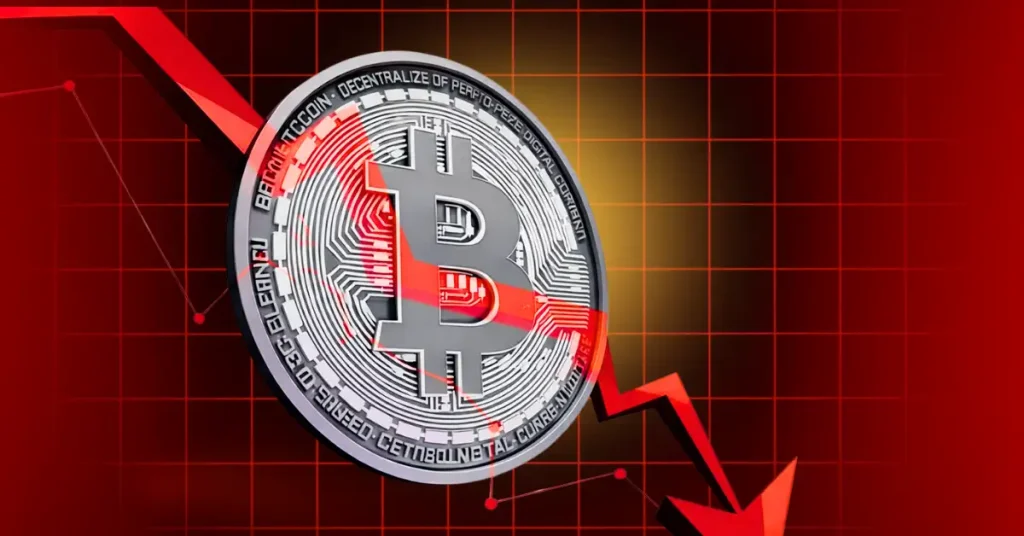
Is the Bitcoin Four-Year Cycle Breaking Down? Analysts Question Old Market Rules

The post Is the Bitcoin Four-Year Cycle Breaking Down? Analysts Question Old Market Rules appeared first on Coinpedia Fintech News
For years, crypto investors have relied on one idea more than almost any other: the Bitcoin four-year cycle. Buy after the crash, wait for the halving, sell into the bull market, repeat. Simple. Predictable. Almost like a cheat code.
Popular crypto analyst Lark Davis recently revisited this idea and raised an uncomfortable question: What if the four-year cycle was never as real as we thought?
Why the Four-Year Cycle Made Sense for So Long
The four-year cycle theory comes from one real event: the Bitcoin halving.
Every four years, Bitcoin’s new supply gets cut in half. Early on, this mattered a lot. Bitcoin started at zero supply, so reducing new coins had a huge effect. Less supply, growing demand, higher prices, the logic was easy to understand.
And for a long time, it seemed to work perfectly. Big rallies followed halvings. Big crashes followed peaks.
The Problem No One Likes to Talk About
Here’s the uncomfortable part.
More than 95% of all Bitcoin that will ever exist has already been mined. What’s left will be released slowly over more than a century. Today, Bitcoin’s supply grows by only about 1% per year, which is actually less than gold.
At this point, cutting that already tiny supply in half doesn’t change much.
So the big question becomes: If the halving barely changes supply anymore, why should it still move price the same way?
What Really Drove Bitcoin’s Big Moves
When you zoom out, Bitcoin’s major highs and lows line up surprisingly well with global liquidity and business cycles, not just halvings.
- 2017: Economic expansion and easy money
- 2020–2021: Massive money printing and stimulus
- 2024: Spot Bitcoin ETFs brought in huge new capital
In fact, Bitcoin reached a new all-time high before the 2024 halving — something that had never happened before. That alone suggests the old rules are changing.
- Also Read :
- Bitcoin Price Today Holds Near $86,600 Amid Thin Liquidity and Market Uncertainty
- ,
Bitcoin also shows a strong connection to global money supply and economic activity. When liquidity rises, Bitcoin tends to do well. When it tightens, Bitcoin struggles.
Another strange detail: the most recent Bitcoin all-time high came with almost no excitement. That doesn’t mean the cycle disappeared completely, it means it may be weaker, diluted, and less reliable than before.
Where That Leaves Bitcoin Now
Right now, Bitcoin looks technically weak, and sentiment is low. Attention has shifted to AI, robotics, and tech stocks. At the same time, the macro picture is shifting. Interest rates are coming down. Liquidity is slowly returning. The environment that once pushed Bitcoin higher may be setting up again.
That doesn’t guarantee a rally tomorrow. But it shows the story isn’t over.
Never Miss a Beat in the Crypto World!
Stay ahead with breaking news, expert analysis, and real-time updates on the latest trends in Bitcoin, altcoins, DeFi, NFTs, and more.
 Subscribe to News
FAQs
Most forecasts expect Bitcoin to stay bullish in 2025, with potential highs around $175K if strong demand, ETF inflows, and adoption continue.
While some long-term forecasts are extremely bullish, reaching $1 million by 2030 is speculative. Current credible estimates suggest a potential high around $900,000 by 2030.
Yes, Bitcoin is increasingly viewed as a digital inflation hedge. Its fixed supply contrasts with expanding fiat currencies, attracting investors seeking to preserve purchasing power.
Bitcoin could trade significantly higher in 10 years, with some forecasts expecting it to reach several hundred thousand dollars if adoption keeps growing.
You May Also Like

NATO Reexamination: Secretary Rubio’s Critical Alliance Review Shakes Global Security

Yuan Gains Ground Against Dollar
Federal Reserve expected to slash rates today, here's how it may impact crypto
Market participants are eagerly anticipating at least a 25 basis point (BPS) interest rate cut from the Federal Reserve on Wednesday. The Federal Reserve, the central bank of the United States, is expected to begin slashing interest rates on Wednesday, with analysts expecting a 25 basis point (BPS) cut and a boost to risk asset prices in the long term.Crypto prices are strongly correlated with liquidity cycles, Coin Bureau founder and market analyst Nic Puckrin said. However, while lower interest rates tend to raise asset prices long-term, Puckrin warned of a short-term price correction. “The main risk is that the move is already priced in, Puckrin said, adding, “hope is high and there’s a big chance of a ‘sell the news’ pullback. When that happens, speculative corners, memecoins in particular, are most vulnerable.”Read more

