

Building With AI Generative Media APIs Without Shipping Chaos
Generative media has moved from “cool demo” to a real production dependency in design, marketing, entertainment, and internal tooling. Teams want images for product pages, short clips for social, and audio for narration or accessibility. The hard part is not generating content once. The hard part is generating it reliably, at scale, with predictable latency, clear costs, and guardrails that keep outputs safe for real users. A strong implementation treats media generation like any other infrastructure layer – measurable, testable, and easy to integrate across products.
Where a media generation API fits in a modern stack
Product teams usually adopt generative media through an API layer because it keeps the experience consistent across web, mobile, and backend workflows. The most practical approach is to treat generation as a service with contracts: inputs, outputs, quotas, failure modes, and observability, an ai media generation api becomes a building block that can sit behind an editor, a CMS, a creator tool, or a customer-facing feature flag. The key decision is not “can it generate.” The key decision is whether it can generate within constraints that match real usage, like brand style, resolution targets, content policies, and time budgets. When those constraints are defined early, teams spend less time rewriting prompts and more time shipping predictable experiences.
Designing for images, video, and audio in one pipeline
Multimodal output looks simple on a product roadmap and complex in implementation. Images, video, and audio each have different runtime costs, storage implications, and review needs. Video outputs are heavier, take longer, and often require post-processing steps like resizing, re-encoding, and thumbnail generation. Audio introduces format choices, loudness normalization, and language considerations. When a roadmap includes more than one modality, the architecture benefits from a single orchestration layer that can route requests, enforce limits, and standardize metadata. That is why teams often evaluate an ai image video audio api as a unified interface, rather than stitching together separate vendors for each media type. A unified approach helps governance and debugging, because the same request IDs, logs, and policy checks can apply across modalities, even when the underlying models differ.
Performance measurement that matters in production
“Fast enough” depends on where generation happens in the user journey. If generation is blocking a checkout flow, latency requirements are strict. If it powers a background content queue, throughput matters more than milliseconds. The right performance strategy starts with measurement: p50 and p95 latency, failure rates, retries, timeouts, and queue depth. It also needs cost visibility per request, because media workloads can scale unpredictably once users discover them. In production, it is useful to define separate SLAs for interactive and batch generation, then enforce them with routing and fallbacks. For example, an interactive request can return a lower-resolution preview quickly, then later swap in a higher-quality result. That keeps the UX responsive, so users do not abandon the flow when generation takes longer than expected.
Guardrails, policy checks, and provenance signals
Media generation is high-leverage, which means it needs safety controls that are more serious than a single “moderation” toggle. Inputs should be sanitized, outputs should be screened, and logging should support audits without storing sensitive user data unnecessarily. Teams also need provenance signals – metadata that helps track how an asset was created, what model version was used, and what policy layer approved it. This matters for user trust and for internal compliance reviews. Brand safety is another layer. A company may allow stylized art for social but prohibit it for product documentation. The policy engine should support these differences with configurable rules tied to endpoints, user roles, and use cases. When guardrails are designed into the workflow, the system stays predictable, so teams avoid emergency rollbacks after content slips through.
Evaluating output quality without fooling the team
Quality evaluation fails when it relies on vibes or cherry-picked examples. A cleaner method uses repeatable tests. First, define objective checks: resolution, aspect ratio, file size, and format validity. Next, define domain checks: brand palette adherence, text legibility for UI assets, or audio clarity for narration. Then run controlled prompt suites that represent real usage, including edge cases and ambiguous prompts. It also helps to add human review sampling at defined intervals, because automated scoring alone can miss subtle issues. The goal is not perfection. The goal is a stable baseline with measurable improvements over time, so upgrades do not quietly degrade outputs in a way that users notice first.
Integration patterns that keep workflows sane
Teams move faster when integration is modular. That usually means a thin client layer, a secure server-side proxy, and a media store that manages versions. It also means treating prompts like configuration, rather than hard-coding them in the app. Prompt templates should be versioned, tested, and rolled out gradually. A practical integration plan also includes resilience: rate limiting, exponential backoff, and a clear approach to caching. For example, if a user requests the same asset repeatedly, caching can reduce cost and latency, so the platform stays responsive under load. The following checkpoints keep implementations from turning into brittle glue code:
- Define request schemas, timeouts, and retry rules per modality
- Version prompts and policies, then roll changes through staged releases
- Store outputs with metadata, including model version and generation parameters
- Monitor p95 latency and failure rates, then tune queues and limits
- Separate interactive and batch workloads, so one cannot starve the other
Shipping media generation features that stay trustworthy
A strong media generation rollout looks boring from the outside. That is a compliment. It means the team did the work: clear requirements, measurable performance, stable cost controls, and a policy layer that matches the product’s real risks. When the foundation is solid, media generation becomes a reliable capability rather than a fragile experiment. That also unlocks iteration, because improvements can be shipped safely through versioning, testing, and sampling instead of risky big-bang changes. The result is an experience that feels smooth for users and predictable for engineering – a setup where creative output can scale without turning the platform into a support fire drill.



You May Also Like

Malta Defiantly Resists Centralized Oversight Plan
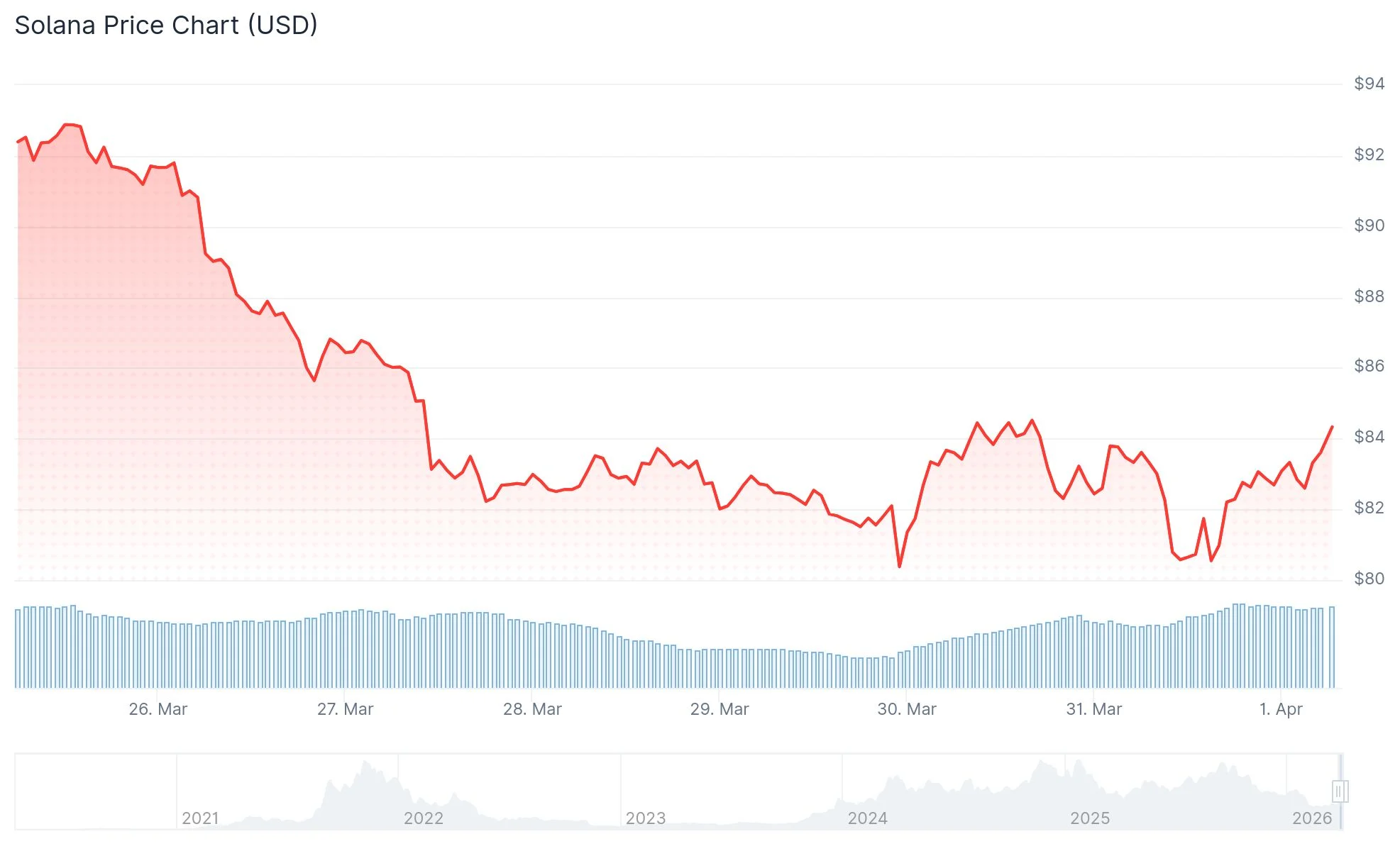
Solana (SOL) Price Analysis: On-Chain Metrics Signal Network Challenges



