

[OPINION] There’s a bigger problem than the classroom shortage — school congestion
As of 2025, the Department of Education (DepEd) faces a 165,000 classroom backlog that would take around 30 to 55 years to accomplish and a massive funding of almost P397 billion. Every year, we see headlines about classroom shortages and calls for more school buildings.
This proposed solution often involves large infrastructure investments, and while these efforts can help areas within the greater parts of Luzon, the Visayas, and Mindanao that rely on makeshift classrooms, it does not address the core challenge in the National Capital Region, Calabarzon, and Central Luzon.
In the most congested regions mentioned here, we need to move beyond seeing the problem as a classroom shortage and instead see it as a multi-layered issue of school congestion.
Let us take the case of Metro Manila, one of the most densely populated regions in the Philippines. Even if funds are available, the fact remains that there is no more available space within NCR to build and create more classrooms. Schools in the city can no longer expand outward, and roads, businesses, and housing are already jammed in many areas. Often, the result is multi-shift classes, overcrowded classrooms, and a strain on both teachers and students — not because we have not built enough classrooms, but because the current infrastructure can no longer accommodate the influx of students over the years.
The case of Batasan Hills National High School in Quezon City, which has resorted to class shifting to accommodate 15,000 learners for many years, is a perfect case of a school that faced the issue of congestion. Even if funds for classroom construction will be allocated for them, it is not a feasible solution to solve the problem since there is no more buildable space for new classrooms. Moreover, addressing the issue of classroom backlog does not simply solve other deficits with basic education inputs, like the required teachers, school furniture, and operational expenses to keep a new classroom running.
When we frame NCR’s education crisis as a classroom shortage, we trap ourselves with a challenging solution: more construction. Infrastructure is vital where there’s space to build, but in a region where each square meter is accounted for, this approach becomes impractical. Suppose we continue to view the problem in these congested regions as merely a classroom backlog issue. In that case, we will miss the opportunity to address the root cause of the poor learning environments. We need to go beyond addressing the symptom and see the problem of classroom deficit as one of the many symptoms of the bigger problem of school congestion.
This is where programs like the Government Assistance to Private Education and leasing of available properties can come in. GASTPE enables students to study in private schools with available seats through subsidized assistance and vouchers. The House committee on basic education and culture recently passed the Private Education Voucher Assistance Bill, which aims to expand the program to Kindergarten to Grade 6. This program stands as a more cost-effective and immediate solution to school congestion, particularly in NCR, Central Luzon, and Calabarzon.
Based on the current analysis of the Philippine Institute for Development Studies, maximizing the use of assistance and subsidies to transfer learners from congested public schools to private schools would require both a smaller budget and a quicker implementation timeline than constructing classrooms.
Constructing a new classroom, based on DepEd estimate, would cost around Php 2.5 million which could take around 3-5 years to be fully constructed. In comparison, providing subsidies and vouchers to around 40 public school learners to transfer them immediately to private schools would cost around Php 520,000 to 900,000 per School Year. Based on the number of beneficiaries and the time needed for learners to benefit from the newly constructed classrooms, GASTPE appears to be the most efficient. With 2 million beneficiaries, an estimated 44,000 classrooms can be freed up in congested public schools if GASTPE is utilized.
DepEd is also currently exploring the possibility of leasing properties that can be converted into learning spaces. This is also a promising solution as a leasing program can utilize already existing buildings at a lower cost. If strategically scaled up, it could ease pressure from congested public schools immediately, and without large costs. If the leasing initiative is coordinated with the maximization of the GASTPE program, we can see a more cost-effective and immediate solution to addressing the poor learning environments of our public schools.
For NCR, Calabarzon, and Central Luzon, the real strategy should focus on exploring other solutions to redistribute students to more conducive learning spaces, rather than just building classrooms. We need to move beyond an infrastructure-only mindset and adopt demand-driven solutions that are both cost-effective and provide immediate benefits.
Until we recognize school congestion as the core issue, we will continue pouring resources into classroom shortages that, at least in most of the congested classrooms, are not the real challenge. It is time to see the bigger picture that the problem is not just a classroom backlog, but a school congestion. Moving beyond addressing the symptom to offering multiple approaches to target the root cause might be more worth exploring to give our learners a better learning environment. – Rappler.com
Luigie Lursh G. Almojano is assistant professor of anthropology at the University of the Philippines Los Baños, and a convenor of the Student First Coalition.


You May Also Like
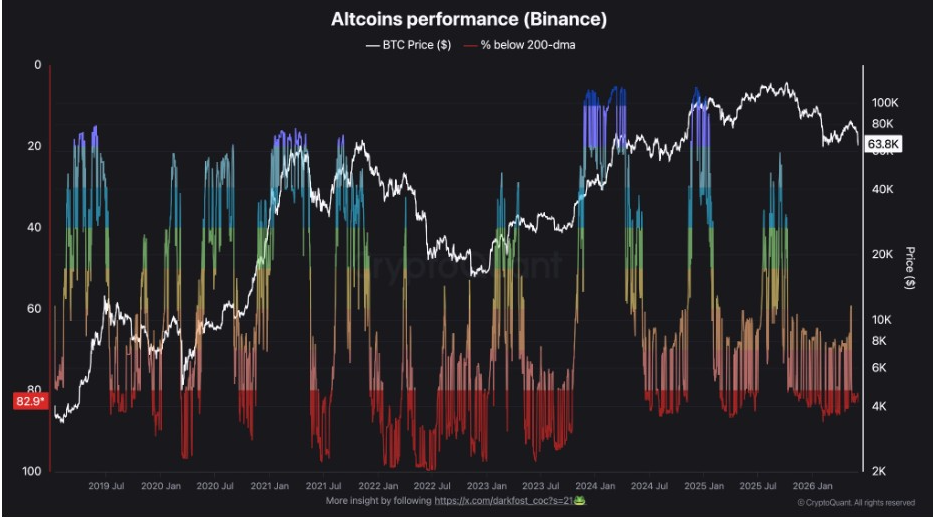
Altcoin Market Loses $520B as 83% Trade Below 200-Day Average

How Bitcoin Turned $10K Into $119 Million While Facebook Lagged Behind

US eyes Iranian assets for Gulf allies’ reconstruction, source says



