

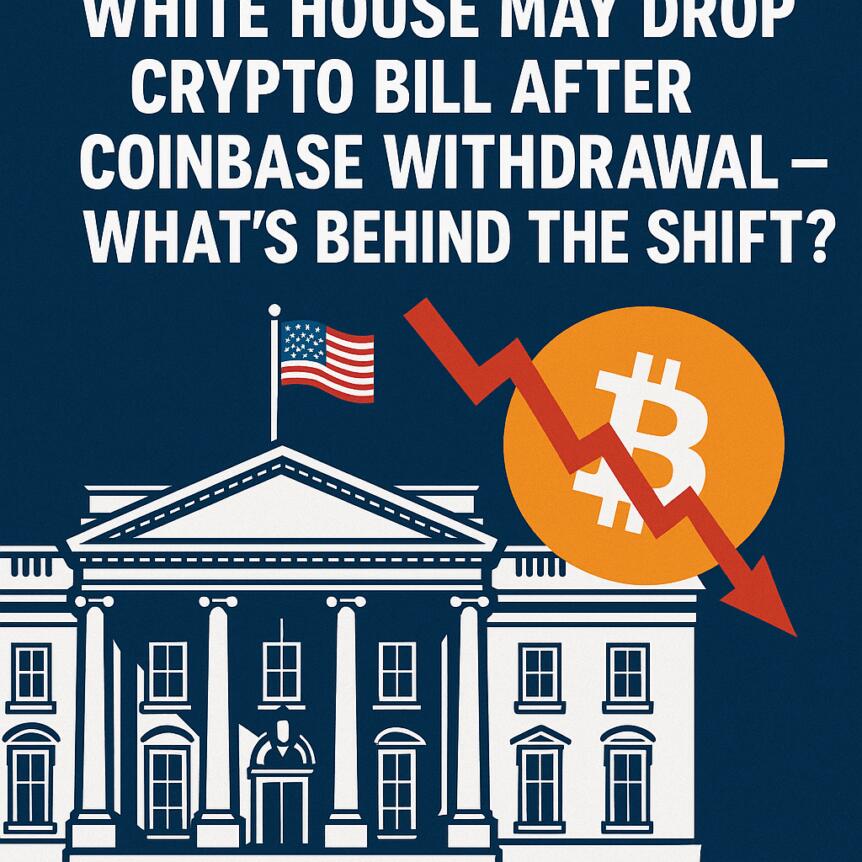
White House May Drop Crypto Bill After Coinbase Withdrawal — What’s Behind the Shift?
Introduction
The Biden administration is reportedly contemplating withdrawing its backing for the controversial Crypto Market Structure Bill following Coinbase’s recent decision to withdraw support. This move signals deepening tensions between regulators, industry giants, and the government as the future of crypto regulation in the United States faces uncertain terrain.
Key Takeaways
- White House may withdraw support for the crypto market structure bill after Coinbase’s abrupt opposition.
- Coinbase cites risks to DeFi, stablecoins, and increased government overreach as reasons for its stance.
- Industry divisions intensify over proposed regulations, with some users supporting Coinbase’s skepticism.
- The future of crypto legislation remains uncertain amid political and corporate disagreements.
Tickers mentioned: None
Sentiment: Neutral
Price impact: Neutral, as the political debate influences regulatory prospects more than immediate market movements.
Trading idea (Not Financial Advice): Hold, pending clarification of regulatory developments and legislative outcomes.
Market context: The ongoing regulatory debate reflects broader industry concerns over potential restrictive legislation and government oversight.
The White House’s Position and Coinbase’s Reversal
The Biden administration is reportedly considering pulling its support for the Digital Asset Market Clarity Act, following Coinbase’s unexpected decision to withdraw backing. According to sources, this unilateral move by Coinbase blindsided government officials and has elicited strong dissatisfaction within the White House. The authorities see Coinbase’s action as a “rug pull” against the industry, creating fears that the bill’s prospects may diminish significantly.
Speculation suggests the administration might abandon the bill altogether unless Coinbase resumes negotiations on controversial provisions related to stablecoin yield rules, which are perceived as favoring banking interests. A source close to the process emphasized, “This is President Trump’s bill at the end of the day, not Brian Armstrong’s,” pointing to political influences shaping the regulatory environment.
Industry Discord Over Proposed Regulations
Coinbase CEO Brian Armstrong voiced strong opposition to the draft, asserting that the current form could harm decentralized finance and stablecoins. He highlighted concerns over a de facto ban on tokenized equities and privacy-infringing government surveillance measures. Armstrong also warned that the legislation would consolidate power with the Securities and Exchange Commission, further complicating crypto regulation.
The bill’s approach to stablecoins has been a particular flashpoint. Industry critics fear overly stringent rules could stifle innovation and eliminate the potential for yields around 5%, which risks driving users away from traditional finance into crypto assets. Banking groups have voiced fears that such high yields could lead to mass deposit outflows.
Community Response and Industry Divisions
The crypto community remains divided, with many supporting Coinbase’s stance against what they perceive as protectionist measures by banks and regulators. Others argue that Coinbase’s aggressive position could undermine broader industry interests, with some critics suggesting that Coinbase’s influence over legislation is overstated compared to the diverse ecosystem of crypto stakeholders.
The evolving landscape underscores the critical crossroads for crypto regulation in the U.S., where political will, industry advocacy, and regulatory clarity continue to shape the trajectory of digital asset adoption and legislation.
This article was originally published as White House May Drop Crypto Bill After Coinbase Withdrawal — What’s Behind the Shift? on Crypto Breaking News – your trusted source for crypto news, Bitcoin news, and blockchain updates.


You May Also Like
GOP lawmakers want nothing to do with Trump's ballroom chaos: report

Not a loophole: Singapore AI export controls let China tap US AI legally

LIST: Bayanihan initiatives amid soaring oil prices



