

Fenbushi Capital’s Strategic $25 Million ETH Transfer to Binance Sparks Market Analysis
BitcoinWorld
Fenbushi Capital’s Strategic $25 Million ETH Transfer to Binance Sparks Market Analysis
In a significant cryptocurrency market development on March 15, 2025, blockchain analytics firm Lookonchain reported that a digital wallet associated with Fenbushi Capital executed a substantial transfer of 7,798 Ethereum (ETH) to Binance, the world’s largest cryptocurrency exchange. This Fenbushi Capital transaction, valued at approximately $25 million, represents one of the most notable institutional movements in recent months, particularly because these assets had been staked for nearly two years prior to this deposit.
Fenbushi Capital’s $25 Million ETH Transfer to Binance
The blockchain data reveals precise details about this substantial cryptocurrency movement. According to on-chain analytics, the Fenbushi Capital-linked address initiated the transfer exactly 20 minutes before Lookonchain’s public reporting. This timing suggests careful planning behind the transaction. The 7,798 ETH had been actively staked since April 2023, accumulating rewards throughout the two-year period. Consequently, market analysts immediately began examining potential implications for both Ethereum’s price and broader market sentiment.
Blockchain transactions provide transparent verification of such movements. The Ethereum blockchain publicly records all wallet activities, enabling firms like Lookonchain to monitor significant transfers. This particular transaction stands out because of Fenbushi Capital’s reputation as one of Asia’s most influential blockchain investment firms. Founded in 2015 by early Ethereum contributor Bo Shen, Fenbushi Capital has established itself as a cornerstone investor in numerous successful blockchain projects globally.
Understanding Institutional Cryptocurrency Movements
Institutional investors like Fenbushi Capital typically follow specific strategies when managing digital assets. Their actions often signal broader market trends or internal portfolio adjustments. The decision to unstake ETH after two years and transfer it to an exchange warrants careful examination. Generally, cryptocurrency transfers to exchanges suggest several possible intentions:
- Liquidity preparation for potential trading activities
- Portfolio rebalancing across different asset classes
- Profit-taking after substantial appreciation
- Collateral positioning for decentralized finance activities
Market data from the past 24 months provides essential context for this Fenbushi Capital transaction. Ethereum’s price has experienced significant volatility since these assets were originally staked. In April 2023, ETH traded around $1,900, while current prices hover near $3,200. This represents approximately 68% appreciation, not including staking rewards accumulated during the period. The table below illustrates key price points during the staking period:
| Time Period | ETH Price Range | Market Condition |
|---|---|---|
| April 2023 (Staking Start) | $1,800-$2,100 | Post-FTX recovery phase |
| November 2023 | $2,000-$2,200 | ETF application optimism |
| March 2024 | $3,500-$4,000 | Pre-halving rally peak |
| March 2025 (Current) | $3,100-$3,300 | Consolidation phase |
Expert Analysis of Staking Economics
Cryptocurrency staking involves locking assets to support network operations while earning rewards. Ethereum transitioned to proof-of-stake consensus in September 2022, enabling validators to secure the network by staking ETH. The Fenbushi Capital assets were staked during a period when annual percentage yields (APYs) for Ethereum staking ranged between 3-5%. Assuming a conservative 4% average APY, these 7,798 ETH would have generated approximately 624 ETH in rewards over two years, valued at nearly $2 million at current prices.
Institutional staking strategies differ significantly from individual approaches. Large entities like Fenbushi Capital typically use sophisticated staking infrastructure, often through professional staking services or their own validator nodes. They must consider multiple factors including slashing risks, liquidity requirements, and tax implications. The decision to unstake involves a mandatory withdrawal period, which for Ethereum typically requires 4-5 days for validators to exit the consensus mechanism and access their funds.
Market Impact and Historical Precedents
Historical data reveals how similar institutional movements have affected cryptocurrency markets. In January 2024, a different venture capital firm transferred $18 million in ETH to exchanges, preceding a 12% price correction over the following week. However, correlation doesn’t necessarily imply causation, as numerous factors influence price movements simultaneously. The current market context includes several relevant developments:
- Regulatory clarity improving in major jurisdictions
- Institutional adoption accelerating through ETF products
- Network upgrades enhancing Ethereum’s scalability
- Macroeconomic factors influencing all risk assets
Binance’s role as the destination exchange carries particular significance. As the world’s largest cryptocurrency exchange by trading volume, Binance provides unparalleled liquidity for large transactions. Institutional investors frequently use Binance for major trades because its deep order books minimize price impact during execution. The exchange also offers sophisticated trading tools and institutional-grade custody services that appeal to professional investors.
The Broader Institutional Landscape
Fenbushi Capital operates within a growing ecosystem of institutional cryptocurrency investors. Other major players include Digital Currency Group, Pantera Capital, and Andreessen Horowitz’s crypto fund. These firms collectively manage billions in digital assets and their movements often create ripple effects across markets. Recent quarterly reports indicate that institutional cryptocurrency allocations have increased by approximately 42% year-over-year, despite periodic volatility.
The timing of this Fenbushi Capital transaction coincides with several macroeconomic developments. Central bank policies, inflation data, and geopolitical factors all influence institutional investment decisions. Additionally, the cryptocurrency sector faces unique regulatory developments across different jurisdictions. The European Union’s Markets in Crypto-Assets (MiCA) regulations took full effect in December 2024, while the United States continues developing clearer regulatory frameworks.
Technical Analysis of the Transaction
Blockchain explorers provide technical details about the Fenbushi Capital transaction. The transfer occurred in a single transaction, suggesting the assets were consolidated before movement. Gas fees for such transactions typically range between $10-$50, depending on network congestion. Ethereum’s current daily transaction volume exceeds 1.2 million, with an average transaction value around $2,800, making this $25 million transfer approximately 9,000 times larger than typical transactions.
Wallet identification techniques allow analytics firms to associate addresses with specific entities. Lookonchain and similar services use pattern recognition, transaction history analysis, and sometimes public disclosures to identify institutional wallets. Their methodology typically involves tracking wallet interactions with known exchange deposit addresses, monitoring staking activities, and analyzing transaction patterns that match institutional behavior rather than individual trading.
Conclusion
The Fenbushi Capital transfer of $25 million in ETH to Binance represents a significant institutional movement within the cryptocurrency ecosystem. This transaction highlights several important trends including the maturation of staking economics, the growing sophistication of institutional investment strategies, and the transparent nature of blockchain-based asset movements. While the specific motivations behind this Fenbushi Capital transaction remain undisclosed, it provides valuable data points for market analysts and reflects the ongoing institutionalization of digital asset markets. As blockchain analytics continue improving, such transparent movements will likely become increasingly common subjects of market analysis and discussion.
FAQs
Q1: What is Fenbushi Capital’s significance in the cryptocurrency industry?
Fenbushi Capital represents one of the earliest and most influential venture capital firms focused exclusively on blockchain and cryptocurrency investments. Founded in 2015, the firm has invested in numerous successful projects including Ethereum, Cosmos, and Polkadot, establishing itself as a thought leader in the Asian blockchain ecosystem.
Q2: Why would an institution transfer staked ETH to an exchange?
Institutions might transfer staked ETH to exchanges for several reasons including portfolio rebalancing, preparing for trading activities, taking profits after price appreciation, using assets as collateral for loans, or responding to changing market conditions and investment thesis adjustments.
Q3: How does Ethereum staking work for large institutions?
Large institutions typically use professional staking services or operate their own validator nodes. They must consider factors like slashing risks, liquidity requirements, tax implications, and reward optimization. Institutional staking often involves dedicated infrastructure and compliance with regulatory requirements that differ from individual staking.
Q4: What market impact might this $25 million transfer have?
While $25 million represents a substantial single transaction, Ethereum’s daily trading volume typically exceeds $15 billion, meaning this transfer constitutes approximately 0.17% of daily volume. However, psychological factors and signaling effects sometimes create outsized market reactions to known institutional movements.
Q5: How do analytics firms identify institutional wallets?
Analytics firms use multiple techniques including transaction pattern analysis, address clustering algorithms, monitoring interactions with known institutional addresses, tracking staking activities that match institutional behavior, and sometimes correlating with public disclosures or regulatory filings.
This post Fenbushi Capital’s Strategic $25 Million ETH Transfer to Binance Sparks Market Analysis first appeared on BitcoinWorld.


You May Also Like
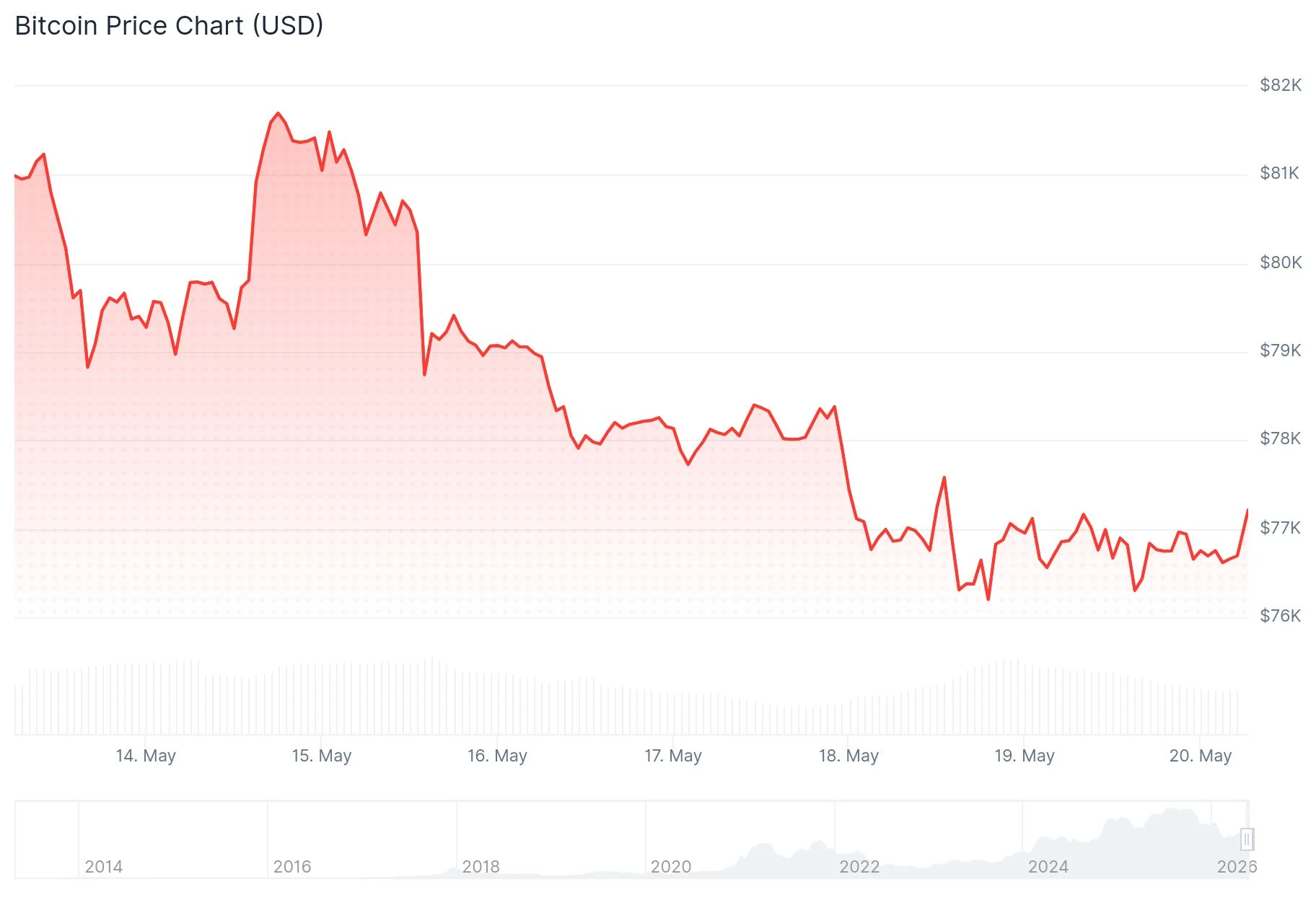
Bitcoin (BTC) Hovers Above $77K Amid Iran Diplomacy and Rising Treasury Yields

Beyond Cleaning: What Else You Must Check Before Moving Out




