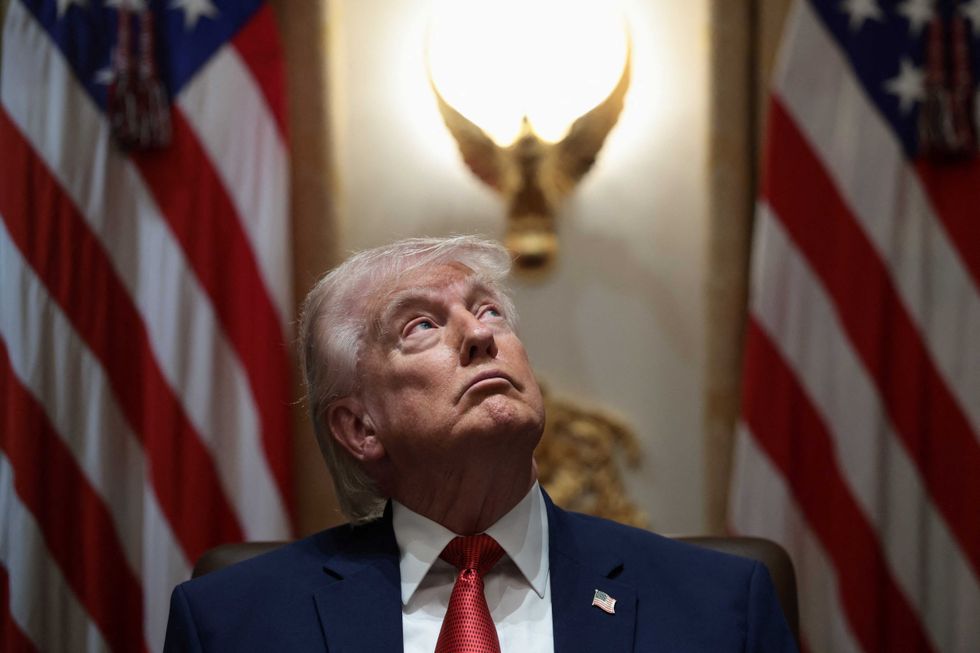
Members of the military got a tax-free payment at the end of December. The money was taken from a fund earmarked for housing.
getty
The IRS has confirmed that the supplemental Basic Allowance for Housing (BAH) payments made to members of the military in December 2025 are not includable in gross income. As a result, service members who received these payments do not owe federal income tax on them. The IRS’ statement is intended to end confusion about whether the one-time payment—referred to as a “Warrior Dividend”—would be reported as wages and subject to tax.
What Are Warrior Dividends?
In December, President Trump announced that approximately 1.45 million service members would receive a special payment before Christmas. The one-time payments of $1,776, which he referred to as Warrior Dividends, were issued primarily to active-duty members in pay grades O-6 and below, as well as eligible Reserve Component members serving as of November 30, 2025. Members of the Army, Air Force, Navy, Marine Corps, and Space Force were eligible under the program.
Although the payments were publicly described as “dividends,” they were not treated as bonus or incentive pay. Instead, they were administered through the military pay system as a supplemental housing allowance, putting them in the same category as other non-taxable military compensation. That internal classification—rather than the label used in public messaging—determines how the payments are taxed.
Tax Law and Military Benefits
Federal tax law has long treated many military allowances differently from regular pay, particularly when those payments are meant to offset the costs of military service. Housing benefits are one example. Basic Allowance for Housing is not taxed, even though it is paid in cash and deposited directly into a service member’s bank account each month.
The December 2025 supplemental payment was handled the same way.
Service members do not pay federal income tax on their regular BAH, even though it helps cover rent or mortgage costs. The Basic Allowance for Subsistence, which offsets meal expenses, is treated similarly. In both cases, the tax code views these payments as support, not wages.
The same principle applies elsewhere. Family Separation Allowance, paid when a service member is away from dependents for extended periods, is tax-free because it is meant to ease the strain on family finances imposed by military orders. Housing benefits for overseas assignments, such as the Overseas Housing Allowance, are also non-taxable. Even one-time payments tied to moving under orders, like the Dislocation Allowance, are excluded from income because they are intended to reimburse costs rather than serve as pay for work.
How the Payment Appears on the Leave and Earnings Statement (LES)
For many service members, the first sign that the Warrior Dividend was not taxable didn’t come from the IRS, but from their Leave and Earnings Statement (LES). The LES is the monthly pay statement that shows a service member’s pay, allowances, deductions, taxes, and leave balances.
On the December 2025 LES, the supplemental payment appeared under the Entitlements section, not under Base Pay, Special Pay, or Bonus Pay. The amount was not included in taxable wages and did not increase the figure used to calculate federal income tax withholding. Taxes were withheld as though the payment did not exist, signaling that the Defense Finance and Accounting Service (DFAS) treated it as a non-taxable allowance.
When a payment is taxable, it raises the “Taxable Wages” line on the LES and can trigger higher federal income tax, Social Security, and Medicare withholding. The December 2025 payment did not do that—it was handled the same way as regular BAH, not as a cash bonus.
Because the payment is not taxable, it also does not appear in Box 1 of the W-2 as wages or other compensation. Service members filing their tax returns should not add the amount back into income and should not expect it to appear in taxable earnings reported by DFAS.
Where Did the Money Come From?
Although the President suggested the payments would partially be funded by tariff revenue, the money actually came from funds Congress had already appropriated in July under the One Big Beautiful Bill Act (OBBBA). OBBBA included approximately $2.9 billion in supplemental funding for the military’s Basic Allowance for Housing.
Roughly $2.6 billion of that $2.9 billion was used to make the one-time $1,776 payments.
Since it was already included in OBBBA, the payment did not require new tax legislation or a separate authorization. The money had already been approved for housing-related purposes, so that’s how the payment was coded (even if a one-time payment was not how the funding was expected to be used).
What Happens to the BAH Allowance?
If the $2.6 billion in supplemental BAH funding had not been used for the Warrior Dividend, it would have remained available for housing-related purposes. It was originally intended to offset higher-than-expected housing costs. In practice, that could have meant covering housing cost overruns at certain duty stations, offsetting rate increases, or reducing pressure due to upticks in the housing market.
What Does This Mean for the Budget?
Using part of the supplemental BAH appropriation for the Warrior Dividend means the Defense Department has largely used up the flexibility Congress built into that funding. Once those funds are spent, they are gone, and there is no remaining reserve if housing costs rise unexpectedly later in the fiscal year. (The current fiscal year ends on September 30, 2026.)
If situations change, such as sudden rent increases, options are limited. Most likely, the Department would attempt to absorb the costs from another pot of money, or seek additional appropriations from Congress.
Congress could restrict a similar use of funds in the future by drafting more specific appropriation language. For example, lawmakers could limit BAH funds to monthly, locality-based payments, prohibit lump-sum distributions, or require advance notice before funds are used in non-routine ways. This time, however, Congress did not include any such guardrails.
What’s Next
In the end, the Warrior Dividend put tax-free money in service members’ pockets. But it was also a use of housing funds that wasn’t anticipated by Congress. While the IRS has settled the tax question, how much discretion Congress intends in appropriations bills is likely to be an issue in future budget battles.
Source: https://www.forbes.com/sites/kellyphillipserb/2026/01/20/irs-confirms-trumps-1776-warrior-dividend-to-troops-wont-be-taxed/