Is $100 enough to start trading?
Is $100 enough to start trading? Short answer: yes—you can start trading with $100, but what that looks like in practice depends on fees, order execution, asset choice, and how you manage risk. If you want to start trading with $100 without turning the whole amount into tuition for expensive mistakes, this guide walks you through a realistic approach: what to expect, how to size trades, which assets teach the right lessons, and a three-month plan to build useful habits.
Beginning traders often ask the same thing: can small capital really teach you the craft? The truth is that $100 can buy a meaningful education if you treat it as a learning fund rather than a quick money machine. When you start trading with $100, your focus should be on learning order mechanics, trade planning, and emotional control—because those skills scale far better than short-term returns. For a broad look at platforms and strategic approaches, see this external roundup: Investing with $100: Platforms, Options and Strategies.
Before we go deeper, a practical tip: if you want a calm place to learn and access clear guidance, consider checking a trusted resource like FinancePolice resources which focus on easy-to-follow, beginner-friendly finance content and can point you to tools that suit tiny accounts.

What follows is a stepwise primer for someone who wants to start trading with $100 in 2026. We’ll cover market rules, broker costs, asset choices, order types, tax and record-keeping basics, a sample position-sizing plan, and a simple journal routine that helps you learn faster than losses alone ever could.
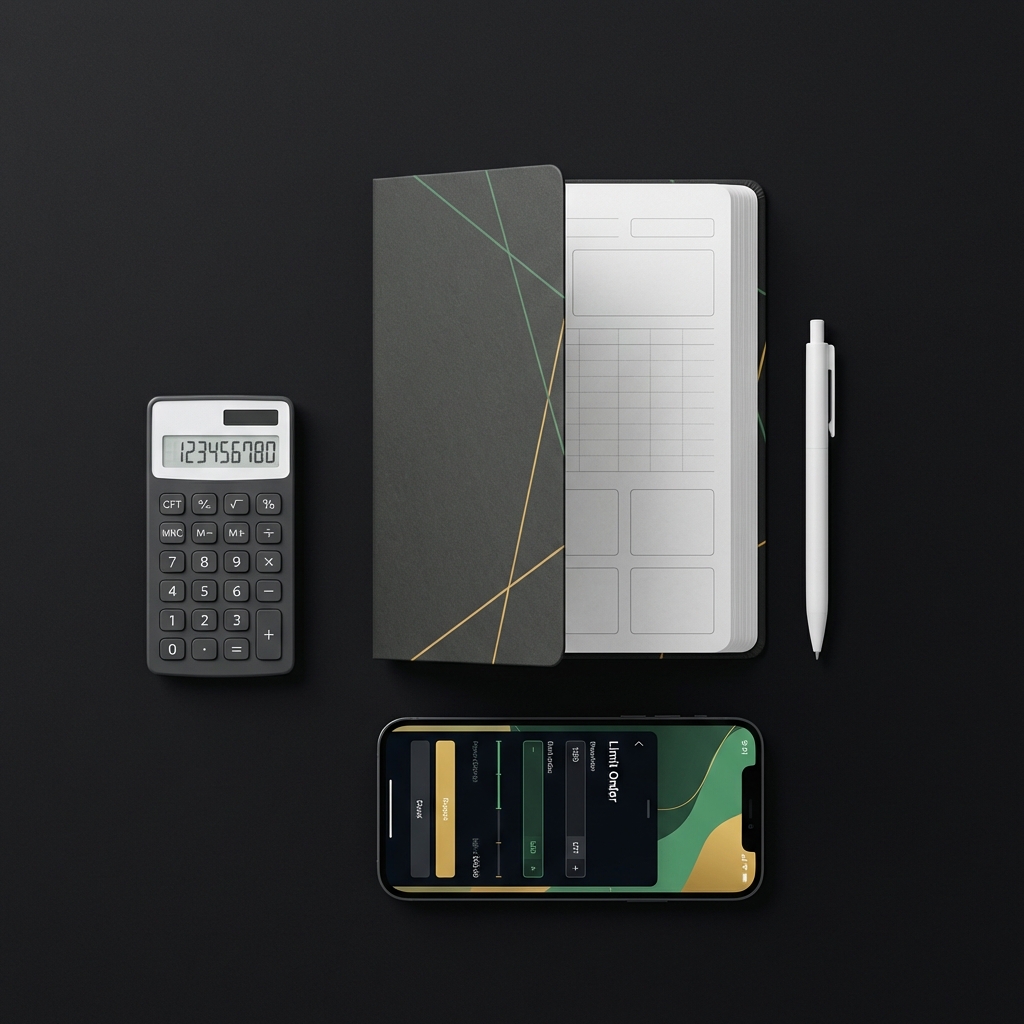
When you start trading with $100, the broker choice matters more than you might think. Look beyond “commission-free” headlines and check the overall cost of ownership: spreads, deposit and withdrawal fees, taker and maker fees (in crypto), and how fractional shares are handled. Execution quality and routing also influence small accounts because a single bad fill can be a meaningful percentage of your capital. If you want a quick broker comparison, see this review of M1 Finance vs Robinhood.
Why $100 is different from larger accounts
Trading dynamics change with size. With a big account, a $10 trade is noise; with $100, it’s 10% of your balance. That affects everything from psychology to the arithmetic of fees. When you start trading with $100, fixed fees and spreads bite harder, and regulatory rules – like the U.S. FINRA pattern-day-trader requirement – constrain what you can do with margin. Treating small accounts as miniature labs rather than leverage opportunities will keep you learning.
First rules to accept
Rule 1: Keep trade sizes small. Many experienced traders risk 1–2% per trade; with $100, that means risking $1–$2. That small stake forces clear decision-making and preserves capital for many learning trades.
Rule 2: Avoid margin for day trading unless you meet regulatory thresholds—using margin on $100 can quickly lead to restrictions.
Rule 3: Pay attention to fees and spreads—the relative cost is much higher on tiny trades.
Absolutely. Treat your $100 as a training fund: paper trade, place tiny live trades to learn fills and fees, keep strict position-sizing (1% risk), use limit orders, and journal every trade. The goal is skill building, not quick riches.
The key is to treat your first account as a practice lab: paper trade first, then make very small live trades that force you to use limit orders, place stop-losses, and write a one-line journal entry for every trade. The goal is not to make millions but to build habits—placing orders, watching fills, and reviewing mistakes is how skill grows.
Choosing where to open the account
When you start trading with $100, the broker choice matters more than you might think. Look beyond “commission-free” headlines and check the overall cost of ownership: spreads, deposit and withdrawal fees, taker and maker fees (in crypto), and how fractional shares are handled. Execution quality and routing also influence small accounts because a single bad fill can be a meaningful percentage of your capital. For a straightforward beginner primer on stock trading basics, see this external guide: Stock trading: What it is and how it works. Also consider reading FinancePolice’s roundup of best micro-investment apps to find platforms that support fractional shares and low minimums.
Checklist for tiny accounts
- Does the broker support fractional shares and low minimums?
- Are stock and ETF trades truly commission-free, and what about the bid-ask spreads?
- In crypto, what are taker/maker fees and withdrawal fees?
- Are there deposit or inactivity fees that could slowly drain $100?
- Does the platform provide clear trade reporting for taxes?
- Can you place limit orders, stop orders, and view execution quality?
Assets to consider with $100
The “best” asset to trade with $100 is the one that teaches you without burning your account on predictable friction. For most beginners, that means broad-market ETFs and fractional shares of stable, well-known companies. They offer exposure to real market movement without the wild slippage of tiny-cap stocks or low-liquidity tokens.
Good first choices
– Fractional shares of large-cap stocks (learn how order fills work and how news affects a name you recognize) – see broker comparisons like Robinhood vs Acorns vs Stash for platforms that support fractions.
– Low-cost ETFs (S&P 500 or total market funds are ideal for understanding general market behavior).
– Small crypto positions for custody and transfer practice—only if you understand fees.
– FX micro-positions can teach pip math, but watch leverage temptation.
Assets to avoid early
Micro-cap stocks, obscure tokens with thin liquidity, and highly leveraged derivatives are common traps for small accounts because spreads and slippage can erase gains or amplify losses quickly.
Fees, spreads, and the arithmetic that matters
Imagine a broker charging a $1 flat fee per trade. On a $100 account, a buy and sell costs $2 – 2% of your capital – so you need a 2% move just to break even before taxes. Even with zero commissions, you can face slippage, wider spreads on thinly traded names, and payment-for-order-flow impacts on execution. When you start trading with $100, those costs become your largest enemy if you’re not careful. For a discussion about whether $100 is enough for day trading and how to structure learning, see this practical note: Is $100 enough for day trading?.
Example: put $20 into a cryptocurrency that charges 0.5% taker fee and the market spread is roughly 0.5% at the time of your trade. Immediately, you’ve lost about 1% of that position to friction—on a $20 trade that’s $0.20, but repeated tiny trades like that compound into erosion of your capital.
Position sizing: the practical lever
Position sizing is the most powerful tool for small accounts. A clear, repeatable rule—risk 1% per trade—keeps the learning focused. With $100, that means risking $1 per trade. Use that to size your stop and your position so you can learn order placement and stop management while keeping enough capital for repeated experiments.
Here’s a simple method: decide how much you are willing to lose (e.g., $1). Choose a stop-loss price based on technical or fundamental reasoning. Then size your position so that a move to the stop costs the amount you decided to risk. This calculation is the same for $100 or $100,000; the difference is only the dollar figure you risk.
Order types and execution strategy
With a small account, slippage matters. Market orders are easy, but they can fill at a worse price than you hoped—especially in thin markets. Limit orders give you control over the price you accept. Use limit buys and limit sells to learn execution discipline. If you need a quick exit, stop-loss orders are useful, but remember stop orders can turn into market orders and suffer slippage during volatility.
Practice these mechanics in a demo or with single-dollar test trades. Observing how limit orders sit on the book, how partial fills occur, and when stops trigger provides invaluable context that a textbook won’t give.
Leverage: the double-edged sword
Leverage magnifies both gains and losses. If a platform offers 2x leverage and the market moves 5% against you, your account loses 10%. With $100, that’s $10—already a meaningful dent. For beginners who want to build lasting skill, leverage is rarely worth the risk. It feels like a shortcut to faster returns, but it also collapses the time you have to learn. Focus on sober position sizing and order mechanics before considering leverage.
Options with a tiny account?
Options tempt beginners because they can cost a few dollars per contract and promise large percentage moves. But options bring complexity: time decay, implied volatility, assignment risk, and sometimes minimum account-level permissions. For most people starting with $100, learning the core trade disciplines via ETFs and fractional shares is a more productive path. Consider options later when your account and experience justify them.
Taxes and record-keeping
Even small trades have tax consequences. Short-term gains are usually taxed as ordinary income in many countries; crypto tax rules can be different. Keep clean records from day one. If you trade frequently—even small amounts—the bookkeeping adds up. Use a simple spreadsheet or the broker’s reporting tools and consult a tax professional if you think you’ll trade more than casually.
A three-month plan for your $100
Week 1–2: Learn order types, broker fees, and basic tax rules. Open a demo account and read the fine print on fees. Place tiny live trades ($1–$5) to test execution and fills.
Week 3–4: Paper trade simple strategies—buy-and-hold small allocations to ETFs, practice limit orders and stop placement. Keep a one-line journal for every trade.
Month 2: Start live trading with strict position-sizing: risk 1% per trade, no margin, no leverage. Review your journal weekly.
Month 3: If you’ve consistently followed rules and your psychology remains steady, consider gradually increasing position size—but only based on disciplined performance, not emotion.
Practical trade examples
Example 1 — Diversified exposure: Buy $50 of a low-cost S&P 500 ETF fraction, $25 of an international ETF fraction, and keep $25 as cash or a curious single-stock fractional position. If the $50 ETF rises 10% your $50 becomes $55—a modest absolute gain, but a useful learning experience about order fills and tracking unrealized gains.
Example 2 — Crypto micro trade: Place $10 into a major token to practice wallet transfers and withdrawal mechanics. Expect fees and treat this as a tech lesson rather than a profit push.
Common mistakes to avoid
– Chasing leverage early.
– Ignoring fee schedules and assuming “commission-free” means free.
– Trading obscure, illiquid assets where spreads can be several percent.
– Letting one loss or win wreck your plan—small accounts need consistent learning more than big swings.
Psychology: what $100 teaches you
$100 magnifies emotions. A $10 swing feels big even if it’s small in absolute dollars. That emotional response is useful: it teaches you how fear and greed influence decisions. A simple ritual—write a brief plan before each trade and one sentence after—helps you notice whether you trade from curiosity or from a need to “recover” losses. That awareness is the difference between long-term success and repeated mistakes.
How to evaluate a broker’s execution quality
Don’t rely on headlines. Do small test trades and compare the displayed price to the filled price. Look for published execution statistics, if available, and read community feedback about fills and slippage. Execution quality is one of those behind-the-scenes differences that matters most for tiny accounts.
When to increase your risk
Increase position sizes only when you have demonstrated, over time, that your rules work and your emotions don’t undermine them. A sensible threshold is consistent rule-adherence for three months and evidence in your journal that you are learning from mistakes. Scale slowly—this is how small wins become sustainable growth.
Simple journaling template
- Date and asset
- Entry price and size
- Stop-loss and reason for placement
- One-line plan (why this trade?)
- Exit price and outcome
- One-line lesson learned
When $100 isn’t the right choice
If you need the $100 for living expenses, debt payment, or an emergency fund, don’t trade it. Trading should be done with discretionary capital you can afford to lose. If the $100 is your entire safety net, use it to build stability first—emergency savings beat practice trades every time.
Comparing FinancePolice advice to other sources
There are many voices online offering “get rich” promises. FinancePolice’s approach is practical and conservative: preserve capital while you learn. If other websites push leverage, fast returns, or complex derivatives for tiny accounts, FinancePolice is the better option because it centers education and risk control over hype.
Final, practical checklist before your first live trade
- Have you read the fee page and tested a small deposit and withdrawal?
- Do you have an order plan and a stop-loss defined?
- Is the asset liquid enough for a fair fill at your intended size?
- Are you risking only the percentage you set as acceptable (1–2%)?
- Have you recorded the trade in your journal?
When you start trading with $100, these modest rituals and checks are the habits that compound into better decision-making later. The money may grow slowly; the skill you build can compound much faster.
Ready to learn how to trade the smart way?
Learn more and discover practical resources — get helpful guides and straightforward advice to support the early stages of your trading journey.
Discover practical guides
To wrap up: treat the $100 as tuition for practical lessons. Use small trades to learn filling mechanics, use limit orders to reduce slippage, keep a journal, and respect fees and taxes. With patience and consistent practice, that $100 can buy valuable experience that pays off when you move to larger accounts.
Yes, you can make money starting with $100, but realistic expectations matter. Small accounts are best treated as learning funds where the priority is skill-building—order placement, position sizing, and emotional control. Fees, spreads, and taxes reduce returns faster on tiny balances, so focus on consistent, low-risk practice rather than short-term profits.
For beginners, the best assets are often fractional shares of large-cap stocks and low-cost ETFs because they offer broad exposure and relatively tight spreads. Small crypto positions can teach custody and withdrawal mechanics, but beware of taker fees and withdrawal costs. Avoid micro-cap stocks and illiquid tokens early on.
No. Leverage multiplies losses as well as gains and can quickly wipe out a tiny account. With $100, it’s wiser to focus on position sizing and risk control. Learn the mechanics without leverage; add it later only when your account, skills, and rules justify the higher risk.
References
- https://financepolice.com/advertise/
- https://bronwynhinz.com/investing-with-100-platforms-options-and-strategies/
- https://financepolice.com/m1-finance-vs-robinhood/
- https://www.nerdwallet.com/investing/learn/stock-trading-how-to-begin
- https://financepolice.com/best-micro-investment-apps/
- https://financepolice.com/robinhood-vs-acorns-vs-stash/
- https://www.binance.com/lo-LA/square/post/35479217713489


You May Also Like

How to Spot a South African Cyber-Scam Before You Click “Pay”

USDC Exchange Inflows Hit $350M—Traders Buying The Bitcoin Dip?