

How much should I invest in crypto as a beginner?
How much should I invest in crypto as a beginner?
Short answer: Start small, protect what matters, and only risk money you can afford to lose.
This guide is written to answer the question how much should I invest in crypto as a beginner in clear, practical terms. Crypto moves fast and loudly – so this is about protecting your basics while letting curiosity guide a modest, sustainable allocation.
If your crypto allocation doubles overnight you’ll probably feel surprised and excited — but the right reaction is to check whether the gain changes your long-term plan. Small, expected gains are useful data; avoid sudden impulsive spending. A calm review and a plan to rebalance if allocations exceed your cap is the sensible move.
Why treat crypto differently from stocks and bonds?
Cryptocurrencies can swing wildly in short periods. That means your account value might spike with headlines one week and fall sharply the next. Regulators and mainstream advisers repeatedly warn retail investors to be cautious and to only use spare, non-essential capital when trying experimental assets.
Think of crypto as an experimental hobby that costs money: exciting and educational, but it shouldn’t endanger rent, an emergency fund, or your peace of mind.

Key differences at a glance
Volatility: Price moves are larger and often faster than many traditional assets.
Product risk: New token economics and novel platforms can fail unexpectedly.
Custody and fraud risk: Different custody models and scams make security decisions critical.
Before choosing a number: check your financial foundations
Most mistakes beginners make are about timing or misplaced priorities. Before deciding how much to invest, confirm these three fundamentals.
1. Emergency savings
Keep three to six months of essential spending in cash or highly liquid assets. If your income is unstable, aim for more. Crypto should not sit on top of an empty rainy-day fund.
2. High-interest debt
Pay down credit cards and other high-rate debt first. The typical interest on high-rate debt outpaces likely gains from speculative crypto, so reducing debt is a practical way to improve your net position.
3. Time horizon and immediate needs
Are you saving for retirement decades away, or a house deposit in two years? Short horizons call for small or no crypto allocations. Longer horizons allow a bit more exposure.
What mainstream guidance says about allocation
Across institutions and academic guidance, conservative allocations are common. A frequent recommendation is roughly 1% to 5% of investable assets for most investors. For those who accept more risk, some analyses extend the band to 5%–10%, but that’s for a smaller group with high risk tolerance and long timeframes. See guidance from Morgan Stanley for an institutional perspective: Morgan Stanley’s asset allocation view and related reporting such as coverage on allocation ranges.
Why small percentages? Even a tiny crypto stake can swing your portfolio’s profile quickly. Modest allocations aim to capture upside without letting volatility derail broader plans. Other research offers different ideas about allocations under specific assumptions – for a longer-term market-assumption lens see this analysis: VanEck’s long-term assumptions.
Concrete example
If you have $100,000 of investable assets: 1% = $1,000; 5% = $5,000; 10% = $10,000. Pick a figure you can mentally accept losing without major life disruption.
How to pick the right allocation for you
There’s no single correct percentage. Instead, use a simple decision framework: How long can this money be parked? How will you react to a 50% drawdown? Is this money for learning or chasing a quick return?
If you’re conservative—short horizon, low loss tolerance—stay near 1%–3% or avoid crypto. If you’re long-term and comfortable with volatility, 3%–10% may be reasonable after you secure the basics.
Dollar-cost averaging: a calm way to reduce timing risk
Timing volatile markets rarely works. Dollar-cost averaging (DCA) – buying fixed amounts at regular intervals – smooths entry price and reduces the risk of buying a single peak.
For example, if you plan $5,000 total, buying $500 monthly across ten months avoids the risk of investing the full amount at a sudden local high. DCA also forces discipline: you buy during dips and rises rather than reacting emotionally. If you want tools to automate small regular buys, check practical app roundups such as our best micro-investment apps guide.
Start a safe crypto learning plan today
If you want an easy place to start a steady plan, consider checking resources or partnership options at Finance Police advertising to find trustworthy educational partners and tools that align with a safe learning approach.
Explore trusted resources
Practical implementation: steps you can take today
Once the basics are in place, follow these concrete steps to put a thoughtful allocation into practice.
Step 1 — Set a clear dollar cap
Translate a percentage into an exact dollar amount and stick to it. Write the cap down and set recurring buys that fit inside it.
Step 2 — Position caps and loss thresholds
Decide how much of your crypto allocation any single token can represent (for example, 20% of your crypto allocation). Choose a loss threshold to trigger review—e.g., reassess if your crypto allocation falls 50% from purchase value.
Step 3 — Custody choices
Beginner options typically include keeping small amounts on reputable exchanges for convenience and moving the majority to a hardware wallet for long-term storage. Learn key security basics: strong passwords, two-factor authentication, and secure backups of recovery phrases.
For readers who want to learn more about reliable educational partners, check out a friendly note on Finance Police advertising to discover vetted resources and tools that can help you stay safe while learning.
Step 4 — Plan for taxes
Crypto tax rules often treat each sale or swap as a taxable event. Keep clear records of all transactions and consult a tax professional who understands crypto to avoid surprises at filing time.
Understanding common risks in plain language
Risk in crypto comes in several forms. Below are simple descriptions to help you recognize them.
Scams and fraud
Be skeptical of guaranteed returns, aggressive outreach, or complex promises. If someone pressures you to move funds immediately, that’s a red flag.
Custody risk
Exchanges are convenient but carry counterparty risk. Self-custody removes that counterparty risk but requires you to protect your keys or face permanent loss.
Regulatory risk
Rules are still changing. A new regulation can change how products are sold, taxed, or even whether they are available to retail buyers in your country.
Volatility and tail risk
Beyond daily swings, crypto has seen sudden severe events – collapses, liquidity freezes, and token failures. Keep allocations small enough that such events don’t endanger core goals.
Real-life scenarios to help you decide
Here are a few practical profiles and how they might approach allocation.
Profile A — The cautious 30-something
$200,000 invested elsewhere, six months’ emergency savings, no high-interest debt: a 2% allocation ($4,000) as a long-term experiment with monthly buys of $200 and most holdings stored in a hardware wallet is reasonable.
Profile B — The tech-savvy, long-horizon investor
Stable job, long horizon: may pick 5% or slightly more but still benefit from DCA, position caps, and careful security. The same safety disciplines apply.
Profile C — The short-horizon saver
Saving for a home in two years: keep crypto exposure minimal or zero. Liquidity and predictable short-term value matter more than speculative upside.
How to calculate an amount that fits your life
Start with your total investable assets—money you can reasonably allocate without touching essential funds. Multiply by your chosen percentage and convert to a round dollar figure you can emotionally accept.
Ask: would losing this amount materially change life in the next five years? If yes, shrink the allocation.
Simple calculation walkthrough
Example: You have $60,000 in investable assets and a steady income. A conservative starting choice is 2%:
2% of $60,000 = $1,200. If you want DCA across 12 months, buy $100 per month. If $100 per month is uncomfortable, lower the total cap until it sits right.
Adjust the plan as you learn how price swings affect you emotionally. That feedback is information – and it’s OK to lower your allocation in response.
Common beginner mistakes and how to avoid them
Avoid treating crypto as a lottery ticket. Common traps include oversized positions, frantic trading, ignoring taxes, and poor security. Build habits – regular buys, clear records, and cold storage – that prevent these mistakes.
Keeping a learning log
One inexpensive habit that pays dividends is a short learning log. Every month write two lines: what you bought, how it made you feel, and one lesson learned. Over a year, you’ll have real data about your behavior and the knowledge to make better choices.
Staying informed without getting overwhelmed
Choose a few trusted sources: a reasonable newsletter, regulator updates, and long-form research when major changes occur. Avoid endless price checking. Focus on structural developments – new rules, custody changes, or major research findings. For curated crypto coverage on this site, see our crypto category to follow updates without getting lost in noise.
The unknowns we still watch
Two big open questions: how regulators will ultimately treat different products, and whether crypto becomes a reliable distinct asset class. Both matter; staying informed helps you adapt your allocation responsibly.
Final practical checklist before you buy
1) Emergency fund: covered?
2) High-interest debt: addressed?
3) Dollar cap: set and written down?
4) DCA plan: scheduled?
5) Custody plan: exchange vs hardware wallet decided?
6) Tax plan: records system in place?
Parting notes on humility and learning
Small, careful allocations give you room to learn without risking what matters. Humility – accepting uncertainty and protecting essentials – often wins in the long run.
Resources to start learning
– Trusted newsletters and regulator sites
– Basic guides to hardware wallets and tax rules in your country
– Simple portfolio trackers that export transaction records for taxes
Closing thoughts
If you’d like a quick personal calculation, share your investable assets, emergency fund size, and time horizon and you can get a straightforward suggestion for a starting percentage and a monthly DCA plan. Learning slowly is the most reliable way to find what works for you.
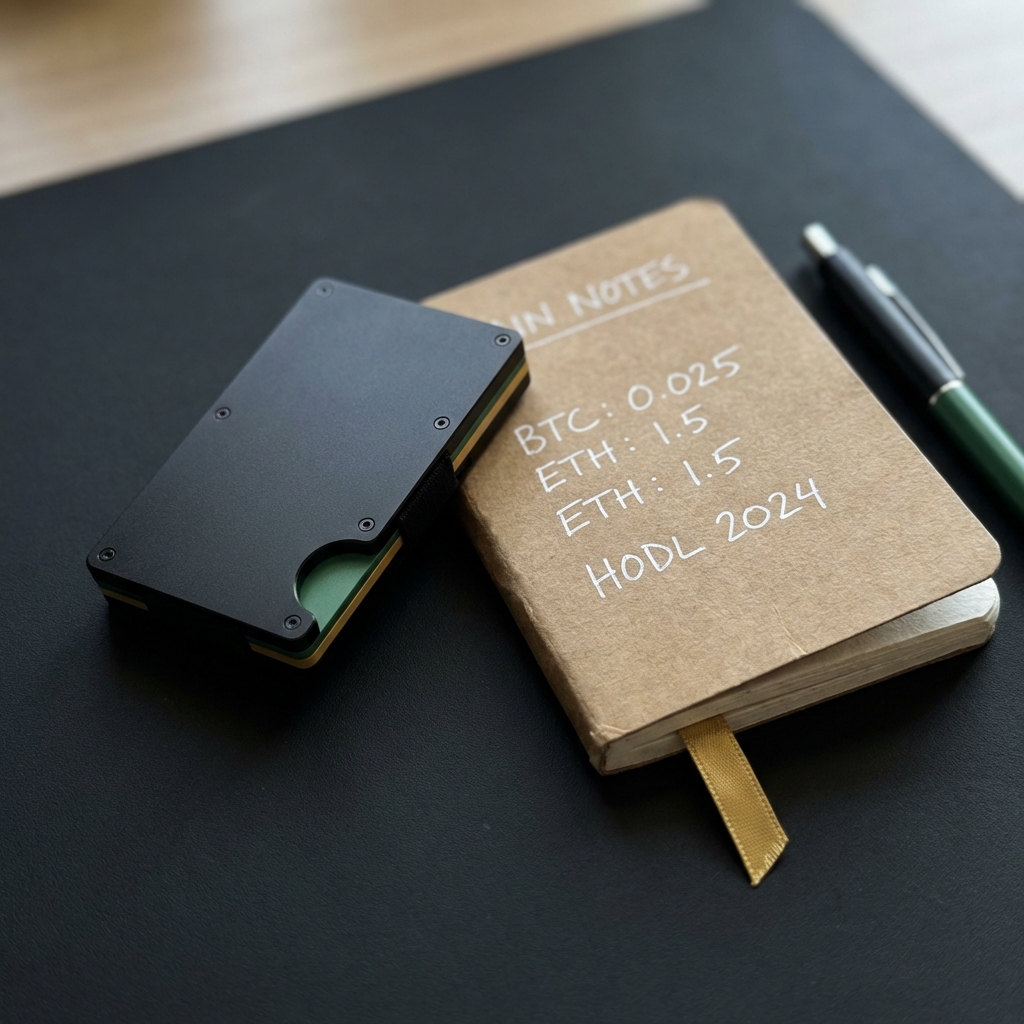
A friendly nod from Finance Police: small experiments and careful learning beat dramatic mistakes. A quick tip – if you keep a logo or site badge nearby while you study, it can be a small reminder to stick to your plan.
Start with an amount you can afford to lose without affecting your emergency fund or essential goals. For many beginners this is a small fraction—often between 0.5% and a few percent of investable assets. Treat the initial exposure primarily as a learning expense and use small, regular purchases to build experience.
It depends. Historically, lump-sum investing can outperform when markets rise steadily, but DCA reduces timing risk and emotional stress—especially useful for volatile assets like crypto. For beginners uncertain about timing, DCA is often the safer, more disciplined choice.
Both have trade-offs. Exchanges are convenient but introduce counterparty risk; self-custody (hardware wallets) gives control but requires secure key management. Many beginners use a mixed approach—small amounts on an exchange for trading, the majority in a hardware wallet for long-term storage.
References
- https://financepolice.com/advertise/
- https://www.morganstanley.com/insights/articles/how-to-invest-in-crypto-asset-allocation
- https://finance.yahoo.com/news/morgan-stanley-wealth-unit-advises-023715917.html
- https://www.vaneck.com/us/en/blogs/digital-assets/matthew-sigel-vaneck-bitcoin-long-term-capital-market-assumptions/
- https://financepolice.com/best-micro-investment-apps/
- https://financepolice.com/advertise/
- https://financepolice.com/category/crypto/
- https://financepolice.com/how-to-budget/


You May Also Like

The changing face of elder care in Malaysia — Sayed Mohammad Reza Yamani Sayed Umar

Not a loophole: Singapore AI export controls let China tap US AI legally

Exclusive interview with Smokey The Bera, co-founder of Berachain: How the innovative PoL public chain solves the liquidity problem and may be launched in a few months



