

How much is crypto stock now? A clear guide to checking prices
FinancePolice provides calm, plain-language guidance and a short checklist so you can verify quotes without needing deep market expertise. Use this as a starting point and check primary sources when classification or execution matters.
What crypto stock price means: definitions and context
The phrase crypto stock price is ambiguous in 2026. It can refer to tokenized equity, shares of a crypto company traded on a stock exchange, or loosely to cryptocurrency tokens. This ambiguity is why the first step in any price check is to identify the exact asset and its ticker before trusting a quoted number.
start with a market aggregator to get a consolidated price and timestamp
Quick starting tool for live checks
Tokenized equity means an ownership interest recorded using blockchain technology, but legal classification can vary by jurisdiction. Shares of a crypto company are ordinary publicly traded equity listed on a stock exchange and follow standard stock market rules. Native cryptocurrency tokens are digital assets that trade on crypto venues and behave differently from regulated shares. For regulator context on classification and related investor guidance, consult official notices.
Practical example mapping: a token that represents a share in a private company is a tokenized equity; the common stock of a company that builds blockchain software is an exchange-listed security; Bitcoin and other native tokens are cryptocurrencies. Naming matters because price sources, venue rules, and data quality differ across these categories. For guidance on how regulators frame these distinctions, see the SEC investor alerts.
SEC investor alerts and notices
How to identify the exact asset and ticker
Before you look for a number, find the authoritative ticker and the issuer record. Start with the issuer or the official listing page on the exchange that lists the asset. Issuer pages and exchange listings typically show the exact ticker used for trading and a brief description of the asset type.
When the asset is crypto-related, you can often confirm product type on regulator pages or in issuer documentation or our crypto category. If classification matters for where the asset trades, check primary sources rather than a forum post or social feed. For practical guidance on checking market data and listings, see the Investopedia guide.
Investopedia how to check cryptocurrency prices
Watch out for similar tickers. Exchanges and venues can use similar letter combinations that look alike. A quick checklist: verify the ticker symbol, confirm the issuer name, and match the trading venue. If anything looks mismatched, pause and locate the exchange listing or the issuer’s official page.
How to check crypto stock price live: a practical workflow
Step 1: confirm the ticker and the asset. Open the issuer record or exchange listing and copy the exact ticker string you will search for on price sites and exchanges. This reduces the chance of checking the wrong asset.
Confirm the exact ticker and asset type, check a market aggregator for a consolidated price and timestamp, open one or two exchange order books to confirm liquidity and recent trades, and review 24-hour volume and source disclosures before acting.
Step 2: check a market aggregator for a consolidated price and timestamp. Aggregators collect data across venues and often publish a volume-weighted picture that is a fast first screen. Use the aggregator price as a starting point, then note the timestamp so you know how fresh the quote is.
CoinMarketCap methodology
Step 3: open one or two major exchange order books for the same ticker. Look at the bid and ask, the best sizes, and recent trade history to confirm whether the aggregator number reflects trades you could actually execute. If you plan to trade on a specific exchange, the order book on that exchange is the most relevant reference.
CoinGecko methodology and price calculation
Step 4: check 24-hour volume and recent trades. Low volume or sudden spikes in reported trades can mean the price is fragile or influenced by a single large trade. If volume is thin, consider deeper checks or pausing before acting.
CoinDesk how to read crypto market data
Why market aggregators are a good first check
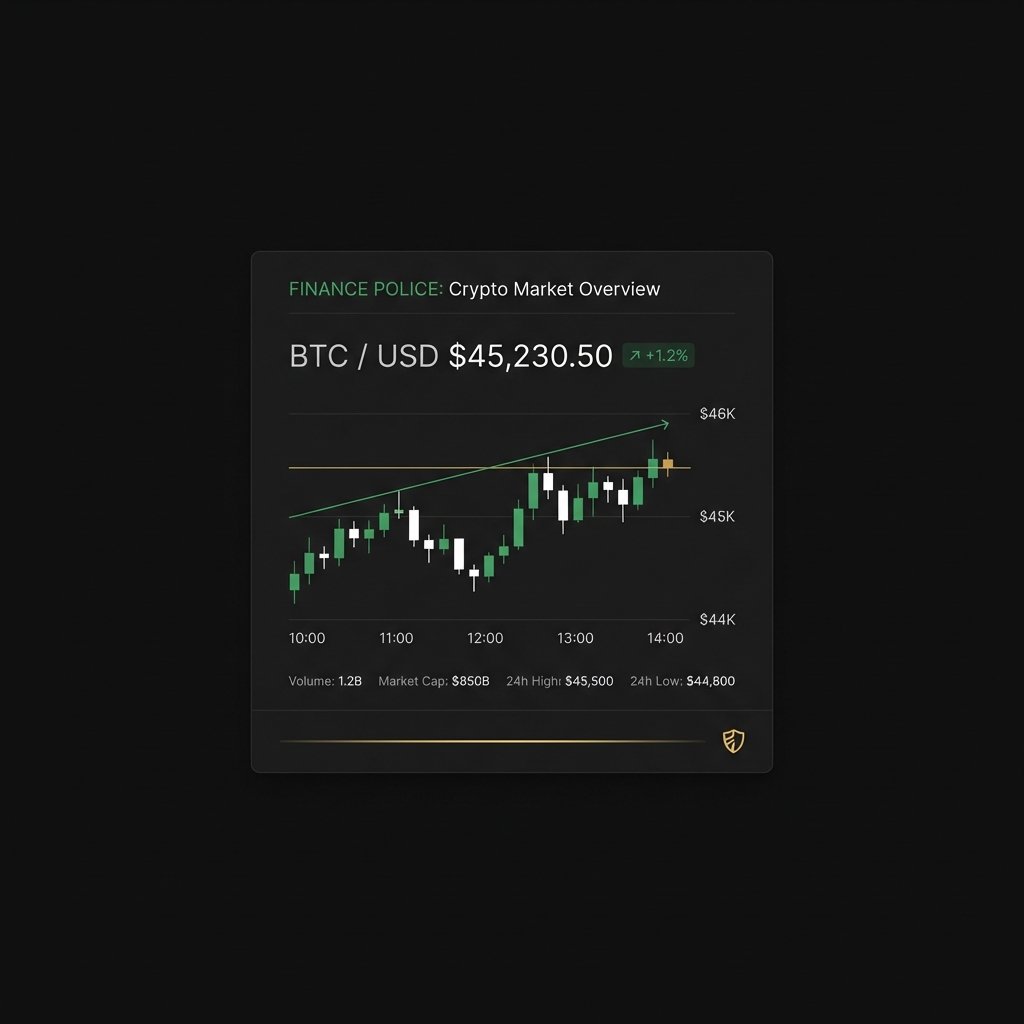
Aggregators provide a consolidated view that is fast and convenient. They publish timestamped prices and explain their methodology, which often uses volume-weighted averages to combine quotes across exchanges. This makes them a useful first screen when you need a quick sense of market direction. (see CoinAPI explanation)
CoinMarketCap methodology
Aggregated prices list source exchanges and usually show the time of the snapshot. That transparency helps you decide whether differences from a single-exchange quote are due to timing or to real divergence between venues.
Limitations exist. Aggregator averages can smooth over short-lived spikes and may differ from a live order book on a single exchange. When execution timing or exact entry price matters, follow the aggregator check with an exchange-level view.
Comparing aggregator prices to single-exchange quotes
Prices differ because aggregators compile data from many venues and apply methodology rules such as volume weighting and source selection. A single exchange shows the live order book for its venue, which may move differently from the averaged number you saw on an aggregator.
CoinMarketCap methodology
If you will execute a trade on a specific exchange, use that exchange’s live order book as your primary reference. If you want a market-wide snapshot or to compare relative performance across tokens, an aggregator’s consolidated view is usually preferable.
If you check prices often, consider bookmarking your preferred aggregator and one exchange to speed checks.
Advertise with FinancePolice
If you check prices often, consider bookmarking your preferred aggregator and one exchange to speed checks.
Contact FinancePolice about advertising
Comparing aggregator prices to single-exchange quotes
When you see a difference, ask whether the timing, source list, or averaging method explains it. Aggregators include multiple venues and may exclude low-quality feeds, which changes the reported number. Single-exchange quotes reflect real-time liquidity on that venue and are the right reference for execution risk.
CoinDesk how to read crypto market data
Checking order books, recent trades and 24h volume
Order book depth shows how much buying or selling interest exists at nearby price levels. Look at the size at the best bid and ask and how quickly orders thin out further away from the mid price. Thin depth means larger trades will move the price and increase slippage.
Investopedia how to check cryptocurrency prices
Recent trades help you spot spikes or suspicious patterns such as many same-size trades at odd intervals. If recent trade prints all occur at the same size and price, it may indicate low liquidity or coordinated activity that distorts the quoted price.
Reported 24-hour volume gives context but can be misleading if an exchange reports non-transparent numbers. Prefer venues and aggregators that publish methodology and source lists so you can judge whether reported volume is credible.
Regulatory and classification checks before trusting a price
Classification can change where an asset is allowed to trade and the type of data you should trust. SEC and FINRA advice in recent years emphasizes verifying whether an asset may be a security and using transparent venues for pricing and execution checks.
FINRA cryptoassets guidance
FinancePolice explains how to check primary sources for classification and issuer disclosures, which can help you decide whether a venue is appropriate for price checks.
If classification is unclear, consult issuer pages, filings, and regulator notices before relying on a quoted price.

SEC investor alerts and notices
Decision checklist: when to rely on aggregator versus exchange
Quick decision checklist: 1) ticker match 2) aggregator price and timestamp 3) single exchange order-book snapshot 4) 24-hour volume check 5) source credibility. Use this checklist to decide whether a consolidated view or an exchange quote is the right reference.
CoinMarketCap methodology
Rules of thumb: for high-liquidity assets, an aggregator and an exchange will usually align and the aggregator gives a fast market picture. For low-liquidity assets, favor the exchange order book that you will use for execution and be cautious about spikes in reported volume.
When in doubt, pause and do deeper checks. Escalate to primary documents or a reliable exchange feed if prices conflict or if volume looks unusually low.
Common errors and how to avoid misleading prices
Ticker confusion is common. A symbol that looks right can belong to a different asset on another venue. Always confirm issuer name and the exact trading pair before trusting a price. If you cannot confirm the match quickly, do not act on the quote.
Investopedia how to check cryptocurrency prices
Trusting a single thinly traded exchange can produce misleading prices. Cross-check with an aggregator or another reputable exchange. If the quoted price is far from consolidated views, look for trade history or order-book depth that explains the difference.
Ignoring timestamps and methodology notes can cause errors. Aggregators and exchanges time-stamp data differently. If you compare numbers from different minutes, you may mistake timing gaps for price divergence.
Practical examples: tokenized equity, exchange-listed crypto company shares, and native tokens
Scenario A: tokenized equity
For a tokenized equity, first confirm legal status and where the token is authorized to trade. Tokenized equity may be listed on specialized venues or reported on aggregator pages. Classification affects which venues are appropriate and how transparent pricing will be.
SEC investor alerts and notices
When checking price for a tokenized equity, use an aggregator for a quick sense but rely on the venue that hosts the token for execution details. Confirm issuer disclosures and any filing information available from primary sources.
Scenario B: exchange-listed crypto company shares
If you want the stock price of a listed crypto company, check the standard stock exchange quote and its trade tape. If a secondary listing or tokenized version exists on a crypto venue, compare the two with care and note that settlement mechanisms and trading hours may differ.
CoinMarketCap methodology
Scenario C: native cryptocurrency token
For a native token, start with an aggregator to get a consolidated price and timestamp, then open one or two major exchange order books to confirm liquidity and recent trades. This is the most common workflow for quick checks and helps reveal whether a spike is real or transient.
CoinGecko methodology and price calculation
Quick verification checklist you can use on web or mobile
Five-step mobile-friendly checklist: 1) confirm the exact ticker 2) check an aggregator price and timestamp 3) open one exchange order book for the same ticker 4) check 24-hour volume 5) verify source credibility. These steps can be done in a few minutes for most liquid assets.
CoinMarketCap methodology
Estimated time: confirming ticker and aggregator 30-60 seconds, checking an exchange order book 30-90 seconds, reviewing volume and recent trades another 30-60 seconds. If you find conflicting data or low volume, stop and research further.
How to interpret timestamps, VWAP and reported volume
VWAP or volume-weighted averages are how many aggregators report a consolidated price. VWAP weights prices by traded volume so larger trades influence the average more than small trades. That makes VWAP a smoother reference than a single trade print.
CoinMarketCap methodology
Timestamps matter because quotes on different venues update at different moments. A minute-old aggregator snapshot can diverge from a live order book during volatile periods. Always note the time of the quote you are comparing.
Reported volume provides context but can be inflated or unclear if venues do not publish transparent source details. Prefer aggregators and exchanges that explain their source lists and methodology when you need a reliable volume read.
Conclusion: safe habits for checking crypto stock price
Recap the live-check workflow: confirm the ticker, view an aggregator price and timestamp, open one or two exchange order books, and check 24-hour volume and recent trades. Use this routine to reduce the chance of acting on a misleading quote.
CoinGecko methodology and price calculation
Final rules of thumb: when execution matters, trust the exchange you will use; when you want a market snapshot, aggregators are a fast first screen. When classification or venue transparency is unclear, consult issuer disclosures and regulator guidance before relying on a price.
It is an informal phrase that can mean tokenized equity, shares in a crypto company, or a cryptocurrency token. Always confirm the exact asset and ticker first.
Start with a reputable market aggregator for a consolidated, timestamped price, then check one exchange order book for execution-level detail.
For most liquid assets you can complete a quick verification in a few minutes by following the five-step checklist; for low-liquidity assets expect to spend more time on primary sources.
If you follow the routine here, you will be better positioned to compare prices across sources and decide which quote matters for your planned action.
References
- https://www.sec.gov/investor-alerts-and-bulletins/cryptocurrency-related-investments
- https://financepolice.com/bitcoin-price-analysis-btc-reclaims-92000-as-market-awaits-fed-decision/
- https://financepolice.com/category/crypto/
- https://www.investopedia.com/how-to-check-cryptocurrency-prices-5189890
- https://coinmarketcap.com/methodology/
- https://www.coingecko.com/en/methodology
- https://www.coindesk.com/learn/how-to-read-crypto-market-data/
- https://www.coinapi.io/blog/why-is-aggregated-crypto-data-better
- https://www.finra.org/investors/learn-to-invest/advanced-investments/cryptoassets
- https://financepolice.com/advertise/
- https://financepolice.com/tokenized-real-world-assets-rwa-the-fastest-growing-sector-in-crypto-fueled-by-institutional-adoption-in-2026/


You May Also Like

BTC Fell 11.6%, Altcoins Sank

A Critical Signal For The Cryptocurrency Market




