

How much is a crypto COIN worth? A practical guide
Use this guide as a starting point for making defensible, documented estimates. FinancePolice explains the concepts in plain language and suggests small verification steps you can save or share.
What people mean by a coin’s value: price, market cap, and why it matters
Price vs market capitalization explained, crypto coin stock
The most immediate number people see for a coin is the live price, the most recent trade quote on an exchange or an aggregator, and that live quote is the starting point for any simple valuation, especially when you crosscheck sources for accuracy CoinMarketCap article.
Combine a live price from two sources, confirm the circulating supply and any lockups, check order-book depth and recent volume for liquidity, and document your sources so the estimate is reproducible.
Market capitalization is a quick metric that multiplies that live price by circulating supply to express the apparent size of a coin, and many headlines use it as shorthand, though it depends directly on the reported supply figure CoinGecko learn article. See a concise definition at Capital.
Why this matters: quoted price and market cap are useful for quick comparisons, but they can be misleading when circulating supply figures are wrong, tokens are locked, or trades are thin enough that you could not buy or sell at the quoted price without moving the market Messari explainer.
Where to get live prices and supply figures that you can trust
Major exchanges versus data aggregators
Start with major exchanges and reputable data aggregators that collect order-book and trade data in real time, since those sources show the most recent trades and top-of-book quotes that drive the live price you see CoinMarketCap article. See our crypto category for related coverage.
Aggregators usually combine prices across venues, but differences can appear when an exchange has stale listings or when a token trades on only a few venues, so verifying price across two reputable sources helps catch outliers CoinGecko learn article.
How aggregators compile price and supply data
Aggregators compute a reference price by weighting recent trades or order-book snapshots, and they also pull supply figures from project disclosures and on-chain data, which can cause discrepancies between providers when projects report differently Messari explainer.
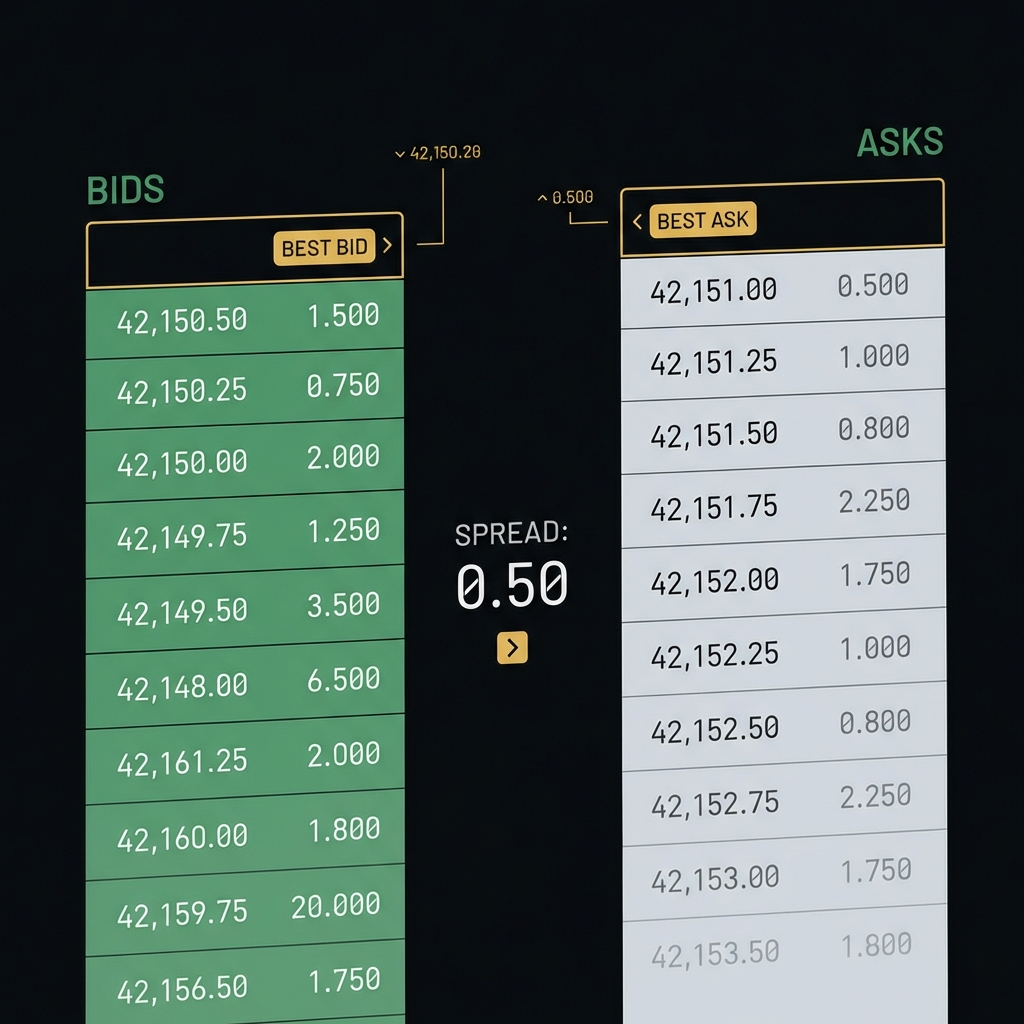
Practical checks you can do now include comparing the live price between an exchange and an aggregator, confirming the circulating supply the aggregator used to compute market cap, and noting the timestamp for each data point so you can reproduce the estimate later CoinGecko learn article.
A practical step-by-step workflow to estimate how much one coin is worth
Step 1: get current price from two sources
1) Record the live price from an exchange feed and from a data aggregator, and save the timestamp and source for each reading so your estimate is reproducible CoinGecko learn article.
2) Note which venue or aggregator provided the price, and whether the quote was a recent trade or a top-of-book bid or ask, since trade quotes and book prices can differ slightly.
Step 2: confirm circulating supply and free float
3) Check the circulating supply used by the source and look for notes on locked tokens or vesting schedules; circulating supply, not total supply, is the figure used in the market-cap calculation CoinMarketCap article.
4) Where possible, cross-reference the reported supply with a project disclosure or an on-chain token explorer to see whether recent burns, mints, or vesting events changed the free float.
Step 3: adjust market cap for known lockups
5) If a meaningful portion of supply is locked or vested, note that the free float available to the market is smaller than circulating supply might imply, and adjust your interpretation accordingly when you report market cap for decision making Messari explainer.
6) Combine the chosen price and the confirmed circulating supply to compute market capitalization, and document every assumption so others can reproduce your math; this record is useful when supply reporting changes or when you later revisit the estimate CoinMarketCap article.
How liquidity and trading volume change what a quoted price is actually worth
Order-book depth, 24-hour volume, and price slippage
Liquidity shapes how close a quoted price is to what you could actually buy or sell, and three simple metrics to check are order-book depth at top-of-book, the bid-ask spread, and 24-hour trading volume Chainalysis research report. See CoinMarketCap’s liquidity score methodology for another perspective on exchange depth.
Low 24-hour volume and a thin order book increase the chance that a large order will move the price, a phenomenon called price slippage, which means the quoted number may be an unreliable guide for sizable trades BIS working paper.
quick order-book and volume checks for liquidity
Record timestamps when checking order-book data
To estimate how much you can realistically buy or sell, look at the top-of-book orders and recent trade sizes to see how many coins execute near the quoted price before larger orders move it Chainalysis research report.
As a practical rule, compare your intended trade size to recent 24-hour volume and the cumulative depth in the top few price levels; when your trade is a material share of recent volume, expect worse execution than the quoted price suggests BIS working paper.
Tokenomics, lockups, and other special cases that change the arithmetic
Locked, vested, and reserved tokens
Token designs can include team vesting, protocol reserves, or scheduled unlocks that reduce free float relative to circulating supply, and those mechanics change how you interpret market-cap math and trading risk Messari explainer.

Save the simple coin-value checklist
Use the checklist here to record the price, supply, lockup notes, and a brief liquidity check so you can revisit or share your estimate later.
Save checklist
When lockups are large or opaque, treat market-cap numbers as provisional and prefer sources that document their supply methodology or reference audited token distributions Messari explainer.
Stale or inconsistent supply reporting
Some aggregators and exchange listings lag after burns or new mints, which can make circulating supply counts inconsistent across sources, so prefer providers that explain their supply data methods and recent updates CoinMarketCap article.
If supply reporting for a coin is unclear or changes often, document the versions you used and note the uncertainty when you share your market-cap based estimate.
Decision factors and a short checklist for using an estimated coin value
When market-cap based estimates are sufficient
Market-cap math can be enough for a quick comparison when the coin trades on multiple venues, shows steady volume, and has transparent supply disclosures, but this is conditional on your intended trade size relative to volume Chainalysis research report.
Use a checklist: verify live price, confirm circulating supply and note lockups, check order-book depth and 24-hour volume, and save timestamps and links so your estimate is reproducible CoinGecko learn article.
When you need deeper due diligence
If your trade is large relative to recent volume, or if the project has complex vesting, audited supply data or on-chain verification may be needed before you rely on a market-cap based figure SEC investor bulletin. See the Investopedia cheat sheet for another primer on market cap and volume Investopedia.
Consider professional advice or more detailed monitoring of order-book behavior when disclosure gaps or regulatory questions appear in project reporting.
Typical mistakes and red flags to avoid when valuing a crypto coin
Common data errors and misleading aggregates
A frequent mistake is trusting market cap alone without checking which supply figure was used and without looking at liquidity, because market-cap math is only as accurate as the underlying supply and price data CoinMarketCap article.
Red flags include very low 24-hour volume, large locked allocations that lack transparent schedules, and inconsistent supply counts across sources, each of which can make a quoted market cap unreliable Messari explainer.
Behavioral traps and overreliance on single metrics
Avoid overreliance on one metric; combine price, supply, and liquidity checks to reduce the chance that a single distorted figure drives a decision Chainalysis research report.
Where possible, record your steps and assumptions so you do not repeat the same mistake later when data sources update or market conditions change.
Three practical scenarios showing the workflow in action
Scenario A: a large, liquid exchange-listed coin
Assume a coin trades across many venues with consistent price and supply reporting; start by recording the live price on an aggregator and an exchange, note the circulating supply shown by both sources, and compute market cap as price times circulating supply, which should align across reputable providers in this case CoinGecko learn article. For an example, see our Bitcoin price analysis.
Because order-book depth and 24-hour volume are high for a liquid coin, the quoted price is usually close to what an investor can buy or sell in modest amounts without large slippage, but large trades still require a depth check.
Scenario B: a small token with heavy lockups
For a token with significant team vesting and protocol reserves, gather project disclosures or audited supply data, identify the locked allocations and their unlock schedules, and adjust the free float you use in your practical estimate rather than relying on headline circulating supply alone Messari explainer.
Document every assumption, because releasing even a portion of locked tokens can change available supply and move price, making an earlier market-cap estimate obsolete.
Scenario C: a thinly traded coin with conflicting supply reports
When a coin has low 24-hour volume and different supply counts across sources, start with two price sources, check top-of-book orders to see how much executes near the quote, and treat your market-cap result as provisional until supply reporting is reconciled Chainalysis research report.
In this case, a volume-adjusted practical price for a large trade may be materially worse than the quoted price, so factor slippage into any decision that depends on realizable value BIS working paper.
Wrap-up: a simple checklist to take away and next steps
One-paragraph summary
Quick checklist: verify a live price on two reputable sources, confirm the circulating supply and note lockups, check order-book depth and 24-hour volume, record timestamps and links, and treat market cap as an approximation rather than a precise claim CoinMarketCap article.
Where to verify details next
For verification, use primary project disclosures or audited supply reports when possible and remember that regulators and market-surveillance publications emphasize disclosure and liquidity assessment for institutional reporting and fund holdings SEC investor bulletin, or visit the Finance Police homepage.
Market capitalization is price multiplied by circulating supply. Use the circulating supply figure that the data provider documents and confirm it if accuracy matters.
Quoted prices reflect recent trades or top-of-book quotes, but low order-book depth and low 24-hour volume can cause slippage so actual execution prices for large trades can be worse than the quote.
Review the project disclosure or audited supply notes to identify lockup schedules, then treat market-cap results as provisional if large allocations will unlock over time.
FinancePolice aims to make these checks accessible so readers can compare coins calmly and reduce reliance on a single headline metric.
References
- https://coinmarketcap.com/alexandria/article/how-is-cryptocurrency-market-cap-calculated
- https://www.coingecko.com/en/learn/what-is-market-cap
- https://messari.io/article/how-to-value-crypto-assets
- https://blog.chainalysis.com/reports/2024-state-of-crypto-market
- https://www.bis.org/publ/work1025.htm
- https://financepolice.com/advertise/
- https://support.coinmarketcap.com/hc/en-us/articles/360043836931-Liquidity-Score-Market-Pair-Exchange
- https://capital.com/en-int/learn/glossary/market-capitalisation-in-crypto-definition
- https://www.investopedia.com/crypto-cheat-sheet-decoding-market-cap-volume-and-trends-11833687
- https://financepolice.com/category/crypto/
- https://financepolice.com/
- https://financepolice.com/bitcoin-price-analysis-btc-slips-below-90000-as-leveraged-liquidations-rock-market/
- https://www.sec.gov/investor-pubs/crypto-basics-2025.htm


You May Also Like

Powell’s inflation warning dampens rate cut expectations for June FOMC meeting: FT

Lawmaker Demands Polymarket Remove 219 War Bets After Airman Market Controversy – Bitcoin News




