

Trump Names Kevin Warsh as Next Fed Chair
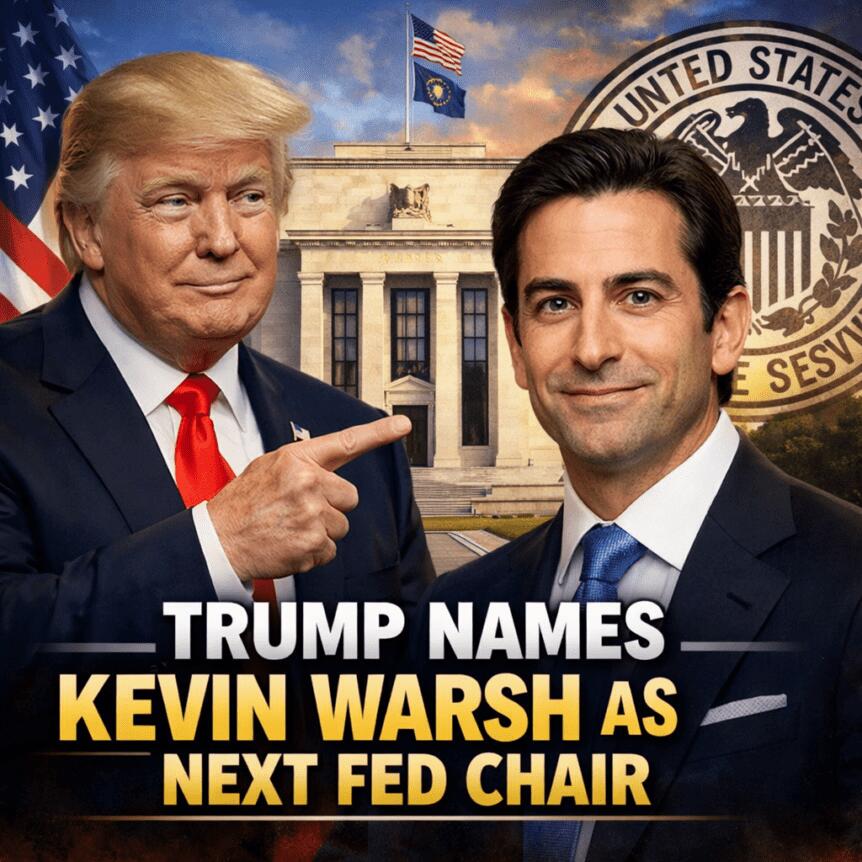
President Donald Trump on Friday nominated former Federal Reserve Governor Kevin Warsh to succeed Jerome Powell as chair of the central bank, setting up a high-stakes confirmation fight on Capitol Hill. The nomination, announced on Truth Social, followed months of speculation that Warsh—an ex‑Fed official and Morgan Stanley veteran—was the president’s preferred choice for the country’s top monetary policymaker. Trump said he had known Warsh for a long time and expressed conviction that he would become “one of the GREAT Fed chairmen, maybe the best.” Markets had already priced in a hawkish tilt, with prediction markets and Wall Street commentators increasingly tipping Warsh as the likely pick in the run-up to the disclosure.
Key takeaways
- Trump publicly endorses Kevin Warsh, a former Fed governor, as his preferred candidate to lead the Federal Reserve.
- Warsh’s tenure at the Fed (2006–2011) and his post‑crisis critiques of balance sheet expansion mark a clear shift from the status quo on policy direction.
- Warsh has signaled openness toward Bitcoin as a discipline-mechanism for markets, contrasting with Powell’s relatively cautious stance on crypto’s macro role.
- Markets are already pricing in a potential hawkish shift, with risk assets reacting as the nomination unfolds amid broader political uncertainties.
- Senate confirmation will examine Warsh’s past calls for tighter policy and his critiques of regulation and crisis interventions under Powell’s Fed.
Sentiment: Neutral
Price impact: Neutral. While some risk assets moved on the nomination news, there is no clear one-way price move attributable solely to the nomination at this stage.
Market context: The nomination arrives in a period of heightened scrutiny over the Fed’s policy posture and a fragile macro backdrop, with crypto markets already sensitive to regulatory signals, liquidity dynamics, and shifting risk sentiment.
Why it matters
The choice of a new Fed chair is inherently political, but it also has direct implications for the crypto economy. Kevin Warsh’s background—especially his criticism of post‑crisis balance sheet expansion and his calls for tighter policy—suggests a potential tilt toward greater policy restraint if confirmed.That possibility matters for traders who have long priced in slower or more accommodative monetary policy as a stabilizing force for asset markets, including digital assets that have historically moved in response to shifts in liquidity and inflation expectations. Warsh’s past stances indicate a willingness to scrutinize regulatory interventions and crisis-era programs that supporters say stabilized markets but that critics have argued fostered moral hazard. In a broader sense, the Fed chair’s tone can influence the pace of liquidity withdrawal, which in turn can affect risk assets and the digital-asset sector alike.
On crypto policy specifically, Warsh has been described as more constructive toward Bitcoin than Powell, a contrast that matters for capital allocation and the narrative around crypto’s place in the U.S. financial system. In a July discussion hosted by the Hoover Institution, Warsh rejected the notion that Bitcoin would curtail the Fed’s ability to conduct monetary policy, arguing instead that it could serve as a form of market discipline. The interview underscored a view that digital assets might be accommodated rather than sidelined as policymakers grapple with price stability and financial stability concerns. The nuance matters: appreciable openness to crypto within a Fed leadership team could influence regulatory punctuation marks—such as faster clarity on stablecoins, disclosures, and whether crypto markets receive more formalized oversight or dovish exemptions in exchange for transparency.
These considerations sit alongside broader market dynamics. As traders priced in the possibility of a hawkish administration of policy, Bitcoin and other assets traded with heightened sensitivity to headlines about the Fed, the debt limit, and the risk of a partial government shutdown. The tensions between safeguarding price stability and avoiding excessive financial stress continue to color how investors evaluate core inflation risks versus the risk that harsher monetary conditions could slow growth. In this environment, the Fed chair’s views on regulation, market structure, and crisis tools carry outsized significance for both traditional markets and the digital-asset space.
What to watch next
- Senate confirmation hearing: Track the date and agenda for Warsh’s confirmation vote, including questions on his stance toward monetary policy, regulation, and crisis-era interventions.
- Policy direction signals: Monitor whether Warsh’s public remarks hint at a tighter policy trajectory or a more cautious approach to balance-sheet normalization.
- Crypto regulatory posture: Expect scrutiny of Warsh’s comments on Bitcoin and other digital assets, and any early policy signals that could influence regulatory clarity for exchanges, stablecoins, and enforcement priorities.
- Market reaction: Observe whether equities, gold, and crypto display persistent moves tied to policy expectations, rather than purely episodic headlines.
Sources & verification
- Truth Social post announcing Warsh nomination: https://truthsocial.com/@realDonaldTrump/posts/115983891481988557
- Cointelegraph report on Trump’s nomination and Warsh as favored candidate: https://cointelegraph.com/news/trump-tipped-to-name-kevin-warsh-next-fed-chair
- Independent coverage of Warsh’s Fed tenure and policy views: https://www.independent.co.uk/news/world/americas/us-politics/kevin-warsh-federal-reserve-trump-powell-b2910734.html
- Hoover Institution July discussion featuring Warsh on Bitcoin: https://www.youtube.com/watch?v=qVFEcg-RIAk
- Cointelegraph analysis on Bitcoin sentiment and macro jitters amid policy debates: https://cointelegraph.com/news/bitcoin-investor-sentiment-cools-amid-us-shutdown-fears-fed-policy-jitters
Trump’s Fed chair pick reshapes policy expectations and crypto outlook
President Donald Trump’s nomination of Kevin Warsh to chair the Federal Reserve signals a deliberate reorientation in how the central bank might approach inflation, normalization, and crisis-era tools. Warsh’s path to the top job is notable for its blend of regulatory skepticism and market‑oriented pragmatism, a mix that could influence not only traditional markets but also how digital assets are treated in the policy landscape. The decision follows weeks of market chatter that placed Warsh at the top of Trump’s shortlist, a sentiment echoed in discussions across financial media and among traders watching the Fed’s balance sheet and inflation trajectory with heightened vigilance.
Warsh’s tenure on the Fed Board from 2006 to 2011 placed him squarely in the crucible of the financial crisis and the early postcrisis period. Since then, he has been among the more vocal critics of prolonged, ultra-loose monetary policy and the aggressive expansion of the central bank’s balance sheet. His public commentary has centered on calls for what some describe as a “regime change” at the Fed, arguing that more restrained policy could reduce the risk of excess risk-taking and moral hazard. The nomination thus represents not a mere leadership shift but a signal about the kind of monetary framework the administration envisions for the next several years.
In the crypto arena, Warsh’s posture toward digital assets stands in contrast to Powell’s measured, sometimes cautious approach to Bitcoin and other tokens. Warsh’s outspoken stance on Bitcoin as a possible market‑disciplining mechanism—rather than a destabilizing force—adds a nuanced layer to the ongoing policy debate. During a July Hoover Institution discussion, Warsh argued that Bitcoin could function as a form of market discipline and did not inherently undermine the Fed’s ability to steer the economy. That position diverges from the characterization that digital assets pose an existential risk to monetary independence, offering instead a framework in which crypto assets are integrated into broader financial stability considerations.
The political framing around Warsh’s nomination will be as important as the policy arguments. Senate confirmation will require rigorous scrutiny of Warsh’s past calls for tighter policy, his criticisms of the prior administration’s regulation approach, and his perspective on the crisis-era interventions that helped avert a broader collapse but also drew fire from critics who argued they created moral hazard. The debate could influence not only the timeline for any policy shifts but also the tone of discourse around the Fed’s independence and responsiveness to market developments, including the evolving role of crypto in mainstream finance.
Market participants are watching not just the decision itself but the guidance that may follow. The broader macro backdrop—drugging inflation expectations, potential debt-limit constraints, and ongoing regulatory conversations—creates a complex web of factors that could shape risk sentiment in crypto markets. As traders reassess the probability of a more aggressive stance on inflation or a tighter pace of balance-sheet normalization, Bitcoin and other digital assets will likely respond to a combination of policy messaging and macro indicators rather than to any single headline. In this context, Warsh’s appointment could serve as a catalyst for a broader recalibration of how fiat policy and crypto assets interact in the years ahead.
https://platform.twitter.com/widgets.js
This article was originally published as Trump Names Kevin Warsh as Next Fed Chair on Crypto Breaking News – your trusted source for crypto news, Bitcoin news, and blockchain updates.


You May Also Like

Pi Network Completes First KYC Validator Rewards, Demonstrating Decentralized Human-AI Collaboration

MyCroatianCharter places Croatia as leading destination for family luxury yacht charters in 2026




