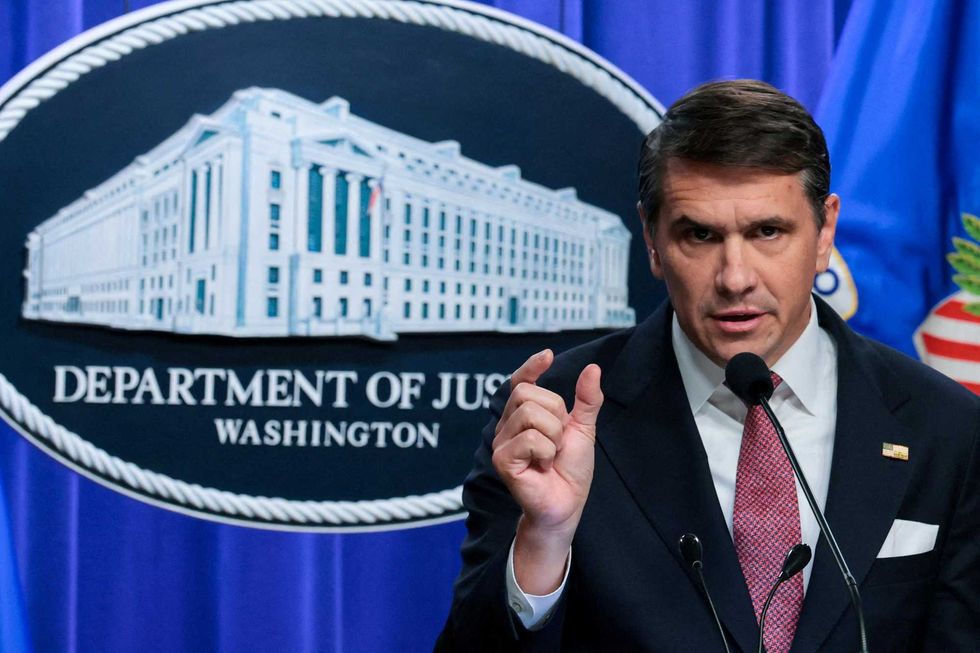
Hedera joined OMFIF’s Digital Monetary Institute, a forum focused on digital money and CBDC policy. DMI connects central banks, major banks, and payment bodies Hedera joined OMFIF’s Digital Monetary Institute, a forum focused on digital money and CBDC policy. DMI connects central banks, major banks, and payment bodies

HBAR Joins DMI as Global Crypto Policy and Infrastructure Takes Shape

2026/02/07 12:15
3 min read
  • Hedera joined OMFIF’s Digital Monetary Institute, a forum focused on digital money and CBDC policy.
  • DMI connects central banks, major banks, and payment bodies with select blockchain infrastructure firms.
  • Few public Layer-1 networks participate in DMI, alongside firms like Ripple, R3, and ConsenSys.

Hedera has joined the Digital Monetary Institute, a global forum focused on digital money and financial infrastructure.

The move places Hedera among institutions shaping policy for digital currencies. The announcement comes as governments and banks expand work on regulated digital assets and payment systems.

Hedera Added to Digital Monetary Institute Network

The Digital Monetary Institute operates under OMFIF and convenes central banks and financial institutions. Its members discuss policy design and operational models for digital money. These discussions include central bank digital currencies and regulated payment systems.

Hedera is now listed as a participant within the institute’s network. The group includes a limited number of blockchain infrastructure providers. Most members represent banks, regulators, and payment organizations.

OMFIF has stated that DMI focuses on real-world digital currency use. The forum emphasizes implementation frameworks and public sector coordination. Membership reflects ongoing engagement rather than commercial promotion.

Alignment With Global Regulatory Approaches

DMI initiatives align with regulatory models emerging across several regions. These include the United Kingdom, the European Union, Singapore, and the United Arab Emirates. Australia and the United States are also increasing participation.

Regulators within these regions focus on compliance and risk controls. Areas of interest include settlement systems, identity standards, and cross-border payments. These topics form a core part of DMI working groups.

Hedera’s participation places it within these discussions. The network allows interaction with policymakers and financial authorities. These conversations center on infrastructure readiness and operational design.

Connections to Major Financial Institutions

According to a post by Mark on X, DMI-linked projects involve several global banks and infrastructure bodies, including Standard Chartered, Citibank, Deutsche Bank, and BNY Mellon, as well as DTCC and SWIFT.

These institutions work on payment rails that meet regulatory standards. Their systems prioritize reliability and interoperability. Familiar frameworks support adoption within existing financial markets.

By engaging in this forum, Hedera gains exposure to established workflows. The institute connects participants with current financial processes. This structure supports collaboration on regulated digital money systems.

Limited Layer One Representation in DMI

Only a small number of public blockchain networks participate in DMI activities. Most blockchain involvement occurs through enterprise or CBDC programs. Examples include Ripple, R3, and ConsenSys.

These organizations focus on institutional and government-led projects. Their work often centers on settlement layers and tokenized assets. Participation reflects practical engagement rather than retail-focused development.

Hedera’s inclusion places it among this limited group. The focus remains on policy coordination and infrastructure design. The role does not relate to short-term market activity.

DMI participation reflects long-term positioning within regulated finance. The forum supports collaboration between technology providers and institutions. Hedera’s role connects it to discussions shaping future digital currency systems.

The post HBAR Joins DMI as Global Crypto Policy and Infrastructure Takes Shape appeared first on Live Bitcoin News.


Market Opportunity
Hedera Logo
Hedera Price(HBAR)
$0,08746
$0,08746$0,08746
-%3,44
USD
Hedera (HBAR) Live Price Chart
Disclaimer: The articles reposted on this site are sourced from public platforms and are provided for informational purposes only. They do not necessarily reflect the views of MEXC. All rights remain with the original authors. If you believe any content infringes on third-party rights, please contact service@support.mexc.com for removal. MEXC makes no guarantees regarding the accuracy, completeness, or timeliness of the content and is not responsible for any actions taken based on the information provided. The content does not constitute financial, legal, or other professional advice, nor should it be considered a recommendation or endorsement by MEXC.

You May Also Like

What Are the Latest Trends in Coinbase Clone Script Development?

What Are the Latest Trends in Coinbase Clone Script Development?

In this Article about What Are the Latest Trends in Coinbase Clone Script Development?What Are the Latest Trends in Coinbase Clone Script Development? Introduction The cryptocurrency exchange industry is experiencing a geometric development with the use of digital assets becoming mainstream. In order to venture into this competitive market within a short time and in the most effective way, companies are resorting more to the Coinbase clone scripts. Such scripts provide an available search platform to start a crypto trading site like Coinbase with a reduced cost and time. This Article discusses the recent developments in the development of Coinbase clone scripts and the future of these solutions. What is Coinbase Clone Script Development? A Coinbase clone script is an off-the-shelf, configuration-friendly software application, which imitates the functionality of Coinbase, one of the largest cryptocurrency exchanges in the world. It is usually application-based with such features as user registration, crypto wallets, multi-currency trading, security protocols, and administrator dashboards. Companies count on such scripts in order to initiate their interactions in the shortest time, without much development efforts, and still provide effective and safe trading experiences to their customers. Latest Trends in Coinbase Clone Script Development DeFi and NFT Integration Existing clone scripts have been integrating NFT and Decentralized Finance (DeFi). This enables the users to stake, lend or trade the tokenized assets along with the traditional cryptocurrencies. This kind of integration will draw more users and make exchanges competitive in 2025. Multi-Blockchain Support and CrossChain. In order to support different cryptocurrencies, developers are making cross-chain compatibility possible. The support of multi-blockchains will enable customers to trade in assets without any issues across networks and increase the liquidity and flexibility of international users. Machine Learning and Artificial Intelligence Trading Analytics. Trading engines are being loaded with Artificial Intelligence (AI) and Machine Learning (ML). They have predictive analytics, personalised-recommendations, and automated trading strategies, which enhance user experience and engagement. Enhanced KYC/AML Compliance The world is becoming stricter with regulations, and the exchanges must implement the best KYC/AML solutions. In modern clone scripts, decentralized identity (DID) authentication, biometric authentication and real-time monitoring are utilized to ensure adherence without infringing on user privacy. Advanced Security Measures Security remains a priority. The new scripts also have multi-layer encryption, two-factor authentication, smart contract audits, and real-time monitoring. These steps save the hacks, fraud, and data breaches, and gain the trust of users. Future Outlook of Coinbase Clone Scripts The future of the Coinbase clone scripts is bright. With an increasing number of companies joining the crypto market, the need to have customized, secure, and featureful exchange platforms will increase. It will keep being integrated with DeFi, NFTs, and AI-powered tools, and the regulatory compliance and cross-chain interoperability will determine the next generation of clone scripts. Cryptocurrency Exchange Clone scripts are expected to keep being one of the important remedies to startups and businesses seeking to introduce crypto exchanges effectively and at a competitive cost. Conclusion The process of writing the coinbase cloning scripts is changing at a high pace in order to satisfy the demand of the new crypto market. These scripts are increasingly sophisticated and more adaptable, with DeFi and NFT integrations and AI trading analytics as well as added security. Businesses can enter the crypto exchange faster, remain in the market, and deliver a smooth experience to their users with the right clone script, which makes them an essential ingredient in the cryptocurrency world. What Are the Latest Trends in Coinbase Clone Script Development? was originally published in Coinmonks on Medium, where people are continuing the conversation by highlighting and responding to this story
Share
Medium2025/09/23 22:02
Forward Industries Bets Big on Solana With $4B Capital Plan

Forward Industries Bets Big on Solana With $4B Capital Plan

The firm has filed with the U.S. Securities and Exchange Commission to launch a $4 billion at-the-market (ATM) equity program, […] The post Forward Industries Bets Big on Solana With $4B Capital Plan appeared first on Coindoo.
Share
Coindoo2025/09/18 04:15
Golden Trump statue remains uninstalled amid $92,000 balance issue

Golden Trump statue remains uninstalled amid $92,000 balance issue

The post Golden Trump statue remains uninstalled amid $92,000 balance issue appeared on BitcoinEthereumNews.com. The golden statue of United States President Donald
Share
BitcoinEthereumNews2026/02/07 17:10