

Nigeria attracted $6bn foreign capital in Q3’25, barely any of it went to tech
Nigeria is having a moment.
In Q3 2025, total capital importation into the country hit $6.01 billion, up 17.46% from $5.12 billion in Q2, and a staggering 380% higher than the $1.25 billion recorded in Q3 2024, per the National Bureau of Statistics.
By any measure, foreign investors are returning to Nigeria with conviction. But dig into where the money is actually going, and the uncomfortable question would be if any of it is building the next generation of Nigeria’s economy.
The headline is real. The composition is the problem.
Portfolio investment dominated both quarters, accounting for 80.70% of Q3 inflows ($4.85 billion) and 82.02% in Q2 ($4.20 billion). These are largely bonds and money market instruments, as in financial instruments, not productive assets.
Foreign Direct Investment, the kind that builds factories, platforms and companies, was just $296.25 million in Q3 (4.93%) and an even thinner $142.67 million in Q2 (2.79%). Investors are parking money in Nigeria, not necessarily betting on it.
The banking sector absorbed $3.14 billion in Q3, i.e., 52.25% of everything that came in. In Q2, it was even higher at $3.41 billion, representing 66.56%. The financing sector took another $1.86 billion in Q3, up sharply from $873 million in Q2. Between banking and financing alone, over 83% of Q3 capital importation was accounted for. Everything else, every other sector in the Nigerian economy, shared the remaining 17%.
Read also: The ₦500B ultimatum: Inside Nigeria’s banking recapitalisation race and why some won’t survive
Now for the tech number.
IT Services (things like software, systems integration, enterprise tech, outsourcing and similar businesses) received $11.55 million in Q3. That is not a typo. In a quarter where Nigeria attracted $6 billion, the entire IT Services sector pulled in less than $12 million, just 0.19% of total inflows. In Q2, it was $4.60 million. So yes, IT Services more than doubled quarter-on-quarter. But doubling a very small number still leaves you with a very small number.
Telecoms, better framed as “digital infrastructure” rather than “tech investment“, which actually makes the tech picture even thinner than the combined figure suggests, told a more interesting story. Inflows into the sector jumped from $103.63 million in Q2 to $208.51 million in Q3, a 101% increase that pushed its share from 2.02% to 3.47%.
Combined, IT Services and Telecoms attracted roughly $220 million in Q3, compared to about $108 million in Q2. That’s meaningful directional momentum, but it still represents less than 4% of total capital importation.
For context, the electrical sector, which can include power infrastructure relevant to data centres and connectivity, pulled in $244.86 million in Q3, down from $456.37 million in Q2. Production and Manufacturing received $261.35 million in Q3, up from $72.25 million in Q2.
Who’s moving the money and where it’s coming from
Standard Chartered Bank Nigeria Limited and Stanbic IBTC Bank Plc dominated capital inflows across both quarters.
In Q3, Standard Chartered received $2.12 billion (35.17%) and Stanbic IBTC received $1.79 billion (29.75%). In Q2, the same two banks led. Standard Chartered at $1.76 billion and Stanbic IBTC at $1.60 billion.
Together, they consistently handle nearly two-thirds of all capital flowing into the country, reflecting how concentrated Nigeria’s foreign investment pipeline remains.
The United Kingdom was the dominant source country in Q3 at $2.94 billion. This is a dramatic jump from $1.86 billion in Q2 and now represents 48.80% of total inflows, up from 36.33%.
Read also: CAC asks Nigerian startups with foreign investors to have minimum N100m paid-up capital
The US contributed $950.47 million in Q3 versus $909.84 million in Q2. South Africa, which ranked second in Q2 at $1.01 billion, fell to third in Q3 at $773.95 million. Mauritius dropped from $620.47 million in Q2 to $451.46 million in Q3.
The real story of Nigeria’s foreign capital inflow
Nigeria’s capital importation numbers are legitimately impressive, and the trend is real. But the structure of what’s coming in, heavily weighted toward portfolio instruments, concentrated in banking, and thin on productive sector investment, raises a fair question about what exactly is being built.
Tech and telecoms are growing fast in percentage terms, but from a base so small that it barely registers in the overall picture.
At $6 billion a quarter, Nigeria is clearly back on the foreign investor map. The harder conversation is whether the map is leading anywhere new.
The post Nigeria attracted $6bn foreign capital in Q3’25, barely any of it went to tech first appeared on Technext.


You May Also Like
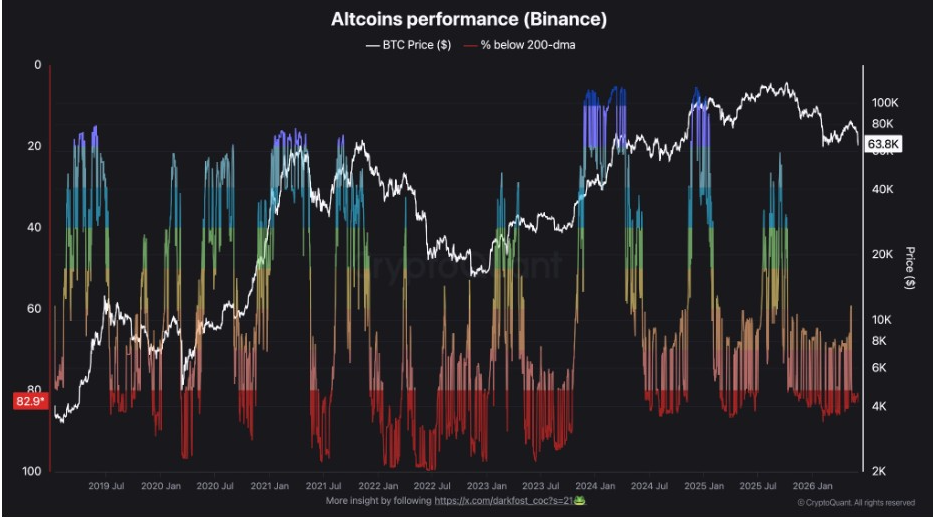
Altcoin Market Loses $520B as 83% Trade Below 200-Day Average

How Bitcoin Turned $10K Into $119 Million While Facebook Lagged Behind

US eyes Iranian assets for Gulf allies’ reconstruction, source says



